Prize lecture: Bengt Holmström, Laureate in Economic Sciences 2016
07 Jan 2017 Leave a comment
in applied price theory, industrial organisation, managerial economics, organisational economics Tags: game theory
Trade-offs in an high-gun arms race equilibrium
28 Oct 2016 Leave a comment
in economics of crime, economics of regulation, law and economics, politics - USA Tags: game theory, gun control
Would ceasefires have shortened WWII? The American Civil War? #Syrianconflict
22 Sep 2016 Leave a comment
in defence economics, politics - USA, war and peace Tags: American Civil War, game theory, Middle-East politics, Syrian Civil War, World War II
Edward Luttwak in his essay Give War a Chance speculated that if there was a United Nations in the 1860s, there would still be UN peacekeepers stationed between the warring Union and Confederate troops on the Mason Dixon line as of this day.
If you can work out a way in which ceasefires would have shorten World War II in either the European or Pacific theatres, you have got a better crystal ball than me.
There were long interludes on the Western front; several years in which the Nazis fortified the French beaches while the Allies built up their invasion force in England. For all practical purposes, there is a land-forces ceasefire from Dunkirk to D-Day across the English Channel.
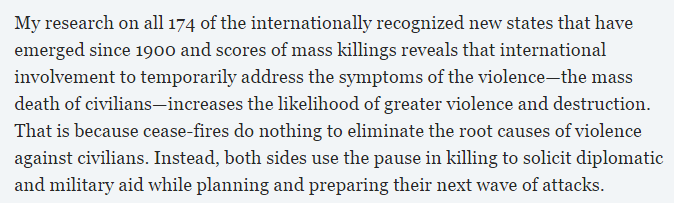
Luttwak wrote that cease-fires permit space for both sides to heal while only intensifying and prolonging the struggle once the cease fire ends — and it almost always ends.
This was true in the Arab-Israeli War of 1948-1949. It is true of the dozen of ceases fires in Gaza negotiated by the Security Council. It was true of all the cease-fires that failed in the fall of Yugoslavia with Serbs, Croats, and Bosnians who negotiated month-long cease fires where
John Stevenson studied 170 ceasefires. He pretty much vindicated the position that each side uses the lull in the fighting to regroup, rebuild and reinforce when for when the fighting starts again.
Ceasefires are perplexing in the many sided civil war in Syria. Aside from the Kurds, it is hard to work out who you want to win.
The Kurds just want to be left alone with their own country.
But Turkey is not happy about that prospect nor is Iraq.
A useful guide to Who's Who in the Syrian Civil War. And how many fighter they have.
Chart by @EP_ThinkTank https://t.co/oGbN4A67w0—
Paul Kirby (@paul1kirby) February 09, 2016
You can work out who you want to lose territory but as for who might replace them, maybe the free Syrian army is a bit of an improvement.
Who's Fighting in Syria
(or: Why more intl focus won't fix this) https://t.co/RLo7kTtyK5—
ian bremmer (@ianbremmer) November 15, 2015
There will be a bloodbath in reprisals if any of the other sides win apart from the Kurds. The Kurds are only willing to fight as far into Syria as they need to defend their own territory.
A nuclear free New Zealand delayed the end of the Cold War
24 Jul 2016 Leave a comment
in defence economics, politics - New Zealand, war and peace Tags: Cold War, game theory, George Orwell, nuclear free New Zealand, peace movements, war against terror
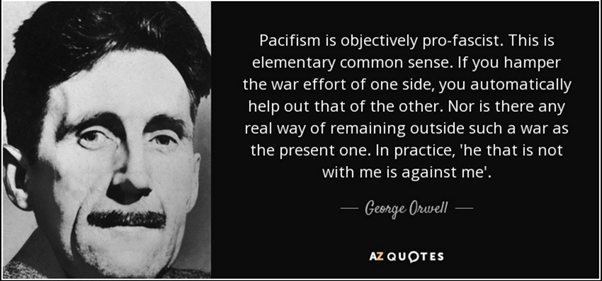
If the dilettantes at the end of the known world accomplished anything at all by declaring New Zealand nuclear free after 1984, anything at all, it was to prolong the Cold War, embolden Communist Russia and increase the chance of a nuclear exchange. As George Orwell said in 1941
Pacifism is objectively pro-Fascist. This is elementary common sense. If you hamper the war effort of one side you automatically help that of the other. Nor is there any real way of remaining outside such a war as the present one. In practice, ‘he that is not with me is against me’.
The idea that you can somehow remain aloof from and superior to the struggle, while living on food which British sailors have to risk their lives to bring you, is a bourgeois illusion bred of money and security.
Mr Savage remarks that ‘according to this type of reasoning, a German or Japanese pacifist would be “objectively pro-British”.’ But of course he would be! That is why pacifist activities are not permitted in those countries (in both of them the penalty is, or can be, beheading) while both the Germans and the Japanese do all they can to encourage the spread of pacifism in British and American territories. The Germans even run a spurious ‘freedom’ station which serves out pacifist propaganda indistinguishable from that of the P.P.U. They would stimulate pacifism in Russia as well if they could, but in that case they have tougher babies to deal with.
In so far as it takes effect at all, pacifist propaganda can only be effective against those countries where a certain amount of freedom of speech is still permitted; in other words it is helpful to totalitarianism.
There is a strong peace movement in the 1930s that undermined rearmament at every point. Indeed, the then leader of the British Labour Party met with Hitler one afternoon with the aim of persuading him to become a Christian pacifist. He failed.
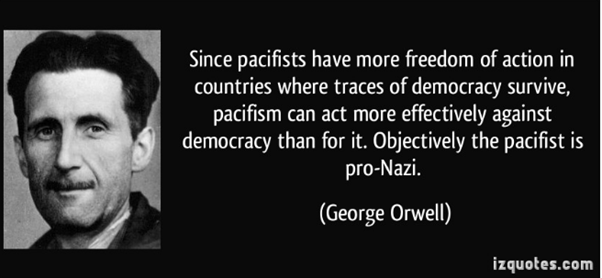
The slaughterhouse of World War I would certainly rest on the memory but Hitler gave them no choice but to rearm yet some on the Left would not accept this reality. The purpose of British foreign policy in the 1930s was to buy time to rearmament before the inevitable clash.
The pro-fascism of the peace movement continues to this day. To quote Michael Walzer
so many leftists rushed to the defense of civil liberties while refusing to acknowledge that the country faced real dangers–as if there was no need at all to balance security and freedom.
Maybe the right balance will emerge spontaneously from the clash of right-wing authoritarianism and left-wing absolutism, but it would be better practice for the left to figure out the right balance for itself, on its own; the effort would suggest a responsible politics and a real desire to exercise power, some day.
But what really marks the left, or a large part of it, is the bitterness that comes with abandoning any such desire. The alienation is radical.
How else can one understand the unwillingness of people who, after all, live here, and whose children and grandchildren live here, to join in a serious debate about how to protect the country against future terrorist attacks? There is a pathology in this unwillingness, and it has already done us great damage.
With one exception, democracies do not go to war with other democracies. There are plenty of undemocratic countries out there with dictators willing to have it go if they see weakness.
That is before you consider the suspicion that the Communist dictatorships had of other countries. In Tom Schelling’s view, many wars including World War 1 were the products of mutual alarm and unpredictable tests of will.
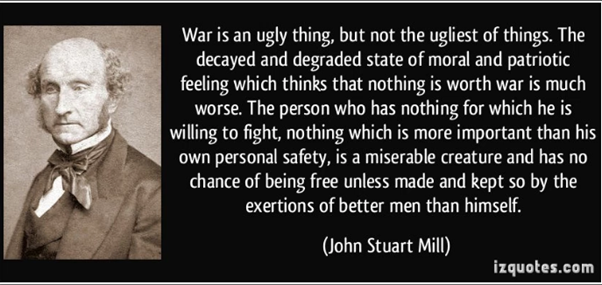
Robert Aumann argued well that the way to peace is like bargaining in a medieval bazaar. Never look too keen, and bargain long and hard. Aumann argues that:
If you are ready for war, you will not need to fight. If you cry ‘peace, peace,’ you will end up fighting… What brings war is that you signal weakness and concessions.
A nuclear free New Zealand signalled weakness and a willingness to make concessions. The peace movements across all democracies had the same effect.
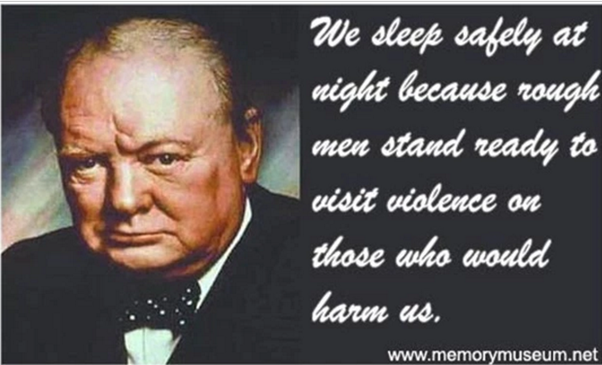
Disarmament increases the chances of war. Aumann gave the example of the Cold War of how their stockpiles of nuclear weapons and fleets of bombers prevented a hot war from starting:
In the long years of the cold war between the US and the Soviet Union, what prevented “hot” war was that bombers carrying nuclear weapons were in the air 24 hours a day, 365 days a year? Disarming would have led to war.
Peace activists are utterly clueless about what is discussed at peace talks. The ability to negotiate a credible peaceful settlement between sovereign states depends on:
- the divisibility of the outcome of the dispute,
- the effectiveness of the fortifications and counterattacks with which an attacker would expect to have to contend, and
- on the permanence of the outcome of a potential war.
Central to any peace talks is that any peace agreement is credible – it will hold and not will not be quickly broken:
A state would think that another state’s promise not to start a war is credible only if the other state would be better off by keeping its promise not to start a war than by breaking its promise.
Peace talks occur only when there something to bargain about. As James Fearon explained, there must be
a set of negotiated settlements that both sides prefer to fighting
That need for a bargaining range is the fundamental flaw of peace activists. When they call for peace talks, peace activists never explain what will be discussed in a world where everybody is not like them terms of good intentions.
What are the possible negotiated settlements that each both side will prefer to continue fighting? Diplomacy is about one side having some control over something the other side wants and this other side have something you want to exchange. In a war, the attacker thinks he can get what it wants to fighting for it.
If peace activists truly want peace, rather than victory for the other side, they must prepare for war including fortified borders so that the other side doesn’t dare cross them and start a war. A peace settlement depends upon the ability to divide the contested territory with or without fortified borders to make a settlement credible:
…despite the costs and risks of war, if a dispute is existential, or, more generally, if the whole of a contested territory is sufficiently more valuable than the sum of its parts, then a peaceful settlement is not possible.
A peaceful settlement of a territorial dispute, and especially a settlement that includes an agreement not to fortify the resulting border, also can be impossible if a state thinks, even if over optimistically, that by starting a war it would be able at a small cost to settle the dispute completely in its favour permanently.
Peace activists didn’t use the knockdown argument against 2nd Iraq war
10 Jul 2016 Leave a comment
in defence economics, war and peace Tags: anti-war movements, British politics, game theory, Iraq, Iraq war, Middle-East politics, mutually assured destruction, nuclear deterrence, peace movements, Syrian Civil War
This idea of suing ministers for abuse of public office has appeal given the gap between many left-wing policies and sound economics.
https://twitter.com/_PaulMonaghan/status/751525929613156352
Anti-war MPs such as Jeremy Corbyn should be sued for abuse of public office and crimes against peace for not making the knockdown argument against the 2nd war against Iraq.
Instead, Corbyn said he did not like war without explaining how this was different from appeasement and surrender. The easiest way to stop a war is to surrender. The easiest way to start a war is to look weak to an aggressor.
That knockdown argument against the 2nd Iraq war argument was right under the noses of the peace movement. It was yes, Iraq has weapons of mass destruction.
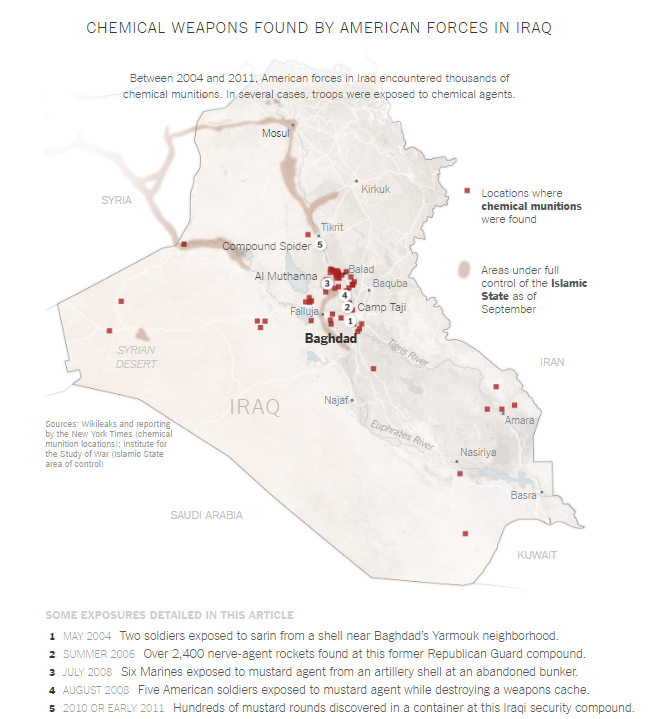
Source: The Secret Casualties of Iraq’s Abandoned Chemical Weapons – The New York Times
It is madness to invade a country that has weapons of mass destruction because they might use them especially if the objective is regime change. Iraq may not have had nuclear weapons, but the potential for Iraq to have biological and chemical weapons secreted away was real.
No one is mad enough to invade North Korea. They will use chemical and biological weapons on Seoul and Tokyo. Syria has chemical and biological weapons to make sure no one invades it.

From what I read, in the current Civil War, Syria uses chemical and biological weapons when it is on the retreat but does not use them to advance and claim new territory.
The reason why the renegade left could not possibly make this obvious argument against the war in Iraq, which was it could be a massive disaster if these chemical and biological weapons were used in desperation, was these peace activists would have to admit nuclear deterrence works. To stop a war by having to admit that weapons of mass destruction deter war was too much for the peace movement to swallow.
An admission that nuclear deterrence works would invalidate the entire political activism of the peace movements in the Cold War. The practical effect of those peace movements was, of course, to undermine the one factor preventing a nuclear war, which was nuclear deterrence.

Since 1945, at least seven or eight wars have occurred where one side had nuclear weapons. In 1973, Israel had nuclear weapons it could have used.

The reason for the non-use of nuclear weapons in those seven or eight wars including the 1973 Yom Kippur War was none were wars of annihilation. Nuclear weapons were more likely to be used if the suspected intention is to invade or occupy a country.
The Yom Kippur war was launched with a plan by President Sadat to reclaim the Sinai then after a few days agreed to an internationally brokered ceasefire. He was intending on reclaiming lost territory, not invading Israel proper continue and risk nuclear retaliation.
Saddam destroyed his nuclear, biological, and weapons but not his weapons development capability soon after he lost the first Iraq war. Saddam played a double strategy: make sure he was not caught with contraband but play a fine game of bluff making everybody think Iraq still has them so he remains a regional strongman.
Saddam could have produced biological and chemical weapons within weeks if he chose to do so but was probably 5 years away from a nuclear weapon. Chilcot’s recent report concluded:
The ingrained belief that Saddam Hussein’s regime retained chemical and biological warfare capabilities, was determined to preserve and if possible enhance its capabilities, including at some point in the future a nuclear capability, and was pursuing an active policy of deception and concealment, had underpinned UK policy towards Iraq since the Gulf Conflict ended in 1991.
The 2nd Iraq war started because Saddam fooled his enemies into thinking he had chemical, biological and nuclear weapons. He certainly had the Japan option. This is having in place the capability to produce weapons of mass destruction such as chemical and biological weapons quickly if he wanted.
Expressive voting, more gun control or fewer gun free zones
18 Jun 2016 Leave a comment
in applied price theory, applied welfare economics, comparative institutional analysis, economics of crime, economics of regulation, law and economics, politics - USA Tags: expressive voting, game theory, gun control, offsetting the, unintended consequences
https://twitter.com/Thomas_Conerty/status/649800146528563200
If you want fewer mass shootings, reduce the supply of gun free zones where even the craziest gunmen have been able to find despite being tormented by the voices as John Lott explains
Time after time, we see that these killers tell us they pick soft targets. With just two exceptions, from at least 1950, the mass public shootings have occurred in these gun-free zones. From last summer’s mass public killers in Santa Barbara and Canada, to the Aurora movie theatre shooter, these killers made it abundantly clear in their diaries or on Facebook how they avoided targets where people with guns could stop them.
And even when concealed handgun permit holders don’t deter the killers, the permit holders stop them. Just a couple of weeks ago, a mass public shooting at a liquor store in Conyers, Ga., was stopped by a concealed handgun permit holder.
The USA is in an arms race between criminals and law-abiding citizens. Both have lots of guns so the only people who gain from disarmament to those who obey the law to have fewer guns. They are in a high gun equilibrium where it very difficult to get out of this arms race.
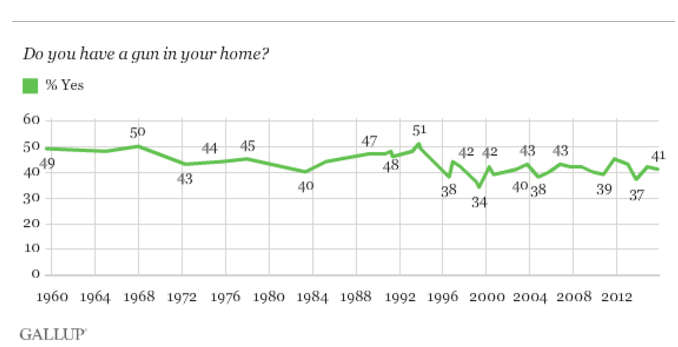
Demands for more gun control and bans on specific weapons postpone the hard work of how to reduce mass shootings in a society with easy gun access. It is expressive politics at its worse.
What does U.S. gun ownership really look like? Load up with #PollPosition’s @Johnnydontlike: bit.ly/1y2EMjX http://t.co/fn5EpM75U7—
(@PJTV) March 25, 2015
An Australian politician today in an unrelated context regarding universal health insurance in Australia called Medicare made this point about politics is hard work, not political theatre
It’s so much easier today to be a cynical poseur than a committed democrat, it’s easier to retreat to observer status than convince your friends of the merits of incremental change.
It required hard slog to ensure those institutions could survive the heat of adversarial politics. Then it took election campaign after election campaign, tough political negotiation, administrative effort, and the making and breaking of careers and governments to finally make Medicare stick,” she said.
The creation of Medicare took more than a hollow-principled stand, it took more than just wishful thinking, it took more than slogans, it took more than protests. It took real, tough politics. It took idealists who were prepared to fight to win government.
Expressive politics is about what voters boo and cheer, not whether policies actually work if adopted. Voters want to feel good about what they voted for and find a sense of identity in who they oppose and what they support. After a mass shooting, voters feel they must do something, cheer for something better and cheering for more gun control is an easy way to feel better.
Gun control is not going to happen in the USA because of the poor incentives for law-abiding individuals to retreat from high levels of legal private gun ownership when criminals will keep their guns. Harry Clarke pointed out that:
The political popularity of guns is strengthened by Prisoner’s Dilemma disincentives for individuals to retreat from high levels of gun ownership.
Accepting a gun buyback would be unattractive to citizens who would recognize high levels of overall gun ownership in the community and, hence, their own personal increased vulnerability if those with criminal intent acted rationally and kept their weapons.
If you want fewer mass shootings, fewer gun free zones is the way to go. That might have other unintended consequences but more mass shootings is not likely to be one of them. Ready access to guns in moments of despair increases suicide rates. Suicides in the Israeli Defence Force fell 40% when young soldiers were not allowed to take their guns home at the week-end. Suicides do not increase during the week so the lack of weekend access to guns got them through dangerous moments of despair where ready access to a firearm would have led to a suicide.

The last thing spree killers want is to be quickly shot down like the dogs they are such as at an American church in 2007. The last wannabe jihadist to try it on in Texas died in a hail of gunfire.
The U.S. Department of Justice’s National Crime Victimization Survey showed the risk of serious injury from a criminal attack is 2.5 times greater for women offering no resistance than for women resisting with a gun. 97% of murders are by men. Any arguments about gun control should be about gun control for men.
The sharemarket perception of gun control is every time there are calls for more gun controls, the share prices of gun manufacturers surge of the back of an anticipated spike in sale. Buying two gun shares on the first trading day after 12 recent mass shootings and selling them 90 days later produces a return of 365% over a nine-year period compared to 66 percent for the S&P 500 Index. A buy-and-hold bet on Smith & Wesson stock starting in January 2007returns 137%.
What gun-control headlines mean for gun-industry bottom lines: reut.rs/20LPJGf via @specialreports https://t.co/R3QiG4MuSM—
Reuters Top News (@Reuters) February 05, 2016
The key to the success of Australian and New Zealand gun laws was low levels of gun crime and minimal use of guns for self-defence. There was no arms race as compared to the USA where criminals and civilians are both armed. It is easy to control an arms race that has not started. The New Zealand, Australian and even the British police rarely have to discharge their weapons.
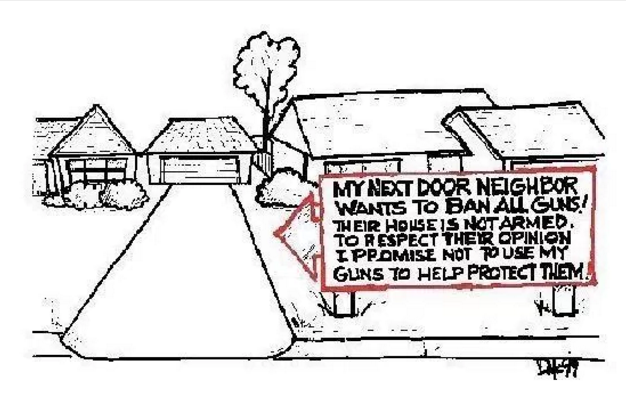
Martin Luther King was a gun owner for obvious reasons. Tom Palmer was the lead litigant in the recent Supreme Court case on gun control in the USA. He saved himself and a fellow gay man from a severe beating in 1987 by gang of 20 men by pulling a gun on them. Pink pistols has been in the thick of anti-gun control litigation in the USA.
High US drug prices as a good shot public good @RobinHoodTax
08 Jun 2016 Leave a comment
in applied price theory, comparative institutional analysis, health economics, law and economics, politics - USA, property rights Tags: best shot public goods, creative destruction, drug prices, game theory, good shot public goods, military alliances, NATO, patterns and copyrights, Warsaw Pact, weakest link public goods, World War I
Much is made of the fact that drug prices are lower in Canada and Western Europe as compared to the USA. Indeed, day trips are made across the Canadian border to buy cheaper drugs as compared to the local pharmacy pricin in a US city.

Instead of what is always the relevant public policy question. What would happen in the USA if attempts were made to seriously reduce the price of drugs. The answer is obvious, the incentive to create new drugs would be severely diminished. There are no free lunches in public policy.

Bringing in new drug to the market is a seriously expensive business these days. That is before you consider the commercial risk of inventing a drug that isn’t much better than its competitors.
Of course, you can always be leapfrogged by another drug company brining on a better drug not long after you have brought yours to market. None of this is getting any cheaper.

Innovation by specific drug company is a form of public good production known as best shot public goods. Under a best-shot rule, the socially available amount is the maximum of the individual quantities. There is is a single prize of overwhelming social importance, such as a major drug breakthrough, with any individual’s effort having a chance of securing the prize.
A specialty drug for a year costs more, on average, than most household incomes wpo.st/0y_q0 https://t.co/uss6ikgkYk—
carolyn johnson (@Carolynyjohnson) November 20, 2015
The amount to be produced of a best shot public good depends on the best contribution rather than the usual situation of any contribution is interchangeable. Another example is a large number of people shooting at an incoming missile. The best shot counts, all the others don’t matter.
High drug prices in the USA could be the price of the weakest shot or weakest link public good. Weakest shot public good is where the socially available amount is the minimum of the quantities individually provided. One example a weakest link public goods are military alliances where the success of the alliance depends upon everyone contributing
In the weakest shot or weakest link theory of public good production, the free riding countries of Europe will bring the whole show down by not making their contribution to drug research by buying at good prices from the US pharmaceutical companies.
Perhaps a better way to look at drug innovation is a good shot public good. Someone has to make a reasonable contribution; that has to be the USA because it is such a large market. Without access to good prices in the USA, there wouldn’t be enough of an incentive for drug innovation.
Military alliances such as NATO and the Warsaw Pact probably are examples of good shot public goods. They depend on a number of large countries making their contribution but I always leaned towards the crucial best shot contribution of the USA and former USSR .
In the case of the start of World War I, Triple Entente against Germany was a weaker shot public good. Its defensive wall depended on the strength of the weakest country defending i.e. the unfortified Belgian border (in both wars). The Tripartite Alliance was a best shot public good depending on the strength of Germany’s attack for ultimate success or failure.
Sensible Sentencing Trust mistaken to oppose plea bargaining @sst_nz
01 Jun 2016 Leave a comment
in economics of crime, law and economics, politics - New Zealand Tags: crime and punishment, game theory, law and order, plea-bargaining
The sensible sentencing trust wants to greatly curtail if not abolish plea-bargaining. Its petition is motivated by a recent plea bargain where a particularly horrendous child murder was pleaded down to two manslaughter guilty pleas.
I have no knowledge of the details of that case or the plea-bargain other than a male and female caregiver were charged with the brutal murder of a 3-year-old child in their foster care.
 My speculation is two guilty pleas to manslaughter is better than one of the accused getting off through a cutthroat defence.
In this defence, the co-accused blame each other for the worst and minimises their own culpability. Sometimes this backfires. The jury convicts both on the evidence of the other but ignores self-serving testimony. But sometimes a cutthroat defence works and a guilty goes free.
A few years ago a father was accused of murdering his 3 month old twins. The chief witness against him was their mother.
By the end of the trial, his defence counsel made the mother look far more guilty than the accused. So much so that the jury returned a not guilty verdict in 10 minutes.One of the two did it, but the jury could not work out which one so there was reasonable doubt.
In the case motivating the petition to abolish plea-bargaining, the accused pleaded down to manslaughter pleas. Both are certain to be punished rather than one perhaps get off.
Plea-bargain are a compromise but they are still justice. The punishment is less but is more certain. Plea-bargaining allows scarce prosecution resources to be better targeted, which means more convictions in those cases that do go to trial.
Following Landes (1971), plea bargaining is a rational response to the costs of trial for prosecutors intent on maximizing the sum of punishments imposed on defendants as a class and for defendants seeking to minimize the expected costs of punishment to them as individuals.
A plea-bargain spares witnesses the ordeal of a trial; justice is speedier, less a severe but more certain as there is no chance of the not guilty verdict at trail. Testifying against an accused found not guilty because a reasonable doubt rather than actual innocence must be disheartening.
Reagan began seeking a rapprochement with the Kremlin 15 months before Gorbachev took office, this Day 1984
16 Jan 2016 Leave a comment
in politics - USA, war and peace Tags: Cold War, game theory, mutually assured destruction, nuclear deterrence, nuclear war, Ronald Reagan
Reagan spoke of common concerns, the mutual desire for peace and the urgent need to address “dangerous misunderstandings” between Moscow and Washington.
Soldiers exchange cigarettes during Christmas Truce, 1914
25 Dec 2015 Leave a comment
WWI British and German soldiers exchange cigarettes, gifts, and addresses during Christmas Truce, 1914. http://t.co/8HFq1870YI—
ClassicPics (@History_Pics) April 25, 2015
What would be the opening offer of @jeremycorbyn at Syrian Civil War peace talks?
24 Nov 2015 1 Comment
in defence economics, war and peace Tags: British politics, game theory, Iraqi civil war, ISIS, Kurds, Middle-East politics, peace talks, Syrian Civil War, Turkey
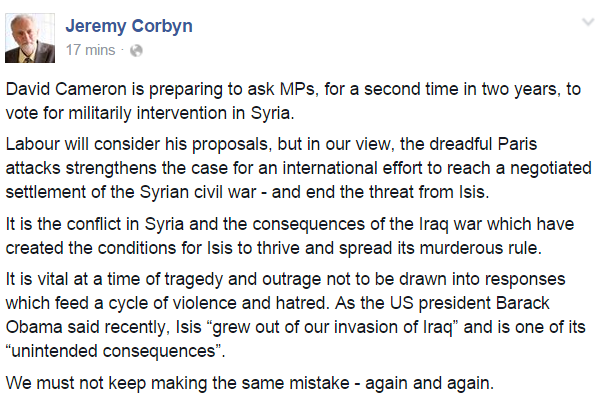
Exactly what would Jeremy Corbyn put on that negotiating table for a comprehensive peace settlement to the Syrian Civil War that:
- would end the military threat from ISIS in Syria, and
- allow the Kurdish succession opposed by all others plus Turkey, Iraq and Russia?
Without the resumption of military strikes as negotiating coin if such peace talks break down, why would anyone fighting on the ground in Syria care about what proposals the Western powers might put up?
The possibility of a temporary cessation in current and intensifying Western military airstrikes is one of the few reasons for the parties to sit down at a negotiating table with the Western powers and Russia if only to string out that cessation of those airstrikes while they regroup and re-equip. The parties to the Syrian Civil War only respect force, not moral authority.

The ability to negotiate a credible peaceful settlement between sovereign states depends on:
- the divisibility of the outcome of the dispute,
- the effectiveness of the fortifications and counterattacks with which an attacker would expect to have to contend, and
- on the permanence of the outcome of a potential war.
Central to any peace talks is that any peace agreement is credible – it will hold and not will not be quickly broken:
A state would think that another state’s promise not to start a war is credible only if the other state would be better off by keeping its promise not to start a war than by breaking its promise.
Peace talks occur only when there something to bargain about. As James Fearon explained,there must be
a set of negotiated settlements that both sides prefer to fighting.
When a war is over territory rather than annihilation of the other side, the challenge is to divide the disputed territory in a way that both are happy to keep the peace settlement rather than come back and fight in a few years.
Civil wars such as those in Syria and Iraq today are grubby affairs in terms of peace talks because of the greater inability to divide what is contested.
Who Does What to Whom in #Syria https://t.co/xO8PJHZwgW—
ian bremmer (@ianbremmer) November 04, 2015
Ending civil wars is even more difficult to make binding commitments because new groups such as ISIS can spring up to replace the signatories to the old peace treaty or introduce new agendas:
…if the constituent groups of a polity are deeply divided and, hence, are unwilling to accept meaningful limitations on the prerogatives of winners of constitutional contests, then civil war can be unavoidable.
Do peace talks have a role in wars of annihilation @jeremycorbyn
17 Nov 2015 1 Comment
in defence economics, war and peace Tags: British politics, game theory, ISIS, Middle-East politics, Twitter left, World War I
Peace activists are utterly clueless about what is discussed at peace talks. The ability to negotiate a credible peaceful settlement between sovereign states depends on:
- the divisibility of the outcome of the dispute,
- the effectiveness of the fortifications and counterattacks with which an attacker would expect to have to contend, and
- on the permanence of the outcome of a potential war.
Central to any peace talks is that any peace agreement is credible – it will hold and not will not be quickly broken:
A state would think that another state’s promise not to start a war is credible only if the other state would be better off by keeping its promise not to start a war than by breaking its promise.
Peace talks occur only when there something to bargain about. As James Fearon explained, there must be
a set of negotiated settlements that both sides prefer to fighting
That need for a bargaining range is the fundamental flaw of peace activists. When they call for peace talks, peace activists never explain what will be discussed in a world where everybody is not like them terms of good intentions. What are the possible negotiated settlements that each both side will prefer to continue fighting? Diplomacy is about one side having some control over something the other side wants and this other side have something you want to exchange. In a war, the attacker thinks he can get what it wants to fighting for it.
There were plenty of peace feelers during World War I. World War I came to an end when Germany preferred surrender and disarmament over conquest. Its armies were in full retreat and disarray – revolution was a threat at home
Previous World War I peace feelers failed because each side thought it could gain more by fighting. German peace feelers when they are advancing were premised on keeping what they are taken. When the Germans were retreating, the Germans wanted to go back to the pre-war borders and keep their capability for relaunching the war once they have recouped. The Allies had nothing to gain from allowing Germans simply to withdraw from the fighting intact and regroup, attack again and perhaps win.
When a war is over territory rather than annihilation of the other side, the challenge is to divide the disputed territory in a way that both are happy to keep the peace settlement rather than come back and fight in a few years. Grossman explains:
If the winner of a war would gain control of the entire territory, and if the whole of a contested territory is sufficiently more valuable than the sum of its parts, then, despite the costs and risks of war, promises not to start a war could be not credible, and a peaceful settlement, or at least a peaceful settlement with unfortified borders, would not be possible.
That point about the need for fortified or unfortified borders after a peaceful settlement over contested territory is the ultimate failure of peace activists.
If peace activists truly want peace, rather than victory for the other side, they must prepare for war including fortified borders so that the other side doesn’t dare cross them and start a war. A peace settlement depends upon the ability to divide the contested territory is with or without fortified borders to make a settlement credible:
…despite the costs and risks of war, if a dispute is existential, or, more generally, if the whole of a contested territory is sufficiently more valuable than the sum of its parts, then a peaceful settlement is not possible. A peaceful settlement of a territorial dispute, and especially a settlement that includes an agreement not to fortify the resulting border, also can be impossible if a state thinks, even if over optimistically, that by starting a war it would be able at a small cost to settle the dispute completely in its favour permanently.
Wars of annihilation have a long history. The first two Punic wars were settled by Rome and Carthage. The third was not because the objective of Rome was to destroy Carthage which it did. Rome is decided it simply did not want to have any further wars with Carthage. The only way to ensure that was to destroy that city – level it to the ground. The Arab Israel conflict is another example:
Over the years the Arabs have rejected every proposal for a peaceful settlement that would divide Palestine into a Jewish state and an Arab state, because for the Arabs allowing a Jewish state would be a defeat, not a compromise. The Israelis, however, demand a Jewish state, and they refuse to turn all of Palestine into a single multinational state in which Jews would not make up a large majority of the population. If the dispute between Arabs and Israelis were about the control of tracts of land or sources of water, then a peaceful settlement might have been possible long ago. But, the dispute is about the existence of a Jewish state, and the outcome is indivisible. Is there or is there not to be a Jewish state in Palestine? The answer is either yes or no.
The key guardian of peace and enforcer of peace settlements is the ability of the other side to mount an effective counter-attack if attacked again. If you want peace, you must prepare for war. The loudest champions of a large military budget should be peace activists. Peace activists know, they should know, that a country with a strong military is less likely to be attacked.
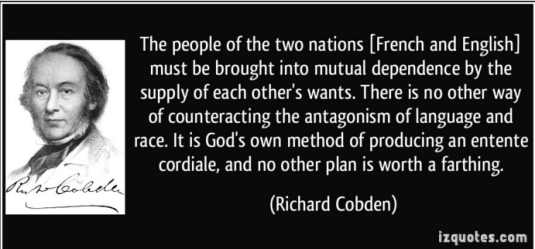
If a country is a democracy, it is less likely to start wars and especially with other democracies. If peace activists want more democracies in the world, they should preach capitalism and free trade because countries that are capitalistic become democracies.
Peace activists think that they can make peace just by talking with people. Peace is made by trading with hostile countries to make them depend on you for their prosperity as well as yours. By growing rich through free trade, training partners have less reasons to go to war or otherwise have poor relations with each other or each other’s friends. Trade increases the opportunity cost of starting a war.
Robert Aumann argued well that the way to peace is like bargaining in a medieval bazaar. Never look too keen, and bargain long and hard. Aumann argues that:
If you are ready for war, you will not need to fight. If you cry ‘peace, peace,’ you will end up fighting… What brings war is that you signal weakness and concessions.
Countries are more likely to cooperate if they have frequent interactions and have a long time horizon. The chances of cooperation increase when it is backed by the threat of punishment.
The ability to threaten to hurt is conducive to peace. Disarmament, Aumann argues, “would do exactly the opposite” and increase the chances of war. He gave the example of the Cold War as an example of how their stockpiles of nuclear weapons and fleets of bombers prevented a hot war from starting:
In the long years of the cold war between the US and the Soviet Union, what prevented “hot” war was that bombers carrying nuclear weapons were in the air 24 hours a day, 365 days a year? Disarming would have led to war.
Aumann has quoted the passage from the biblical Book of Isaiah:
Isaiah is saying that the nations can beat their swords into ploughshares when there is a central government – a Lord, recognized by all. In the absence of that, one can perhaps have peace – no nation lifting up its sword against another. But the swords must continue to be there – they cannot be beaten into ploughshares – and the nations must continue to learn war, in order not to fight!
Civil wars such as those in Syria and Iraq today are grubby affairs in terms of peace talks because of the greater inability to divide what is contested.
Who Does What to Whom in #Syria https://t.co/xO8PJHZwgW—
ian bremmer (@ianbremmer) November 04, 2015
Ending civil wars is even more difficult to make binding commitments because new groups such as ISIS can spring up to replace the signatories to the old peace treaty or introduce new agendas:
…if the constituent groups of a polity are deeply divided and, hence, are unwilling to accept meaningful limitations on the prerogatives of winners of constitutional contests, then civil war can be unavoidable.
Detailed map of Syria and Iraq showing which forces hold what territory. bit.ly/1VlPsH2 http://t.co/up3YGV5SGB—
Kenneth Roth (@KenRoth) August 29, 2015
Margaret Thatcher on peacemakers
16 Nov 2015 Leave a comment
in defence economics, war and peace Tags: game theory, Margaret Thatcher
Jihadists and the Nisei soldiers
16 Nov 2015 1 Comment
in economic history, economics of religion, occupational choice, politics - Australia, politics - New Zealand, politics - USA, war and peace Tags: British politics, counter-signalling, economics of oppositional identities, game theory, ISIS, New Zealand Greens, war against terror, World War II
Japanese Americans interned during World War II jumped at the chance to volunteer to fight. They saw it as their last chance to prove their undivided loyalty to their country.
One Japanese father, when saying goodbye to his son, stressed that showing his loyalty to his country, if necessary through the last full measure of devotion was far more important that his returning safely to his family.
The 442nd Combat Regiment Team was the most decorated unit in World War II. Its motto was “Go for Broke”. The 4,000 Nisei soldiers in April 1943 had to be replaced nearly 2.5 times. In total, about 14,000 men served, earning 9,486 Purple Hearts.
Migrants are a cut above regarding initiative and judgement. They pass many of these traits on to their children. These Japanese Americans, both migrants and native born knew that counter-signalling was required. They had to go out of their way to show their loyalty no matter how unfair any suspicions of disloyalty among Japanese Americans might have been at the time.
I am reminded of that counter-signalling by Japanese Americans during the darkest days of World War II when I read the remarks of Julie Anne Genter and Jeremy Corbyn. Both focused their pleas on the need to be inclusive and understanding why people join violent, radical groups. They and the rest of the Twitter Left had nothing to contribute regarding strategies to deter the next attack and disrupt those that are in the planning stage, but that is not new.
The notion that bad behaviour towards minority communities leads to more recruitment to the terrorists is overrated. There will be a few wind-bags who say harsh things after each terrorist attack, but if they cross the line, they will be dealt with by the police and courts in a democracy governed by the rule of law.
Acrimony towards your community following the latest terrorist attacks has little to do with the level of recruitment to these terrorist groups either now or in the past. As Alan Krueger explains:
One of the conclusions from the work of Laurence Iannaccone—whose paper, “The Market for Martyrs,” is supported by my own research—is that it is very difficult to effect change on the supply side. People who are willing to sacrifice themselves for a cause have diverse motivations. Some are motivated by nationalism, some by religious fanaticism, some by historical grievances, and so on. If we address one motivation and thus reduce one source on the supply side, there remain other motivations that will incite other people to terror.
Malcontents join the jihadists today for the same reasons they joined the Red Brigade, the Japanese Red Army Faction and Baader-Meinhof gang in the 1970s and 1980s.
Plenty of young people were attracted to communism in previous generations as a way of sticking it to the man. Now as then economic conditions were good as were political freedoms. Italy, Japan and Germany were all at the peak of recoveries from war. Japanese incomes are doubled in the previous decade. Germany and Italy were rich countries. As Alan Krueger explains:
Despite these pronouncements, however, the available evidence is nearly unanimous in rejecting either material deprivation or inadequate education as important causes of support for terrorism or participation in terrorist activities. Such explanations have been embraced almost entirely on faith, not scientific evidence.
Each generation has its defining oppositional identity. Radical Islam is the oppositional identity of choice for today’s angry young men and women. Mind you, they have to buy Islam for dummies to understand what they’re signing up for.
In previous generations, it was communism, weird Christian sects, eco-terrorism, animal liberationist terrorism and a variety of domestic terrorists of the left and right with conspiratorial motivations. Look at the level of diversity of the angry young men and women on the domestic terrorists list of the FBI. One jihadists when interviewed said that 30 years ago he would probably have become a Communist as his vehicle for venting his frustrations.
There is always an ample supply of troubled and angry people so trying to redress their grievances is overrated as Alan Krueger explains:
…it makes sense to focus on the demand side, such as by degrading terrorist organizations’ financial and technical capabilities, and by vigorously protecting and promoting peaceful means of protest, so there is less demand for pursuing grievances through violent means. Policies intended to dampen the flow of people willing to join terrorist organizations, by contrast, strike me as less likely to succeed.
The current appeal of radical Islam rests on what psychologists call personal significance. The quest for personal significance by these angry young men and women is the desire to matter, to be respected, to be somebody in one’s own eyes and in the eyes of others.
A person’s sense of significance may be lost for many reasons, including economic conditions. The anger can grow out of a sense of disparagement and discrimination; it can come from a sense that one’s brethren in faith are being humiliated and disgraced around the world.
Extremist ideologies, be they communism, fascism or extreme religions are effective in such circumstances because it offers a quick-fix to a perceived loss of significance and an assured way to regain it. It accomplishes this by exploiting primordial instincts for aggression, sex and revenge. MI5’s behavioural science unit found that
“far from being religious zealots, a large number of those involved in terrorism do not practise their faith regularly. Many lack religious literacy and could… be regarded as religious novices.” The analysts concluded that “a well-established religious identity actually protects against violent radicalisation”
Most evidence point to moral outrage, disaffection, peer pressure, the search for a new identity, for a sense of belonging and purpose as drivers of radicalisation. Anthropologist Scott Atran pointed out in testimony to the US Senate in March 2010:
“. . . what inspires the most lethal terrorists in the world today is not so much the Quran or religious teachings as a thrilling cause and call to action that promises glory and esteem in the eyes of friends, and through friends, eternal respect and remembrance in the wider world”. He described wannabe jihadists as “bored, underemployed, overqualified and underwhelmed” young men for whom “jihad is an egalitarian, equal-opportunity employer . . . thrilling, glorious and cool”.
Chris Morris, the writer and director of the 2010 black comedy Four Lions – which satirised the ignorance, incompetence and sheer banality of British Muslim jihadists – said “Terrorism is about ideology, but it’s also about berks”.

 Utopia, you are standing in it!
Recent Comments