In light of the absence of news as well as my recurring insomnia, which has made me unable to brain, I’m posting a list of what I consider the three best cuisines in the world. What I mean by this is that if I were constrained to eat only one nation’s cuisine for the rest…
Another excellent post from Samir Varma, this time on the 1991 reforms in India that launched India’s second freedom movement: Three men you’ve probably never heard of—P.V. Narasimha Rao, Manmohan Singh, Montek Singh Ahluwalia—may be the three most important people of the late 20th century. Bold claim. Audacious, even. Let me defend it. Here are…
The FT’s Krishn Kaushik covers the courts in India: …in one recent example a Delhi court concluded a property dispute after 66 years. Both the original litigants were dead. Still, the lawyer for one of the warring parties cautioned that the conclusion was in fact not the end, as the ruling would be appealed. Three […]
Another great piece by Samir Varma on Indian marriages—where deep traditions endure, even as subtle revolutions unfold around the edges.. It starts with this kicker: When I told my mother I was marrying my girlfriend, an Italian Jew, she called all my friends in the US asking them to break us up. When that failed, […]
In Massive Rent-Seeking in India’s Government Job Examination System I argued that the high value of government jobs has distorted India’s entire labor market and educational system. India’s most educated young people—precisely those it needs in the workforce—are devoting years of their life cramming for government exams instead of working productively. These exams cultivate no […]
In India, government jobs pay far more than equivalent jobs in the private sector–so much so that the entire labor market and educational system have become grossly distorted by rent seeking to obtain these jobs. Teachers in the public sector, for example, are paid at least five times more than in the private sector. It’s […]
In our textbook, Modern Principles, Tyler and I contrast basic U.S. labor law, at-will employment—where employers may terminate workers for any reason not explicitly illegal (e.g., racial or sexual discrimination), without notice or severance—with Portugal’s “just cause” regime, which requires employers to prove a valid reason, give advance notice, pay severance, and endure extensive regulatory […]
India won’t bow to carbon taxes and it won’t join an unscientific climate war that sacrifices its future. The U.K. and EU would do well to listen, lest they find themselves on the losing end of an Asian-dominated trade battle over manufactured goods.
Chris Trotter writes – What does India want from New Zealand? Not our dairy products, that’s for sure, it’s got plenty of those. Indeed 45 percent of the Indian population are small-scale farmers, most of them running a few head of cattle – not to eat, you understand – but to milk. If it once […]
In the comments to my post, India has Too Few Tourists, many people worried about the food, the touts and the poverty. Many of these comments are mistaken or apply only if you are traveling to India on the cheap as an adolescent backpacker (nothing wrong with that but I suspect the MR audience is […]
I am sad to hear about the passing of Manmohan Singh at age 92. Singh was perhaps the most influential Indian policymaker in the last five decades. An Oxbridge educated trade economist, he became India’s most important technocrat in the 1980s and 1990s – occupying every top position in economic policy – finance secretary; deputy […]
I’m back from my first trip to India, where I visited Mumbai, Delhi, Agra, and Amritsar. I enjoyed fine company in all four cities. In Mumbai, my new friend Sachin Aggarwal, head of the local EconTalk Club, rolled out the red carpet — and ACX Mumbai joined the festivities. (Thank you, Scott Alexander, for creating…
By Paul Homewood h/t Dennis Ambler The latest Issue of World Coal contains a feature on India: https://issuu.com/palladianpublications/docs/worldcoal_issue2_2024/11 Unfortunately the report cannot be downloaded, but below are some of the key highlights: “As of April 2023, the Geological Survey of India reported coal reserves amounting to 378 billion tonnes. India’s coal production […]
Why Evolution is True is a blog written by Jerry Coyne, centered on evolution and biology but also dealing with diverse topics like politics, culture, and cats.
“We do not believe any group of men adequate enough or wise enough to operate without scrutiny or without criticism. We know that the only way to avoid error is to detect it, that the only way to detect it is to be free to inquire. We know that in secrecy error undetected will flourish and subvert”. - J Robert Oppenheimer.

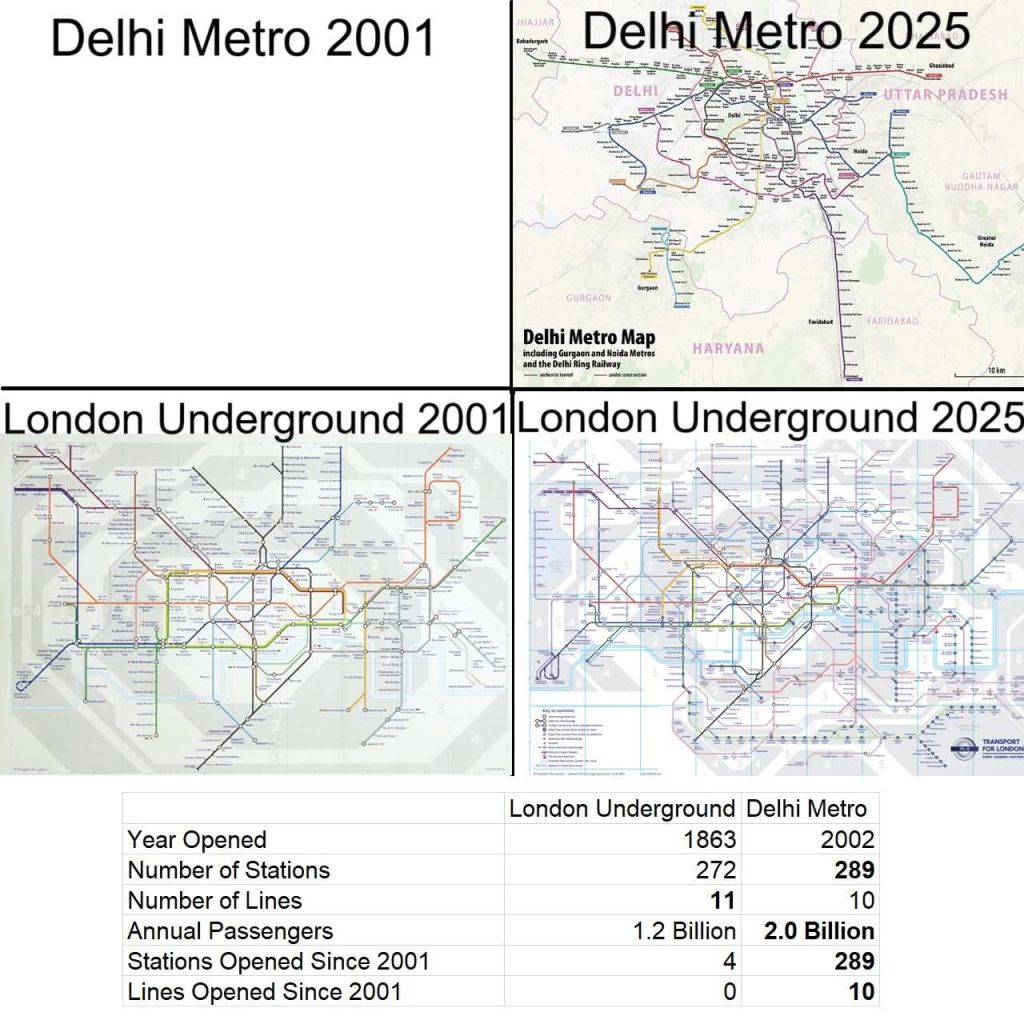
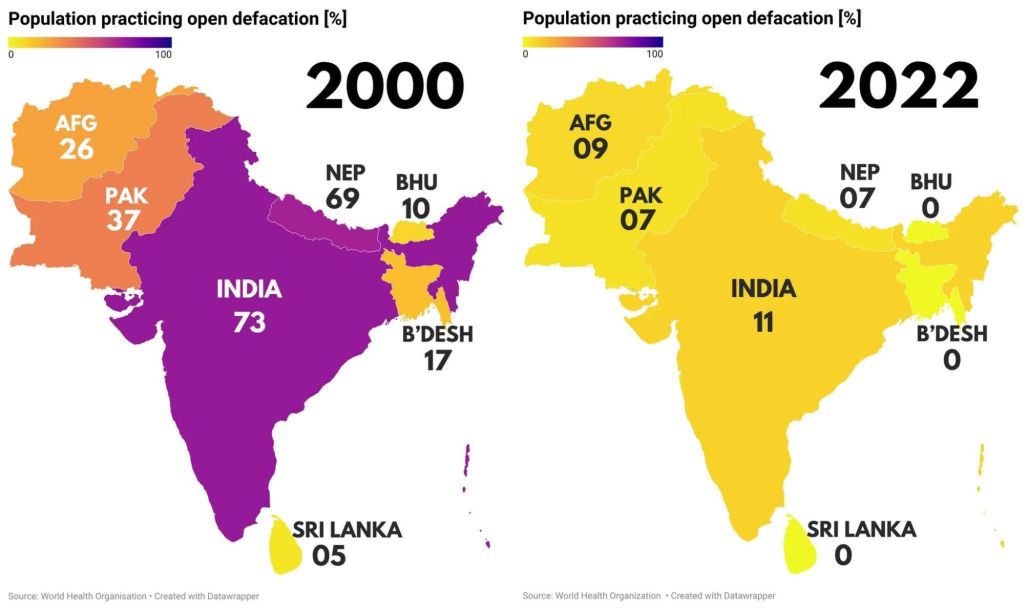



 Utopia, you are standing in it!
Recent Comments