NYT in 1985 on why laptops doomed to be a niche market. Reminder to us all about predictions. http://t.co/cFcm42qqA8 pic.twitter.com/GABYTG1ftc
— zeynep tufekci (@zeynep) February 21, 2015

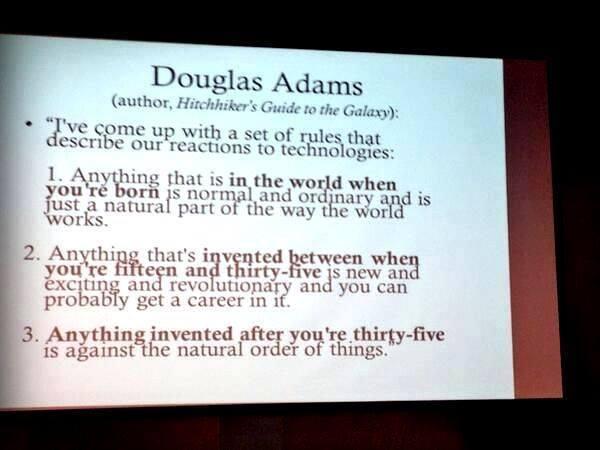
Douglas Adams on new technologies
11 Feb 2015 Leave a comment
in economics of media and culture, technological progress, TV shows Tags: creative destruction, Douglas Adams, innovation, technology diffusion
When did global technological leadership migrate across the Atlantic?
10 Feb 2015 Leave a comment
in economic growth, human capital, politics - USA, technological progress Tags: global technological frontier, growth of knowledge, innovation, Schumpeter, technology diffusion

HT: theatlantic.com/a-short-history-of-american-invention/385279/ via Mikko Packalen and Jay Bhattacharya
Facebook has come a long way in 11 years
09 Feb 2015 Leave a comment
in technological progress Tags: creative destruction, Facebook, innovation

HT: allday.com
On the role of R&D and boffins in lab coats in the Industrial Revolution
24 Jan 2015 Leave a comment

” Google glass ” 1960s.
22 Jan 2015 Leave a comment
in technological progress Tags: creative destruction, innovation, technology diffusion
Movie 3-D technology review: Peter Jackson’s Battle of the Five Armies versus the rest
22 Jan 2015 Leave a comment
in economics of media and culture, entrepreneurship, industrial organisation, movies, politics - New Zealand, technological progress Tags: 3-D movies, creative destruction, innovation
We saw Peter Jackson’s latest Hobbit movie the other day. The other films previewed before the Battle of the Five Armies were also 3-D films.

The first of these was a cartoon where the 3-D technology seemed to be based on using crayons to try and trick you as to what was going on.
The next trailer was the next Star Wars movie in 3-D. Again, it was vastly inferior to the 3-D technology of Sir Peter Jackson and his team.
I noticed the same with all the 3-D films of Sir Peter Jackson: they are much better than the competition.
More than a few times in the 3-D films of his competition, you doubt as to whether the film is in 3-D or not and can’t really tell the difference sometimes as to the 3-D effect over normal films in terms of cinematic experience. Example of this was the last Star Trek movie we saw. The 3-D effect failed in a number of occasions.
Clearly there are trade secrets in 3-D films. The 3-D effect works pretty well in Peter Jackson’s films, except for the occasional close-up transition, and sometimes is quite dazzling.
Who needs a cameraman to do local news anymore?
21 Jan 2015 Leave a comment
in entrepreneurship, labour economics, labour supply, technological progress Tags: creative destruction, entrepreneurial alertness, innovation


 Utopia, you are standing in it!
Recent Comments