Climate economics (UG): International environmental agreements in practice
14 Jul 2017 Leave a comment
in applied price theory, comparative institutional analysis, constitutional political economy, development economics, economic history, economics of bureaucracy, energy economics, environmental economics, global warming, international economics, International law, Public Choice, rentseeking Tags: international public goods
Climate economics (UG): International environmental agreements in theory
26 Jun 2017 Leave a comment
in applied price theory, comparative institutional analysis, economics of bureaucracy, energy economics, environmental economics, global warming, international economics, Public Choice Tags: free riding, game theory, global warming, international public goods
THE PARIS CLIMATE AGREEMENT WON’T CHANGE THE CLIMATE
17 Feb 2017 Leave a comment
in applied price theory, environmental economics, global warming, Public Choice Tags: climate alarmism, climate treaties, free riding, international public goods
@CarlyFiorina says it all on action to fight global warming @jamespeshaw @AndrewLittleMP @garethmorgannz
24 Oct 2015 Leave a comment
in applied price theory, comparative institutional analysis, energy economics, environmental economics, global warming, Public Choice, rentseeking Tags: 2016 presidential election, climate alarmists, expressive voting, free riding, game theory, global warming, international public goods, rational ignorance, rational irrationality
@GreenpeaceNZ @jamespeshaw The Futility and Farce of Global Climate Negotiations @RichardTol
18 Oct 2015 Leave a comment
in constitutional political economy, development economics, economics of bureaucracy, environmental economics, environmentalism, global warming, growth disasters, growth miracles, international economics, politics - Australia, politics - New Zealand, politics - USA, Public Choice, rentseeking Tags: bootleggers and baptists, climate alarmism, expressive voting, free-riders, global warming, green tariffs, international public goods, Leftover Left, New Zealand Greens, Twitter left
It is time for the environmental movement to face up to the fact that there never will be an international treaty to restrain carbon emissions. The practical way to respond to global warming is healthier is wealthier, richer is safer. Faster economic growth creates more resources for resilience and adaptation to a changing environment.
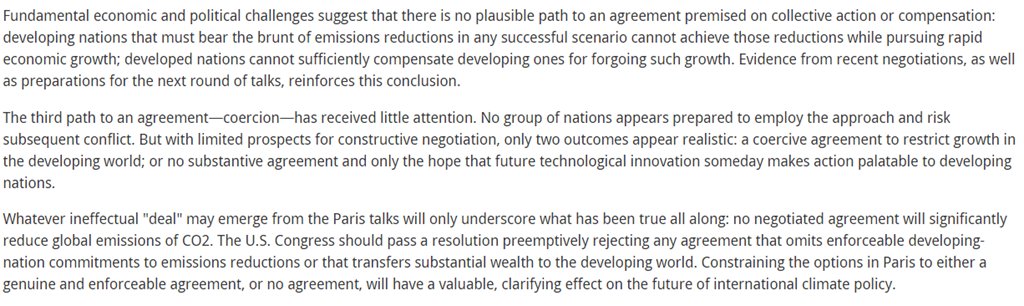
NEW REPORT: The Futility and Farce of Global Climate Negotiations bit.ly/1LvFFv3 http://t.co/TwbFUwaPlm—
Manhattan Institute (@ManhattanInst) October 17, 2015
India's target compared to its recent history http://t.co/pIvwhoSTpL—
Richard Tol (@RichardTol) October 02, 2015
Australia announces its futile carbon emissions target
12 Aug 2015 Leave a comment
in applied price theory, applied welfare economics, environmental economics, global warming, politics - Australia, politics - New Zealand, politics - USA, Public Choice, rentseeking Tags: Australia, China, climate alarmism, climate change treaties, free-riders, game theory, global warming, international free riders, international public goods, public goods

How to argue for doing nothing about global warming when arguing for a climate club enforced by green tariffs!
08 Jun 2015 1 Comment
in environmental economics, global warming, politics - Australia, politics - New Zealand, politics - USA, Public Choice Tags: climate treaties, club goods, free-riders, global warming, green tariffs, international public goods
The best case I’ve seen recently for doing nothing about global warming was put by those arguing with the greatest sincerity and considerable technical skill that the next international climate treaty should be built around a climate club of those that comply with its obligations with green tariffs on those who do not join.
I have long argued that green tariffs are the only reason to do anything about climate change. Much better to collect the revenue ourselves than let it go into the pockets of a foreign taxman.
William Nordhaus has proposed climate clubs as a way of overcoming free riding in international climate negotiations. Specifically, the international climate treaty should authorise members to impose green tariffs on non-members to encourage them to impose their own carbon taxes and carbon emission targets. This has been done before with the Montréal protocol on CFCs. To encourage the phase-out of CFCs countries that did not commit to do so simply could not trade in those goods with members of the club.
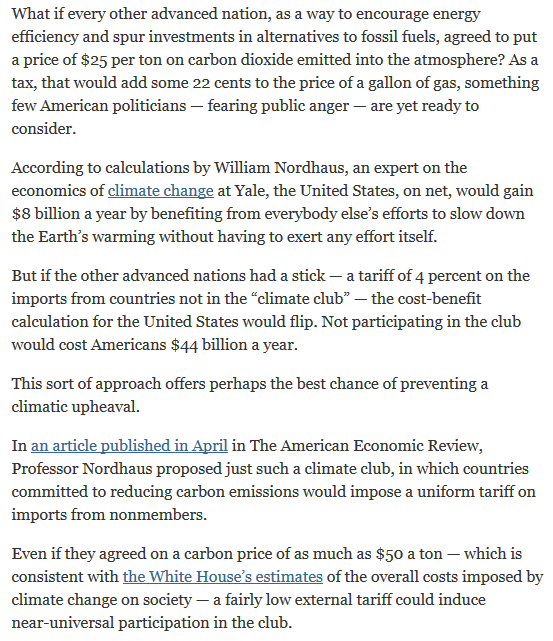
via Climate Deal Badly Needs a Big Stick – NYTimes.com.
4%! A 4% global green tariff is all that is necessary under a climate change treaty that proposes that a carbon price of $50 to apply globally! A 4% green tariff is hardly worth worrying about considering tariffs used to be much much higher than that.
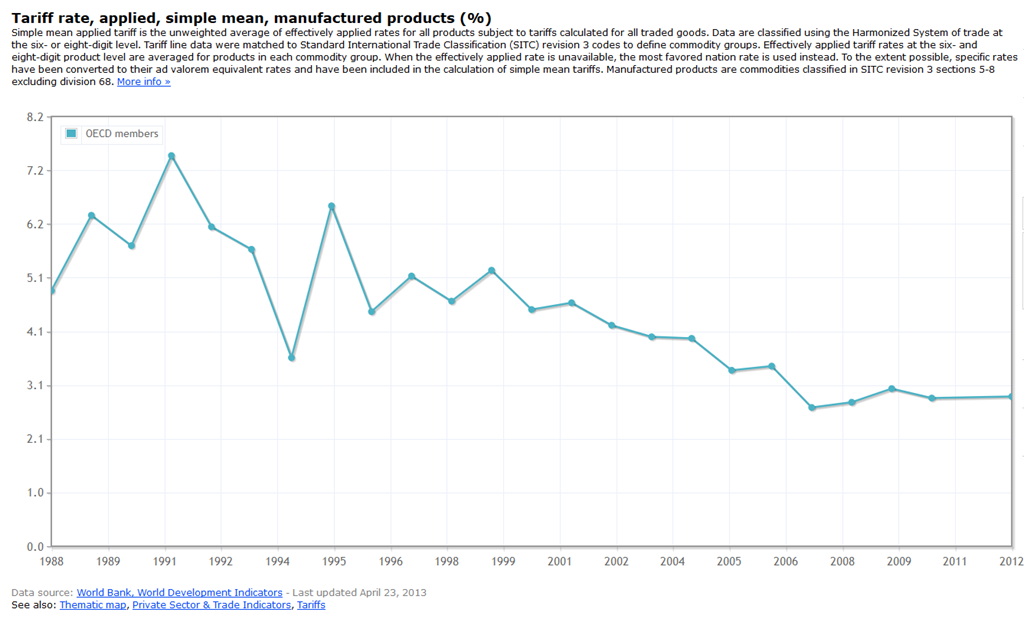
Given all the stories of why woe and doom touted out by the climate alarmists, climate salvation and the keys to environmental heaven should cost much more than 4% tax?! Your sins are forgiven for a 4% green tariff! Big problems such as a climate crisis are not solved with a 4% green tariff.
I think this green tariff of 4% is an own goal. It reinforces the clear message from the economics of climate change that global warming is actually a small economic problem not a large one.
For developed countries, global warming will be at most a minor irritant. For developing countries, their best solution and the solution they have most control over is to develop faster and become a developed country.
What are the incentives to sign a global climate change treaty? Who must sign up to real commitments?
05 Mar 2015 1 Comment
in environmental economics, global warming, international economic law Tags: change treaty, climate alarmism, global climate, global warming, international public goods
 Utopia, you are standing in it!
Recent Comments