Why does Kuwait Exist?
05 Sep 2021 Leave a comment
in defence economics, International law, war and peace Tags: Arab oil crisis, economics of borders, Iraq war, Kuwait, World War I
Was the intelligence about Iraq sexed up?
20 Apr 2020 Leave a comment
in defence economics, war and peace Tags: Atomic weapons, Iraq war
Rand Paul: End America’s War’s
30 Oct 2019 Leave a comment
in defence economics, economics of bureaucracy, International law, politics - USA, Public Choice, war and peace Tags: Iraq war, Syrian Civil War, war against terror, War in Afghanistan
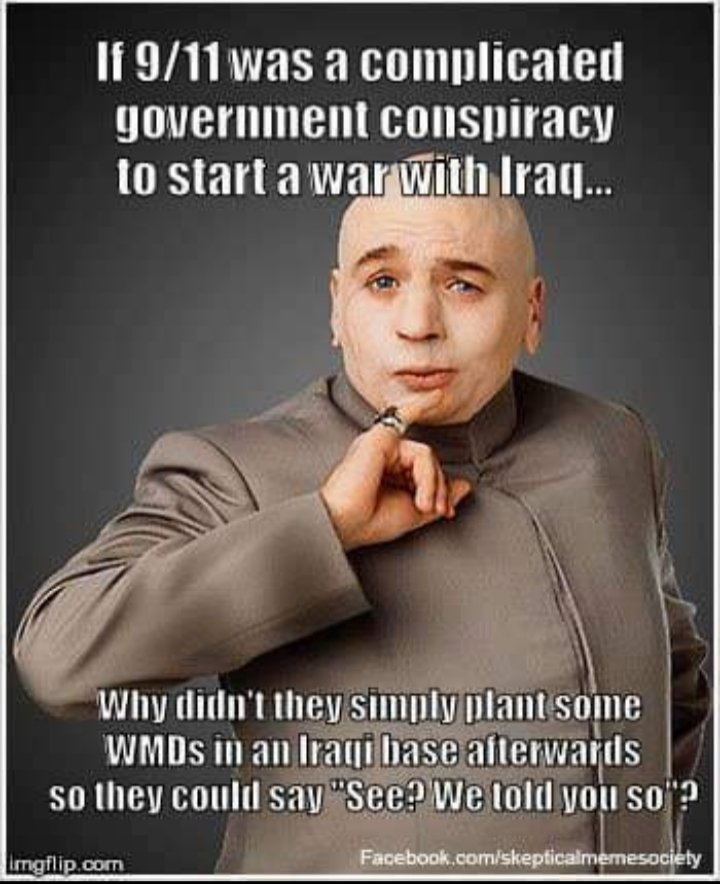
A flaw common to many conspiracy theories
20 Oct 2019 Leave a comment
in defence economics, economics of education, economics of information, economics of media and culture, politics - USA, war and peace Tags: 9/11, conspiracy theories, conspiracy theorists, Iraq war
Conversations With History – Edward N. Luttwak 2007
29 Apr 2019 Leave a comment
in defence economics, development economics, economic history, economics of crime, International law, law and economics, politics - USA, war and peace Tags: Iraq war
Christopher Hitchens – On the fascist “anti-war” movement 2005
23 Apr 2019 Leave a comment
in defence economics, war and peace Tags: Gulf war, Iraq war, war against terror
Christopher Hitchens destroys all popular arguments against Iraq War
13 Apr 2019 2 Comments
in defence economics, economic history, energy economics, laws of war, war and peace Tags: Gulf war, Iraq war
Christopher Hitchens on Michael Moore
04 May 2018 1 Comment
in defence economics, economics of crime, law and economics, movies, television Tags: 9/11 conspiracy theories, Christopher Hitchens, conspiracy theories, Iraq war, Michael Moore, regressive left
Christopher Hitchens | The consequences of ‘anti-war politics’ [2005]
01 May 2018 Leave a comment
in defence economics, laws of war, politics - USA, war and peace Tags: Christopher Hitchens, Gulf war, Iraq war, peace activists
Peace activists didn’t use the knockdown argument against 2nd Iraq war
10 Jul 2016 Leave a comment
in defence economics, war and peace Tags: anti-war movements, British politics, game theory, Iraq, Iraq war, Middle-East politics, mutually assured destruction, nuclear deterrence, peace movements, Syrian Civil War
This idea of suing ministers for abuse of public office has appeal given the gap between many left-wing policies and sound economics.
https://twitter.com/_PaulMonaghan/status/751525929613156352
Anti-war MPs such as Jeremy Corbyn should be sued for abuse of public office and crimes against peace for not making the knockdown argument against the 2nd war against Iraq.
Instead, Corbyn said he did not like war without explaining how this was different from appeasement and surrender. The easiest way to stop a war is to surrender. The easiest way to start a war is to look weak to an aggressor.
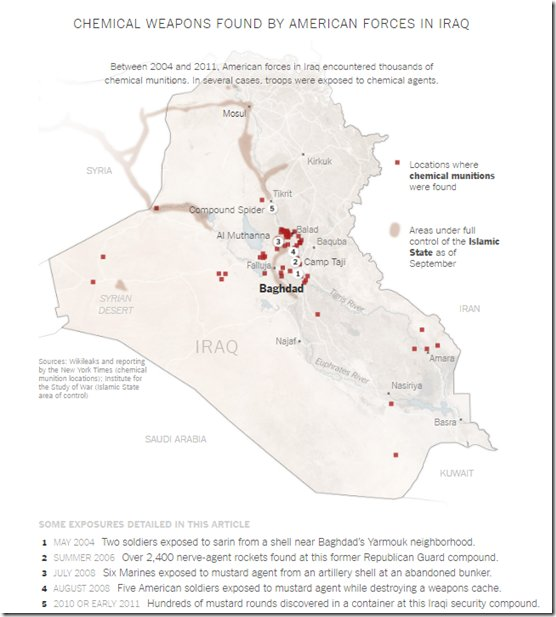
That knockdown argument against the 2nd Iraq war argument was right under the noses of the peace movement. It was yes, Iraq has weapons of mass destruction.

Source: The Secret Casualties of Iraq’s Abandoned Chemical Weapons – The New York Times
It is madness to invade a country that has weapons of mass destruction because they might use them especially if the objective is regime change. Iraq may not have had nuclear weapons, but the potential for Iraq to have biological and chemical weapons secreted away was real.
No one is mad enough to invade North Korea. They will use chemical and biological weapons on Seoul and Tokyo. Syria has chemical and biological weapons to make sure no one invades it.

From what I read, in the current Civil War, Syria uses chemical and biological weapons when it is on the retreat but does not use them to advance and claim new territory.
The reason why the renegade left could not possibly make this obvious argument against the war in Iraq, which was it could be a massive disaster if these chemical and biological weapons were used in desperation, was these peace activists would have to admit nuclear deterrence works. To stop a war by having to admit that weapons of mass destruction deter war was too much for the peace movement to swallow.
An admission that nuclear deterrence works would invalidate the entire political activism of the peace movements in the Cold War. The practical effect of those peace movements was, of course, to undermine the one factor preventing a nuclear war, which was nuclear deterrence.

Since 1945, at least seven or eight wars have occurred where one side had nuclear weapons. In 1973, Israel had nuclear weapons it could have used.

The reason for the non-use of nuclear weapons in those seven or eight wars including the 1973 Yom Kippur War was none were wars of annihilation. Nuclear weapons were more likely to be used if the suspected intention is to invade or occupy a country.
The Yom Kippur war was launched with a plan by President Sadat to reclaim the Sinai then after a few days agreed to an internationally brokered ceasefire. He was intending on reclaiming lost territory, not invading Israel proper continue and risk nuclear retaliation.
Saddam destroyed his nuclear, biological, and weapons but not his weapons development capability soon after he lost the first Iraq war. Saddam played a double strategy: make sure he was not caught with contraband but play a fine game of bluff making everybody think Iraq still has them so he remains a regional strongman.
Saddam could have produced biological and chemical weapons within weeks if he chose to do so but was probably 5 years away from a nuclear weapon. Chilcot’s recent report concluded:
The ingrained belief that Saddam Hussein’s regime retained chemical and biological warfare capabilities, was determined to preserve and if possible enhance its capabilities, including at some point in the future a nuclear capability, and was pursuing an active policy of deception and concealment, had underpinned UK policy towards Iraq since the Gulf Conflict ended in 1991.
The 2nd Iraq war started because Saddam fooled his enemies into thinking he had chemical, biological and nuclear weapons. He certainly had the Japan option. This is having in place the capability to produce weapons of mass destruction such as chemical and biological weapons quickly if he wanted.
Michael Walzer on Just War in Iraq
28 Mar 2016 Leave a comment
in defence economics, economics Tags: Iraq war, just war theory, Micheal Walzer
 Utopia, you are standing in it!
Recent Comments