The Evolution of the 9-Month Fight for Mosul
09 Aug 2017 Leave a comment
in defence economics, war and peace Tags: ISIS, Middle-East politics, war against terror
#YesPrimeMinister approach of @jamespeshaw 2 fighting #ISIS
23 Jun 2016 Leave a comment
in defence economics, economics, politics - USA, war and peace Tags: foreign policy, Iraq, ISIS, New Zealand Greens, Syrian Civil War, war on terror
The Greens this week has decided to offer every support short of real help to those being massacred and brutalised by ISIS
“The NZDF deployment to Iraq does not make us safer, but puts New Zealand troops at risk and makes New Zealanders unnecessary targets of ISIL.
“We condemn the horrific violence of ISIL. New Zealand should be using its leverage as a member of the UN Security Council to curb ISIL’s access to funding and arms, not keeping our troops in danger for another year and a half,” said Mr Shaw.
This is straight out of the Yes Prime Minister episode on how the Foreign & Commonwealth Office explains how it helps foreign nations in trouble from invasion and tyranny. A 4 stage plan on how to do nothing.
In his recent speech before the House of Commons on further assistance to those fighting ISIS since Syria, Labour Party foreign office spokesman Hilary Benn described this as walking to the other side of the road.
Drone strikes on terrorist cell phone users by time of day in Yemen
04 Jun 2016 Leave a comment
in defence economics, war and peace Tags: Al-Qaeda, electronic surveillance, ISIS, Middle-East politics, national security, war on terror
I will worry about terrorists in a more serious way when they stop using their mobile phones. I worry even more when they stop blabbing to everyone at the local mosque about their intentions.
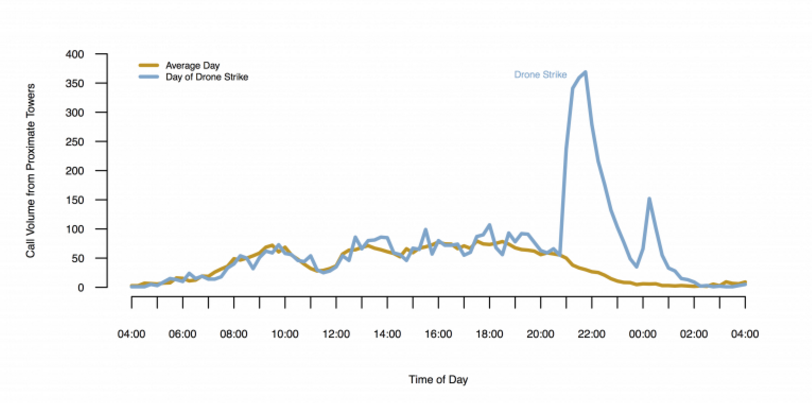
Source: Fotini Christia, Leon Yao, Stephen Wittels, and Jure Leskovec | Seven Things Cell Data Shows About Life In Yemen, Foreign Affairs (July 2015).
![image_thumb[1]](https://utopiayouarestandinginit.com/wp-content/uploads/2016/04/image_thumb110.png "image_thumb[1]")
SIS’s external attacks and ambitions
10 Dec 2015 Leave a comment
in defence economics Tags: ISIS, war on terror
12 ways ISIS gets funding
03 Dec 2015 Leave a comment
in defence economics, war and peace Tags: ISIS
What would be the opening offer of @jeremycorbyn at Syrian Civil War peace talks?
24 Nov 2015 1 Comment
in defence economics, war and peace Tags: British politics, game theory, Iraqi civil war, ISIS, Kurds, Middle-East politics, peace talks, Syrian Civil War, Turkey
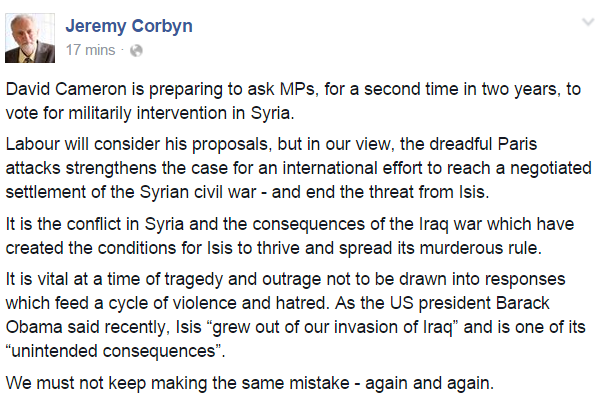
Exactly what would Jeremy Corbyn put on that negotiating table for a comprehensive peace settlement to the Syrian Civil War that:
- would end the military threat from ISIS in Syria, and
- allow the Kurdish succession opposed by all others plus Turkey, Iraq and Russia?
Without the resumption of military strikes as negotiating coin if such peace talks break down, why would anyone fighting on the ground in Syria care about what proposals the Western powers might put up?
The possibility of a temporary cessation in current and intensifying Western military airstrikes is one of the few reasons for the parties to sit down at a negotiating table with the Western powers and Russia if only to string out that cessation of those airstrikes while they regroup and re-equip. The parties to the Syrian Civil War only respect force, not moral authority.

The ability to negotiate a credible peaceful settlement between sovereign states depends on:
- the divisibility of the outcome of the dispute,
- the effectiveness of the fortifications and counterattacks with which an attacker would expect to have to contend, and
- on the permanence of the outcome of a potential war.
Central to any peace talks is that any peace agreement is credible – it will hold and not will not be quickly broken:
A state would think that another state’s promise not to start a war is credible only if the other state would be better off by keeping its promise not to start a war than by breaking its promise.
Peace talks occur only when there something to bargain about. As James Fearon explained,there must be
a set of negotiated settlements that both sides prefer to fighting.
When a war is over territory rather than annihilation of the other side, the challenge is to divide the disputed territory in a way that both are happy to keep the peace settlement rather than come back and fight in a few years.
Civil wars such as those in Syria and Iraq today are grubby affairs in terms of peace talks because of the greater inability to divide what is contested.
Who Does What to Whom in #Syria https://t.co/xO8PJHZwgW—
ian bremmer (@ianbremmer) November 04, 2015
Ending civil wars is even more difficult to make binding commitments because new groups such as ISIS can spring up to replace the signatories to the old peace treaty or introduce new agendas:
…if the constituent groups of a polity are deeply divided and, hence, are unwilling to accept meaningful limitations on the prerogatives of winners of constitutional contests, then civil war can be unavoidable.
Who’s Who at the moment in Syria
21 Nov 2015 Leave a comment
in war and peace Tags: Al-Qaeda, ISIS, Middle-East politics, Syrian Civil War
Do peace talks have a role in wars of annihilation @jeremycorbyn
17 Nov 2015 1 Comment
in defence economics, war and peace Tags: British politics, game theory, ISIS, Middle-East politics, Twitter left, World War I
Peace activists are utterly clueless about what is discussed at peace talks. The ability to negotiate a credible peaceful settlement between sovereign states depends on:
- the divisibility of the outcome of the dispute,
- the effectiveness of the fortifications and counterattacks with which an attacker would expect to have to contend, and
- on the permanence of the outcome of a potential war.
Central to any peace talks is that any peace agreement is credible – it will hold and not will not be quickly broken:
A state would think that another state’s promise not to start a war is credible only if the other state would be better off by keeping its promise not to start a war than by breaking its promise.
Peace talks occur only when there something to bargain about. As James Fearon explained, there must be
a set of negotiated settlements that both sides prefer to fighting
That need for a bargaining range is the fundamental flaw of peace activists. When they call for peace talks, peace activists never explain what will be discussed in a world where everybody is not like them terms of good intentions. What are the possible negotiated settlements that each both side will prefer to continue fighting? Diplomacy is about one side having some control over something the other side wants and this other side have something you want to exchange. In a war, the attacker thinks he can get what it wants to fighting for it.
There were plenty of peace feelers during World War I. World War I came to an end when Germany preferred surrender and disarmament over conquest. Its armies were in full retreat and disarray – revolution was a threat at home
Previous World War I peace feelers failed because each side thought it could gain more by fighting. German peace feelers when they are advancing were premised on keeping what they are taken. When the Germans were retreating, the Germans wanted to go back to the pre-war borders and keep their capability for relaunching the war once they have recouped. The Allies had nothing to gain from allowing Germans simply to withdraw from the fighting intact and regroup, attack again and perhaps win.
When a war is over territory rather than annihilation of the other side, the challenge is to divide the disputed territory in a way that both are happy to keep the peace settlement rather than come back and fight in a few years. Grossman explains:
If the winner of a war would gain control of the entire territory, and if the whole of a contested territory is sufficiently more valuable than the sum of its parts, then, despite the costs and risks of war, promises not to start a war could be not credible, and a peaceful settlement, or at least a peaceful settlement with unfortified borders, would not be possible.
That point about the need for fortified or unfortified borders after a peaceful settlement over contested territory is the ultimate failure of peace activists.
If peace activists truly want peace, rather than victory for the other side, they must prepare for war including fortified borders so that the other side doesn’t dare cross them and start a war. A peace settlement depends upon the ability to divide the contested territory is with or without fortified borders to make a settlement credible:
…despite the costs and risks of war, if a dispute is existential, or, more generally, if the whole of a contested territory is sufficiently more valuable than the sum of its parts, then a peaceful settlement is not possible. A peaceful settlement of a territorial dispute, and especially a settlement that includes an agreement not to fortify the resulting border, also can be impossible if a state thinks, even if over optimistically, that by starting a war it would be able at a small cost to settle the dispute completely in its favour permanently.
Wars of annihilation have a long history. The first two Punic wars were settled by Rome and Carthage. The third was not because the objective of Rome was to destroy Carthage which it did. Rome is decided it simply did not want to have any further wars with Carthage. The only way to ensure that was to destroy that city – level it to the ground. The Arab Israel conflict is another example:
Over the years the Arabs have rejected every proposal for a peaceful settlement that would divide Palestine into a Jewish state and an Arab state, because for the Arabs allowing a Jewish state would be a defeat, not a compromise. The Israelis, however, demand a Jewish state, and they refuse to turn all of Palestine into a single multinational state in which Jews would not make up a large majority of the population. If the dispute between Arabs and Israelis were about the control of tracts of land or sources of water, then a peaceful settlement might have been possible long ago. But, the dispute is about the existence of a Jewish state, and the outcome is indivisible. Is there or is there not to be a Jewish state in Palestine? The answer is either yes or no.
The key guardian of peace and enforcer of peace settlements is the ability of the other side to mount an effective counter-attack if attacked again. If you want peace, you must prepare for war. The loudest champions of a large military budget should be peace activists. Peace activists know, they should know, that a country with a strong military is less likely to be attacked.
If a country is a democracy, it is less likely to start wars and especially with other democracies. If peace activists want more democracies in the world, they should preach capitalism and free trade because countries that are capitalistic become democracies.
Peace activists think that they can make peace just by talking with people. Peace is made by trading with hostile countries to make them depend on you for their prosperity as well as yours. By growing rich through free trade, training partners have less reasons to go to war or otherwise have poor relations with each other or each other’s friends. Trade increases the opportunity cost of starting a war.
Robert Aumann argued well that the way to peace is like bargaining in a medieval bazaar. Never look too keen, and bargain long and hard. Aumann argues that:
If you are ready for war, you will not need to fight. If you cry ‘peace, peace,’ you will end up fighting… What brings war is that you signal weakness and concessions.
Countries are more likely to cooperate if they have frequent interactions and have a long time horizon. The chances of cooperation increase when it is backed by the threat of punishment.
The ability to threaten to hurt is conducive to peace. Disarmament, Aumann argues, “would do exactly the opposite” and increase the chances of war. He gave the example of the Cold War as an example of how their stockpiles of nuclear weapons and fleets of bombers prevented a hot war from starting:
In the long years of the cold war between the US and the Soviet Union, what prevented “hot” war was that bombers carrying nuclear weapons were in the air 24 hours a day, 365 days a year? Disarming would have led to war.
Aumann has quoted the passage from the biblical Book of Isaiah:
Isaiah is saying that the nations can beat their swords into ploughshares when there is a central government – a Lord, recognized by all. In the absence of that, one can perhaps have peace – no nation lifting up its sword against another. But the swords must continue to be there – they cannot be beaten into ploughshares – and the nations must continue to learn war, in order not to fight!
Civil wars such as those in Syria and Iraq today are grubby affairs in terms of peace talks because of the greater inability to divide what is contested.
Who Does What to Whom in #Syria https://t.co/xO8PJHZwgW—
ian bremmer (@ianbremmer) November 04, 2015
Ending civil wars is even more difficult to make binding commitments because new groups such as ISIS can spring up to replace the signatories to the old peace treaty or introduce new agendas:
…if the constituent groups of a polity are deeply divided and, hence, are unwilling to accept meaningful limitations on the prerogatives of winners of constitutional contests, then civil war can be unavoidable.
Detailed map of Syria and Iraq showing which forces hold what territory. bit.ly/1VlPsH2 http://t.co/up3YGV5SGB—
Kenneth Roth (@KenRoth) August 29, 2015
Jihadists and the Nisei soldiers
16 Nov 2015 1 Comment
in economic history, economics of religion, occupational choice, politics - Australia, politics - New Zealand, politics - USA, war and peace Tags: British politics, counter-signalling, economics of oppositional identities, game theory, ISIS, New Zealand Greens, war against terror, World War II
Japanese Americans interned during World War II jumped at the chance to volunteer to fight. They saw it as their last chance to prove their undivided loyalty to their country.
One Japanese father, when saying goodbye to his son, stressed that showing his loyalty to his country, if necessary through the last full measure of devotion was far more important that his returning safely to his family.
The 442nd Combat Regiment Team was the most decorated unit in World War II. Its motto was “Go for Broke”. The 4,000 Nisei soldiers in April 1943 had to be replaced nearly 2.5 times. In total, about 14,000 men served, earning 9,486 Purple Hearts.
Migrants are a cut above regarding initiative and judgement. They pass many of these traits on to their children. These Japanese Americans, both migrants and native born knew that counter-signalling was required. They had to go out of their way to show their loyalty no matter how unfair any suspicions of disloyalty among Japanese Americans might have been at the time.
I am reminded of that counter-signalling by Japanese Americans during the darkest days of World War II when I read the remarks of Julie Anne Genter and Jeremy Corbyn. Both focused their pleas on the need to be inclusive and understanding why people join violent, radical groups. They and the rest of the Twitter Left had nothing to contribute regarding strategies to deter the next attack and disrupt those that are in the planning stage, but that is not new.
The notion that bad behaviour towards minority communities leads to more recruitment to the terrorists is overrated. There will be a few wind-bags who say harsh things after each terrorist attack, but if they cross the line, they will be dealt with by the police and courts in a democracy governed by the rule of law.
Acrimony towards your community following the latest terrorist attacks has little to do with the level of recruitment to these terrorist groups either now or in the past. As Alan Krueger explains:
One of the conclusions from the work of Laurence Iannaccone—whose paper, “The Market for Martyrs,” is supported by my own research—is that it is very difficult to effect change on the supply side. People who are willing to sacrifice themselves for a cause have diverse motivations. Some are motivated by nationalism, some by religious fanaticism, some by historical grievances, and so on. If we address one motivation and thus reduce one source on the supply side, there remain other motivations that will incite other people to terror.
Malcontents join the jihadists today for the same reasons they joined the Red Brigade, the Japanese Red Army Faction and Baader-Meinhof gang in the 1970s and 1980s.
Plenty of young people were attracted to communism in previous generations as a way of sticking it to the man. Now as then economic conditions were good as were political freedoms. Italy, Japan and Germany were all at the peak of recoveries from war. Japanese incomes are doubled in the previous decade. Germany and Italy were rich countries. As Alan Krueger explains:
Despite these pronouncements, however, the available evidence is nearly unanimous in rejecting either material deprivation or inadequate education as important causes of support for terrorism or participation in terrorist activities. Such explanations have been embraced almost entirely on faith, not scientific evidence.
Each generation has its defining oppositional identity. Radical Islam is the oppositional identity of choice for today’s angry young men and women. Mind you, they have to buy Islam for dummies to understand what they’re signing up for.
In previous generations, it was communism, weird Christian sects, eco-terrorism, animal liberationist terrorism and a variety of domestic terrorists of the left and right with conspiratorial motivations. Look at the level of diversity of the angry young men and women on the domestic terrorists list of the FBI. One jihadists when interviewed said that 30 years ago he would probably have become a Communist as his vehicle for venting his frustrations.
There is always an ample supply of troubled and angry people so trying to redress their grievances is overrated as Alan Krueger explains:
…it makes sense to focus on the demand side, such as by degrading terrorist organizations’ financial and technical capabilities, and by vigorously protecting and promoting peaceful means of protest, so there is less demand for pursuing grievances through violent means. Policies intended to dampen the flow of people willing to join terrorist organizations, by contrast, strike me as less likely to succeed.
The current appeal of radical Islam rests on what psychologists call personal significance. The quest for personal significance by these angry young men and women is the desire to matter, to be respected, to be somebody in one’s own eyes and in the eyes of others.
A person’s sense of significance may be lost for many reasons, including economic conditions. The anger can grow out of a sense of disparagement and discrimination; it can come from a sense that one’s brethren in faith are being humiliated and disgraced around the world.
Extremist ideologies, be they communism, fascism or extreme religions are effective in such circumstances because it offers a quick-fix to a perceived loss of significance and an assured way to regain it. It accomplishes this by exploiting primordial instincts for aggression, sex and revenge. MI5’s behavioural science unit found that
“far from being religious zealots, a large number of those involved in terrorism do not practise their faith regularly. Many lack religious literacy and could… be regarded as religious novices.” The analysts concluded that “a well-established religious identity actually protects against violent radicalisation”
Most evidence point to moral outrage, disaffection, peer pressure, the search for a new identity, for a sense of belonging and purpose as drivers of radicalisation. Anthropologist Scott Atran pointed out in testimony to the US Senate in March 2010:
“. . . what inspires the most lethal terrorists in the world today is not so much the Quran or religious teachings as a thrilling cause and call to action that promises glory and esteem in the eyes of friends, and through friends, eternal respect and remembrance in the wider world”. He described wannabe jihadists as “bored, underemployed, overqualified and underwhelmed” young men for whom “jihad is an egalitarian, equal-opportunity employer . . . thrilling, glorious and cool”.
Chris Morris, the writer and director of the 2010 black comedy Four Lions – which satirised the ignorance, incompetence and sheer banality of British Muslim jihadists – said “Terrorism is about ideology, but it’s also about berks”.
#Paris Kurdish forces, backed by U.S. airstrikes, launch offensive in Iraq
14 Nov 2015 Leave a comment
in defence economics, war and peace Tags: ISIS, Paris, war on terror
The Kurds are helping fight #ISIS. Why is Turkey bombing them? nyti.ms/1P6K5ro http://t.co/NH0JYh5NpX—
NYT Graphics (@nytgraphics) August 15, 2015
The expansion of ISIS
12 Nov 2015 Leave a comment
in war and peace Tags: ISIS, Middle-East politics, war on terror
Oil and ISIS
02 Oct 2015 Leave a comment
in energy economics, war and peace Tags: Iraq, Iraqi civil war, ISIS, Middle-East politics, Oil prices, Syria, Syrian Civil War
This map shows where ISIS overlaps with major oil refineries rightrelevance.com/search/article… http://t.co/gDDzKVNAI8—
Cartography & Maps (@CartogRRaphy) September 29, 2015
 Utopia, you are standing in it!
Recent Comments