https://twitter.com/123InfoGraphics/status/562535985205231617
Spot the jihadist translated from French
31 Jan 2015 Leave a comment
in economics of crime, economics of religion, occupational choice, war and peace Tags: France, Jihadists, war on terror
Be Afraid. Be A Little Afraid: The Threat of Terrorism from Western Foreign Fighters in Syria and Iraq | Brookings Institution
14 Jan 2015 Leave a comment
in economics of crime, managerial economics, occupational regulation, organisational economics, personnel economics Tags: Jihadists, war against terror
Complex Model of Foreign Fighter Radicalization

via The Threat of Terrorism from Western Foreign Fighters in Syria and Iraq | Brookings Institution.
Radical Islam is the defining oppositional identity of our generation
13 Jan 2015 Leave a comment
in applied price theory, economics of religion, human capital, occupational choice Tags: economics of oppositional identities, Jihadists, radical Islam
Each generation has its defining oppositional identity.

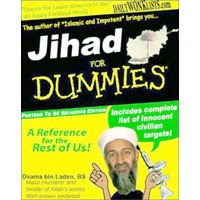
Radical Islam is the oppositional identity of choice for today’s angry young men and women. Mind you, they have to buy Islam for dummies to understand what they’re signing up for in the most crude way.
In previous generations, it was communism, the Red Brigade, weird religious sects, eco-terrorism, animal liberationist terrorism and a variety of domestic terrorists of the left and right with conspiratorial motivations. Look at the level of diversity of the angry young men and women on the domestic terrorists list of the FBI.

Plenty of young people were attracted to communism in previous generations as a way of sticking it to the man.

The appeal of radical Islam Islamic State rests on what psychologists call personal significance. The quest for personal significance by these angry young men and women is the desire to matter, to be respected, to be somebody in one’s own eyes and in the eyes of others.
A person’s sense of significance may be lost for many reasons, including economic conditions. The anger can grow out of a sense of disparagement and discrimination; it can come from a sense that one’s brethren in faith are being humiliated and disgraced around the world.
Extremist ideologies be they communism, fascism or extreme religions are effective in such circumstances because it offers a quick-fix remedy to a perceived loss of significance and an assured way to regain it. It accomplishes this by exploiting primordial instincts for aggression, sex and revenge.
The Islamic State is using a social-networking website to answer mundane questions from aspiring militants. They want answers on what to wear, how cold it gets, access to medical and dental services, if they have to buy their own weapons, whether there is wi-fi, and how soon they can capture women to rape. the answer to the last question is “Dawlah [ISIS] sorts that out”.
The two brothers responsible for the attacks in Paris were known to French intelligence but were not seen as not much of a threat because they were judged to be dope smoking, 30 something has been Jihadists. They were thought by the French intelligence services to have aged out of radical jihad.
The main difference between the two brothers in France and a common garden spree killer is their grievance was given a narrative of radical Islam rather than just the plain old hate that drives other spree killers.
Radical Islam is a magnet for wannabe spree killers who need a support network and a bit of rationalisation to pluck up the courage to kill unarmed people who can’t fight back.
No sleeping-in for wannabe jihadists
28 Nov 2014 Leave a comment
in labour economics, war and peace Tags: economics of oppositional identities, Jihadists
 g
g
Why mass electronic surveillance is so important in the war on terror
10 Oct 2014 1 Comment
in defence economics, war and peace Tags: David Hicks, economics of oppositional identities, electronic surveillance, Jihadists, security and intelligence, war on terror

Islamic Jihadists seem to be a bunch of windbags. First thing they do is tell their friends, acquaintances and everyone down at the local mosque what they plan to do. Out of a spirit of public duty or hope of reward, someone informs the police or their chatter is picked up through electronic eavesdropping.

A surprising number of Jihadists, including Bin Laden’s courier, have been located by listening in on their mum. Jihadists tend to be mummies boys.
 One of the strengths of the Jihadists terrorist networks, their decentralised and spontaneous nature, is also one of their weaknesses. There appears to be no recruitment standards or admission criteria or any other mechanism for screening out the indiscreet and those prone to big talk.
The fact that idiot David Hicks got into Al Qaeda and the Taleban in Afghanistan indicates that they seem to be not in any way suspicious of infiltration.
What the jihadists who bought “Islam for Dummies” tell us about radicalisation
10 Sep 2014 1 Comment
in economics, economics of crime, labour economics, occupational choice Tags: economics of oppositional identities, Jihadists, Terrorism is an occupational choice

Sarwar and Ahmed, who pleaded guilty to terrorism offences, purchased Islam for Dummies and The Koran for Dummies. MI5’s behavioural science unit found that
“far from being religious zealots, a large number of those involved in terrorism do not practise their faith regularly. Many lack religious literacy and could . . . be regarded as religious novices.” The analysts concluded that “a well-established religious identity actually protects against violent radicalisation”
Most evidence point to moral outrage, disaffection, peer pressure, the search for a new identity, for a sense of belonging and purpose as drivers of radicalisation. Anthropologist Scott Atran pointed out in testimony to the US Senate in March 2010:
“. . . what inspires the most lethal terrorists in the world today is not so much the Quran or religious teachings as a thrilling cause and call to action that promises glory and esteem in the eyes of friends, and through friends, eternal respect and remembrance in the wider world”. He described wannabe jihadists as “bored, underemployed, overqualified and underwhelmed” young men for whom “jihad is an egalitarian, equal-opportunity employer . . . thrilling, glorious and cool”.
Chris Morris, the writer and director of the 2010 black comedy Four Lions – which satirised the ignorance, incompetence and sheer banality of British Muslim jihadists – said:
Terrorism is about ideology, but it’s also about berks.
 Utopia, you are standing in it!
Recent Comments