John Cowperthwaite passed this day 2006.
21 Jan 2016 Leave a comment
in development economics, economic history, growth miracles Tags: Hong Kong, John Cowperthwaite
The current-account deficit is a false problem
01 Jul 2014 1 Comment
in applied welfare economics, international economics Tags: capital account surpluses, current account deficits, foreign investment, international trade in savings, John Cowperthwaite
The current account balance equals net foreign investment. When net foreign investment is positive, the current account is in deficit. The current account balance is the result of the international trade in savings and the relative rewards and incentives of investing at home or abroad:
- The current account is in surplus when national saving is greater than net domestic investment; and
- The current account is in deficit when national saving is less than net domestic investment.
New Zealand can import more than it exports courtesy of this foreign investment.
- The difference between exports and imports, or net exports, is the trade balance.
- But for net foreign investment, the trade balance would have to always balance.
For most of the last 20-years, exports have been the same as imports, more or less, so the New Zealand current account deficit has little to do with the level of exports or imports.

A current account could be called a capital account surplus, but this label lacks that certain demonic ring the media laps up. Deficits are bad, surpluses are good. How can a surplus be bad? Who wants to cut a surplus?
John Cowperthwaite solved Hong Kong’s current account problems by not collecting trade statistics. His concern was:
If I let them compute those statistics, they’ll want to use them for planning.
Cowperthwaite refused to collect economic statistics
for fear that I might be forced to do something about them
If New Zealand did not collect trade statistics, would anyone be the worse off? How would we notice?
People knew that unemployment and inflation were a problem long before statistics agencies descended upon us.
The better solutions to unemployment and inflation are rules-based and were developed again long before statistics were collected.
Rules based policy regimes that attempt to stabilise unemployment and inflation often reject discretionary responses to the latest statistical releases.
Indeed, the main focus of rules based policy regimes is to prevent monetary and fiscal policy from becoming an independent source of instability. The secret of inflation targeting is to do as little as possible and not make things worse by doing much more that keeping monetary supply growth in check.
What is the welfare cost of a current account deficit and how does it compare?
- Welfare cost of inflation of 10% is maybe 1-2% of national income; and
- The annual welfare cost of the post-war business cycle is about 1% of national income.
People apparently fear the current account because it may lead to recessions and inflation. But the current account must be a small component of the factors contributing to the welfare cost of inflation and the annual welfare cost of the post-war business cycle.
There are a large number of other factors that cause recessions and and one factor that causes inflation. These must get their share of the 1-2% of national income that is the welfare cost of post-war business cycles and inflation of 10%. Adding up constraints mean that the welfare cost of the current account deficit, if there is such a welfare cost, must be small.
Scobie, Zhang and Makin (2008) found average income gains of $2,600 per New Zealand worker on a cumulative basis from capital inflows over the period 1996 – 2006. International capital mobility allows New Zealand to fund additional investment from external sources which raises wages in New Zealand because there is more technology and capital per worker in New Zealand. To the extent that foreign investment occurs, it raises the amount of capital in a country, driving wages up and profits down.
The current account reflects the relative returns of investing at home and abroad and any consumption smoothing. People save and borrow to smooth out consumption during any temporary ups and downs in their annual incomes.
The current-account balance typically gets worse—moves into deficit—in good times. Reason for this is in good times, people anticipate higher permanent incomes in the future and start spending now before the higher income actually arrives.
New Zealand and Australia based their prosperity on borrowing in anticipation of future increases in production based on exploiting the ample land and natural resources in New Zealand and Australia. This increase of wealth could be spread out over many periods including before it actually arrived because of the ability to borrow in the international credit markets in anticipation of permanently higher future incomes.
John Cowperthwaite, Hong Kong and the dangers of collecting statistics
15 Apr 2014 Leave a comment
in development economics, growth miracles, Milton Friedman, Murray Rothbard Tags: action bias, Hong Kong, illusion of competence, John Cowperthwaite, Milton Friedman
The Colonial Office sent John Cowperthwaite to Hong Kong in 1945 to serve eventually as its financial secretary from 1961.
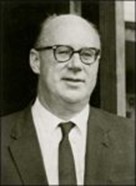
This Scotsman was very much a disciple of Adam Smith. In his first budget speech, in 1961, he said:
In the long run, the aggregate of decisions of individual businessmen, exercising individual judgment in a free economy, even if often mistaken, is less likely to do harm than the centralised decisions of a government, and certainly the harm is likely to be counteracted faster.
In his decade as financial secretary, real wages rose by 50 % and the share of the population in acute poverty fell from 50% to 15%. Milton Friedman met Cowperthwaite in 1963 and asked about the lack of economic statistics. Cowperthwaite answered:
“If I let them compute those statistics, they’ll want to use them for planning.” Friedman thought “How wise”.
Murray Rothbard got into a debate with George Stigler in the early 1960s about the dangers of collecting statistics. Rothbard argued that:
The individual consumer, in his daily rounds, has little need of statistics; through advertising, through the information of friends, and through his own experience, he finds out what is going on in the markets around him. The same is true of the business firm.
The businessman must also size up his particular market, determine the prices he has to pay for what he buys and charge for what he sells, engage in cost accounting to estimate his costs, and so on.
But none of this activity is really dependent upon the omnium gatherum of statistical facts about the economy ingested by the federal government. The businessman, like the consumer, knows and learns about his particular market through his daily experience.
… Statistics are the eyes and ears of the bureaucrat, the politician, the socialistic reformer. Only by statistics can they know, or at least have any idea about, what is going on in the economy.
… Cut off those eyes and ears, destroy those crucial guidelines to knowledge, and the whole threat of government intervention is almost completely eliminated
Cowperthwaite refused to collect economic statistics
for fear that I might be forced to do something about them
This action bias is a common bias of bureaucracies. Peter Lilley in the UK said:
…when there is a problem – a perceived political problem – officials come up with a range of options which excludes one option. I observed this when I was a humble PPS at the Department of Environment and suggested that we always ought to include this option on the list and it became known as “Lilley’s option” and that was do nothing.
Other psychological biases of bureaucracies are motivated reasoning, the focusing illusion, the affect heuristic and the illusion of competence. When Friedman asked him in 1963 to explain the mechanism which kept the Hong Kong dollar pegged to the pound, Cowperthwaite said that the Hong Kong & Shanghai Bank (through which the currency peg was operated) did not understand it:
Better they shouldn’t. They would mess it up.
His 2008 Guardian obituary noted that when asked what was the key thing that poor countries should do, Cowperthwaite once remarked:
They should abolish the office of national statistics.
The ideal faceless bureaucrat, Cowperthwaite said of his record:
I did very little. All I did was to try to prevent some of the things that might undo it.
.
 Utopia, you are standing in it!
Recent Comments