The Midnight Oil song was true.
Generals launched attacks on Armistice Day in full knowledge that the 11 am. truce had been agreed unofficially up to two days before. The Germans finally signed the armistice at 5:10 a.m. on the morning of the 11th November.
- The records of Commonwealth War Graves Commission shows that 863 Commonwealth soldiers died on 11 November 1918 – this figure includes those who died of wounds received prior to November 11.
- The Americans took 3,300 casualties on the last day of the war.
The last American soldier killed was Private Henry Gunter who was killed at 10.59 a.m. – the last man to die in World War One. His divisional record stated:
Almost as he fell, the gunfire died away and an appalling silence prevailed.
General Pershing supported commanders who wanted to be pro-active in attacking German positions on the last day of the war.
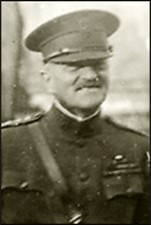
Pershing stated at 1919 Congressional hearings that although he knew about the timing of the Armistice, he simply did not trust the Germans to carry out their obligations.
Pershing also pointed out that his orders of the Allies Supreme Commander, Marshal Ferdinand Foch, to
pursue the field greys (Germans) until the last minute
Pershing found the idea of an armistice repugnant. He maintained:
Germany’s desire is only to regain time to restore order among her forces, but she must be given no opportunity to recuperate and we must strike harder than ever.
As for terms, Pershing had one response:
There can be no conclusion to this war until Germany is brought to her knees.
Pershing said that conciliation now would lead only to a future war. He wanted Germany’s unconditional surrender. He insisted that Germany must know that it was fully defeated in the field of battle rather than betrayed from within.
When presented with the terms of the 1919 Treaty of Versailles, several German governments resigned.
France started to remobilise before Germany finally accepted the Treaty. The Treaty was somewhat harsher than the German Foreign Office anticipated.
A blow by blow account of the six-months of treaty negotiations is in Margaret MacMillan Paris 1919: Six Months That Changed the World 2002 who showed that:
- real defeat was not brought home to the German people,
- the power of the peacemakers was limited,
- they were not responsible for the fragmentation of Europe which was already happening,
- the blockade did not starve Germany,
- neither the Versailles treaty nor France was vindictive,
- reparations were not crushing,
- the treaty was not enforced with any consistency, and it did not seriously restrict German power, and
- The Versailles treaty was not primarily responsible for either the next twenty years or for World War II.
The high-minded efforts of the Paris negotiators were doomed as some of them realised. Lloyd George wrote:
It fills me with despair the way in which I have seen small nations, before they have hardly leapt into the light of freedom, beginning to oppress other races than their own.
 Utopia, you are standing in it!
Recent Comments