Few labour markets statistics make much sense unless broken down by gender.
Women working full-time, year-round jobs earned 78.6% of what similar men did in 2014 on.wsj.com/1KlsIC8 http://t.co/amouJSkPMr—
Real Time Economics (@WSJecon) September 19, 2015
Wages growth is no exception with female wages growth quite good for a long period of time after the 1970s – a period in which male earnings stagnated.
The beginning of male wage stagnation seemed to coincide with the closing of the gender wage gap.
U.S. wage growth doesn't look as weak when you account for benefit costs covered by employers on.wsj.com/1JJ2EmV http://t.co/s0tJutTjBy—
Nick Timiraos (@NickTimiraos) July 06, 2015
Presumably if men were previously profiting from patriarchy, that should have some implications for future wage growth and promotions for men as women catch up.
Presumably if men were previously profiting from patriarchy, that should have some implications for future wage growth for men as women catch up. Men lost the wage premium they previously earned from the sex discrimination directly in hiring, wage setting and promotions and investing in more education because they expected to be discriminated favourably at the expense of women.
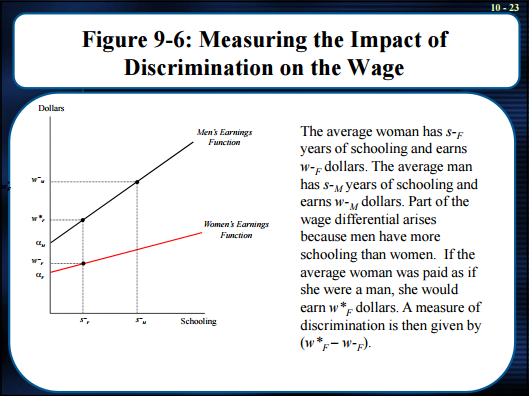
Not surprisingly the convergence in the male-female wage ratios started in the 1970s which was the decade that male wage stagnation started.

The gender wage gap started converging again also pretty much in lockstep with the top 1% starting to grab higher and higher proportions of income.
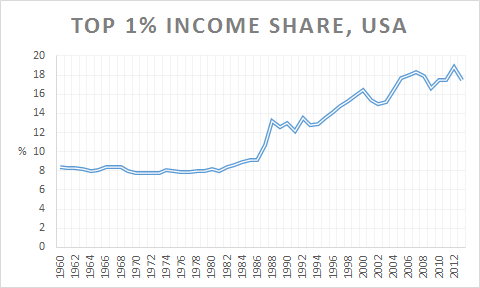
Source: Alvaredo, Facundo, Anthony B. Atkinson, Thomas Piketty and Emmanuel Saez, The World Top Incomes Database.
 Utopia, you are standing in it!
Recent Comments