Arab Spring revisited—the battle for democracy in Egypt
25 Jan 2017 Leave a comment
in constitutional political economy, development economics Tags: Egypt, Middle-East politics

Nuclear proliferation in the Middle East
28 Nov 2016 Leave a comment
in defence economics Tags: Middle-East politics, nuclear proliferation
.@DrJillStein wants Assad win #SyrianCivilWar #usefulidiots #peaceoffensive
17 Oct 2016 Leave a comment
in defence economics, politics - USA, war and peace Tags: 2016 presidential election, Leftover Left, Middle-East politics, Syrian Civil War

Source: Stein Opposes Obama’s Troops on the Ground in Syria – Jill2016 via The Strange Sympathy of the Far Left for Putin
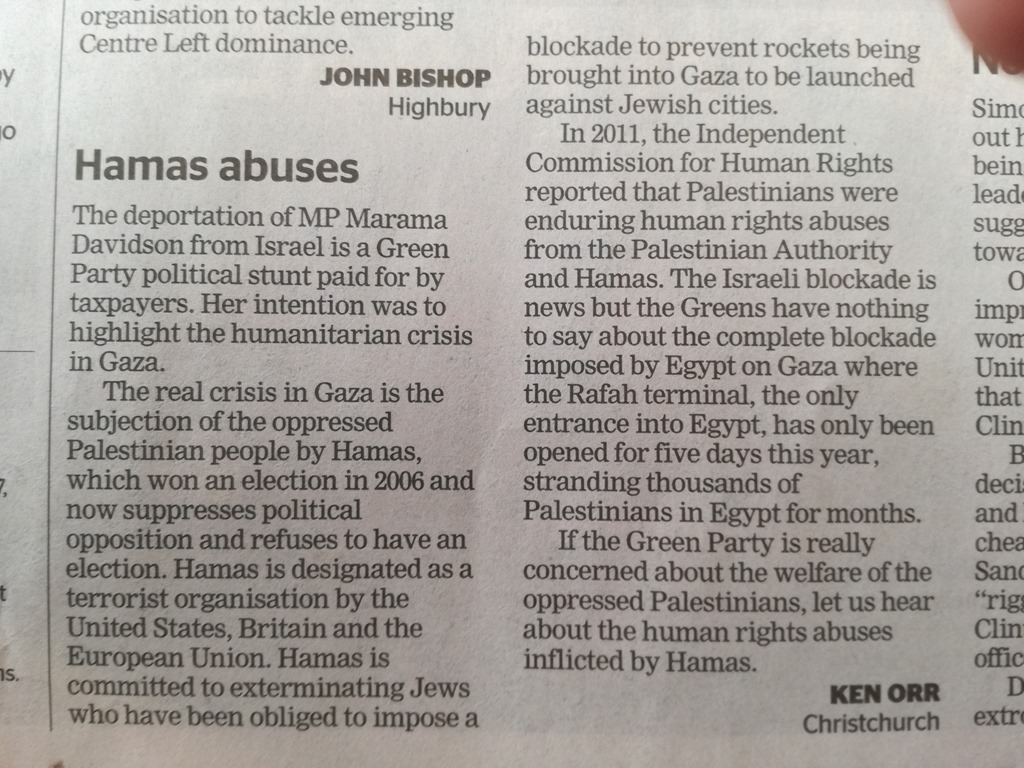
#WomensBoatToGaza @MaramaDavidson silent on Hamas rocket attacks
11 Oct 2016 Leave a comment
in defence economics, laws of war, politics - New Zealand, war and peace Tags: Gaza Strip, Hamas, Israel, Left-wing hypocrisy, Middle-East politics, New Zealand Greens
Would ceasefires have shortened WWII? The American Civil War? #Syrianconflict
22 Sep 2016 Leave a comment
in defence economics, politics - USA, war and peace Tags: American Civil War, game theory, Middle-East politics, Syrian Civil War, World War II
Edward Luttwak in his essay Give War a Chance speculated that if there was a United Nations in the 1860s, there would still be UN peacekeepers stationed between the warring Union and Confederate troops on the Mason Dixon line as of this day.
If you can work out a way in which ceasefires would have shorten World War II in either the European or Pacific theatres, you have got a better crystal ball than me.
There were long interludes on the Western front; several years in which the Nazis fortified the French beaches while the Allies built up their invasion force in England. For all practical purposes, there is a land-forces ceasefire from Dunkirk to D-Day across the English Channel.
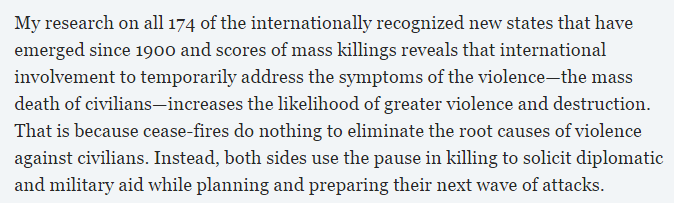
Luttwak wrote that cease-fires permit space for both sides to heal while only intensifying and prolonging the struggle once the cease fire ends — and it almost always ends.
This was true in the Arab-Israeli War of 1948-1949. It is true of the dozen of ceases fires in Gaza negotiated by the Security Council. It was true of all the cease-fires that failed in the fall of Yugoslavia with Serbs, Croats, and Bosnians who negotiated month-long cease fires where
John Stevenson studied 170 ceasefires. He pretty much vindicated the position that each side uses the lull in the fighting to regroup, rebuild and reinforce when for when the fighting starts again.
Ceasefires are perplexing in the many sided civil war in Syria. Aside from the Kurds, it is hard to work out who you want to win.
The Kurds just want to be left alone with their own country.
But Turkey is not happy about that prospect nor is Iraq.
A useful guide to Who's Who in the Syrian Civil War. And how many fighter they have.
Chart by @EP_ThinkTank https://t.co/oGbN4A67w0—
Paul Kirby (@paul1kirby) February 09, 2016
You can work out who you want to lose territory but as for who might replace them, maybe the free Syrian army is a bit of an improvement.
Who's Fighting in Syria
(or: Why more intl focus won't fix this) https://t.co/RLo7kTtyK5—
ian bremmer (@ianbremmer) November 15, 2015
There will be a bloodbath in reprisals if any of the other sides win apart from the Kurds. The Kurds are only willing to fight as far into Syria as they need to defend their own territory.
HYPOCRISY OVER GAZA
09 Sep 2016 Leave a comment
in defence economics, liberalism Tags: Gaza Strip, Middle-East politics
Bill Maher on the U.N. & Israel
19 Aug 2016 Leave a comment
in defence economics, economics, economics of crime, law and economics Tags: Israel, Left-wing hypocrisy, Middle-East politics, UN, war on terror
“Gaza is a concentration camp”? check out #ThankyouHamas video
10 Aug 2016 Leave a comment
in defence economics, development economics, economics Tags: Gaza Strip, Hamas, Middle-East politics, war on terror
@NZGreens very sane compared to @DrJillStein @GreenPartyUS
08 Aug 2016 1 Comment
in defence economics, laws of war, politics - New Zealand, politics - USA, war and peace Tags: 2016 presidential elections, Left-wing hypocrisy, Middle-East politics, peace movements, Syrian Civil War, useful idiots
Jill Stein managed to denounce American imperialism without mentioning the invasion of the Crimea and Russian intervention in the Syrian Civil War to prop up the old regime.
Stein is what Orwell called a renegade liberal. Progressives hunt the world for dictators to worship. As George Orwell said in 1941
Pacifism is objectively pro-Fascist. This is elementary common sense. If you hamper the war effort of one side you automatically help that of the other. Nor is there any real way of remaining outside such a war as the present one. In practice, ‘he that is not with me is against me’.
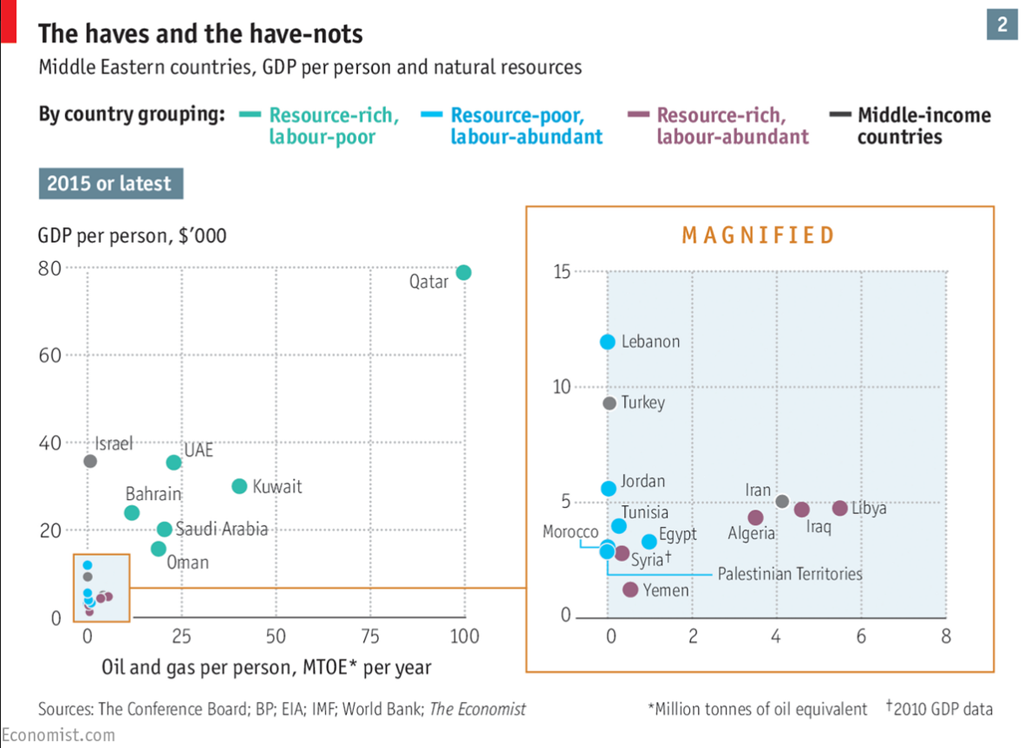
The haves and have-nots in the Middle East
11 Jul 2016 Leave a comment
in development economics Tags: Middle-East politics, Oil prices, resource curse
Peace activists didn’t use the knockdown argument against 2nd Iraq war
10 Jul 2016 Leave a comment
in defence economics, war and peace Tags: anti-war movements, British politics, game theory, Iraq, Iraq war, Middle-East politics, mutually assured destruction, nuclear deterrence, peace movements, Syrian Civil War
This idea of suing ministers for abuse of public office has appeal given the gap between many left-wing policies and sound economics.
https://twitter.com/_PaulMonaghan/status/751525929613156352
Anti-war MPs such as Jeremy Corbyn should be sued for abuse of public office and crimes against peace for not making the knockdown argument against the 2nd war against Iraq.
Instead, Corbyn said he did not like war without explaining how this was different from appeasement and surrender. The easiest way to stop a war is to surrender. The easiest way to start a war is to look weak to an aggressor.
That knockdown argument against the 2nd Iraq war argument was right under the noses of the peace movement. It was yes, Iraq has weapons of mass destruction.
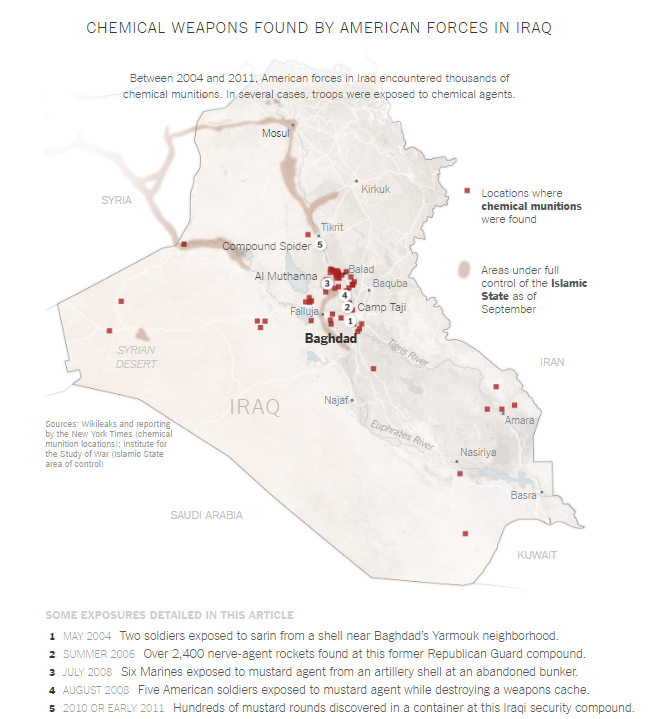
Source: The Secret Casualties of Iraq’s Abandoned Chemical Weapons – The New York Times
It is madness to invade a country that has weapons of mass destruction because they might use them especially if the objective is regime change. Iraq may not have had nuclear weapons, but the potential for Iraq to have biological and chemical weapons secreted away was real.
No one is mad enough to invade North Korea. They will use chemical and biological weapons on Seoul and Tokyo. Syria has chemical and biological weapons to make sure no one invades it.

From what I read, in the current Civil War, Syria uses chemical and biological weapons when it is on the retreat but does not use them to advance and claim new territory.
The reason why the renegade left could not possibly make this obvious argument against the war in Iraq, which was it could be a massive disaster if these chemical and biological weapons were used in desperation, was these peace activists would have to admit nuclear deterrence works. To stop a war by having to admit that weapons of mass destruction deter war was too much for the peace movement to swallow.
An admission that nuclear deterrence works would invalidate the entire political activism of the peace movements in the Cold War. The practical effect of those peace movements was, of course, to undermine the one factor preventing a nuclear war, which was nuclear deterrence.

Since 1945, at least seven or eight wars have occurred where one side had nuclear weapons. In 1973, Israel had nuclear weapons it could have used.

The reason for the non-use of nuclear weapons in those seven or eight wars including the 1973 Yom Kippur War was none were wars of annihilation. Nuclear weapons were more likely to be used if the suspected intention is to invade or occupy a country.
The Yom Kippur war was launched with a plan by President Sadat to reclaim the Sinai then after a few days agreed to an internationally brokered ceasefire. He was intending on reclaiming lost territory, not invading Israel proper continue and risk nuclear retaliation.
Saddam destroyed his nuclear, biological, and weapons but not his weapons development capability soon after he lost the first Iraq war. Saddam played a double strategy: make sure he was not caught with contraband but play a fine game of bluff making everybody think Iraq still has them so he remains a regional strongman.
Saddam could have produced biological and chemical weapons within weeks if he chose to do so but was probably 5 years away from a nuclear weapon. Chilcot’s recent report concluded:
The ingrained belief that Saddam Hussein’s regime retained chemical and biological warfare capabilities, was determined to preserve and if possible enhance its capabilities, including at some point in the future a nuclear capability, and was pursuing an active policy of deception and concealment, had underpinned UK policy towards Iraq since the Gulf Conflict ended in 1991.
The 2nd Iraq war started because Saddam fooled his enemies into thinking he had chemical, biological and nuclear weapons. He certainly had the Japan option. This is having in place the capability to produce weapons of mass destruction such as chemical and biological weapons quickly if he wanted.
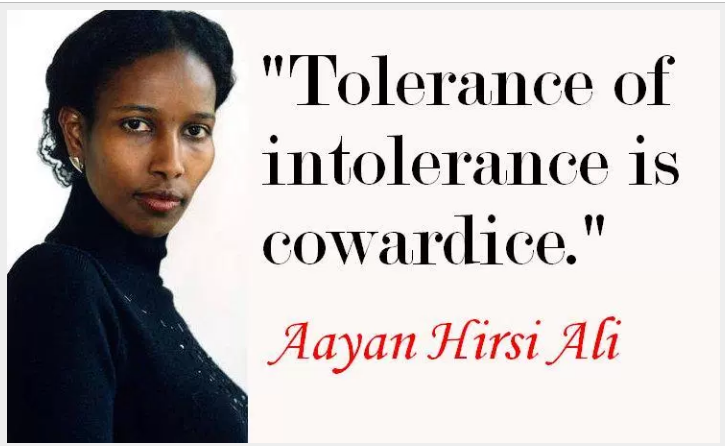
A Conversation With Ayaan Hirsi Ali
23 Jun 2016 Leave a comment
in defence economics, liberalism, libertarianism Tags: Age of Enlightenment, free speech, Middle-East politics, political correctness, religious tolerance, war against terror
Tony Benn v Hilary Benn on war votes
22 Jun 2016 Leave a comment
in defence economics, war and peace Tags: just wars, Middle-East politics
Gaza’s border with Egypt? #EndGazaBlockade
04 Jun 2016 Leave a comment
in defence economics, laws of war, war and peace Tags: Egypt, Gaza blockade, Gaza Strip, Israel, Middle-East politics, war against terror
Oxfam inadvertently left the neighbour on the western border of Gaza off the map in its YouTube clip but not on its eastern border. An honest mistake despite the Arab Spring drawing the attention of Egypt and its politics to everyone’s ears including ODA activists.

The Gaza Strip has two borders: both Egypt and Israel restrict trade with the Gaza. Through this honest mistake in map reading, Oxfam blames Gaza’s problems on the Israeli blockade. I am sure it will correct its position once it reads a map such as the one adjacent which is identical to that in its YouTube clip in all but one detail. It has all of the Gaza’s neighbours on it.
We're currently helping ~700k people in #Gaza affected by Israeli blockade: oxf.am/gaza-crisis #EndGazaBlockade https://t.co/4BWdGDqo2F—
Oxfam International (@Oxfam) June 04, 2016
Any blockade of Israel of the Gaza Strip is not grounds to attack Israel because it can always trade across its border with Egypt but Hamas backed the wrong side in the recent Egyptian presidential election.
After the military coup, the military leaders closed 95% of the tunnels that connected Egypt to Gaza. In 2013-2014, Egypt’s military has destroyed most of the 1,200 tunnels which were used to smuggle food, weapons and other goods into Gaza, including flooding them with sewage. Egypt is setting-up a 13-mile buffer zone with the Gaza Strip. The includes clearing 10,000 residents from 800 houses.
Hamas derived 40% of its tax revenue from tariffs on goods that flow through those tunnels with Egypt. One estimate puts the economic losses at nearly a fifth of Gazan GDP.
The Israeli blockade of the Gaza may have something to do with Gaza firing missiles randomly at civilian targets in Israel. Hamas now murders Israeli citizens in the street in knife attacks.
The Gaza strip may have political differences with the Egyptian military dictators but it is not actually committing acts of war against them.
There is no good reason why Oxfam is not protesting against Egypt’s blockade of the Gaza in the same way they protest against breaches of international law involved in the Israeli blockade!Passing references to the Egyptian blockade in press releases is not enough.
No peace convoys attempt to break the Egyptian blockade. Plenty were launched against Israel. One reason is the Egyptians are rough customers. There is rule of law in Israel, none in Egypt.
 Utopia, you are standing in it!
Recent Comments