Yes Prime Minister, opinion polls and leading questions
17 Aug 2016 Leave a comment
in economics, economics of information, economics of media and culture, television Tags: opinion polls, voter demographics, Yes Prime Minister
Aggregated polling – Australian Federal Election
04 Feb 2016 Leave a comment
in politics - Australia Tags: Australia, opinion polls
Malcolm Turnbull sure is popular
27 Oct 2015 Leave a comment
in politics - New Zealand, Public Choice Tags: Australia, expressive voting, opinion polls, rational ignorance, rational irrationality, voter demographics
https://twitter.com/Mark_Graph/status/658769666748346368/photo/1
All the bookies I follow now giving the Coalition >80% #auspol bit.ly/1GwJgc4 https://t.co/2y3iPBnnnn—
Mark the Graph (@Mark_Graph) October 23, 2015
Peak Trump?
02 Oct 2015 Leave a comment
Donald Trump's drop in the polls related to a drop in media coverage. (cc @TheFix). washingtonpost.com/blogs/monkey-c… http://t.co/5uQMyJ1Lhj—
The Monkey Cage (@monkeycageblog) September 29, 2015
Trigger warning for American political junkies: latest US presidential polling
25 Sep 2015 Leave a comment
in politics - USA, Public Choice Tags: 2016 presidential election, expressive voting, opinion polls, rational ignorance, rational rationality, voter demographics
Here's @pollsterpolls avg since 6/1, w/ less smoothing. 2-pt drop for Trump. Not yet clear whether there's a trend. http://t.co/vrwXNC6hlo—
The Monkey Cage (@monkeycageblog) September 24, 2015
Here's some actual evidence on whether voter anger is helping "outsider" candidates. washingtonpost.com/blogs/monkey-c… http://t.co/RaragjjStV—
The Monkey Cage (@monkeycageblog) September 16, 2015
Ben Carson's decline and then surge in the polls tracks media attention. washingtonpost.com/blogs/monkey-c… http://t.co/mrddJMMAc0—
The Monkey Cage (@monkeycageblog) September 03, 2015
Another key graph: news coverage of Trump hasn't really become more negative. For more: washingtonpost.com/blogs/monkey-c… http://t.co/p8KpVcUlGd—
The Monkey Cage (@monkeycageblog) August 28, 2015
Here's a new graph of Trump's poll numbers and share of news coverage. For more see: washingtonpost.com/blogs/monkey-c… http://t.co/sdJCQCs5O5—
The Monkey Cage (@monkeycageblog) August 28, 2015
Trump has lost 9-points since debate. Rubio, Fiorina and Carson surge.
12 Aug 2015 Leave a comment
in politics - USA, Public Choice Tags: 2016 presidential election, opinion polls, voted demographics
My tip is a President Rubio and Vice President Fiorina or vice a versa.
A look at how @realDonaldTrump is running his unconventional campaign: on.wsj.com/1P5iV49 http://t.co/qXZ6VuGMUW—
Nick Timiraos (@NickTimiraos) August 12, 2015
Some basics about opinion polls and polling results
03 Aug 2015 Leave a comment
in applied price theory, econometerics, Public Choice Tags: data mining, media bias, opinion polls, sampling errors, statistics, voter demographics
Common mistakes in polling and poll results, from PhD Comics…. phdcomics.com/comics.php http://t.co/JIvuPqFVRs—
(@SocImages) August 02, 2015
The shy Tory voter versus the shy Labour voter (waiting for those hard left policies) – updated
09 May 2015 1 Comment
in constitutional political economy, politics - Australia, politics - New Zealand, politics - USA, Public Choice Tags: British general election, British Labour Party, expressive voting, Leftover Left, New Zealand general election, New Zealand Labour Party, opinion polls, rational ignorance, rational irrationality, UK politics, voter demographics
The go left young man, go left strategy is a view of many in the Labour Party in New Zealand, Australia and the UK is if they present hard left policies to the electorate, they will mobilise many more votes from people who are currently don’t vote or who are mysteriously parking their vote with the Tory party or other centre parties.

Michael Foot’s attempt at to get out shy Labour voters with a hard left campaign in the 1983 British general election, which lead to his manifesto earning the title the longest suicide note in history.
The eight foot high stone monolith Ed Miliband planned to erect in the garden of number 10 Downing Street, if he could get planning permission, was dubbed the heaviest suicide note in history.
The heaviest suicide note in history http://t.co/1xDQlnnWU7—
Phil Rodgers (@PhilRodgers) May 03, 2015
The New Zealand Labour Party went left at the 2014 general election and for its troubles earned its lowest party vote since the party was founded in 1919.
Central to the strategy of the New Zealand Labour Party in the 2014 general election was mobilising non-voters in their working-class electorates.

The median voter theorem be dammed! The New Zealand Labour Party in the 2014 general election honestly believed that hard left policies would induce these non-voters to vote.
These non-voters are called the missing million by the New Zealand left . Almost one million people did not vote in 2014; 250,683 were not enrolled, while 694,120 were enrolled but did not turn out to vote. Many of these voters were thought to be just parking their vote pending the arrival of true believers to lead the Labour Party if the Left over Left is to be believed! Many of these non-voters are younger voters who generally are more likely to vote left.
The Internet – Mana party also spent an immense amount of the $4 million donated by Kim.com in trying to turn out to the youth voter as well.
Chris Trotter was wise and prophetic on go left young man, go left and the shy Labour voters will come:
[T]he Left has been given an extraordinary opportunity to prove that it still has something to offer New Zealand …..
If Cunliffe and McCarten are allowed to fail, the Right of the Labour Party and their fellow travellers in the broader labour movement (all the people who worked so hard to prevent Cunliffe rising to the leadership) will say:
“Well, you got your wish. You elected a leader pledged to take Labour to the Left. And just look what happened. Middle New Zealand ran screaming into the arms of John Key and Labour ended up with a [pitiful] Party Vote …
So don’t you dare try peddling that ‘If we build a left-wing Labour Party they will come’ line ever again! You did – and they didn’t.”
Be in no doubt that this will happen – just as it did in the years after the British Labour Party’s crushing defeat in the general election of 1983. The Labour Right called Labour’s socialist manifesto “the longest suicide note in history” and the long-march towards Blairism … began.
The most obvious flaw in the missing million and non-voter argument where they are waiting for true believers to offer hard left policies is a countries with much higher rates of voter turnouts and compulsory voting are not more likely to have left-wing governments.
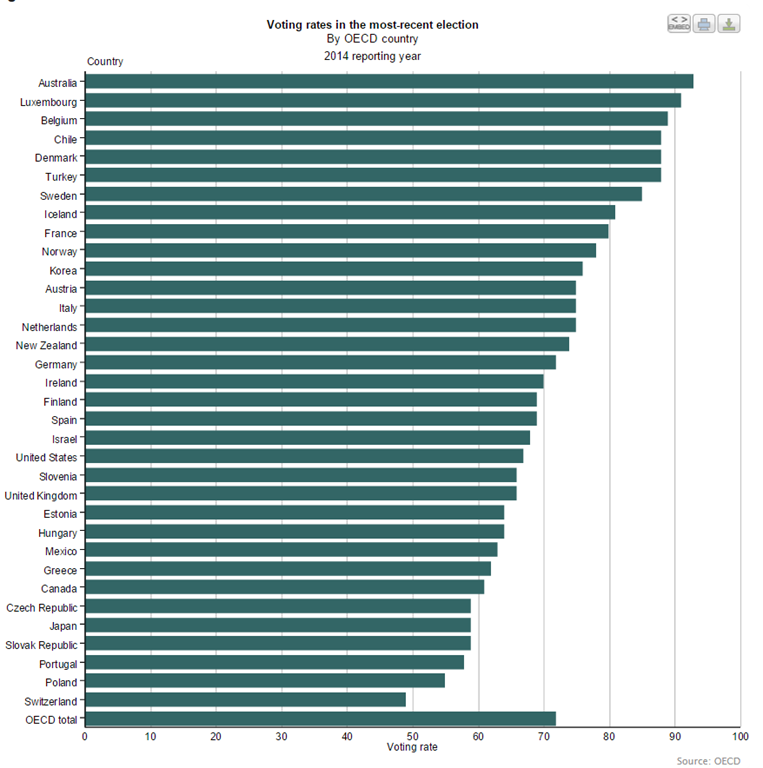
There is much more evidence of shy Tory voters rather than shy Labour voters.
Shy Tory voters is a name invented by British opinion polling companies in the 1990s. The share of the vote won by the Tories in elections was substantially higher than the proportion of people in opinion polls who said they would vote for the party.
The final opinion polls gave the Tories between 38% and 39% of the vote – 1% behind the Labour Party. In the final results, the Conservatives had a lead of 7.6% over Labour and won their fourth successive general election.
Because of this turnout of shy Tory voters, the Tories won 3 million more votes than the Labour Party. This 14 million votes was more votes than they or any other British political party is ever won in a British general election, breaking the record set by Labour in 1951.
In a subsequent marketing research port, it was found a significant number of Tory party supporters refusing to disclose their voting intentions both the opinion poll companies, and exit polls.
This shy Tory factor is so large that opinion poll companies attempt to account for it in the weights they assign in their opinion polls surveys.
One of the explanations behind the turnout of the shy Tory vote in the 2015 British general election was a fear that a Labour Party minority government would be be holding to the hard left Scottish nationalists.
A number of British media commentators talked about running into many ordinary people expressing that very fear and they were undecided voters. About 20% of British voters were undecided on the eve the election, which is an unusually high amount.
Ironically, Neil Kinnock, the British Labour Party leader in the 1992 election, warned of a shy Tory factor a few days before the current British general election.
Tony Blair was much blunter a few months before the British general election about the relevance of the median voter theorem to British politics and the future of the British Labour Party. The most electorally successful politician in Labour history said that May’s general election risks becomes one in which a
traditional left-wing party competes with a traditional right-wing party, with the traditional result.
Asked by the Economist magazine if he meant that the Conservatives would win the general election in those circumstances, Mr Blair replied: “Yes, that is what happens.”
The post-mortem by the New Statesman called “10 delusions about the Labour defeat to watch out for” equally blunt about the role of Tony Blair in rescuing British labour from permanent oblivion:
Many of your drinks will be prompted by variations on this perennial theme. Labour accepted the austerity narrative. Labour weren’t green enough. Labour weren’t radical (which has somehow come to be used as a synonym for left-wing).
Given that the last time Labour won an election without Tony Blair was 1974 it’s hard to believe people still think the answer is to move left. But people still do. I sort of love these people for their stubbornness. But I don’t want them picking the next leader.
The shy Tory vote stirred by the fears of a hard left government happened in the 2014 New Zealand general election. On the Monday night for the election that Saturday, the Internet – Mana party board had an hour of television for their Moment of Truth. This included Edward Snowden beamed in from Moscow put forward a whole range of bizarre conspiratorial theories about NASA surveillance of New Zealand and analysis by base in Auckland.
David Farrar reported that in Tuesday night opinion polling, the National party’s party vote rose from 44% to 47%. In the subsequent general election that Saturday, the national party led all night for the first time. It won as many votes as it did in the previous election when it was expected to lose votes because the national party government was going into its third term.
One reason for shy Tory voters is expressive voting. People obtain more sense of identity by proclaiming themselves to be a left-wing voter than they do from saying that they are a right-wing voter.
The expressive aspect of voting is “action that is undertaken for its own sake rather than to bring about particular consequences” (Brennan and Lomasky 1993, 25). There is almost never a causal connection between an individual’s vote and the associated electoral outcome. Hence, a vote is not disciplined by opportunity cost.

With no opportunity cost of how you vote in terms of deciding the outcome, people vote expressively to affirm their identity. Voting is about who and what you boo and cheer for and how you present yourself to the world.

Through the fatal conceit and the pretence to knowledge, a left-wing vote allows people to identify with doing good and changing the world for the better. No point in voting that way if you don’t go around thumping your chest proclaiming yourself as doing good for others by voting Left including telling the truth to polling companies.
The shy Tories factor in British opinion polling
08 May 2015 Leave a comment
in Public Choice Tags: British general election, expressive voting, opinion polls, voter demographics
Forget 1992. “Shy Tories” may be about to cause their biggest upset yet econ.st/1bBNvEs #GE2015 http://t.co/FpGM8UE0PI—
The Economist (@EconEconomics) May 08, 2015
The relative political importance of climate change
01 Apr 2015 Leave a comment
in environmental economics, global warming, politics - Australia, politics - New Zealand, politics - USA Tags: 2014 congressional elections, climate alarmism, global warming, opinion polls, voter demographics
Apparently there are people who claim they haven’t used the Internet
25 Mar 2015 Leave a comment
in economics of media and culture, industrial organisation Tags: creative destruction, Internet, opinion polls, revealed preference
Why masterly inactivity will be the American response to global warming
20 Mar 2015 1 Comment
in energy economics, environmental economics, environmentalism, global warming, Public Choice Tags: climate alarmism, global warming, green rent seeking, opinion polls, voting
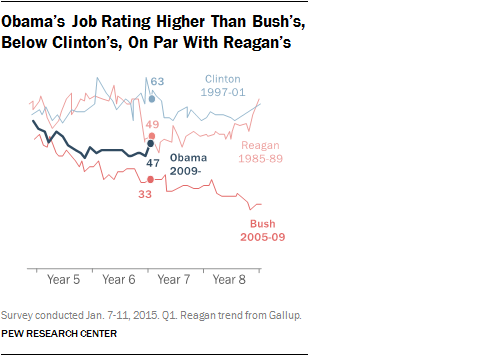
The highs and lows of presidential popularity ratings
18 Mar 2015 Leave a comment
in politics - USA Tags: opinion polls

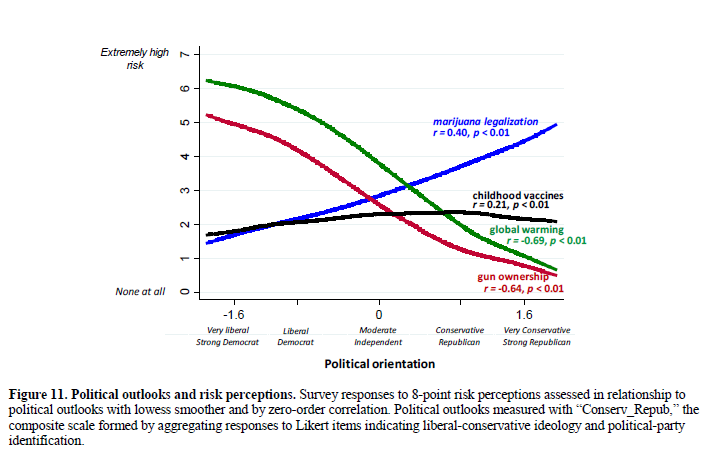
 Utopia, you are standing in it!
Recent Comments