
Source: Enemies of the WTO (1999).
Celebrating humanity's flourishing through the spread of capitalism and the rule of law
04 Jan 2017 Leave a comment
in applied price theory, comparative institutional analysis, development economics, growth disasters, growth miracles Tags: antiforeign bias, antimarket bias, globalisation, Leftover Left, pessimism bias, The Great Enrichment, The Great Escape, The Great Fact
Source: Enemies of the WTO (1999).
01 Jan 2017 Leave a comment
in development economics, economic history, growth miracles Tags: pessimism bias, The Great Enrichment, The Great Escape, The Great Fact

.
03 Aug 2016 Leave a comment
in economic history, economics of media and culture Tags: pessimism bias

.
24 Jul 2016 1 Comment
in economic growth, economic history, labour economics, macroeconomics, politics - New Zealand, unions Tags: economic reform, Employment Contracts Act, employment protection laws, employment regulation, Leftover Left, neoliberalism, pessimism bias
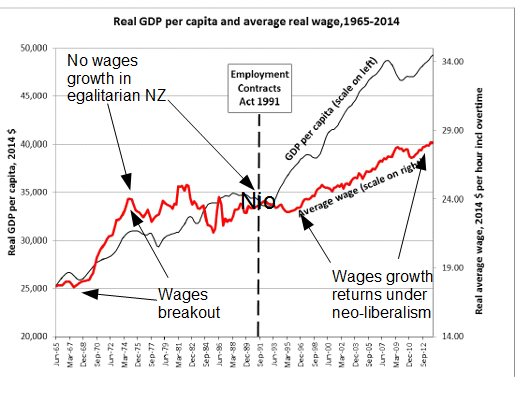
Source: Low Wage Economy | New Zealand Council of Trade Unions – Te Kauae Kaimahi, with extra annotations by this blogger.
23 Jul 2016 Leave a comment
in economic history, liberalism, politics - New Zealand Tags: Leftover Left, pessimism bias, Twitter left
David Aislabie yesterday in the Wanganui Chronicle went beyond Max Rashbrooke’s boy’s own view of the 1970s New Zealand is an egalitarian paradise. Aislabie said
The post-war New Zealand I grew up in was the envy of the world — an egalitarian paradise and a great place to bring up children.
It is a sad irony that the baby boomers who benefited from the welfare state they inherited from their parents’ generation should be responsible for snatching those benefits away from subsequent generations.
At least last year, Max Rashbrooke was good enough to qualify his pre-economic reform egalitarian paradise to not include women and Maori
New Zealand up until the 1980s was fairly egalitarian, apart from Maori and women, our increasing income gap started in the late 1980s and early 1990s,” says Rashbrooke. “These young club members are the first generation to grow up in a New Zealand really starkly divided by income.
Leaving out a good 60% of the population from the pre-1984 New Zealand egalitarian paradise is a bit of a stretch on any paradise.
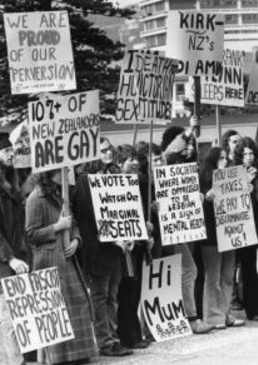 Pre-1984 was no paradise to sing that you were glad to be gay; you could have been thrown in jail and many were.
17 Jul 2016 Leave a comment
in economic history, human capital, labour economics, occupational choice, politics - New Zealand, poverty and inequality Tags: Leftover Left, pessimism bias, top 1%, top incomes, Twitter left
Max Rashbrooke was good enough to remind us that the 2013 update of New Zealand top income shares came online a few days ago.
As is well known to everyone except those obsessed with top income shares, New Zealand top income shares have not changed much since the late 1980s. They are now no higher than in the good old days when New Zealand was an egalitarian paradise in their eyes.

Source: The World Wealth and Income Database.
28 Jun 2016 Leave a comment
in constitutional political economy, international economic law, international economics, International law, Public Choice Tags: British economy, British politics, Common market, European Union, pessimism bias, single market, Twitter left, voter demographics
There were few difference across the political spectrum as to why voters voted to Remain or Leave. This is according to Lord Ashcroft’s survey on referendum day of over 12,000 voters.

Source: How the United Kingdom voted on Thursday… and why – Lord Ashcroft Polls
Labour and Tory voters voted to leave to regain control over immigration and sovereignty.
Labour and Tory voters who wanted to remain thought the EU and its single market was a good deal not worth putting at risk. It is all about identity politics, not inequality.
Vote Leave voters are a grumpy lot who think things have been getting worse for 30 years:
Leavers see more threats than opportunities to their standard of living from the way the economy and society are changing, by 71% to 29% – more than twice the margin among remainers…
By large majorities, voters who saw multiculturalism, feminism, the Green movement, globalisation and immigration as forces for good voted to remain in the EU; those who saw them as a force for ill voted by even larger majorities to leave.
23 Jun 2016 Leave a comment
in applied welfare economics, economic history Tags: pessimism bias, The Great Enrichment
14 Jun 2016 Leave a comment
in applied price theory, economic history, industrial organisation, labour economics, labour supply Tags: Luddites, pessimism bias, technological unemployment
11 Jun 2016 Leave a comment
in applied welfare economics, economic history Tags: living standards, pessimism bias
09 Jun 2016 Leave a comment
in applied price theory, applied welfare economics, economics, entrepreneurship, health economics, labour economics, minimum wage, politics - USA, public economics Tags: 2016 presidential election, antimarket bias, expressive voting, living wage, Old Left, pessimism bias, rational irrationality
09 Jun 2016 Leave a comment
in applied price theory, applied welfare economics, comparative institutional analysis, economic history, economics of education, economics of regulation, health economics, income redistribution, industrial organisation, international economics, politics - USA, Public Choice, public economics, rentseeking Tags: 2016 presidential election, antimarket bias, crony capitalism, living wage, pessimism bias, top 1%
Celebrating humanity's flourishing through the spread of capitalism and the rule of law
Scholarly commentary on law, economics, and more
Beatrice Cherrier's blog
Celebrating humanity's flourishing through the spread of capitalism and the rule of law
Celebrating humanity's flourishing through the spread of capitalism and the rule of law
Celebrating humanity's flourishing through the spread of capitalism and the rule of law
Why Evolution is True is a blog written by Jerry Coyne, centered on evolution and biology but also dealing with diverse topics like politics, culture, and cats.
Celebrating humanity's flourishing through the spread of capitalism and the rule of law
Celebrating humanity's flourishing through the spread of capitalism and the rule of law
A rural perspective with a blue tint by Ele Ludemann
DPF's Kiwiblog - Fomenting Happy Mischief since 2003
Celebrating humanity's flourishing through the spread of capitalism and the rule of law
The world's most viewed site on global warming and climate change
Tim Harding's writings on rationality, informal logic and skepticism
A window into Doc Freiberger's library
Let's examine hard decisions!
Commentary on monetary policy in the spirit of R. G. Hawtrey
Thoughts on public policy and the media
Celebrating humanity's flourishing through the spread of capitalism and the rule of law
Politics and the economy
A blog (primarily) on Canadian and Commonwealth political history and institutions
Reading between the lines, and underneath the hype.
Economics, and such stuff as dreams are made on
"The British constitution has always been puzzling, and always will be." --Queen Elizabeth II
Celebrating humanity's flourishing through the spread of capitalism and the rule of law
Celebrating humanity's flourishing through the spread of capitalism and the rule of law
WORLD WAR II, MUSIC, HISTORY, HOLOCAUST
Undisciplined scholar, recovering academic
Celebrating humanity's flourishing through the spread of capitalism and the rule of law
Res ipsa loquitur - The thing itself speaks
Celebrating humanity's flourishing through the spread of capitalism and the rule of law
Researching the House of Commons, 1832-1868
Articles and research from the History of Parliament Trust
Reflections on books and art
Posts on the History of Law, Crime, and Justice
Celebrating humanity's flourishing through the spread of capitalism and the rule of law
Exploring the Monarchs of Europe
Cutting edge science you can dice with
Small Steps Toward A Much Better World
“We do not believe any group of men adequate enough or wise enough to operate without scrutiny or without criticism. We know that the only way to avoid error is to detect it, that the only way to detect it is to be free to inquire. We know that in secrecy error undetected will flourish and subvert”. - J Robert Oppenheimer.
The truth about the great wind power fraud - we're not here to debate the wind industry, we're here to destroy it.
Celebrating humanity's flourishing through the spread of capitalism and the rule of law
Celebrating humanity's flourishing through the spread of capitalism and the rule of law
Economics, public policy, monetary policy, financial regulation, with a New Zealand perspective
Celebrating humanity's flourishing through the spread of capitalism and the rule of law
Restraining Government in America and Around the World

 Utopia, you are standing in it!
Recent Comments