https://twitter.com/moturesearch/status/743595301345333248
Media reporting and Motu’s own tweet on its research contradict its own conclusions about what it found about the introduction of 90-day trial periods for new jobs in New Zealand.
https://twitter.com/moturesearch/status/743563189451841537
Motu’s executive summary is both as bold as the Motu tweet and directly contradicts it
We find no evidence that the ability to use trial periods significantly increases firms’ overall hiring; we estimate the policy effect to be a statistically and economically insignificant 0.8 percent increase in hiring on average across all industries.
However, within the construction and wholesale trade industries, which report high use of trial periods, we estimate a weakly significant 10.3 percent increase in hiring as a result of the policy.
No evidence means no evidence. Not no evidence but we did find some evidence in two large industries – evidence of a 10.3% increase in hiring. That is a large effect.
Both economic and statistical significance matter. Not only is the effect of 90-day trial periods in the construction and wholesale trades other than zero, 10% is large – a hiring boom. No evidence of any effects on employment of 90 day trial periods means no evidence.
Neither Treasury nor Motu understand their own research and the evidence of large effects in two industries. Can you conclude you have no evidence when you have some evidence, which they did in construction and wholesale trades? There is evidence, there is not no evidence.
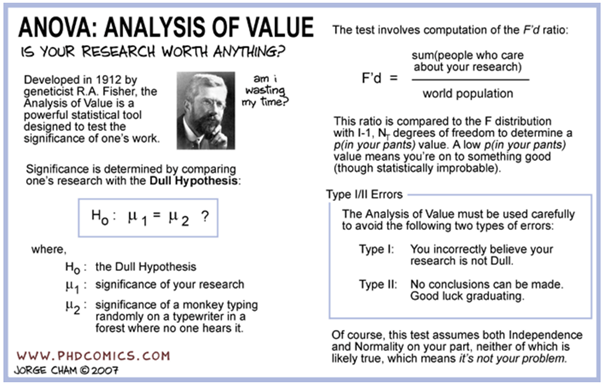
The paper was weak in hypothesis development and in its literature review. It was not clear whether the paper was testing the political hypothesis or the economic hypotheses. Neither were well explained or situated within modern labour economics or labour macroeconomics. If a political hypothesis does not stand up as a question of applied price theory, you cannot test it.
The Motu paper does not remind that graduate textbooks in labour economics show that a wide range of studies have found the predicted negative effects of employment law protections on employment and wages and on investment and the establishment and growth of businesses:
1. Employment law protections make it more costly to both hire and fire workers.
2. The rigour of employment law has no great effect on the rate of unemployment. That being the case, stronger employment laws do not affect unemployment by much.
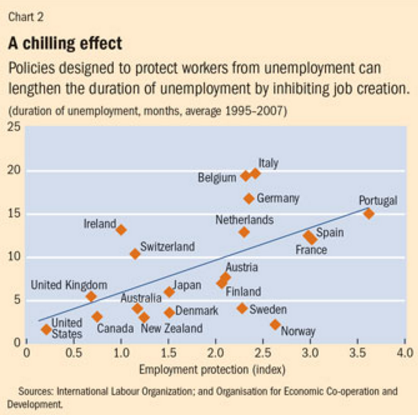
3. What is very clear is that is more rigourous employment law protections increase the duration of unemployment spells. With fewer people being hired, it takes longer to find a new job.
4. Stronger employment law protections also reduce the number of young people and older workers working age who hold a job.
5. The people who suffer the most from strong employment laws are young people, women and older adults. They are outside looking in on a privileged subsection of insiders in the workforce who have stable, long-term jobs and who change jobs infrequently.
Trial periods are common in OECD countries. There is plenty of evidence that increased job security leads to less employee effort and more absenteeism. Some examples are:
- Sick leave spiking straight after probation periods ended;
- Teacher absenteeism increasing after getting tenure after 5-years; and
- Academic productivity declining after winning tenure.
Jacob (2013) found that the ability to dismiss teachers on probation – those with less than five years’ experience – reduced teacher absences by 10% and reduced frequent absences by 25%.
Studies also show that where workers are recruited on a trial, employers have to pay higher wages. For example, teachers that are employed with less job security, or with longer trial periods are paid more than teachers that quickly secure tenure.
Workers who start on a trial tend to be more productive and quit less often. The reason is that there was a better job match. Workers do not apply for jobs to which they think they will be less suited. By applying for jobs that the worker thinks they will be a better fit, everyone gains in terms of wages, job security and productivity. For more information see
- Pierre Cahuc and André Zylberberg, The Natural Survival of Work, MIT Press, 2009;
- Tito Boeri and Jan van Ours, The Economics of Imperfect Labor Markets, MIT Press, 2nd edition (2013);
- Dale T. Mortensen, “Markets with Search Friction and the DMP Model”, American Economic Review 101, no. 4 (June 2011): 1073-91;
- Christopher Pissarides. “Equilibrium in the Labor Market with Search Frictions”, American Economic Review 101 (June 2011) 1092-1105;
- Christopher Pissarides, “Employment Protection”, Labour Economics 8 (2001) 131-159.
- Eric Brunner and Jennifer Imazeki, “Probation Length and Teachers Salaries: Does Waiting Payoff?” Industrial and Labor Relations Review 64, no. 1 (October 2010): 164-179.
- Andrea Ichino and Regina T. Riphahn, “The Effect of Employment Protection on Worker Effort – A Comparison of Absenteeism During and After Probation”, Journal of the European Economic Association 3 no. 1 (March 2005), 120-143;
- Christian Pfeifer “Work Effort During and After Employment Probation: Evidence from German Personnel Data”, Journal of Economics and Statistics (February 2010); and
- Olsson, Martin “Employment protection and sickness absence”, Labour Economics 16 (April 2009): 208-214.
In the labour market, screening and signalling take the form of probationary periods, promotion ladders, promotion tournaments, incentive pay and the back loading of pay in the form of pension vesting and other prizes and bonds for good performance over a long period.
There is good reasons to have strong priors about how employment regulation will work. Employment law protects a limited segment of the workforce against the risk of losing their job. These are those who have a job and in particular those that have a steady job, a long-term job.
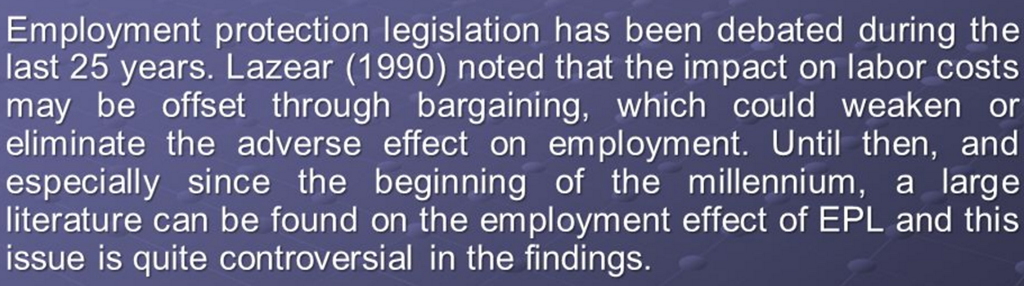
The impact of the introduction of trial periods on employment will be ambiguous because the lack of a trial period can be undone by wage bargaining.
- If you have to hire a worker with full legal protections against dismissal, you pay them less because the employer is taking on more of the risk if the job match goes wrong. If they work out, you promote them and pay them more.
- If you hire a worker on a trial period, they may seek a higher wage to compensate for taking on more of the risks if the job match goes wrong and there is no requirement to work it out rather than just sack them.
The twist in the tail is whether there is a binding minimum wage. If there is a binding minimum wage, either the legal minimum or in a collective bargaining agreement, the employer cannot reduce the wage offer to offset the hiring risk so fewer are hired.
The introduction of trial periods will affect both wages and employment and employment more in industries that are low pay or often pay the minimum wage. Motu found large effects on hiring in two industries that used trial periods frequently. That vindicates the supporters of the law.
Motu said that 36% of employers have used trial periods at least once. The average is 36% of employers have used them with up to 50% using them in construction and wholesale trade. That the practice survives in competition for recruits suggested that it has some efficiency value.
The large size of the employment effect in construction and wholesale trades is indeed a little bit surprising. Given that a well-grounded in economic theory hypothesis about the effect of trial period is ambiguous in regard to what will happen to wages and unemployment, a large employment effect is a surprise. If Motu had spent more time explaining employment protection laws and what hypotheses they imply, that surprise would have come to light sooner.
Motu’s research for the remaining New Zealand industries was a bit of an outlier. It should have spent more time explaining how to manage that anomalous status in light of the strong priors impartial spectators are entitled to have on the economics of employment protection laws.
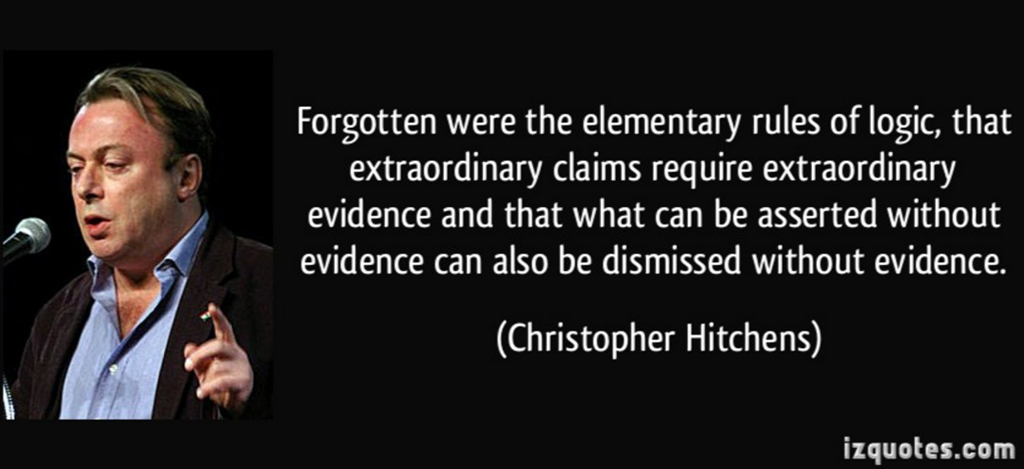
A conflicting study about the effects of any regulation should be no surprise. If there are not conflicting empirical studies, the academics are not working hard enough to win tenure and promotion. Extraordinary claims nonetheless require extraordinary evidence.
 Utopia, you are standing in it!
Recent Comments