The Racism Test – Would you pass it? 2nd time #RickyGervais was even funny
20 Aug 2016 Leave a comment
in economics of media and culture, liberalism Tags: political correctness, racial discrimination
Trailer for ‘Loving’ — true story of an interracial marriage that caused them to be sentenced to prison in Virginia in 1958
13 Jul 2016 Leave a comment
in economics, economics of love and marriage, law and economics, movies Tags: racial discrimination
Wage gaps by gender, race and ethnicity persist in the USA
03 Jul 2016 Leave a comment
in discrimination, economics of education, gender, human capital, labour economics, labour supply, occupational choice, politics - USA Tags: employer discrimination, ethnic wage gap, gender wage gap, racial discrimination, racial wage gap

Walter Williams discusses market versus political solutions to the problems of racism and private property
03 Jun 2016 Leave a comment
in applied price theory, applied welfare economics, comparative institutional analysis, constitutional political economy, discrimination, industrial organisation, labour economics Tags: racial discrimination, Walter Williams
President Obama’s Best and Deepest Argument Against His Critics on the Left
19 May 2016 Leave a comment
in liberalism, politics - USA Tags: pessimism bias, racial discrimination
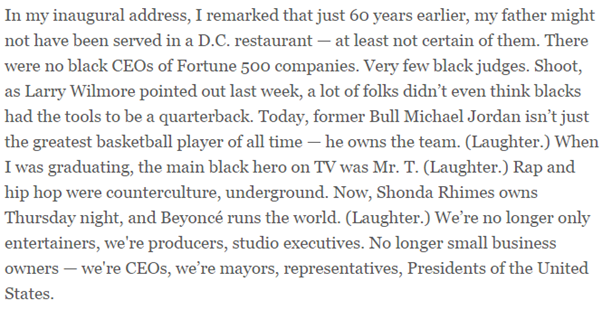
Drug testing helps minority job applicants @jacindaardern
25 Mar 2016 Leave a comment
in discrimination, economics of information, entrepreneurship, human capital, labour economics, personnel economics Tags: asymmetric information, counter-signalling, employer discrimination, racial discrimination, screening, signalling, statistical discrimination
Statistical discrimination is a harsh mistress. If reliable measures of the quality of job applicants are unavailable for short-listing, such as credit checks, coarser, less reliable screening devices will be employed. That was the case when credit checks were prohibited in employment recruitment:
Looking at 74 million job listings between 2007 and 2013, Clifford and Shoag found that employers started to become pickier, especially in cities where there were a lot of workers with low credit scores. If a credit-check ban went into effect, job postings were more likely to ask for a bachelor’s degree, and to require additional years of experience.
There are other ways that employers could have also become more discerning, Shoag says. They might have started to rely on referrals or recommendations to make sure that applicants were high-quality. In the absence of credit information to establish trustworthiness, they may even have fallen back on racial stereotypes to screen candidates. The researchers couldn’t measure these tactics, but they’re possibilities.
Drug testing allows employers to dispel less accurate stereotypes about drug use among different ethnic and social groups. They increased hiring of minorities because a reliable measure became available of their drug use:
…after a pro-testing law is passed in a state, African-American employment increases in sectors that have high testing rates (mining, manufacturing, transportation, utilities, and government).
These increases are substantial: African-American employment in these industries increases by 7-30%. Because these industries tend to pay wage premia and to have larger firms offering better benefits, African-American wages and benefits coverage also increase. Real wages increase by 1.4-13% relative to whites. The largest shifts in employment and wages occur for low skilled African-American men.
I also find suggestive evidence that employers substitute white women for African-Americans in the absence of testing. Gains in hiring African-Americans in these sectors may have come at the expense of women, particularly in states with large African-American populations.
Employers test for drug use both for health and safety reasons and as a way of screening out less reliable employees. People who break the rules are not reliable employees and that includes taking drugs. In low skill jobs, what employers seek is a recruit who is friendly and reliable.

Testing of the skills of workers also showed similar results. What happened is that the ratio of black to white hirings do not change. The administration of these skills tests allowed the more productive of both white and black job applicants to be identified and hired.
Employers already had an accurate stereotype of the average skills of different ethnic groups. Administration of tests allow them to identify which members of each group were the most productive.
It is a standard result that statistical discrimination improves the chances of below-average applicants subject to the stereotype but harms those of above average quality. For that reason, applicants look for what methods of counter-signalling to show that they are indeed a quality applicant – make themselves stand out from the crowd.
Employers profit from developing screening devices that go beyond stereotypes to identify above-average applicants. They want screening devices that find those who do not otherwise stand out from the crowd because of difficulties in transferring credible information about their quality. This is a special difficulty with low-skilled vacancies because hiring is made based much more than on character than experience.
@jacindaardern wrong to say Australia is last place to follow in race relations
07 Feb 2016 Leave a comment
in constitutional political economy, discrimination, economic history, law and economics, politics - Australia, politics - New Zealand, property rights, Public Choice Tags: Aboriginal land rights, Maori economic development, native title, racial discrimination
From 1965 onwards, 1/3rd of terrestrial Australia – 2.5 million sq kms of land – was returned to indigenous owners, with half of that since the Native Title decision in 1993. Tasmania pioneered aboriginal land rights with the Cape Barron Island Act 1912.
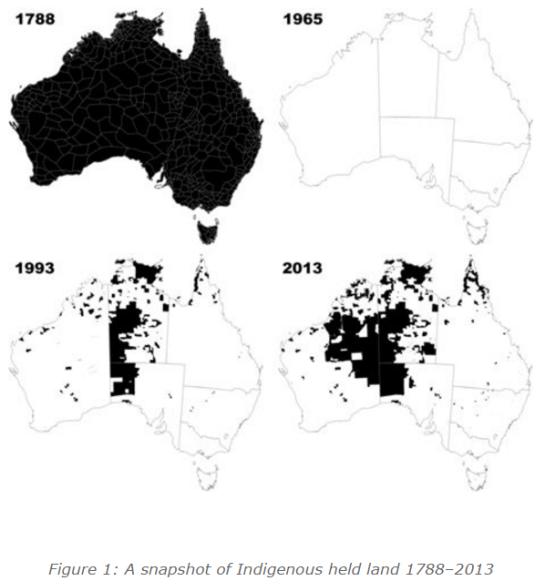
Source: Jon Altman, The political ecology and political economy of the Indigenous land titling ‘revolution’ in Australia, March 2014 Māori Law Review.
New Zealand extinguished native title twice in its history with the 2nd of these takings of Māori land by the last Labour government with the foreshore and seabed legislation. In her op-ed today, has Jacinda Ardern forgotten why the Māori party came into being?
Unlike New Zealand, Australia welcomed migrants from a wide range of ethnicities after the Second World War. It abolished the White Australia policy in the 1960s along with any discrimination in its Constitution against aboriginals.
Australia takes 8 times as many refugees as New Zealand on a per capita basis.
Sweden – the OECD's highest per capita recipient of asylum seekers bit.ly/1vfFEUh http://t.co/y6DmdJjAsE—
Guardian Data (@GuardianData) December 02, 2014
This redress of indigenous grievances was done out of the generosity of the Australian heart. Aboriginals are a tiny minority in Australia with little independent political pull.
Screen actor demographics
07 Feb 2016 Leave a comment
in discrimination, gender, labour economics Tags: customer discrimination, employer discrimination, Hollywood economics, racial discrimination, sex discrimination
Loury and McWhorter tackle the racial mismatch hypothesis and Affirmative Action
23 Dec 2015 Leave a comment
in discrimination, economics of education, human capital, labour economics Tags: affirmative action, racial discrimination
Roland Fryer on Education, Inequality, & Incentives
19 Dec 2015 1 Comment
in applied price theory, discrimination, economics of education, gender, human capital, labour economics, labour supply, politics - New Zealand, politics - USA, poverty and inequality Tags: charter schools, racial discrimination, Roland Fryer

The gap between black and white students appears as early as kindergarten and grows with time
17 Dec 2015 Leave a comment
in discrimination, economics of education, labour economics, politics - USA Tags: early childhood education, racial discrimination
Roland Fryer On Why Good Schools Matter @greencatherine @dbseymour @ThomasHaig @PPTAWeb
17 Sep 2015 Leave a comment
in economics of education, human capital, managerial economics, organisational economics, politics - New Zealand, politics - USA, Public Choice Tags: economics of early childhood education, economics of personality traits, economics of schools, racial discrimination, Roland Fryer
Roland Fryer believes “high-quality education is the new civil rights battleground”. He is an extraordinary man who was carrying a gun and selling drugs at 14 and an assistant professor of economics at Harvard at the age of 27. He is fearless as a researcher.

Source: Roland Fryer On Why Good Schools Matter – Forbes
Roland Fryer is the first Afro-American to win the John Bates Clark Medal econ.st/1FrmzDL http://t.co/QoAZWyRVEX—
Charles Read (@EconCharlesRead) April 27, 2015
Presidential election turnout by race
09 Sep 2015 Leave a comment
in constitutional political economy, politics - USA, Public Choice, rentseeking Tags: 2016 presidential election, civil rights, Democratic Party, racial discrimination, southern States, voting rights

Did Mass Incarceration Destroy the Black Family?
28 Aug 2015 Leave a comment
in discrimination, economics of crime, economics of love and marriage, labour economics, law and economics, politics - New Zealand, population economics, poverty and inequality, unemployment, urban economics, welfare reform Tags: crime and punishment, criminal deterrence, economics of the family, racial discrimination, single mothers, single parents, teen pregnancies
Did Mass Incarceration Destroy the Black Family? Not exactly. bit.ly/1f8jgXm http://t.co/1q2nKJnU9W—
City Journal (@CityJournal) August 13, 2015
Why no ethnic wage gap for New Zealanders aged 15 to 24?
29 Jul 2015 Leave a comment
in discrimination, gender, human capital, labour economics, labour supply, occupational choice, politics - New Zealand Tags: employer discrimination, ethnic wage gap, gender wage gap, racial discrimination, racial wage gap
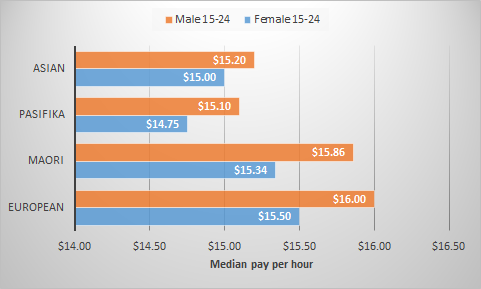
via New Zealand Income Survey 2014 via Human Rights Commission: Tracking Equality at Work
 Utopia, you are standing in it!
Recent Comments