Had we hit peak wind turbine technician demand?
09 May 2016 Leave a comment
in energy economics, environmental economics, global warming, labour economics, labour supply, occupational choice Tags: Big Wind, green rent seeking, renewable energy, wind power
Doubling from 4,400 to 9,000 does not exactly strike me as an explosion in wind technician employment.

Source: Wind Turbine Technicians : Occupational Outlook Handbook: : U.S. Bureau of Labor Statistics.
Yet still this occupation is expected to be the fastest-growing occupation in the USA in the next 10 years.
The renewable energy curse – does corruption turn clean energy into dirty? @GarethMP
30 Apr 2016 Leave a comment
in comparative institutional analysis, constitutional political economy, energy economics, environmental economics, global warming, Public Choice, rentseeking Tags: European Union, expressive voting, green rent seeking, Italy, renewable energy, solar power, wind power
Massimo Tavoni and Caterina Gennaioli published a nice paper showing that corruption and violence was higher in the high wind provinces of Italy after the installation of wind generators. They built on earlier work about countries with abundant renewable resources and weak institutions. The main question in their paper
… is whether an increase in the expected returns of investments in wind energy, following the introduction of the new policy regime based on a green certificate system, has driven economic agents, namely bureaucrats and entrepreneurs, to engage more in rent seeking activities.
As they studied Italy, there is no surprise about the answer which was yes. High winds ensure high returns of the wind farm investment, but whether this translates into more bribery depends on institutional quality. There was more corruption, and so especially in high-wind provinces of Italy.
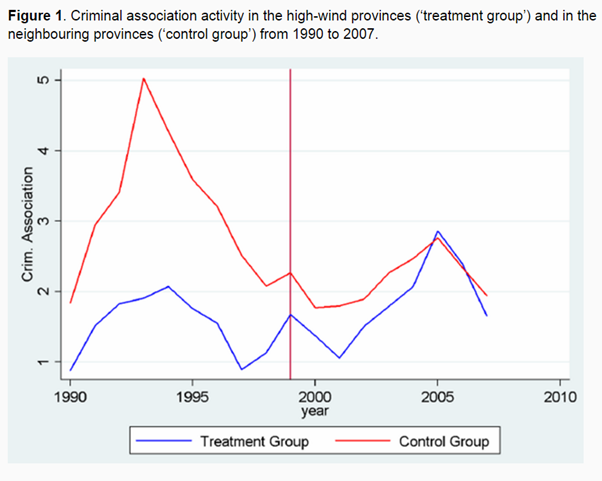
Source: Green policy and corruption | VOX, CEPR’s Policy Portal.
The construction of an average wind park is associated with an increase of criminal association activity of 6%. Italy will have more corruption than elsewhere in the old European Union.
The wider problem is renewable energy is a celebrity technology. In the context of expressive politics, so many cheer for solar and wind power that standards drop in terms of who qualifies for subsidies and who should lose support when their investments do not turn out as promised.
https://twitter.com/CountCarbon/status/715136022414299138
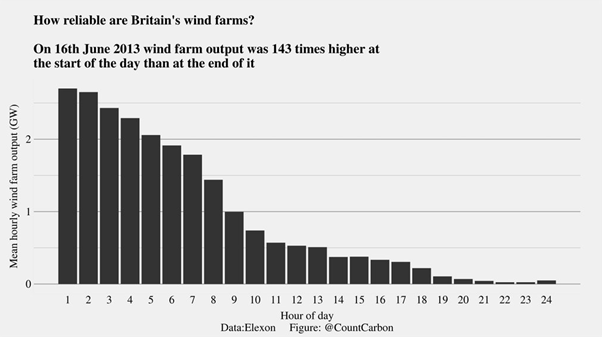
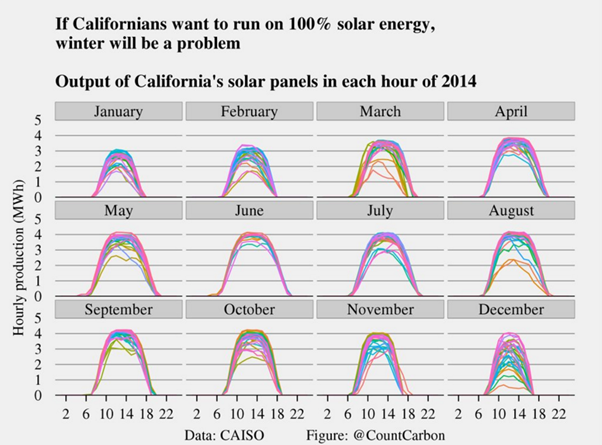
Wind power is not new, it is intermittent, is unsuitable for modern work, and is land constrained but it is still subsidised. Green rent seeking is a real risk even in countries with the best political institutions.
How much of global low carbon energy is wind and solar?
21 Apr 2016 Leave a comment
in economic history, energy economics, environmental economics, resource economics Tags: geothermal power, hydroelectric power, nuclear power, renewable energy, solar power, wind power
How much of Swedish power is renewable energy?
28 Mar 2016 Leave a comment
in economic history, energy economics, environmental economics Tags: hydroelectric power, renewable energy, solar power, wind power
New Zealand’s renewable energy as a percentage of the total primary energy supply
24 Mar 2016 Leave a comment
in economic history, energy economics Tags: geothermal power, renewable energy, solar power, wind power
@RusselNorman @JulieAnneGenter a hedge fund specialises in shorting renewable energy shares @Greenpeace
03 Feb 2016 Leave a comment
in defence economics, economic history, economics of regulation, energy economics, entrepreneurship, environmental economics, financial economics, global warming Tags: active investing, disinvestment, entrepreneurial alertness, ethical investing, Fossil Fuels, green rentseeking, hedge funds, passive investing, renewable energy, solar power, Vice Fund, wind power

Just as the Vice Fund specialises in investing in tobacco, alcohol, gaming and defence shares, Cool Futures Funds Management is starting-up to specialise in betting against global warming by shorting green stocks:
…instead of renewables being our energy future, they’re betting on the subsidies drying up and the whole industry collapsing; instead of fossil fuels being left in the ground as “stranded assets”.
An example of the nice little earners this hedge fund can come across is anticipating when particular investors will want to disinvest from fossil fuels.
When institutional investors ranging from universities to sovereign investment funds such as the New Zealand Superannuation Fund seek to disinvest from fossil fuels, that will be a good time to buy cheap shares.The
Is investing in renewable energy a good investment?
21 Dec 2015 Leave a comment
in economic history, energy economics, environmental economics, financial economics Tags: Big Solar, Big Wind, hydroelectric power, renewable energy, solar power, wind power
Is Paris the end of fossil fuel era?
04 Dec 2015 Leave a comment
in economic history, energy economics, environmental economics, global warming Tags: climate alarmism, Fossil Fuels, global warming, nuclear power, renewable energy, solar energy, wind power
How many solar panels needed to heat 1/2 million homes
13 Nov 2015 Leave a comment
in energy economics, environmental economics Tags: Big Solar, coal power, hydroelectric power, nuclear energy, renewable energy
The costs of solar energy to the environment are underestimated
13 Nov 2015 Leave a comment
in energy economics, environmental economics, global warming Tags: Big Solar, expressive voting, renewable energy, solar energy, unintended consequences
https://twitter.com/roomfordebate/status/662290426083328000
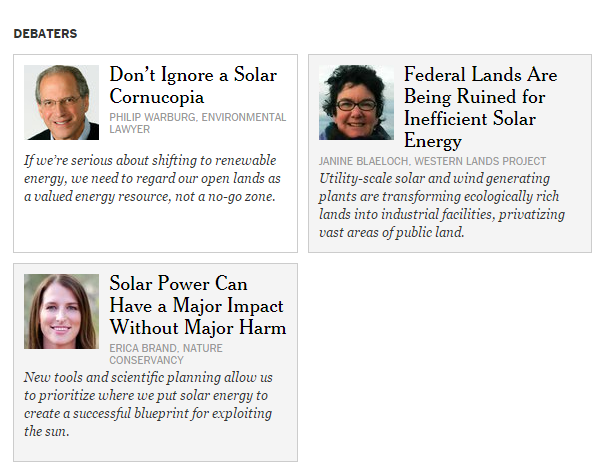
Source: The Costs of Solar Energy to the Environment – Room for Debate – NYTimes.com.
The U.S. is consuming more #green energy such as nuclear power
03 Nov 2015 Leave a comment
in economic history, energy economics Tags: gas, nuclear power, Oil prices, renewable energy, solar power, wind power
@GreenpeaceNZ @RusselNorman Can We Rely on Wind and Solar Energy? @NZGreens
02 Nov 2015 Leave a comment
in energy economics, environmental economics, global warming, politics - Australia, politics - New Zealand, politics - USA Tags: Big Solar, Big Wind, bootleggers and baptists, expressive voting, green rent seeking, rational irrationality, renewable energy, solar power, wind power
Is renewable energy the face of the future?
23 Sep 2015 Leave a comment
in energy economics, environmental economics, global warming Tags: Big Solar, Big Wind, climate alarmists, hydropower, renewable energy, solar power, wind power
EIA Forecast for US Energy Sources to 2040. Fossil fuels will supply >80%, renewables 8%, it's a 'fossil fuel future' http://t.co/B923DH9ncW—
Mark J. Perry (@Mark_J_Perry) June 11, 2015
 Utopia, you are standing in it!
Recent Comments