The rotation of power is common in democracies, and the worst rise to the top, so it is wise to design constitutional safeguards to minimise the damage done when those crazies to the right or left of you get their chance in office, as they will.
Too many policies and ideas of the Left assume that they are the face of the future, rather than just another political party that will hold power as often as not.
Privatisation and deregulation is a lot slower in a federal system with an effective upper house elected by proportional representation. Regulatory powers and public asset ownership is spread over different levels of federations, with different parties always in power at various levels at the same time, all worried about losing office by going to far away from what the majority wants.
The will of the people is constantly tested and measured in a federal system with elections at one level or another every year or so contested on a mix of local and national issues. Any failings of privatisation or deregulation in pioneering jurisdictions would quickly become apparent and would not be copied by the rest of the country. These errors could be undone where they originated by incoming progressive governments.
The Left may want to protect the rights of the unpopular and the unpleasant, and to want constitutional safeguards to slow an impassioned majority down is, in part, because they could be next if they lose the next election to the latest right-wing populist.
In a unitary unicameral parliament, those crazies to the right or left of you are tempered by an occasional general election only every 3 to 5 years. Little wonder that UK Labor reconsidered devolution, an assembly for London, and regional government after 15 years of Maggie Thatcher, good and hard, with her unfettered right to ask the house of commons to make or unmake any law whatsoever.

Developing positive alternatives on the Left includes what to do about the rotation of power and fettered versus unfettered parliamentary and executive power. The failure of the Left to develop its own constitutional political economy is a major strategic shortcoming. Frequenting wine bars, cafes and blogs muttering to each other ‘our day will come, our day will come’ is not enough.
State power was something that the classical liberals feared, and the problem of constitutional design is insuring that such power would be effectively limited.
Sovereignty must be split among several levels of collective authority; federalism was designed to allow for a decentralization of coercive state power.
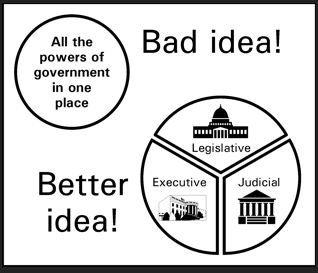
At each level of authority, separate functional branches of government were deliberately placed in continued tension, one with the other. The legislative branch is further restricted by the establishment of two strong houses, each of which organised on a separate principle of representation

 Utopia, you are standing in it!
Recent Comments