The Australian Greens suffered dramatic drops in their vote when they got anywhere near the reins of power.
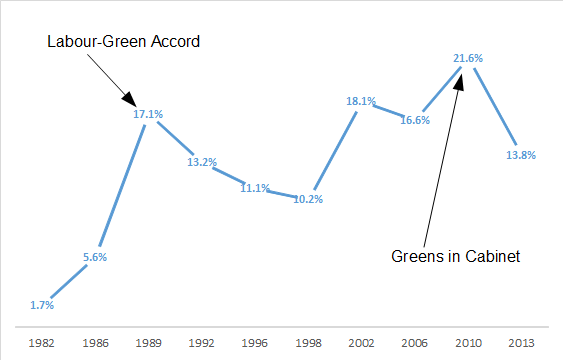
First consider the Tasmanian Greens. They were in a confidence and supply agreement in 1989 in the Tasmanian House of Assembly and then Cabinet ministers from 2010.
As Figure 1 shows, the Green primary vote dropped dramatically after each spell near power – from 21.6% to 13.8%.
Figure 1: Tasmanian Greens primary vote, House of Assembly
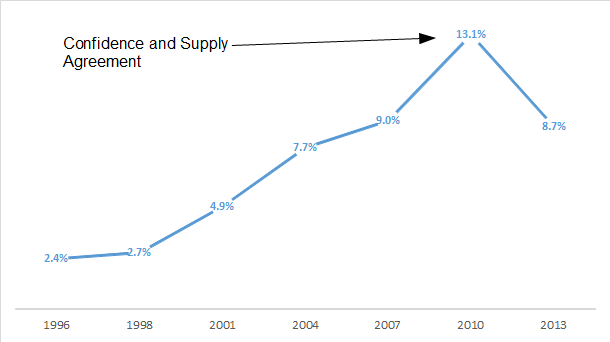
The Australian Greens suffered the same fate when they entered into a confidence and supply agreement after the 2011 Australian Federal Election. Figure 2 shows that their vote dropped by 1/3rd.
Figure 2: Australian Greens Senate primary vote
What lessons does this have for the New Zealand Greens and their ambitions for Cabinet portfolios after the 2017 election? Figure 3 shows of their part vote only got a comfortable distance from the 5% minimum threshold for list MPs after Labour lost power and popularity after the 2008 election.
Figure 3: New Zealand Greens party vote
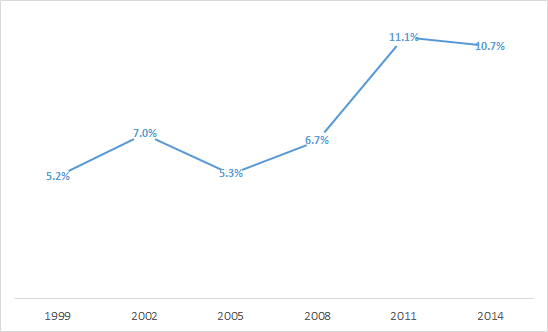
In the 2005 election, the Green party vote was below 5% at the end of election night after rose above that after early and postal votes were count P.
Part of the boost in the vote of the Greens in the 2008 and 2011 New Zealand general elections can be explained by grumpy Labour voters going elsewhere while waiting the call home to a credible Labour government in waiting.
The Greens need to buy an insurance policy and win an electorate seat such as Wellington Central where their new leader James Shaw stood at the last election. The Labour Party came third in the party vote last time but won the seat comfortably because the Greens chose not to seek the electoral vote.
 Utopia, you are standing in it!
Recent Comments