
Charts showing everyone is seriously richer after-taxes
19 Feb 2015 Leave a comment
in income redistribution, labour economics, poverty and inequality Tags: The Great Enrichment, top 1%
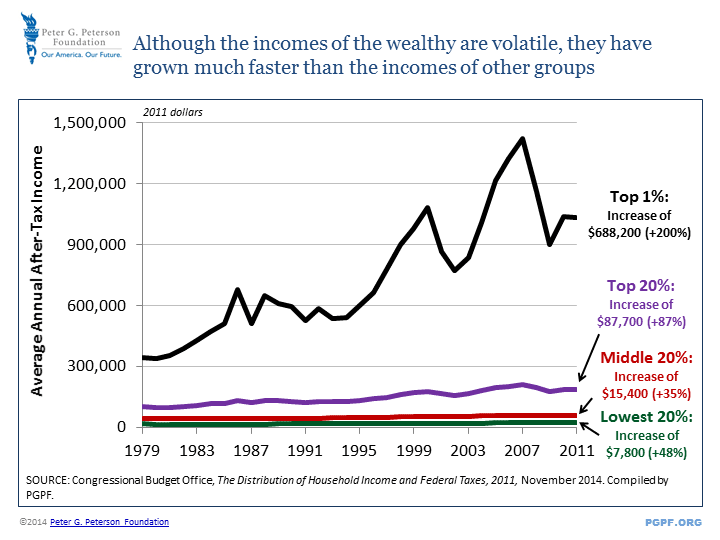
Everyone is 30-50% richer.
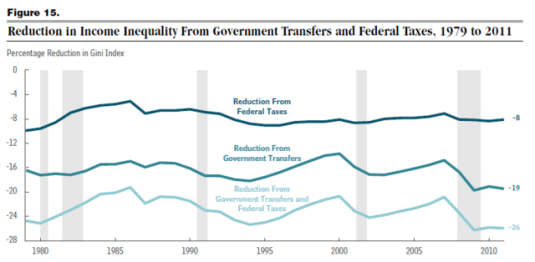

![Microsoft PowerPoint - Group C Federal Budget (KF).pptx [Read-Only]](https://utopiayouarestandinginit.com/wp-content/uploads/2015/02/0014_taxes-income-full.gif "Microsoft PowerPoint - Group C Federal Budget (KF).pptx [Read-Only]")
Ordinary Americans do not pay much in taxes.

Low income Americans receive large amounts of government transfers and increases their income by at least 50%

The middle-class is getting seriously smaller because more of them are getting richer
Economics as Incredulity : Working conditions during the Industrial Revolution
16 Feb 2015 Leave a comment

The greatest achievement in human history
15 Feb 2015 Leave a comment
in development economics, economic history, growth disasters, growth miracles Tags: The Great Enrichment, The Great Escape, The Great Fact

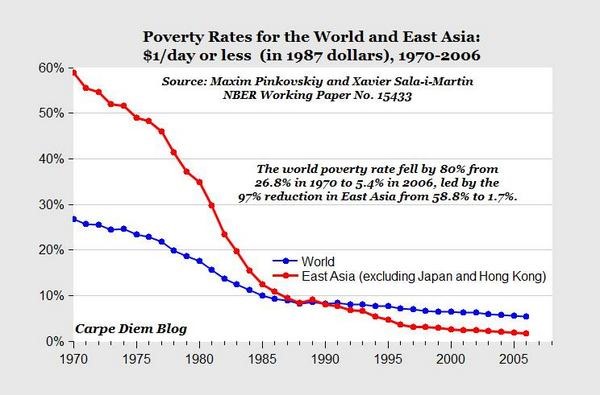
The World Bank reported on Oct. 9 that the share of the world population living in extreme poverty had fallen to 15% in 2011 from 36% in 1990. Earlier this year, the International Labor Office reported that the number of workers in the world earning less than $1.25 a day has fallen to 375 million 2013 from 811 million in 1991.
Such stunning news seems to have escaped public notice, but it means something extraordinary: The past 25 years have witnessed the greatest reduction in global poverty in the history of the world.
To what should this be attributed? Official organizations noting the trend have tended to waffle, but let’s be blunt: The credit goes to the spread of capitalism. Over the past few decades, developing countries have embraced economic-policy reforms that have cleared the way for private enterprise.
The reduction in world poverty has attracted little attention because it runs against the narrative pushed by those hostile to capitalism. The Michael Moores of the world portray capitalism as a degrading system in which the rich get richer and the poor get poorer. Yet thanks to growth in the developing world, world-wide income inequality—measured across countries and individual people—is falling, not rising, as Branco Milanovic of City University of New York and other researchers have shown.
Capitalism’s bad rap grew out of a false analogy that linked the term with “exploitation.” Marxists thought the old economic system in which landlords exploited peasants (feudalism) was being replaced by a new economic system in which capital owners exploited industrial workers (capitalism). But Adam Smith had earlier provided a more accurate description of the economy: a “commercial society.” The poorest parts of the world are precisely those that are cut off from the world of markets and commerce, often because of government policies.
Douglas Irwin
Check out these Instagram Outlaws
10 Feb 2015 Leave a comment
Everyone is richer in the USA and the middle class is moving up
09 Feb 2015 Leave a comment
in economic growth, great recession, macroeconomics, poverty and inequality Tags: The Great Enrichment
The middle class is shrinking in the USA because most of of 10% shrinkage is due to them becoming rich.

Everyone is wealthier than in the past and would have been wealthier but for the Great Recession and the countless tax rises of Obama.


A Report Card for Humanity: 1900-2050
06 Feb 2015 Leave a comment
in applied welfare economics, economic growth, health economics, technological progress Tags: The Great Enrichment, The Great Escape, The Great Fact


30 Years Of Cell Phones
03 Feb 2015 Leave a comment

The Treason Of The Clerisy: Capitalism And The Intellectuals After 1848
02 Feb 2015 Leave a comment
in development economics, economic history, growth disasters, growth miracles, Marxist economics Tags: capitalism and freedom, Deirdre McCloskey, The Great Enrichment, The Great Fact
Deirdre McCloskey is of the view that the “the clerisy” has been, with notable exceptions, hostile to capitalism and downright contemptuous of the morals and attitudes of the middle class that has flourished under capitalism:
The Germans called it the Clerisei or later the Bildungsbürgertum, the cultivated and reading as against the commercial and bettering bourgeoisie. In the eighteenth century the members of the clerisy such as Voltaire and Tom Paine had courageously advocated our liberties.
But in the 1830s and 1840s a much enlarged clerisy, mostly the sons of bourgeois fathers, commenced sneering at the liberties the fathers exercised so vigorously in the market and the factory.
On the right the clerisy under the influence of Romance looked back with nostalgia to an imagined medieval time without markets, in which stasis and hierarchy ruled…
On the left, meanwhile, the clerisy, likewise influenced by Romance, and then by historical materialism, developed the illiberal idea that ideas do not matter.
What matters to progress, they declared, is the unstoppable tide of history, aided (they declared further, contradicting themselves) by protests or strikes or even violent revolutions directed at the thieving bourgeoisie, movements to be led of course by the clerisy.
Later, in European socialism and American progressivism, the left proposed to defeat bourgeois monopoly of markets by gathering under regulation or central planning or ownership of the means of production all the monopolies into one big monopoly of violence called the state.
Yet the commercial bourgeoisie so despised by the clerisy left and right made the Great Enrichment and the modern world.
The Enrichment gigantically improved our lives, showing that both social Darwinism and economic Marxism were mistaken. The genetically inferior races and classes and ethnicities proved not to be so. The exploited proletariat was not immiserised but enriched.
and
Forcing in an illiberal way the French style of equality of outcome, cutting down the tall poppies, treating people as sad children to be engineered by the experts of the clerisy, we have found, has often had a high cost in damaging liberty and slowing betterment. Not always, but often.
On the other hand, introducing the Scottish style of equality of liberty and dignity, as in Hong Kong and Norway and France itself, has regularly led to an astounding betterment and to a real equality of outcome—with even the poor acquiring automobiles and plumbing denied in earlier times even to the rich, and acquiring political rights and social dignity denied in earlier times to everyone except the rich
Growth in real GDP per Americans since 1790
02 Feb 2015 Leave a comment
in economic history Tags: The Great Enrichment
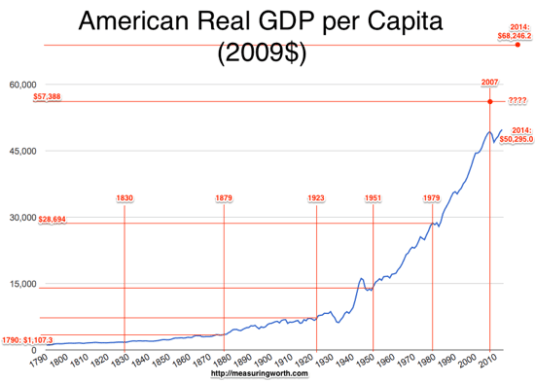
HT: Brad DeLong
 Utopia, you are standing in it!
Recent Comments