Joseph Schumpeter on The Great Enrichment
18 Aug 2015 Leave a comment
in applied welfare economics, economic history, entrepreneurship, liberalism Tags: capitalism and freedom, creative destruction, Joseph Schumpeter, The Great Enrichment, The Great Escape, The Great Fact
Everything’s Amazing and Nobody’s Happy
18 Aug 2015 Leave a comment
in applied welfare economics, development economics, economic history, economics of information, economics of media and culture, growth disasters, growth miracles, liberalism Tags: antimarket bias, Bryan Caplan, capitalism and freedom, life expectancies, living standards, pessimism bias, The Great Enrichment, The Great Escape, The Great Fact
The Great Escape is on-going
18 Aug 2015 Leave a comment
in applied welfare economics, development economics, economic history, environmental economics, growth disasters, growth miracles, health economics Tags: child mortality, global poverty, infant mortality, life expectancies, stream poverty, The Great Escape, The Great Fact
https://twitter.com/humanprogress/status/631179133989617665/photo/1
The total number of undernourished persons is falling despite population growth. buff.ly/1MgKWqd #food #health http://t.co/YfAltqvxVy—
HumanProgress.org (@humanprogress) August 11, 2015
Extreme poverty is declining, but more quickly in some places than others. See the data: buff.ly/1DDz0O5 http://t.co/W1a0WpCxHI—
HumanProgress.org (@humanprogress) August 11, 2015
Julian Simon on Resources, Growth and Human Progress
17 Aug 2015 Leave a comment
in applied welfare economics, development economics, economic history, energy economics, entrepreneurship, environmentalism, health economics, liberalism, resource economics Tags: capitalism and freedom, commodity prices, creative destruction, entrepreneurial alertness, Julian Simon, life expectancies, peak oil, The Great Enrichment, The Great Escape, The Great Fact
Why we shouldn’t rely too much on GDP and Human development index to tell us how we are doing
15 Aug 2015 Leave a comment
in applied price theory, applied welfare economics, development economics, economic history, economics of media and culture Tags: measurement error, The Great Enrichment, The Great Escape, The Great Fact

Up to now, I personally think we are yet to come up with a more accurate and adequate way of measuring our welfare, our quality or standard of living, that is, how happy we feel in our lives or how enjoyable and satisfying our lives are. If this is what we are measuring GDP (output) is in so many ways an inadequate measure of welfare because it is concentrating on output, it focuses more on commodities therefore GDP does not capture the happiness and joy got from family and social networks. So some economists have tried to come up with new ways to better measure GDP as a measure of our welfare, and they have broken down welfare into three things that they believe constitute welfare. Firstly, welfare has something to do with consumption of goods and services giving us utility, pleasure, or happiness. Secondly, it also has something to…
View original post 722 more words
@WJRosenbergCTU A brief history of rising equality in New Zealand
13 Aug 2015 Leave a comment
in applied price theory, applied welfare economics, economic history, economics of media and culture, income redistribution, labour economics, politics - New Zealand, poverty and inequality, Public Choice Tags: capitalism and freedom, Leftover Left, The Great Enrichment, The Great Fact, top 1%, Twitter left
Bill Rosenberg at the Council of Trade Unions was good enough to tweet a Treasury chart that shows next to no increases in inequality in New Zealand for at least 20 years.
A brief history of inequality-from Treasury paper Fig4. Note Employment Contracts Act,GST,income tax,benefit cuts,WFF http://t.co/y4w3cUsgjD—
Bill Rosenberg (@WJRosenbergCTU) June 27, 2015
Inequality in both market and disposable incomes has been stable for a good 20 years, as the above tweet shows, while inequality in consumption has been falling. To back this interpretation of mine up, coincidentally today Bryan Perry published his annual report on income and inequality under the banner of the Ministry of Social Development.
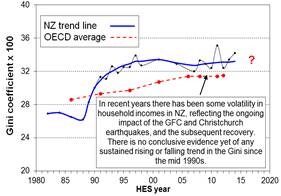
His report showed that there be no significant increase in New Zealand in at least 20 years.
The raw numbers on The Great Fact
10 Aug 2015 Leave a comment
in development economics, economic history, growth disasters, growth miracles Tags: extreme poverty, global poverty, The Great Fact
1 billion ppl lived in extreme poverty 2 centuries ago – 1 billion ppl live in extreme poverty today. #dataviz http://t.co/xBMzrJB1N1—
Randy Olson (@randal_olson) August 01, 2015
@NZGreens and co. must face an inconvenient truth about global poverty
09 Aug 2015 Leave a comment
in development economics, energy economics, environmental economics, global warming, growth disasters, growth miracles, politics - New Zealand Tags: expressive voting, extreme poverty, global poverty, rational irrationality, The Great Escape, The Great Fact
The number of children not going to school globally has halved in 10 years
08 Aug 2015 Leave a comment
in development economics, economic history, economics of education, growth disasters, growth miracles Tags: educational attainment, schooling, The Great Fact
"55 million children remained out of school in 2012" New blog on #MDG2 – blogs.worldbank.org/opendata/mdg2-… #opendata #WDI2015 http://t.co/6uYQE1RNSG—
World Bank Data (@worldbankdata) May 20, 2015
The Great Escape in infant mortality
06 Aug 2015 Leave a comment
in applied welfare economics, economic history, health economics, population economics Tags: infant mortality, life expectancies, The Great Escape, The Great Fact
Child mortality declined dramatically – and #India and #Ghana are catching up fast.
From: OurWorldInData.org http://t.co/uReMfGyoPd—
Max Roser (@MaxCRoser) November 11, 2014
Has Africa Outgrown Development Aid?
03 Aug 2015 Leave a comment
in applied price theory, development economics, economic history, economics of bureaucracy, growth disasters, growth miracles, Public Choice, rentseeking Tags: Africa, capitalism and democracy, capitalism and freedom, rule of law, The Great Fact
Deirdre McCloskey’s speech on ‘Bourgeois Dignity’
03 Aug 2015 Leave a comment
in applied price theory, applied welfare economics, comparative institutional analysis, constitutional political economy, economic history, entrepreneurship, industrial organisation, law and economics, property rights, survivor principle Tags: Deirdre McCloskey, entrepreneurial alertness, industrial revolution, The Great Enrichment, The Great Fact
The Great Fact in India
02 Aug 2015 Leave a comment
in applied welfare economics, development economics, economic history, growth disasters, growth miracles Tags: India, The Great Fact
In #India poverty is falling very, very rapidly – while inequality is rising.
More at: bit.ly/1KLT8Lh http://t.co/xTxlW1i06o—
Max Roser (@MaxCRoser) June 29, 2015
What is the Great Fact?
31 Jul 2015 Leave a comment
in comparative institutional analysis, development economics, economic history Tags: Deirdre McCloskey, The Great Fact
Developing countries’ share of economic activity increased from 20% of global GDP in 2000 to 40% in 2013—@JimKim_WBG http://t.co/QxqPkGjzvQ—
World Bank (@WorldBank) June 09, 2015
"Starvation worldwide is at an all-time low & falling…" —@DeirdreMcClosk. Data to explore: buff.ly/1G78cDt http://t.co/598P4mYdzH—
HumanProgress.org (@humanprogress) June 09, 2015
Deirdre McCloskey on the Samaritan’s dilemma
30 Jul 2015 Leave a comment
in applied price theory, applied welfare economics, comparative institutional analysis, constitutional political economy, development economics, economic history, economics of regulation, entrepreneurship, growth disasters, growth miracles, history of economic thought, income redistribution, industrial organisation, liberalism, Public Choice, rentseeking, survivor principle Tags: Age of Innovation, bourgeoisie deal, capitalism and freedom, Deirdre McCloskey, The Great Enrichment, The Great Escape, The Great Fact

 Utopia, you are standing in it!
Recent Comments