Hamas: By the Numbers
06 Apr 2018 1 Comment
in defence economics, laws of war, war and peace Tags: Gaza Strip, Israel, war against terror
.@JeremyCorbyn on Hamas and Hezbollah
04 Apr 2018 1 Comment
in defence economics, economics of crime, law and economics, laws of war, war and peace Tags: British politics, war against terror
Hamas: By the Numbers
24 Feb 2018 1 Comment
in defence economics, development economics, growth disasters, laws of war, war and peace Tags: Gaza Strip, Israel, Middle-East politics, war against terror, war crimes
Nick Cohen: Is Jeremy Corbyn a pacifist?
10 Oct 2017 Leave a comment
in defence economics, economics of crime, law and economics, war and peace Tags: British politics, war against terror
Just saying
09 Oct 2017 Leave a comment
in defence economics, economics of crime, law and economics, war and peace Tags: war against terror
The Evolution of the 9-Month Fight for Mosul
09 Aug 2017 Leave a comment
in defence economics, war and peace Tags: ISIS, Middle-East politics, war against terror
Christopher Hitchens – Dispels two widespread illusions about islamic terror [2006]
31 May 2017 Leave a comment
in defence economics, economics of religion, war and peace Tags: war against terror
Christopher Hitchens responds to @JeremyCorbyn on war against terror
26 May 2017 Leave a comment
in defence economics, economics of crime, law and economics Tags: political correctness, war against terror
A kind word for Senator Joe McCarthy after watching the movie Trumbo
23 May 2017 Leave a comment
in constitutional political economy, defence economics, economics of crime, law and economics, liberalism, movies, politics - USA, war and peace Tags: communist party, espionage, free speech, McCarthyism, Red Menace, subversion, war against terror

Source: Bernstein, David, The Red Menace Revisited. Northwestern University Law Review.
The deciphered cables of the Venona Project identify 349 citizens, immigrants, and permanent residents of the United States who had had a covert relationship with Soviet intelligence agencies… Further, American cryptanalysts in the Venona Project deciphered only a fraction of the Soviet intelligence traffic, so it was only logical to conclude that many additional agents were discussed in the thousands of unread messages…
Source: Venona Decoding Soviet Espionage in America By JOHN EARL HAYNES and HARVEY KLEHR Yale University Press 1999, Chapter 1.
So @NZGreens support Gulf wars 1 & 2?! The punitive mission to Afghanistan?
08 Apr 2017 Leave a comment
in defence economics, International law, politics - USA Tags: Afghanistan, Gulf war, New Zealand Greens, Syria civil war, war against terror
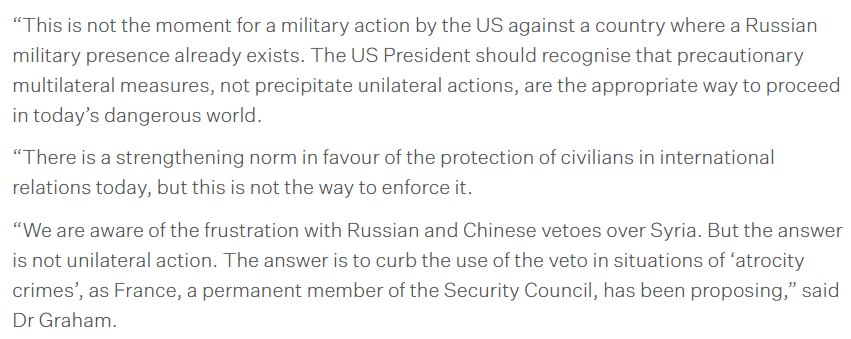
The first Gulf War had UN security council approval. The 2nd Gulf War was approved in a way that provided employment to legal pedants and more importantly, just enough political cover for the Chinese and Russians back home and with their low-rent allies to avoid their veto.
The New Zealand Greens cannot go on about multinational responses than oppose wars with UN security council approval.
Naturally, the Greens opposed NZ participation in the Afghanistan war despite its clear-cut UN authorisation. NATO and other mutual defence treaties were specifically triggered after 9/11.
The USA and others were and still are at war with Al-Qaeda; they can use force against that enemy and those who harbour them. The Taliban was warned. A Wiki has this nice quote by Stone (1921):
When the territorial sovereign is too weak or is unwilling to enforce respect for international law, a state which is wronged may find it necessary to invade the territory and to chastise the individuals who violate its rights and threaten its security.
The 9/11 terrorists were air pirates. NATO and allied military entered Afghanistan to subdue the home base of these brigands and those that harboured them:
- Naval and military deployments against pirate’s lairs date back thousands of years.
- The first war of the USA was with the Barbary Pirates in 1801 to 1805, with another war in 1815. These pirates waged war against the shipping of other nations, seized cargoes and ships, and sold captives into slavery.
- Punitive expeditions against bandits were commonplace too, such as chasing Pancho Villa and his gang of bandits back into Mexico in 1916.
- The U.S. military recently attacked a Somalian maritime pirate camp to rescue hostages. EU naval forces have also attacked these pirate lairs to destroy boats and supplies.

Clint Eastwood It’s Halftime in America Superbowl ad
13 Sep 2016 Leave a comment
in defence economics, economics, economics of media and culture Tags: Clint Eastwood, war against terror
A nuclear free New Zealand delayed the end of the Cold War
24 Jul 2016 Leave a comment
in defence economics, politics - New Zealand, war and peace Tags: Cold War, game theory, George Orwell, nuclear free New Zealand, peace movements, war against terror
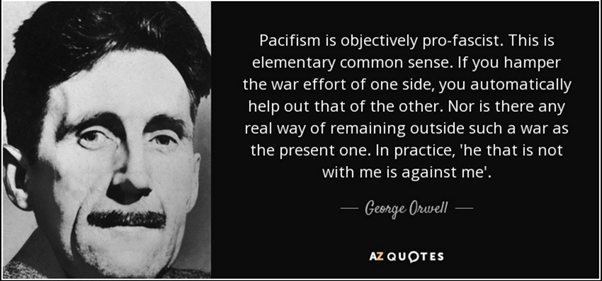
If the dilettantes at the end of the known world accomplished anything at all by declaring New Zealand nuclear free after 1984, anything at all, it was to prolong the Cold War, embolden Communist Russia and increase the chance of a nuclear exchange. As George Orwell said in 1941
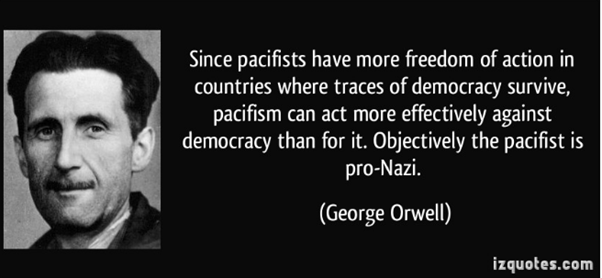
Pacifism is objectively pro-Fascist. This is elementary common sense. If you hamper the war effort of one side you automatically help that of the other. Nor is there any real way of remaining outside such a war as the present one. In practice, ‘he that is not with me is against me’.
The idea that you can somehow remain aloof from and superior to the struggle, while living on food which British sailors have to risk their lives to bring you, is a bourgeois illusion bred of money and security.
Mr Savage remarks that ‘according to this type of reasoning, a German or Japanese pacifist would be “objectively pro-British”.’ But of course he would be! That is why pacifist activities are not permitted in those countries (in both of them the penalty is, or can be, beheading) while both the Germans and the Japanese do all they can to encourage the spread of pacifism in British and American territories. The Germans even run a spurious ‘freedom’ station which serves out pacifist propaganda indistinguishable from that of the P.P.U. They would stimulate pacifism in Russia as well if they could, but in that case they have tougher babies to deal with.
In so far as it takes effect at all, pacifist propaganda can only be effective against those countries where a certain amount of freedom of speech is still permitted; in other words it is helpful to totalitarianism.
There is a strong peace movement in the 1930s that undermined rearmament at every point. Indeed, the then leader of the British Labour Party met with Hitler one afternoon with the aim of persuading him to become a Christian pacifist. He failed.
The slaughterhouse of World War I would certainly rest on the memory but Hitler gave them no choice but to rearm yet some on the Left would not accept this reality. The purpose of British foreign policy in the 1930s was to buy time to rearmament before the inevitable clash.
The pro-fascism of the peace movement continues to this day. To quote Michael Walzer
so many leftists rushed to the defense of civil liberties while refusing to acknowledge that the country faced real dangers–as if there was no need at all to balance security and freedom.
Maybe the right balance will emerge spontaneously from the clash of right-wing authoritarianism and left-wing absolutism, but it would be better practice for the left to figure out the right balance for itself, on its own; the effort would suggest a responsible politics and a real desire to exercise power, some day.
But what really marks the left, or a large part of it, is the bitterness that comes with abandoning any such desire. The alienation is radical.
How else can one understand the unwillingness of people who, after all, live here, and whose children and grandchildren live here, to join in a serious debate about how to protect the country against future terrorist attacks? There is a pathology in this unwillingness, and it has already done us great damage.
With one exception, democracies do not go to war with other democracies. There are plenty of undemocratic countries out there with dictators willing to have it go if they see weakness.
That is before you consider the suspicion that the Communist dictatorships had of other countries. In Tom Schelling’s view, many wars including World War 1 were the products of mutual alarm and unpredictable tests of will.
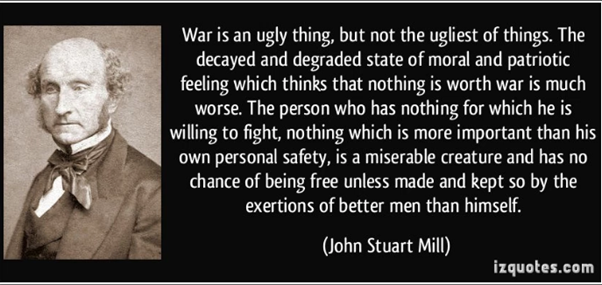
Robert Aumann argued well that the way to peace is like bargaining in a medieval bazaar. Never look too keen, and bargain long and hard. Aumann argues that:
If you are ready for war, you will not need to fight. If you cry ‘peace, peace,’ you will end up fighting… What brings war is that you signal weakness and concessions.
A nuclear free New Zealand signalled weakness and a willingness to make concessions. The peace movements across all democracies had the same effect.
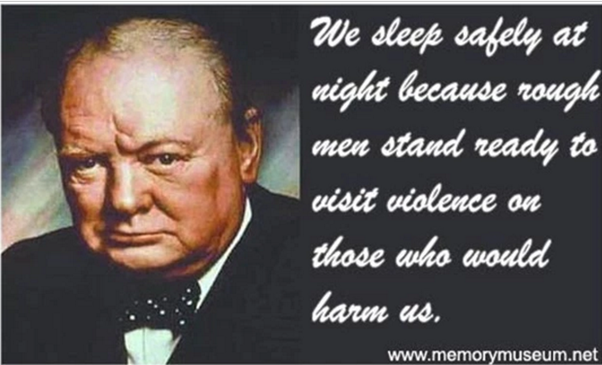
Disarmament increases the chances of war. Aumann gave the example of the Cold War of how their stockpiles of nuclear weapons and fleets of bombers prevented a hot war from starting:
In the long years of the cold war between the US and the Soviet Union, what prevented “hot” war was that bombers carrying nuclear weapons were in the air 24 hours a day, 365 days a year? Disarming would have led to war.
Peace activists are utterly clueless about what is discussed at peace talks. The ability to negotiate a credible peaceful settlement between sovereign states depends on:
- the divisibility of the outcome of the dispute,
- the effectiveness of the fortifications and counterattacks with which an attacker would expect to have to contend, and
- on the permanence of the outcome of a potential war.
Central to any peace talks is that any peace agreement is credible – it will hold and not will not be quickly broken:
A state would think that another state’s promise not to start a war is credible only if the other state would be better off by keeping its promise not to start a war than by breaking its promise.
Peace talks occur only when there something to bargain about. As James Fearon explained, there must be
a set of negotiated settlements that both sides prefer to fighting
That need for a bargaining range is the fundamental flaw of peace activists. When they call for peace talks, peace activists never explain what will be discussed in a world where everybody is not like them terms of good intentions.
What are the possible negotiated settlements that each both side will prefer to continue fighting? Diplomacy is about one side having some control over something the other side wants and this other side have something you want to exchange. In a war, the attacker thinks he can get what it wants to fighting for it.
If peace activists truly want peace, rather than victory for the other side, they must prepare for war including fortified borders so that the other side doesn’t dare cross them and start a war. A peace settlement depends upon the ability to divide the contested territory with or without fortified borders to make a settlement credible:
…despite the costs and risks of war, if a dispute is existential, or, more generally, if the whole of a contested territory is sufficiently more valuable than the sum of its parts, then a peaceful settlement is not possible.
A peaceful settlement of a territorial dispute, and especially a settlement that includes an agreement not to fortify the resulting border, also can be impossible if a state thinks, even if over optimistically, that by starting a war it would be able at a small cost to settle the dispute completely in its favour permanently.
 Utopia, you are standing in it!
Recent Comments