

California Home Prices Are Soaring. Here’s Why: houses as expensive as Wellington’s
09 Mar 2019 Leave a comment
in economics of regulation, politics - USA, Public Choice, rentseeking, urban economics Tags: housing affordability, land supply, zoning
How Zoning Laws Are Holding Back America’s Cities
15 Sep 2018 Leave a comment
in economics of bureaucracy, economics of regulation, income redistribution, Public Choice, rentseeking, urban economics Tags: NIMBY, zoning
.@nzfamilies commission estimate of cost of zoning
11 Mar 2018 1 Comment
in applied price theory, economics of regulation, politics - New Zealand, Public Choice, rentseeking, urban economics Tags: housing affordability, land supply, zoning

Build More Housing! San Francisco’s YIMBY Movement Has a Plan to Solve the City’s Housing Cris
06 Jan 2018 Leave a comment
in applied price theory, economics of religion, Public Choice, rentseeking, urban economics Tags: land supply, NIMBYs, zoning
There is a message in here somewhere
12 Nov 2017 Leave a comment
in applied price theory, economics of regulation, politics - New Zealand, politics - USA, urban economics Tags: land supply, zoning
.@PhilTwyford @JulieAnneGenter finest hour on housing affordability
10 Sep 2017 Leave a comment
in economics of regulation, politics - New Zealand, urban economics Tags: housing affordability, land use planning, zoning
Real housing prices since 1975
04 Apr 2017 Leave a comment
in economic history, economics of regulation, politics - Australia, politics - New Zealand, politics - USA, urban economics Tags: housing affordability, land affordability, land supply, zoning

.

The key role of housing costs in disaster recovery @ericcrampton @JordNZ #nzeq
16 Nov 2016 Leave a comment
in applied price theory, economic history, economics of natural disasters, economics of regulation, politics - New Zealand, politics - USA, urban economics Tags: land supply, land use planning, NYMBYs, RMA, zoning
The evidence abroad after earthquakes, hurricanes, flooding, tornados, and wartime bombing is that for growing cities, disasters, including carpet bombing and atomic bombs, are only temporary set-backs with few long-run economic and population consequences. A few years after a disaster, these cities even recover the industries they had before their calamities.
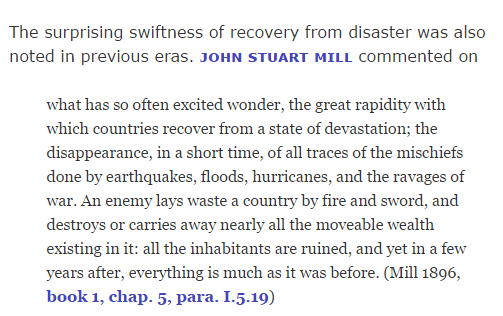
For growing cites, the loss of housing and other destruction does not affect the underlying demand from workers and businesses to be at the location. Florida has prospered despite over twenty hurricanes striking since 1988 and five of the six most damaging Atlantic hurricanes of all time striking since 1988.
Cities that are already in decline drop down onto an even faster downward population and economic trend after a major natural disaster. A large scale destruction of housing takes away the one compensating feature of these declining cities, which was cheap housing.
Housing prices in declining cities are usually well below construction costs. Low living costs partly offset the relative lack of local economic opportunity in these cities. New Orleans is an example of a declining city that did not recover fully from a disaster for this reason.
After Hurricane Katrina, New Orleans had much higher costs of housing because of flood damage but there were limited local economic opportunities to attract back old and new residents. About 20 per cent of the Katrina evacuees did not return.
Natural disasters be they earthquakes or hurricanes turn declining cities and towns from a dump with cheap housing to a dump with expensive housing. They can be a killer blow.
The main policy enabler of growing cities in the USA has been the avoidance of land use regulations that raise housing costs. Over the past 20 years, the fastest growing U.S. regions have not been those with the highest income or most attractive climates.
Flexible housing supply is the key determinant of regional growth. Land use regulations drive housing supply and determine which regions are growing. A regional approach to enabling increases in land and housing supply might reduce the tendency of many localities to block new construction.
When did a house become an investment? 40% price crash has happened before!
26 Sep 2016 Leave a comment
in economic history, urban economics Tags: housing affordability, housing prices, land supply, RMA, zoning
The Resource Management Act was passed in 1993.
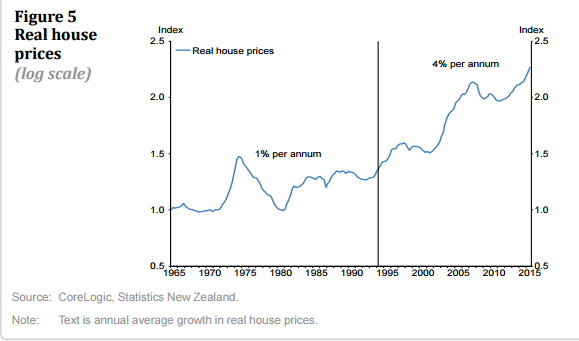
Note that there is considerable regional variation in housing prices in New Zealand.

Source: Property Prices in New Zealand | New Zealand Real Estate Prices.
New Zealand leads house price to income ratio across the OECD
31 Aug 2016 Leave a comment
in politics - New Zealand, urban economics Tags: housing affordability, land supply, RMA, zoning
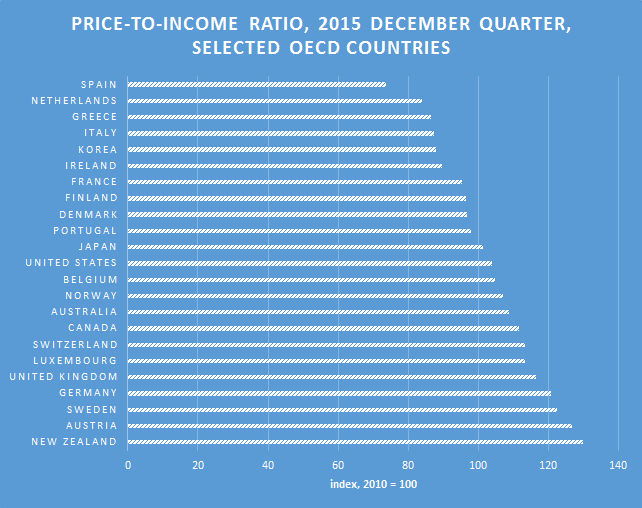
Source: IMF Global Housing Watch
Where will land come from 4 @NZGreens housing plan? @GarethMP
05 Aug 2016 Leave a comment
in applied price theory, economics of regulation, politics - New Zealand, urban economics Tags: Auckland, housing affordability, land supply, New Zealand Greens, RMA, The fatal conceit, zoning
The Greens are at it again proposing to build 100,000 affordable houses without ever explaining where the additional new land will come from.

There would have to be an amendment to the proposed Auckland unitary plan to free up more land for there to be a net increase in the supply of land in Auckland.
Unless there is that such amendment, a government plan to build 100,000 affordable houses in Auckland and elsewhere will simply be competing for the same fixed supply of land. If the supply of land is constrained from expanding by much, the only thing that will happen is that the price will go up with more money chasing the same amount of land and housing.
@metiria house prices won’t drop 40% by raising taxes, banning foreigners
27 Jul 2016 Leave a comment
in applied price theory, economics of regulation, politics - New Zealand, urban economics Tags: housing affordability, land supply, New Zealand Greens, RMA, zoning
Just increase the supply of land. Extending the capital gains tax and banning foreigners from buying land will do no good. An average house price 10 times the average income in Auckland is not a demand-side problem.

Source: Is Your Town Building Enough Housing? – Trulia’s Blog.
There are plenty of examples of US cities with different land supply restrictions but common national surges in demand for housing such as prior to the GFC. Cities with liberal land supply experienced only small increases in house prices.

Source: Regionally, Housing Rebound Depends on Jobs, Local Supply Tightness – The Long-Awaited Housing Recovery – 2013 Annual Report – Dallas Fed from Federal Housing Finance Agency; Bureau of Economic Analysis; “The Geographic Determinants of Housing Supply,” by Albert Saiz, Quarterly Journal of Economics, vol. 125, no. 3, 2010, pp. 1253–96.
The Greens should follow ACT and the Labour Party in calling for the abolition of the Auckland urban limit and changes in council finances so they can fund the necessary infrastructure quickly.
 Utopia, you are standing in it!
Recent Comments