Elements of Access: Induced Demand

Wes Marshall's avatarDavid Levinson

Induced Demand Induced Demand

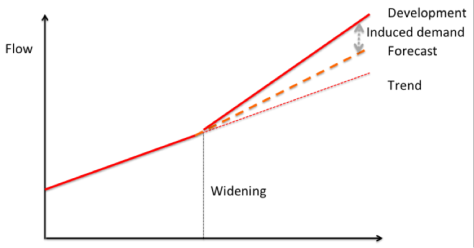
PREDICTED TRAFFIC AND ACTUAL TRAFFIC AFTER A ROAD WIDENING

by Wes Marshall

You already have a congested roadway, and the transportation planners predict even more traffic on that road in the near future. What do you do? For most of the last century, the answer was to increase capacity. In the short-term, this seemed to work. Time and time again, over the long-term, the actual amount of traffic after the capacity increase grew far more than expected. What seemed like an obvious solution to a congestion problem continued to disappoint. But why?

The reason for these failures lies with the principle of induced demand. Once capacity increases, not only do you get the originally predicted traffic growth, but you also facilitate some often unanticipated changes in travel behavior. First, existing road users might change the time of day when they travel; instead of leaving at 5 AM to…

View original post 162 more words

Image

Breathing Beijing’s air

Image

I am not responsible for the ads on my blog

Image

@oxfamnz @GreenpeaceNZ get your ODA priorities straight

Image

Were the good old days any good

Image

John Stuart Mill on the role of error in finding truth

Image

Creative destruction in sector shares in jobs

Image

The wisdom of Homer Simpson: peak oil, oil pollution and the price at the pump

Image

Fred Thompson’s America

Image

Cuts in spending less costly than tax increases @jeremycorbyn @johnmcdonnellMP

Image

So how, exactly, do officials figure out how many people will use mass transit projects? | MinnPost

David M Levinson's avatarDavid Levinson

Peter Callaghan writes an excellent piece for MinnPost “So how, exactly, do officials figure out how many people will use mass transit projects?” I was interviewed, as was Marty Wachs of UCLA and local planning officials and planners.

Selected quotes:

In a seminal 1992 study of the effects of the federal funding system, however, transportation economist Don H. Pickrell found that cities favored expensive capital projects over improved bus systems, largely because that was where the money was. The funding system had produced an incentive to overestimate ridership and underestimate costs. And why not: local agencies weren’t held accountable for the accuracy of their forecasts.

“You had grade inflation,” said David Levinson, the CTS Chair in Transportation Planning at the University of Minnesota. “Forecasts were being abused to achieve a particular outcome because there was a lot of money at stake.”

Levinson agrees that ridership forecasting is…

View original post 436 more words

Image

Peak tablet and peak e-book reader

Source: U.S. Technology Device Ownership 2015 | Pew Research Center

Image

Travel by Purpose per Household | The End of Traffic and the Future of Transport

More data on the general irrelevance of public transport.

Most transport needs are not related to work. The only thing the buses and trains are good for is getting the middle class to and from their jobs in the city

David M Levinson's avatarDavid Levinson

he evidence now shows people visit friends less. While we don't know for sure that the internet prompted this, time online continues to rise, especially mobile. Time spent socializing off-line has dropped about 8% in less than a decade, from over 40 minutes per day in 2003 to 37 minutes in 2011 according to the American Time Use Survey. As shown in Figure 3.7, recession impacted or not, the National Household Travel Survey finds social and recreational travel has dropped markedly in absolute terms from 1990. While lack of work obviously crimps work travel, the lack of work in principle frees up time for non-work travel, particularly things like visiting friends. From Levinson and Krizek (2015) The End of Traffic and the Future of Transport. http://davidlevinson.org/the-end-of-traffic-and-the-future-of-transport/ Figure 3.7 Source: Table 5: Summary of Travel Trends, 2009 National Household Travel Survey)⁠ http://nhts.ornl.gov/2009/pub/stt.pdf. The evidence now shows people visit friends less. While we don’t know for sure that the internet prompted this, time online continues to rise, especially mobile. Time spent socializing off-line has dropped about 8% in less than a decade, from over 40 minutes per day in 2003 to 37 minutes in 2011 according to the American Time Use Survey. As shown in Figure 3.7, recession impacted or not, the National Household Travel Survey finds social and recreational travel has dropped markedly in absolute terms from 1990. While lack of work obviously crimps work travel, the lack of work in principle frees up time for non-work travel, particularly things like visiting friends.

From Levinson and Krizek (2015) The End of Traffic and the Future of Transport.

Figure 3.7 Source: Table 5: Summary of Travel Trends, 2009 National Household Travel Survey.

View original post

Image

Today in history: The 1929 Wall Street crash

Image

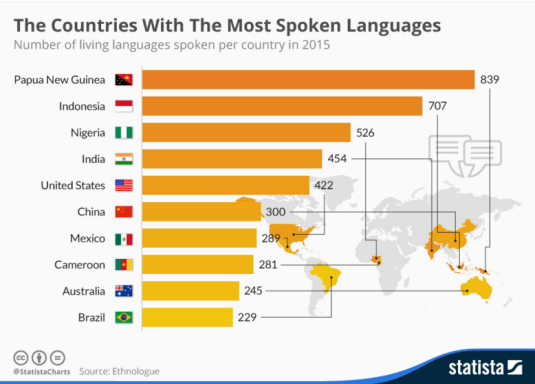
Papua New Guinea has the most spoken languages

Image

Previous Older Entries Next Newer Entries

Bassett, Brash & Hide

Celebrating humanity's flourishing through the spread of capitalism and the rule of law

Truth on the Market

Scholarly commentary on law, economics, and more

The Undercover Historian

Beatrice Cherrier's blog

Matua Kahurangi

Celebrating humanity's flourishing through the spread of capitalism and the rule of law

Temple of Sociology

Celebrating humanity's flourishing through the spread of capitalism and the rule of law

Velvet Glove, Iron Fist

Celebrating humanity's flourishing through the spread of capitalism and the rule of law

Why Evolution Is True

Why Evolution is True is a blog written by Jerry Coyne, centered on evolution and biology but also dealing with diverse topics like politics, culture, and cats.

Down to Earth Kiwi

Celebrating humanity's flourishing through the spread of capitalism and the rule of law

NoTricksZone

Celebrating humanity's flourishing through the spread of capitalism and the rule of law

Homepaddock

A rural perspective with a blue tint by Ele Ludemann

Kiwiblog

DPF's Kiwiblog - Fomenting Happy Mischief since 2003

The Dangerous Economist

Celebrating humanity's flourishing through the spread of capitalism and the rule of law

Watts Up With That?

The world's most viewed site on global warming and climate change

The Logical Place

Tim Harding's writings on rationality, informal logic and skepticism

Doc's Books

A window into Doc Freiberger's library

The Risk-Monger

Let's examine hard decisions!

Uneasy Money

Commentary on monetary policy in the spirit of R. G. Hawtrey

Barrie Saunders

Thoughts on public policy and the media

Liberty Scott

Celebrating humanity's flourishing through the spread of capitalism and the rule of law

Point of Order

Politics and the economy

James Bowden's Blog

A blog (primarily) on Canadian and Commonwealth political history and institutions

Science Matters

Reading between the lines, and underneath the hype.

Peter Winsley

Economics, and such stuff as dreams are made on

A Venerable Puzzle

"The British constitution has always been puzzling, and always will be." --Queen Elizabeth II

The Antiplanner

Celebrating humanity's flourishing through the spread of capitalism and the rule of law

Bet On It

Celebrating humanity's flourishing through the spread of capitalism and the rule of law

History of Sorts

WORLD WAR II, MUSIC, HISTORY, HOLOCAUST

Roger Pielke Jr.

Undisciplined scholar, recovering academic

Offsetting Behaviour

Celebrating humanity's flourishing through the spread of capitalism and the rule of law

JONATHAN TURLEY

Res ipsa loquitur - The thing itself speaks

Conversable Economist

In Hume’s spirit, I will attempt to serve as an ambassador from my world of economics, and help in “finding topics of conversation fit for the entertainment of rational creatures.”

The Victorian Commons

Researching the House of Commons, 1832-1868

The History of Parliament

Articles and research from the History of Parliament Trust

Books & Boots

Reflections on books and art

Legal History Miscellany

Posts on the History of Law, Crime, and Justice

Sex, Drugs and Economics

Celebrating humanity's flourishing through the spread of capitalism and the rule of law

European Royal History

Exploring the Monarchs of Europe

Tallbloke's Talkshop

Cutting edge science you can dice with

Marginal REVOLUTION

Small Steps Toward A Much Better World

NOT A LOT OF PEOPLE KNOW THAT

“We do not believe any group of men adequate enough or wise enough to operate without scrutiny or without criticism. We know that the only way to avoid error is to detect it, that the only way to detect it is to be free to inquire. We know that in secrecy error undetected will flourish and subvert”. - J Robert Oppenheimer.

STOP THESE THINGS

The truth about the great wind power fraud - we're not here to debate the wind industry, we're here to destroy it.

Lindsay Mitchell

Celebrating humanity's flourishing through the spread of capitalism and the rule of law

Alt-M

Celebrating humanity's flourishing through the spread of capitalism and the rule of law

croaking cassandra

Economics, public policy, monetary policy, financial regulation, with a New Zealand perspective

The Grumpy Economist

Celebrating humanity's flourishing through the spread of capitalism and the rule of law

International Liberty

Restraining Government in America and Around the World