The selectivity of the renegade left on international law

International human rights and humanitarian law is a common port of call for the Left in a great many domestic policy debates. This is despite international law being the product of nation-states pursuing their own interests on the international stage.


International law does not pull states towards compliance when this contrary to their national interests. What international law can achieve is therefore rather limited.

International law is a part of international politics. States enter into treaties and other international legal institutions when doing so serves their interests. Any cooperation among states is a by-product of that rational, self-interested act.

The laws of war are governed by reciprocity, which can produce self-enforcing patterns of behaviour. Eric Posner explains:

The laws of war have a simple economic explanation.

When two states go to war, they foresee an endpoint, which will typically involve certain concessions by one state—the transfer of territory, monetary reparations, etc.

Given that both states will end up at some new equilibrium in terms of territory or wealth or power, it is best for both states if they can reach that equilibrium cheaply rather than expensively.

Before the twentieth century, European states and other major powers would presumptively respect the laws of war in wars among themselves but not wars with tribal groups they aimed to subdue.

In World War II, the rules were respected on the western front but not on the eastern front. On the Eastern front, there were long supply lines and the massive number of prisoners who were taken—both of these factors made it extremely costly to hold POWs in humane conditions. The Nazis also regarded Russians as subhuman, when one side launches a total war, the other side has no reason to respect the laws of war.

Human rights laws attempts to produce public goods and is thus subject to collective action problems.

International law that has not been ratified by domestic political processes has a severe democracy deficit because it is not subject to any kind of democratic electoral accountability.

International law-making itself is generally less transparent than domestic political processes, which further undermines democratic control of its content.

The Left is keen on international law despite it being influenced by nondemocratic and even totalitarian nations.

The UN universal declaration of human rights was watered down on requiring multi-party democracy and on the scope of the definition of genocide to accommodate Stalin’s many crimes in the name of socialism.

If you want to scratch a Leftist to find an economic nationalist, start talking about duties under international economic law.

A legal internationalist on the Left quickly become legal xenophobes when it suits them.

International economic law is adopted by mutual agreement bilaterally or multilaterally on a no vote, no veto basis such as at the WTO. Member countries sign the final agreements as they please. Any new rules have no effect until domestic parliaments ratify the agreement and amend local trade and investment laws.

The Left complains about any lack of transparency in international law and their implications for national sovereignty only when trade treaties are under discussion.

When it comes to international human rights  law or international environmental law, the most obscure or treaties ratified decades ago under different circumstances and often very limited purposes are holy writ.

These international laws  trump national sovereignty without question  and the will of the majority within a country and are open to the most free wheeling interpretations and private enforcement by busy bodies, do-gooders and activists with varying degrees of non-violence.

What is most disappointing about the Left and international law is their attempt to bully other countries over the tax rates.

If Sweden has the right to set high taxes, others have the equally sovereign right to set low taxes.

International law is not a cafeteria where you can pick what suits you. Just as there is international humanitarian law, there is international economic law. One in, all in?!

International economic law makes a far greater contribution to peace than any other part of international law. Free trade creates mutual dependencies among nations. Tariff walls do not promote peace.

Radical Economics: Yo Hayek! A BBC Radio interview with Jamie Whyte on Austrian Economics

Other contributors to this talk are: Prof Steven Horwitz, Prof Larry White, Prof Robert Higgs, Philip Booth, Steve Baker, MP, John Papola, and Lord Robert Skidelsky, and Tim Congdon.

Game Theory Is Really Counterintuitive

wspaniel's avatarWilliam Spaniel

Every now and then, I hear someone say that game theory doesn’t tell us anything we don’t already know. In a sense, they are right—game theory is a methodology, so it’s not really telling us anything that our assumptions are not. However, I challenge someone to tell me that they would have believed most of the things below if we didn’t have formal modeling.

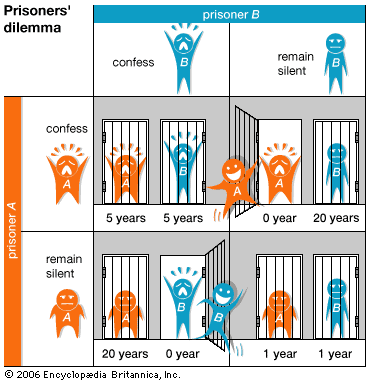
  • People often take aggressive postures that lead to mutually bad outcomes even though mutual cooperation is mutually preferable. Source.
  • Even if everyone agrees that an outcome is everyone’s favorite, they might not get that outcome. Source.
  • Sometimes having fewer options is better than having more options. Source.
  • On a penalty kick, soccer players should kick more frequently toward their weaker side as their weaker side becomes increasingly inaccurate. Source.
  • In a duel, both gunslingers should shoot at the same time, even if one is a worse…

View original post 501 more words

Robert Lucas on the role of income redistribution in economic development

clip_image002

Of the tendencies that are harmful to sound economics, the most seductive, and in my opinion the most poisonous, is to focus on questions of distribution.

In this very minute, a child is being born to an American family and another child, equally valued by God, is being born to a family in India.

The resources of all kinds that will be at the disposal of this new American will be on the order of 15 times the resources available to his Indian brother.

This seems to us a terrible wrong, justifying direct corrective action, and perhaps some actions of this kind can and should be taken.

But of the vast increase in the well-being of hundreds of millions of people that has occurred in the 200-year course of the industrial revolution to date, virtually none of it can be attributed to the direct redistribution of resources from rich to poor.

The potential for improving the lives of poor people by finding different ways of distributing current production is nothing compared to the apparently limitless potential of increasing production.

via The Industrial Revolution: Past and Future 2003 Annual Report Essay by Robert E. Lucas, Jr

Deirdre McCloskey on why poverty matters more than inequality (BBC Radio interview)

In place of capitalism, she talks of a system of ‘market-tested innovation and supply’:

You have to ask what the source of the inequality is.

If the source is stealing from poor people, I’m against it.

But if the source is, you got there first with an innovation that everyone wants to buy, so you get paid some crazy sum, you ought to be paid so much, don’t you think?

There is noting to be gained by focusing on inequality.

McCloskey

McCloskey’s characteristically extravagant self-description:

postmodern free-market quantitative rhetorical Episcopalian feminist Aristotelian woman who was once a man.

She asks that compared to all the envy driven policies, what has helped the poor more than increasing the size of pie?

McCloskey argued that:

  • Equality is not an ethically sensible purpose.
  • Changes in inequality was made an issue by the intellectuals, not by the working class.
  • Absolute poverty is what matters and can be solved.
  • Inequality is a fool’s errand.
  • Who are you going to trust to fix a problem is the key?
  • You must look at the actual ability of government to do various things.
  • predicting the future of human affairs is a deeply foolish project.

Peter Saunders on The Spirit Level Delusion

via Peter Saunders on The Spirit Level | Catallaxy Files.

The car space measuring squad

I bought a BMW in Japan. Before I could, I had to rent a car space and have a policeman come out to measure it to make sure it will big enough from my car.

Anyone who steps out of line in the Tokyo Police Department, the car space measuring squad is where you will spend the rest of your career. I’m sure they envy the guys with the window seats in the big corporations.

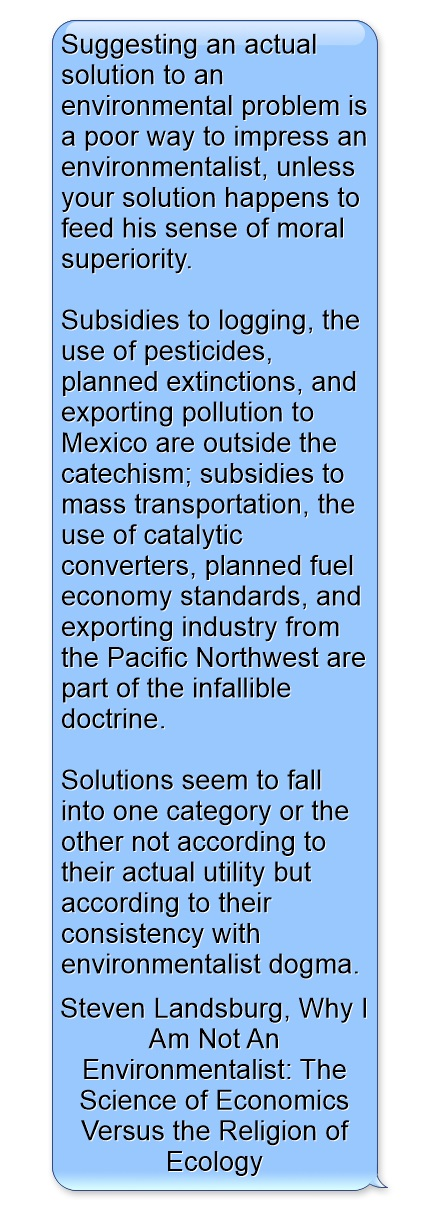
Why I am not an Environmentalist

Steve Landsberg why I am not an environmentalist

Life expectancy at birth and 65 in 1900, 1950, and 2000

Image

Make Bono history | The Economist


Presidents and prime ministers in the West have made grandiloquent speeches about making poverty history for fifty years.

In 2000 the United Nations announced a series of eight Millenium Development Goals to reduce poverty, improve health and so on. The impact of such initiatives has been marginal at best.

Almost all of the fall in the poverty rate should be attributed to economic growth.

Fast-growing economies in the developing world have done most of the work.

Between 1981 and 2001 China lifted 680m people out of poverty.

Since 2000, the acceleration of growth in developing countries has cut the numbers in extreme poverty outside China by 280m

Between 1981 and 2010, China lifted a 680 million people out poverty—more than the entire population of Latin America. This cut the poverty rate in China from 84% in 1980 to about 10% in 2010.

The record of poverty reduction has profound implications for aid.

One of the main purposes of setting development goals was to give donors a wish list and persuade them to put more resources into the items on the list.

This may have helped in some areas but it is hard to argue that aid had much to do with halving poverty.

via Poverty: Not always with us | The Economist and The Economist 

The United States’ Big Welfare State

Jason Sorens's avatarPILEUS

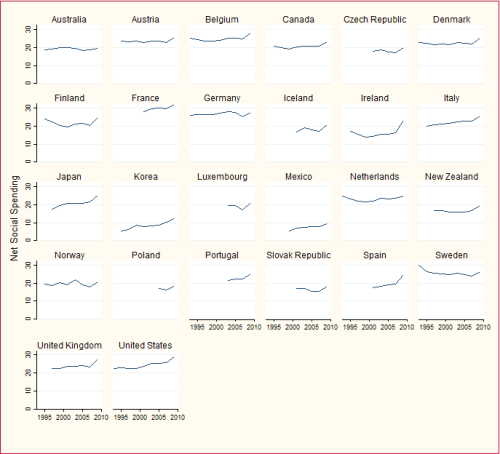
The United States has long had a larger welfare state than most other Western democracies. Surprised? You may not be aware of the new research on “net social spending.”

Net social spending includes not just government expenditures on social programs, but also tax credits for social purposes and, as a debit, government taxation of social benefits. It turns out that many of the so-called “generous” European welfare states tax social benefits at a high rate. Meanwhile, the United States uses the tax code to help the poor, through the Earned Income Tax Credit. We should also include mandatory private social payments, which are not directly paid by the government.

Using the OECD data, I have plotted total net social expenditure over time for 26 rich countries (click the image to zoom in).

the united states has a bigger welfare state than most other democracies

As of 2009, the United States had the second largest welfare state in the world, at 28.8%…

View original post 90 more words

The detention of combatants in wartime

The UK Attorney-General got really worked up after 9/11 about the detention without trial in Gitmo of British terrorists captured in the field of battle by the USA.

The British had internment without trial from 1971 to 1975 in Northern Ireland. The UK Attorney-general accidentally forgot about this when getting prim and proper over the detention of British terrorists abroad:

  • Internment without trial was not new as the Northern Ireland Government had used special powers acts from time to time since 1922; and
  • The 1971 internments were under the Civil Authorities (Special Powers) Act (1922) (Northern Ireland) on August 9, 1971, and then the Detention of Terrorists (Northern Ireland) Order 1972.

Antiterrorist laws in the UK from the 1970s onwards allowed suspects to be held for 7 or 14 days without charge, and now allow for 42 days detention without being charge.

Canada interned 450 Quebec nationalists without trial during the October crisis in 1971 after two kidnappings and a history of bombings and several murders dating from the early 1960s. That left-wing hero Trudeau was the dirty rotten scoundrel behind this human rights abomination. Canada uses a memory hole for the October crisis when it rides its own high horse over Gitmo

Australia and the UK had interment of enemy aliens in World War 1 and 2:

  • During the First World War, 6,890 Germans were interned, of whom 4,500 were Australian residents before 1914. In NSW the principal place of internment was the Holsworthy Military Camp. Shame Labour shame!
  • Australia interned about 7000 residents, including more than 1500 British nationals, during World War II. A further 8000 people were sent to Australia to be interned after being detained overseas by Allies. At its peak in 1942, more than 12,000 people were interned in Australia. Shame Labor shame.

Canada and the USA interned Japanese citizens and aliens by the hundreds of thousands in World War 2.

Lincoln suspended habeas corpus in the civil war. He did not consult Congress.

Roosevelt had several German saboteurs that landed in the USA quickly executed after brief trials before military commissions in 1942.

The detention of captured enemy combatants is incidental to the conduct of a war.

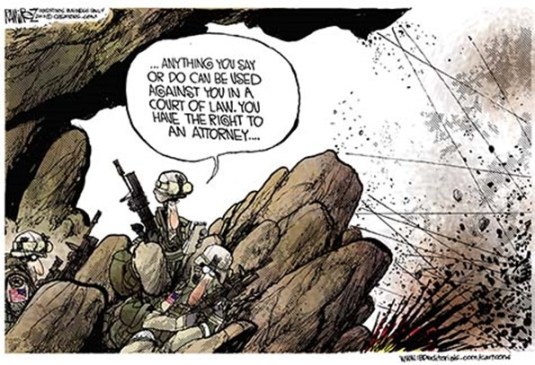
Was this detention without trial wrong? Did these soldiers have a right to a trial? Did they have the right to bail? The right of access to a lawyer?

There would need to have been a lot of lawyers because 11 million German and Japanese soldiers were detained by the Allies by the end of the war in 1945.

Local cafe cat

image

Image

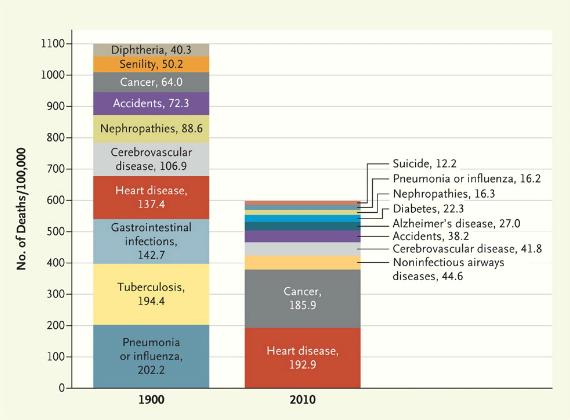
How We Used to Die

aside from a halving in the chances of dying in an accident, Pneumonia/influenza, tuberculosis, and gastrointestinal infections each claimed more lives per 100,000 people than did heart disease in 1900. The major causes of death 100 years ago are now historic curios rather than current threats.

via priceonomics.com

Do ‘more police’ make us safe? | vox

The massive re-deployment of police after the July 2005 London bombings is a test of whether more police reduce crime.

There was a 34% increase in hours worked by police in central-inner London in the six weeks that followed the attacks.

Draca, Machin and Witt in Panic on the Streets of London found a 11% fall in crime. A 10% increase in police leads to a 3% fall in crime. This is broadly consistent with previous casual estimates of the impact of police on crime.

Klick and Tabarrok (2005) found that increases in the Terror Alert levels in the Mall area of Washington, D.C cut crime. A 10% increase in police leads to a 3% fall in crime.

Previous Older Entries

Bassett, Brash & Hide

Celebrating humanity's flourishing through the spread of capitalism and the rule of law

Truth on the Market

Scholarly commentary on law, economics, and more

The Undercover Historian

Beatrice Cherrier's blog

Matua Kahurangi

Celebrating humanity's flourishing through the spread of capitalism and the rule of law

Temple of Sociology

Celebrating humanity's flourishing through the spread of capitalism and the rule of law

Velvet Glove, Iron Fist

Celebrating humanity's flourishing through the spread of capitalism and the rule of law

Why Evolution Is True

Why Evolution is True is a blog written by Jerry Coyne, centered on evolution and biology but also dealing with diverse topics like politics, culture, and cats.

Down to Earth Kiwi

Celebrating humanity's flourishing through the spread of capitalism and the rule of law

NoTricksZone

Celebrating humanity's flourishing through the spread of capitalism and the rule of law

Homepaddock

A rural perspective with a blue tint by Ele Ludemann

Kiwiblog

DPF's Kiwiblog - Fomenting Happy Mischief since 2003

The Dangerous Economist

Celebrating humanity's flourishing through the spread of capitalism and the rule of law

Watts Up With That?

The world's most viewed site on global warming and climate change

The Logical Place

Tim Harding's writings on rationality, informal logic and skepticism

Doc's Books

A window into Doc Freiberger's library

The Risk-Monger

Let's examine hard decisions!

Uneasy Money

Commentary on monetary policy in the spirit of R. G. Hawtrey

Barrie Saunders

Thoughts on public policy and the media

Liberty Scott

Celebrating humanity's flourishing through the spread of capitalism and the rule of law

Point of Order

Politics and the economy

James Bowden's Blog

A blog (primarily) on Canadian and Commonwealth political history and institutions

Science Matters

Reading between the lines, and underneath the hype.

Peter Winsley

Economics, and such stuff as dreams are made on

A Venerable Puzzle

"The British constitution has always been puzzling, and always will be." --Queen Elizabeth II

The Antiplanner

Celebrating humanity's flourishing through the spread of capitalism and the rule of law

Bet On It

Celebrating humanity's flourishing through the spread of capitalism and the rule of law

History of Sorts

WORLD WAR II, MUSIC, HISTORY, HOLOCAUST

Roger Pielke Jr.

Undisciplined scholar, recovering academic

Offsetting Behaviour

Celebrating humanity's flourishing through the spread of capitalism and the rule of law

JONATHAN TURLEY

Res ipsa loquitur - The thing itself speaks

Conversable Economist

Celebrating humanity's flourishing through the spread of capitalism and the rule of law

The Victorian Commons

Researching the House of Commons, 1832-1868

The History of Parliament

Articles and research from the History of Parliament Trust

Books & Boots

Reflections on books and art

Legal History Miscellany

Posts on the History of Law, Crime, and Justice

Sex, Drugs and Economics

Celebrating humanity's flourishing through the spread of capitalism and the rule of law

European Royal History

Exploring the Monarchs of Europe

Tallbloke's Talkshop

Cutting edge science you can dice with

Marginal REVOLUTION

Small Steps Toward A Much Better World

NOT A LOT OF PEOPLE KNOW THAT

“We do not believe any group of men adequate enough or wise enough to operate without scrutiny or without criticism. We know that the only way to avoid error is to detect it, that the only way to detect it is to be free to inquire. We know that in secrecy error undetected will flourish and subvert”. - J Robert Oppenheimer.

STOP THESE THINGS

The truth about the great wind power fraud - we're not here to debate the wind industry, we're here to destroy it.

Lindsay Mitchell

Celebrating humanity's flourishing through the spread of capitalism and the rule of law

Alt-M

Celebrating humanity's flourishing through the spread of capitalism and the rule of law

croaking cassandra

Economics, public policy, monetary policy, financial regulation, with a New Zealand perspective

The Grumpy Economist

Celebrating humanity's flourishing through the spread of capitalism and the rule of law

International Liberty

Restraining Government in America and Around the World