Why charging for plastic bags doesn’t work

My local supermarket tried to charge for plastic bags then backed down because of customer protests.

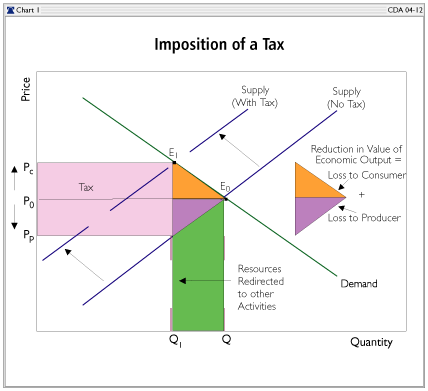
In the UK, a compulsory 5p charge on plastic bags first resulted in a sharp drop consumption then a rise in in the use of plastic bags last year. It seems the immediate change in behaviour reaped by the new charges is short-lived and it doesn’t take long for old habits to re-emerge.

Attaching a cost to something that was free certainly reduces frivolous consumption, but if that cost that is too low can merely act to pay off one’s conscience.

Beware of putting a price on guilt and letting people down.

A classic paper from 2000, Gneezy and Rustichini studied what happened when day-care centres in Israel tried to reduce late parental pick-ups by introducing fines.

Before long, late pick-ups had not reduced, they had doubled. Why? Because parents felt that the fine was a price worth paying and the guilt which had previously controlled their behaviour was assuaged.

The Egyptian blockade of the Gaza Strip is the real target of Hamas

David Brooks argues that Egypt is the real target of the Hamas missiles. After the recent military coup in Egypt, the military leaders closed roughly 95% of the tunnels that connected Egypt to Gaza. In 2013-2014, Egypt’s military has destroyed most of the 1,200 tunnels which were used to smuggle food, weapons and other goods into Gaza, including flooding them with sewage.

Hamas derived 40% of its tax revenue from tariffs on goods that flow through those tunnels. One estimate puts the economic losses at nearly a fifth of the Gazan GDP.

Hamas couldn’t strike at Egypt to end the blockade so it attacked Israel  in a proxy war. If Hamas could emerge as the heroic fighter, if Arab TV screens were filled with dead Palestinian civilians, then public outrage might force Egypt to lift the blockade.

When Mousa Abu Marzook, the deputy chief of the Hamas political bureau, dismissed a plea for a cease-fire, he asked

What are 200 martyrs compared with lifting the siege?

Hamas is firing rockets at Tel Aviv and sending terrorists through tunnels into Israel while aiming at Cairo.

The Gaza Strip has two borders: both Egypt and Israel restrict trade with the Gaza. The Egyptian blockade of the Gaza Strip is biting much more than the Israeli blockade.

HT: marginalrevolution.com

Ebola is not a major public health risk in a developed country

  1. People need to be in intimate contact to spread the virus.
  2. Ebola is much harder to spread than respiratory infections, such as influenza or measles.
  3. Ebola also can only be spread by people with active symptoms.

People in developed countries seek treatment when they feel ill and submit to quarantine if diagnosed with a contagious disease.

HT: reason.com

Who Routinely Trounces the U.S. Stock Market? Try 2 Out of 2,862 Funds – NYTimes.com

For the three years ended March 2014, 14.10% of large-cap funds, 16.32% of mid-cap funds and 25.00% of small-cap funds maintained a top-half ranking over three consecutive 12-month periods. Random expectations would suggest a rate of 25%.

After five years, two funds are still beating the market in each of the last five years.The rest of fallen by the wayside.

via Who Routinely Trounces the Stock Market? Try 2 Out of 2,862 Funds – NYTimes.com

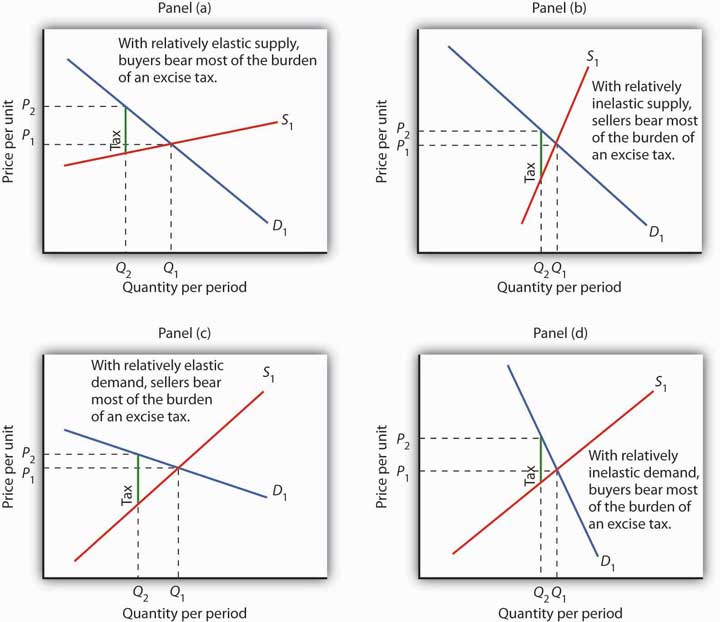
The most forgotten diagrams in the political economy of taxation-updated

The ability to pass the burden of the tax depends on price elasticity of demand and price elasticity of supply.

Does mandatory arrest rules deter domestic violence?

  1. Many states have passed mandatory arrest laws, which require the police to arrest abusers when a domestic violence incident is reported. These laws were justified by a randomized experiment in Minnesota which found that arrests reduced future violence.

  2. Using the FBI Supplementary Homicide Reports, Iyengar found that mandatory arrest laws actually increased intimate partner homicides. He hypothesized that this increase in homicides is due to decreased reporting.

  3. Iyengar investigate validity of this reporting hypothesis by examining the effect of mandatory arrest laws on family homicides where the victim is less often responsible for reporting. For family homicides, mandatory arrest laws appear to reduce homicides.

  4. This study provided evidence that mandatory arrest  laws may have perverse effects on intimate partner violence, harming the very people they were seeking to help.

  5. Finding  that mandatory arrests deters victim reporting rather than perpetrator abuse provides valuable insight into the intricacies facing attempts to decrease intimate partner violence.

Source: Radha Iyengar “Does Arrest Deter Violence? Comparing Experimental and Non-experimental Evidence on Arrest Laws” in The Economics of Crime (2010) Chapter 12.

Figure 1: Plot of fifteen-year compilation of 911 calls and arrests for simple assault in Colorado Springs versus increase in population

But see “Explaining the Recent Decline in Domestic Violence” by Amy Farmer and Jill Tiefenthaler in Contemporary Economic Policy (2003) who found that three important factors  were likely to have contribute to the decline in domestic violence in the USA in the 1990s:

(1) the increased provision of legal services for victims of intimate partner abuse,

(2) improvements in women’s economic status, and

(3) demographic trends, most notably the aging of the population.

The politics of ethnicity-based research in New Zealand

When Simon Chapple in 2000 wrote “Māori Socio-Economic Disparity”, which showed that disadvantage in New Zealand is more closely tied to age, marital status, education, skills, and geographic location than it is to ethnicity, broadly conceived, such as Māori ethnicity:

  • He was summoned before the Māori Affairs Committee of parliament to defend his paper! His chief executive at the Ministry of Social Policy went along with him to defend what he wrote while employed as a senior analyst at the Department of Labour. Staff at his new ministry launched a petition to have Simon fired.
  • The head of the Māori Affairs Ministry accused Simon of breaching the public service code of conduct.

Chapple also found that there are important differences in socio economic development by Māori self-identity. Those who identified only as Māori did worse than those that are identified as Māori and another ethnicity. Identifying only as Māori also correlated with living in rural New Zealand.

In terms of employment discrimination, employers would not know whether a Māori job applicant identified as only as Māori or also with another ethnicity, so discrimination is not a good explanation of Māori disadvantage because of this counterfactual. A major driver of Māori disadvantage, which is identifying on the Census form solely as Maori, is simply unknown to discriminating employers as a basis for discrimination in hiring and promotion.

There were editorials in the Dominion Post, which I cannot find online,  and in the New Zealand Herald. The latter said:

The Government is being prodded to recognise that Maori deprivation has more to do with socio-economic factors than ethnicity.

This was the conclusion of a report by the Labour Department’s senior research analyst, Simon Chapple. Helen Clark might well have had that finding partly in mind when she referred to a lot of water having gone under the bridge since the Government first formulated legislation.

Mr Chapple said, in essence, that place of residence, age, education and skills had more to do with poverty than race. In areas such as South Auckland, Northland and the central North Island, there were poor Maori, but there were also poor Pākehā and poor Pasifika.

The Minister attacked him and the paper as well for contradicting the Minister’s claim during the election campaign that everything got worse for Maori in the 1990s.

image

Real equivalised median household income rose 47% from 1994 to 2010; for Māori, this rise was 68%; for Pasifika, 77% (Perry July 2014)

See Karen Baehler’s Ethnicity-based research and politics: snapshots from the United States and New Zealand for more information and a comparison with the similar response to Daniel Patrick Moynihan’s The Negro Family: A Case for National Action in 1965.

About a quarter of Negro families are headed by women. The divorce rate is about 2 1/2 times what it is [compared with whites],” Moynihan said. “The number of fatherless children keeps growing. And all these things keep getting worse, not better, over recent years.”

Moynihan, now retired from the United States Senate, was a senior official in LBJ’s Labor Department in 1965. He wrote his report on a typewriter over a few weeks and had the publications office in the basement of the Labor Department print 100 of them, marked “For Official Use Only.”

  • He warned about the breakdown of the African-American family where deprivation and disorganisation had formed their own vicious circle.
  • Many civil rights leaders had labelled Moynihan’s report a subtle form of racism because of its unflattering portrayal of the black family (Wilson 1987).
  • These accusations of racism helped make the breakdown of the family a taboo subject in social policy in the USA

see The Moynihan Report Revisited: Lessons and Reflections after Four Decades for a review by the best and the brightest in American economics and sociology on Daniel Patrick Moynihan’s prophetic warnings. Holzer says, for  example:

Moynihan was extremely insightful and even prescient in arguing that the employment situation of young black men was a “crisis . . . that would only grow worse.”

He understood that these trends involve both limits on labour market opportunities that these young men face as well as skill deficits of and behavioural responses by the young men themselves.

More children are growing-up without a working father living in the home and glean the awareness that work is a central expectation of adult life (Wilson 1987, 1996).

Single-parent households increased from 13 per cent of all Māori households in 1981 to 24.4 per cent in the 2006 Census. In the 2006 Census, 70 per cent of Māori single parent households were on a low income compared to 15 per cent of other Māori one family households (Kiro, Randow and Sporle 2010).

Most of the skill gaps that are present at the age of 18 – skill gaps which substantially explain gaps in adult earnings and employment in all groups – are also present at the age of five (Cunha and Heckman 2007). There is much evidence to show that disadvantaged children have lower levels of soft skills (non-cognitive skills): motivation, persistence, self-discipline, the ability to work with others, the ability to defer gratification and plan ahead, etc. (Heckman 2008). Most of the skills that are acquired at school build on these soft skills that are moulded and reinforced within whānau.

When I started working on labour economics in 2007 I found that the labour economics of Māori was very narrowly written and stayed well clear of the minefield that Simon braved about how ethnicity does not matter that much to Māori social disadvantage.

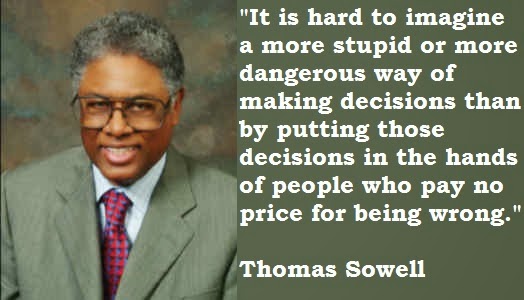
The fire of truth: the importance of putting a price on error

Image

The power and self-discipline of parsimonious analysis

Some bristle over the small size of the basic analytical tool kit of economists and the leanness of the behavioural assumptions therein (Stigler 1987). 

Simpler explanations and more parsimonious abstractions are better ‘engines for the discovery of concrete truth’ about how people will respond to changes in their economic and social environments.

A limited set of causes or postulates in a theory reduces the chances that one or more of the assumptions on a more extensive list inadvertently explains away in an ad hoc manner every possible anomaly, or allows for a deft reinterpretation and/or adaptation to temporise and escape refutation. An every growing number of auxiliary hypotheses and ah hoc assumptions to co-op inconvenient facts may forever immunise the basic theory under scrutiny against testing and falsification (Olson 1982; Popper 1963). More parsimonious abstractions are less likely to found theories that seem to have successfully explained a particular social phenomenon spuriously by chance.

Complex human objectives are not assumed in economic analysis because everything could be explained and nothing could be falsified. Every empirical anomaly could be covered in advance by assuming human objectives that are sufficiently complex and large enough in number that are pursued with a high frequency of error and inertia (Friedman 1990; Popper 1963).

Subsequent ad hoc reinterpretations that add new objectives or additional sources of human frailty can finesse major anomalies to make the basic theory compatible with the facts to side-step refutation. Heavily qualified theories and intricate explanations of narrow application rarely come in the open for long enough to be found wanting.

A good theory is a prohibition: the theory forbids certain things to happen. The more that a theory forbids, the better the theory is. Bold, novel and chancy predictions are even better still.

These predictions are less likely to explain social and economic behaviour spuriously by chance. If incorrect or incomplete, bold and novel predictions are more likely to be quickly found at odds with experience and the basic theory is either revised or is discarded (Popper 1963).

Lessons from field trials with work mandates

Table1_RANDRevRevised_1202

One of the most controversial aspect of the U.S. program changes are the negative incentives – time limits, sanctions, and diversion – that are built into their structure.

All of these policies limit the entitlement to cash public assistance, by either enforcing behavioural requirements (such as work search) or limiting the availability of assistance.

As Besley and Coate (1992) pointed out, linking such requirements with public assistance payments can help deter welfare participation among those who could find a job on their own.

The majority of evaluations of mandatory welfare-to-work programs show significant increases in labour supply and reduced welfare dependency. The drawback is the increase in wage income is greatly offset by the decline in benefit income. In–work tax credits played a major role in making work pay in 1996 U.S. welfare reform

The Minnesota Family Investment Program (MFIP) was implemented in 1994 and provided a strong earnings threshold, allowing women to receive some cash assistance until their earnings reached about 140 per cent of the U.S. poverty line. It also required participation in mandatory job search programs.

A randomly assigned control group remained in AFDC without work requirements or substantial earnings thresholds. MFIP involved both strong negative and positive work incentives. A subset of the treatment group (also randomly assigned) was provided with the earnings thresholds but not the mandatory work requirements.

The MFIP results allow the separate and joint effects of mandatory job search and earnings thresholds to be explored. When only positive work incentives are provided through an expanded earnings threshold, this has little effect on labour supply, consistent with earlier results. The additional income provided by these higher thresholds had strong income-increasing and poverty-reducing effects. Once mandatory work requirements are added to MFIP, then labour supply increases as well, but there is little further effect on income or poverty.

The evaluations of MFIP suggest that the stick of work requirements increases labour supply, but has little effect on overall income as increases in earnings are offset by reduced benefits.

The carrot of greater earnings thresholds provides an income enhancing effect. When used together, there is increased work and higher earnings, along with reduced poverty.

The relatively strong measures to mandate work participation can be effective. Work mandates with sanctions are more effective at inducing work than are more financial incentives. Strict work requirements by themselves may have little income-enhancing effects if they are not combined with some form of wage support for the low-skilled.

Education and training programs do not seem any more effective in promoting labour force attachment and increased earnings than work experience programs. In various welfare reform experiments in the U.S. during the 1990s, states tested training programs – human capital development programs — against work first programs – labour force attachment programs.

The work-first programs increased earnings and decreased welfare usage faster, while human capital development programs cost more, particularly in the first year when women were training rather than working.

But even three years out, after women from human capital development programs had been in the labour market two years, human capital development participants still did not outperform labour force attachment participants.

This may suggest that the gains to experience among women who have been out of the labour market may be larger than the gains to formal education and training. Employment outcomes did not seem significantly worse among less skilled participants or participants with identifiable barriers to work, such as child care or health problems. Learning by doing and job match and job search capital are major sources of hard-to-measure post-school human capital and wages growth even for less skilled workers. Work-first programmes suggest that the reward from working which is human capital as well as wages are greater than an investment in time away from working to train.

The dual emphasis in the U.S. welfare reforms on positive work incentives and more punitive work mandates seems to have been important.

Work mandates (mandatory welfare-to-work programs, backed by sanctions and time limits) forced more people into work faster than would have naturally left welfare even strong economic environments. With low wages and (often) part-time hours, many welfare leavers would have gained little in income without subsidies to low-wage work. Reduced earnings thresholds, the expanded EITC, and subsidies to assist with child care or other work related expenses, all helped make work pay.

Table4_RANDRevised_1202

Diagrams HT: rand.org Conflicting Benefits Trade-Offs in Welfare Reform by Jeffrey Grogger, Lynn A. Karoly, and Jacob Alex Klerman (2002).

Offsetting behaviour alert: school breakfast programmes

When children arrive at school without breakfast, being the dismal economist I am, the question I ask is not why they didn’t have breakfast – I ask whether their parents had breakfast.

If these children are getting a free breakfast because their parents are too poor to buy them breakfast food, why aren’t their parents invited to school to have a free breakfast as well. How do these parents eat at all? Any good parent would give up their breakfast for their children.

Diane Whitmore Schanzenbach and Mary Zaki in their just released Expanding the School Breakfast Program: Impacts on Children’s Consumption, Nutrition and Health look at the school lunch program is nearly universally available in U.S. public schools.

They use experimental data collected by the US Department of Agriculture to measure the impact of two policy innovations aimed at increasing access to the school breakfast program.

The first, universal free school breakfast, provides a hot breakfast before school (typically served in the school’s cafeteria) to all students regardless of their income eligibility for free or reduced-price meals.

The second is the Breakfast in the Classroom program that provides free school breakfast to all children to be eaten in the classroom during the first few minutes of the school day.

The study grouped schools into treated groups (school decided between breakfast in class and cafeteria-based) and control (had normal meal tested before school breakfast  which serves free or reduced-price (maximum price of 30 cents) breakfast to those that are income-eligible and can be purchased at full price for those ineligible for a meal subsidy).

The study showed that breakfast in the classroom substantially increased participation in the school breakfast program and the likelihood a child eats a high-quality breakfast. However, there was no evidence for positive impacts on other outcomes, including: overall dietary quality, health, attendance rates, and test scores.

Both policies increase the take-up rate of school breakfast, though much of this reflects shifting breakfast consumption from home to school or the consumption of multiple breakfasts and relatively little of the increase is from students gaining access to breakfast.

Eating in breakfast at home when I was kid was a good chance to talk to my mum and dad and brothers and sisters, but I wasn’t much of a morning person, so I might be understating the benefits of having breakfast at home. I was always running late, so I would always say to mum on the way out to the car to go to school

Feed the cat

.

A brief history of climate panic and crisis… both warming and cooling

We are not our brother’s keeper nor his co-conspirator

Image

Natural immunity, eh

image

Image

The invisible punch: prices, profits AND losses as error correction mechanisms

Image

Previous Older Entries Next Newer Entries

Bassett, Brash & Hide

Celebrating humanity's flourishing through the spread of capitalism and the rule of law

Truth on the Market

Scholarly commentary on law, economics, and more

The Undercover Historian

Beatrice Cherrier's blog

Matua Kahurangi

Celebrating humanity's flourishing through the spread of capitalism and the rule of law

Temple of Sociology

Celebrating humanity's flourishing through the spread of capitalism and the rule of law

Velvet Glove, Iron Fist

Celebrating humanity's flourishing through the spread of capitalism and the rule of law

Why Evolution Is True

Why Evolution is True is a blog written by Jerry Coyne, centered on evolution and biology but also dealing with diverse topics like politics, culture, and cats.

Down to Earth Kiwi

Celebrating humanity's flourishing through the spread of capitalism and the rule of law

NoTricksZone

Celebrating humanity's flourishing through the spread of capitalism and the rule of law

Homepaddock

A rural perspective with a blue tint by Ele Ludemann

Kiwiblog

DPF's Kiwiblog - Fomenting Happy Mischief since 2003

The Dangerous Economist

Celebrating humanity's flourishing through the spread of capitalism and the rule of law

Watts Up With That?

The world's most viewed site on global warming and climate change

The Logical Place

Tim Harding's writings on rationality, informal logic and skepticism

Doc's Books

A window into Doc Freiberger's library

The Risk-Monger

Let's examine hard decisions!

Uneasy Money

Commentary on monetary policy in the spirit of R. G. Hawtrey

Barrie Saunders

Thoughts on public policy and the media

Liberty Scott

Celebrating humanity's flourishing through the spread of capitalism and the rule of law

Point of Order

Politics and the economy

James Bowden's Blog

A blog (primarily) on Canadian and Commonwealth political history and institutions

Science Matters

Reading between the lines, and underneath the hype.

Peter Winsley

Economics, and such stuff as dreams are made on

A Venerable Puzzle

"The British constitution has always been puzzling, and always will be." --Queen Elizabeth II

The Antiplanner

Celebrating humanity's flourishing through the spread of capitalism and the rule of law

Bet On It

Celebrating humanity's flourishing through the spread of capitalism and the rule of law

History of Sorts

WORLD WAR II, MUSIC, HISTORY, HOLOCAUST

Roger Pielke Jr.

Undisciplined scholar, recovering academic

Offsetting Behaviour

Celebrating humanity's flourishing through the spread of capitalism and the rule of law

JONATHAN TURLEY

Res ipsa loquitur - The thing itself speaks

Conversable Economist

Celebrating humanity's flourishing through the spread of capitalism and the rule of law

The Victorian Commons

Researching the House of Commons, 1832-1868

The History of Parliament

Articles and research from the History of Parliament Trust

Books & Boots

Reflections on books and art

Legal History Miscellany

Posts on the History of Law, Crime, and Justice

Sex, Drugs and Economics

Celebrating humanity's flourishing through the spread of capitalism and the rule of law

European Royal History

Exploring the Monarchs of Europe

Tallbloke's Talkshop

Cutting edge science you can dice with

Marginal REVOLUTION

Small Steps Toward A Much Better World

NOT A LOT OF PEOPLE KNOW THAT

“We do not believe any group of men adequate enough or wise enough to operate without scrutiny or without criticism. We know that the only way to avoid error is to detect it, that the only way to detect it is to be free to inquire. We know that in secrecy error undetected will flourish and subvert”. - J Robert Oppenheimer.

STOP THESE THINGS

The truth about the great wind power fraud - we're not here to debate the wind industry, we're here to destroy it.

Lindsay Mitchell

Celebrating humanity's flourishing through the spread of capitalism and the rule of law

Alt-M

Celebrating humanity's flourishing through the spread of capitalism and the rule of law

croaking cassandra

Economics, public policy, monetary policy, financial regulation, with a New Zealand perspective

The Grumpy Economist

Celebrating humanity's flourishing through the spread of capitalism and the rule of law

International Liberty

Restraining Government in America and Around the World