
A former White House science advisor speaks out about “settled science”
21 Sep 2014 Leave a comment
in economics
Timeless Tips for ‘Simple Sabotage’ — Central Intelligence Agency
21 Sep 2014 Leave a comment
in applied price theory, entrepreneurship, industrial organisation, organisational economics, personnel economics, war and peace Tags: sabotage

Environmental and Urban Economics: What Should Campus Environmentalists Do All Day Long?
21 Sep 2014 Leave a comment
in environmental economics, environmentalism Tags: activists, do gooders, Doing well while doing good

Leo vs. science: vanishing evidence for climate change | New York Post
21 Sep 2014 Leave a comment
in climate change, environmental economics, global warming Tags: climate alarmism, global warming

According to NASA satellites and all ground-based temperature measurements, global warming ceased in the late 1990s. This when CO2 levels have risen almost 10 percent since 1997. The post-1997 CO2 emissions represent an astonishing 30 percent of all human-related emissions since the Industrial Revolution began. That we’ve seen no warming contradicts all CO2-based climate models upon which global-warming concerns are founded.
Rates of sea-level rise remain small and are even slowing, over recent decades averaging about 1 millimeter per year as measured by tide gauges and 2 to 3 mm/year as inferred from “adjusted” satellite data. Again, this is far less than what the alarmists suggested.
Satellites also show that a greater area of Antarctic sea ice exists now than any time since space-based measurements began in 1979. In other words, the ice caps aren’t melting.
A 2012 IPCC report concluded that there has been no significant increase in either the frequency or intensity of extreme weather events in the modern era. The NIPCC 2013 report concluded the same. Yes, Hurricane Sandy was devastating — but it’s not part of any new trend.
via Leo vs. science: vanishing evidence for climate change | New York Post.


The Laffer Curve and Limits to Class Warfare Tax Policy
21 Sep 2014 Leave a comment
in economics

I’m a big advocate of the Laffer Curve.
Simply stated, it’s absurdly inaccurate to think that taxpayers and the economy are insensitive to changes in tax policy.
Yet bureaucracies such as the Joint Committee on Taxation basically assume that the economy will be unaffected and that tax revenues will jump dramatically if tax rates are boosted by, say, 100 percent.
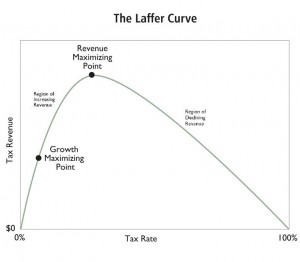 In the real world, however, big changes in tax policy can and will lead to changes in taxable income. In other words, incentives matter. If the government punishes you more for earning more income, you will figure out ways to reduce the amount of money you report on your tax return.
This sometimes means that people will choose to be less productive. Why bust your derrière, after all, if government confiscates a big chunk of your additional earnings? Why make the sacrifice to set aside some of your…
View original post 1,014 more words


 Utopia, you are standing in it!
Recent Comments