South Australia’s Lessons for the World: Subsidised Wind Power The Fastest Route to Social & Economic Disaster
22 Jul 2016 Leave a comment
in economics


Judith Sloan: lays out a lesson on avoiding economic & social disaster.
****
In a week when the mainstream media have been (finally) laying out the catastrophic results of South Australia’s ludicrous attempt to power itself on sunshine and breezes, it would be rude not to include this cracking article penned by The Australian’s top-flight economics editor, Judith Sloan.
Judith’s work has graced the pages of STT once or twice before, as here: LRET “Stealth Tax” to Cost Australian Power Punters $30 BILLION
And, no doubt, with renewed interest in South Australia’s unfolding energy debacle, Judith will have plenty more to say on the issue. Here’s Judith.
Energy price reveals folly of renewables
The Australian
Judith Sloan
19 July 2016
It is unusual for any story related to South Australia to appear on the front page of this newspaper. But when wholesale electricity prices in that state reached more than…
View original post 1,499 more words
Guardian misleads on bill in response to Arab MKs meeting with terrorists’ families
22 Jul 2016 Leave a comment
in economics

A Guardianreport by Peter Beaumont about new Israeli legislation to allow for the ouster of MKs accused of racial incitement, or supporting terror, included the following background information:
Pressure to pass the law had been mounting following anger when three MPs – Jamal Zahalka, Haneen Zoabi and Basel Ghattas – met the families of several Palestinians killed during a recent surge in street attacks on Israelis. The MPs said they were attending a meeting about the repatriation of the Palestinians’ bodies to their families.
This vague language obscures the fact that the Arab MKs in question (Basel Ghattas, Jamal Zahalka and Hanin Zuabi) met relatives of Palestinians killed by Israeli security forces after carrying out deadly (i.e., “successful”) attacks.
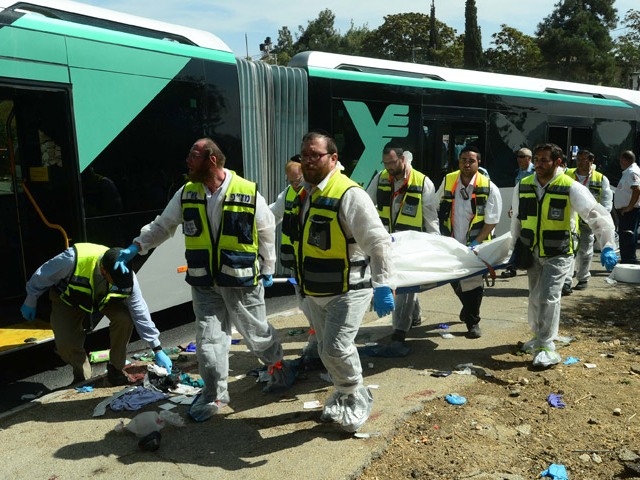 Body of victim removed from scene of terror attack on bus in Jerusalem (Copyright: GPO/Kobi Gideon)
Specifically, they met last February with the father of Bahaa Alyan, one of the terrorists who…
View original post 235 more words
The Prevention of Terrorism Acts and exclusion orders: 40 years since their introduction
22 Jul 2016 Leave a comment
in economics

This week it will be forty years since the introduction of the Prevention of Terrorism Act (Temporary Provisions) 1974, passed quickly in the aftermath of the Birmingham pub bombings in November 1974. The POTA was a broad piece of counter-terrorism legislation and many of the controversial elements of contemporary legislation concerning counter-terrorism and national security can be traced back to this 1974 Act. Many have written about the dramatic powers of the POTA, including the extensive powers of arrest and detention, but this post will focus on exclusion orders, which were granted under the POTA and the first piece of border control legislation to inhibit travel between the UK and Ireland. Although abolished in 1999, the national/border security framework created by the POTA and its exclusion orders have informed how terrorism is “countered” at the UK border in the 21st century. Part of this post is based on a paper…
View original post 1,162 more words
Last PMQ of #Thatcher #Blair #Cameron
22 Jul 2016 Leave a comment
in constitutional political economy, economics Tags: British politics
party in the street: not! michael heaney explains why we have small protests
22 Jul 2016 Leave a comment
in economics

My good friend and collaborator Michael T. Heaney has a nice article in the Monkey Cage, the political science blog of the Washington Post. He explains why we see small protests at the 2016 RNC:
In fact, the protests at this year’s RNC are considerably smaller than we’ve seen at recent conventions.
Why?
The answer is not a newfound love of Donald Trump among social activists. The story is about organization — or rather, the lack of it.
Here’s who was protesting in Cleveland
The groups interested in protest failed to forge a broad, unifying coalition that could bring together protesters in coordinated opposition. My survey research of activists on the ground at the convention (conducted with the assistance of students at the University of Michigan and Kent State University) shows that they were fragmented in a series of smaller coalitions that staged modestly sized events.
Earlier waves of protest were…
View original post 155 more words
Everything is amazing — and no one at the European Commission is happy
22 Jul 2016 Leave a comment
in economics

 Utopia, you are standing in it!
Recent Comments