Zero Percent
22 Aug 2016 Leave a comment
in economics

Every year, the New Zealand Government writes off hundreds of millions of dollars from the value of the loans it provides to tertiary student borrowers. It has been doing this for a decade now. Ten years on, it looks like the scheme has done nothing to improve access to tertiary education, to reduce student debt, to reduce debt repayment times, or to discourage Kiwi students from heading abroad. Instead, students leave university with more debt that they take longer to pay off, more overseas based borrowers have outstanding debt, and tertiary enrolment rates have dropped.
What are we doing?
Last week, The New Zealand Initiative released its report on our Decade of Debt. We there argue that the government should reinstate interest on new lending, from 2018. The savings should be put toward measures that improve real tertiary accessibility, like better tertiary preparation at secondary schools with little history of…
View original post 874 more words
The last photo of all four Beatles together, August 22, 1969
22 Aug 2016 Leave a comment
in Music Tags: The Beatles
Creative destruction in print media
22 Aug 2016 Leave a comment
in economics of media and culture, industrial organisation, survivor principle Tags: creative destruction, legacy media


The bureaucratic Olympic creed
21 Aug 2016 Leave a comment
in economics

First there was the news that Pakistan was sending more officials than athletes to the Olympics: “‘Pakistan contingent will include seven athletes and 17 officials,’ a Pakistan Olympic Association (POA) official told APP.”
and now there is this awesome story about Indian officials behaving badly at the Olympics. It is aptly titled “India’s Olympians deserve a medal just for putting up with their country’s officials.” You could probably delete the word Olympians from that title (and replace Indians for India’s) and still have an accurate sentence.
Here are some of the best details:
a. India’s sports minister, Vijay Goel, has been in Rio and has been so rude that he was almost banned from attending events. Here’s a quote:“‘We have had multiple reports of your Minister for Sports trying to enter accredited areas at venues with unaccredited individuals. When the staff try to explain that this is not allowed, they…
View original post 160 more words
Some Back of the Envelope Nerdery on Corporate Taxes
21 Aug 2016 Leave a comment
in economics

Bill Easterly reminds me about a recently published paper on Corporate tax rates and Investment. I decided to run a few back of the envelope calculations to see if a push to eliminate the corporate tax could make basic arithmetic sense.
The up shot is that it does. The effects are quite mild but not trivial. As an critical caveat this based completely on averages and says nothing about distribution.
Here is a chart from the paper that presents a nice downwardly sloping relationship you’d like to start with. They measure the effective corporate tax rate against various measures. Shown below is the effective corporate tax rate versus total economic investment.
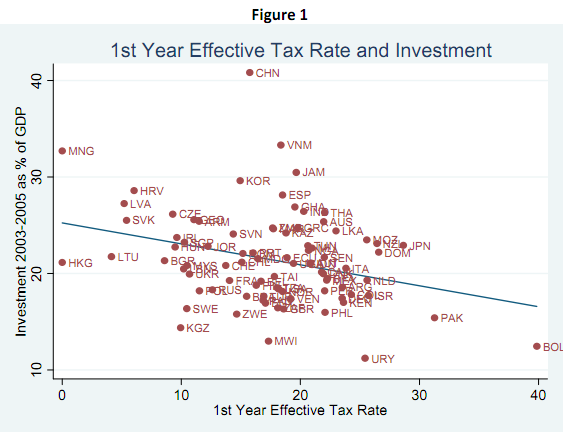
To make you feel more comfortable I will note that the authors hit the data with a few controls. Its not out of this world robustness, but it does have the kind of checks you would like. They control…
View original post 684 more words
Who’s been captured?
21 Aug 2016 Leave a comment
in economics

Jonathan Chait has been having a back and forth with Will Wilkinson over the extent and insurmountability of regulatory capture. In his last reply, Chait summed up his position like this:
If [Will] has access to some study showing that regulation usually, as a rule rather than the exception, become s a weapon of the powers it was intended to regulate and winds up serving the opposite of its intended purpose, then I’m willing to listen. But if his only argument is “look at all of Tim Carney’s articles,” then no, I’m not persuaded, and and not many people outside the economic libertarian world are going to be, either.
Given the varieties and scope of regulation this would be a difficult question to answer with a particular study, or even with a handful of studies. Another problem is defining the challenge as showing that regulations end up “serving the…
View original post 661 more words

Close the Gender Pay Gap, Change the Way We Work – Claudia Goldin
21 Aug 2016 Leave a comment
in economics


Free speech is supposed to sting like a bee
21 Aug 2016 Leave a comment
in constitutional political economy, economics of regulation, liberalism, libertarianism Tags: free speech, political correctness

BP predicted drone technology being used for deliveries
21 Aug 2016 Leave a comment
in economics, economics of media and culture Tags: creative destruction, drones
Hubris: The Troubling Science, Economics, and Politics of Climate Change
20 Aug 2016 Leave a comment
in economics

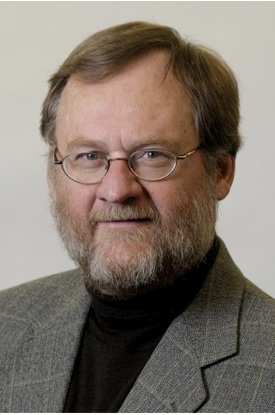 Interview at Lifesitenews with Michael Hart.
Michael Hart is a former official in Canada’s Department of Foreign Affairs and now emeritus professor of international affairs at the Norman Paterson School of International Affairs at Carleton University in Ottawa, Canada, where he has taught courses on the laws and institutions of international trade, Canadian foreign policy, and the politics of climate change. He held the Fulbright-Woodrow Wilson Center Visiting Research Chair in Canada-U.S. Relations and was Scholar-in-Residence in the School of International Service, Senior Fellow at American University in Washington, and is the founder and director emeritus of Carleton University’s Centre for Trade Policy and Law. In addition, he has taught courses in several other countries. He is the author, editor, or co-editor of more than a dozen books and several hundred articles.
LifeSiteNews interviewed him during a conference on Catholic Perspectives on the Environment, sponsored by the Wojtyla Institute for…
View original post 2,201 more words
 Utopia, you are standing in it!
Recent Comments