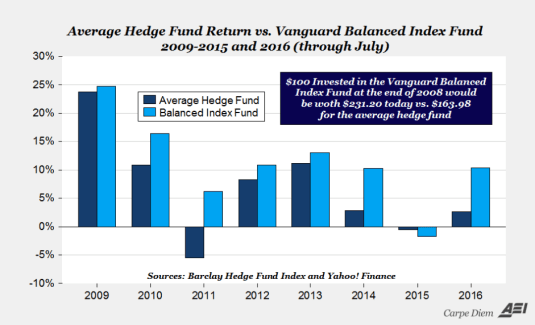
Rock star-scientist Brian Cox confused on more than global temperatures
19 Aug 2016 Leave a comment
in economics
Who is the red tory?
19 Aug 2016 Leave a comment
in economics of media and culture Tags: British politics
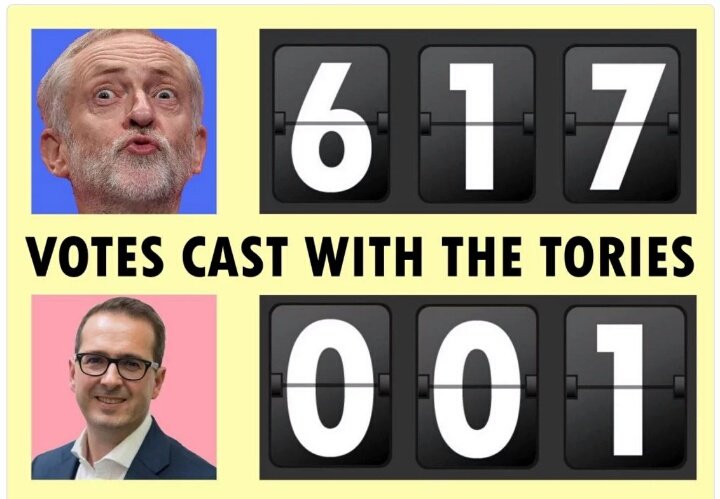
The queen of the anti-science Left @drjillstein
19 Aug 2016 Leave a comment
in defence economics, economics of regulation, energy economics, environmental economics, health economics, politics - USA Tags: Anti-Science left
The Science of Wingsuit BASE Jumping
19 Aug 2016 Leave a comment
in economics, economics of media and culture Tags: Darwin awards
Brutal Tory Attack Ad Says Labour Soft on ISIS
19 Aug 2016 Leave a comment
in defence economics Tags: British politics
Helicopter Money and the Reflux Problem
19 Aug 2016 Leave a comment
in economics

Although I try not to seem overly self-confident or self-satisfied, I do give myself a bit of credit for being willing to admit my mistakes, of which I’ve made my share. So I am going to come straight out and admit it up front: I have not been reading Nick Rowe’s blog lately. Realizing my mistake, I recently looked up his posts for the past few months. Reading one of Nick’s posts is always an educational experience, teaching us how to think about an economic problem in the way that a good – I mean a really good — economist ought to think about the problem. I don’t always agree with Nick, but in trying to figure out whether I agree — and if not, why not — I always find that I have gained some fresh understanding of, or a deeper insight into, the problem than I had before…
View original post 2,569 more words
Bill Maher on the U.N. & Israel
19 Aug 2016 Leave a comment
in defence economics, economics, economics of crime, law and economics Tags: Israel, Left-wing hypocrisy, Middle-East politics, UN, war on terror

New Zealand needs a new written Constitution
18 Aug 2016 Leave a comment
in economics


The New Zealand Constitution, like that of the United Kingdom, is not written down in one place. In a forthcoming book former New Zealand Prime Minister Sir Geoffrey Palmer and Dr Andrew Butler will argue that this is not good enough and propose their own draft Constitution. In this post Sir Geoffrey Palmer explains why he believes that a single written Constitution for New Zealand is needed and elaborates on some of the detail of what he and Dr Butler are proposing.
The existing New Zealand Constitution derives from the Westminster model. In 1852 the Imperial Parliament enacted the New Zealand Constitution Act 1852. Five years later responsible government was conceded. The 1852 Act lasted until 1986 when New Zealand enacted the Constitution Act 1986. By that time it was reduced to a rump of its former self, with only 12 provisions and these offered few clues on how…
View original post 1,056 more words
An adult start of a criminal career is uncommon
18 Aug 2016 Leave a comment
in economics of crime, human capital, labour economics, law and economics, occupational choice Tags: crime and punishment, criminal deterrence, law and order
Japan’s Slow-Motion Fiscal and Monetary Suicide
18 Aug 2016 1 Comment
in economics

Remember Bill Murray’s Groundhog Day, the 1993 comedy classic about a weatherman who experiences the same day over and over again?
Well, the same thing is happening in Japan. But instead of a person waking up and reliving the same day,  we get politicians pursuing the same failed Keynesian stimulus policies over and over again.
The entire country has become a parody of Keynesian economics. Yet the politicians make Obama seem like a fiscal conservative by comparison. They keep doubling down on the same approach, regardless of all previous failures.
The Wall Street Journal reports on the details of the latest Keynesian binge.
Japan’s cabinet approved a government stimulus package that includes ¥7.5 trillion ($73 billion) in new spending, in the latest effort by Prime Minister Shinzo Abe to jump-start the nation’s sluggish economy. The spending program, which has a total value of ¥28 trillion over several years…
View original post 807 more words
Notes from the bookshelf 10: “The Righteous Mind” of Jonathan Haidt
18 Aug 2016 Leave a comment
in economics

 Having dedicated the last several posts to Jonathan Haidt’s book on moral psychology with reference to my study on ethical consumers, I thought it would be useful to sum them all up into a singe book review – I genuinely hope that some of you will find it helpful.
“The Righteous Mind” takes a reader on a fascinating tour of human morality. The book is divided into 3 parts, each intending to convey a particular message about the nature of human moral reasoning through an eloquent metaphor. The “intuitions come first, strategic reasoning second” argument should be the key take-away from the first part. Sourcing inspiration from the ideas of a Platonic philosopher Hume, Haidt argues against a rationalist approach to morality which regards moral reasoning as largely a cognitive ability that humans develop as they grow up and that is focused almost exclusively on the concept of justice. Instead, his social intuitionist model…
View original post 602 more words
Know your onions
18 Aug 2016 Leave a comment
in economics

From SMBC comes this great graph breaking down the differences between Micro and Macro Economics. Just in time for school, Kids!

 Utopia, you are standing in it!
Recent Comments