The #GlobalPOV Project: “Can Experts Solve Poverty?” With Khalid Kadir”
31 Aug 2016 Leave a comment
in constitutional political economy, development economics Tags: The fatal conceit
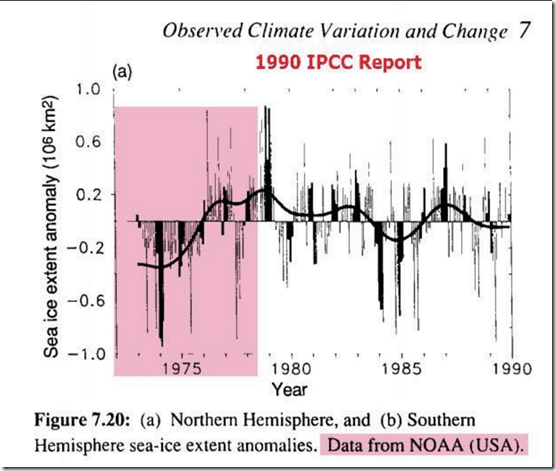
Why do they always use 1979 as a reference point?
31 Aug 2016 Leave a comment
in environmental economics, global warming Tags: climate alarmism, data mining, global warming, logical fallacies
Real GDP Per Capita and the Standard of Living
31 Aug 2016 Leave a comment
in development economics, macroeconomics Tags: living standards
Oregon is replacing coal power with wind – let’s see what happens
30 Aug 2016 Leave a comment
in economics

 What the US government thinks wind power ‘could’ do
If Oregon is modelling its electricity supply policy on South Australia, it should know what to expect, as Hot Air reports.
If you live in Oregon and rely on certain fancy, high tech features of the industrial revolution such as having lights in your home and refrigerated food, you might want to start stocking up on candles and non-perishable goods.
The green energy warriors have pretty much taken over the state legislature in the Beaver State for more than the past decade and they’ve managed to pass all sorts of interesting laws. One of them was a rule which says that all coal fired power will be eliminated by 2020… a deadline which is pretty much right around the corner.
View original post 307 more words
South Australian Debacle Shows Wind Power a ‘Proven Failure’
30 Aug 2016 1 Comment
in economics


It took the wind power disaster to unfold in South Australia before mainstream media started to notice the bleeding obvious: these things don’t work – on any level. Slowly, but surely the press have pounced – attacking the causes and consequences of pouring $billions in subsidies at a power generation system which can only be seen as a proven failure. Here’s The Daily Bell joining the chorus.
Australia Finds Out Wind Power Doesn’t Really Work
The Daily Bell
17 August 2016
Trust in public power companies misplaced … Former Labor minister Patrick Conlon urges carbon price to fix electricity system … A SENIOR Labor figure is urging a carbon price on electricity to lower household bills by kickstarting investment in new-generation power plants. – The Advertiser
Australian politicians have been obsessed with taxing carbon ever since the tax was briefly imposed and then repealed in mid-2104 by former prime minister…
View original post 616 more words
Almost all men are stronger than almost all women
30 Aug 2016 Leave a comment
in gender, health economics, labour economics Tags: economics of physiology, gender gap

trump, social solidarity, and the performance of politics: a guest post by tim gill
30 Aug 2016 Leave a comment
in economics

Tim Gill is a CIPR fellow at Tulane University. His research addresses political sociology and globalization. This guest post addresses the candidacy of Donald Trump.
++++++
In May, I taught my final course at the University of Georgia as I finished up my dissertation: a three-week long seminar on political sociology. Before the course, I was certain that Trump would be the most sought after topic of discussion by the students, regardless of what topic we broached. The Great Depression and issues of tariffs? Trump. The civil rights movement and Black Lives Matter? Trump. And, finally, how performances matter within US politics? Well, of course, Trump.
I admit. When I teach political sociology and use books and articles concerning US politics, my head tends to wander back to Venezuela, where I do most of my research. This didn’t happen though nearly as monolithically this summer. Along with the students, my…
View original post 951 more words
Doug Allen on same-sex divorce
30 Aug 2016 Leave a comment
in economics of love and marriage, law and economics Tags: child poverty, Doug Allen, family poverty, same-sex divorce, same-sex marriage, The fatal conceit, unintended consequences
Doug Allen argues that marriage is an institution designed and evolved to regulate incentive problems that arise between a man and a woman over the life cycle of procreation.
The real problem with same-sex marriage is same-sex divorce according to Allen. Marriage includes a set of exit provisions in terms of the possible grounds for divorce, rules for splitting property, alimony and child support rules, and custody rules. Allen also argues that:
- Many institutional rules within marriage are designed to restrict males from exploiting the specific investments women must make upfront in child bearing;
- Since same-sex marriages are not based as often on procreation, these restrictions are likely to be objected to and challenged in courts and legislatures;
- To the extent divorce laws are changed, they may hurt heterosexual marriages, and women in particular; and
- Given that same-sex relationships are often made up of two financially independent individuals, there will be litigation and political pressures for even easier divorce laws since the problem of financial dependency will be reduced.
Alterations in divorce laws to deal with issues of same-sex divorce necessarily apply to heterosexuals, and these new laws may not be optimal for heterosexuals, making marriage a more fragile institution for them. The actual outcomes of no-fault divorce laws, as an example, could hardly have been more different than what was expected and intended. The most obvious outcome was large increases in divorce rates.
No fault divorce laws influenced the rate at which women entered the workforce, the amount of hours worked in a week, the incidence of spousal abuse, the feminisation of poverty, and the age at which people married. No-fault divorce influenced a series of other laws related to spousal and child support, child custody, joint parenting, and the definition of marital property.
Marriage may provide a poor match for the incentive problems that arise in the relationships of gay and lesbian couples. Doug Allen is also of the view that putting all three relationships under the same law could lead to a sub-optimal law for all three types of marriages.
Allen in summary argues that marriage is an economically efficient institution moulded around the long-term interdependencies of child-rearing heterosexuals. He argues that homosexuals wishing to marry would be better served by a separate, gay-specific form of marriage.
I forgot to mention the second wives clubs which lobby for limits the length of time of alimony to the first wife. The British 2nd Wives club in their legal advice page starts with these points:
- Do you need to disclose your income or assets to an ex-wife?
- Should your income be taken into account when assessing child maintenance?
- Should child maintenance change when you and your husband have children of your own?
2nd wives clubs are natural allies for higher income gay divorcees wanting to pay less alimony. Nothing I have sent here is an argument against same-sex marriage willing as long as you are willing to live with the fact that it may have a few unintended consequences.
The Surprising Virtues of Income Inequality
30 Aug 2016 1 Comment
in economics


The Left, as is usual, smells opportunity in statistics that they can use to win votes and attack the other side. Yahoo chimed in today: “THE ISSUE: The rich keep getting richer while more Americans are getting left behind financially. The average income for the top 1 percent of households climbed 7.7 percent last year to $1.36 million, according to tax data tracked by Emmanuel Saez, an economics professor at the university of California, Berkeley. That privileged sliver of the population saw pay climb at almost twice the rate of income growth for the other 99 percent, whose pay averaged a humble $48,768.
“The” Income Inequality” critic’s faculty salary puts him in the top 1%. Decrying the iniquities of the American capitalist system pays off. Emmanuel Saez’ total wages in 2014, came to $549,350,” in case you were wondering why tuition at major universities is so high.
Yahoo accompanied the…
View original post 480 more words
More on homelessness fell under @NZNationalParty? @CarmelSepuloni @cjsbishop
30 Aug 2016 Leave a comment
in labour economics, politics - New Zealand, poverty and inequality, urban economics Tags: child poverty, family poverty, homelessness, New Zealand Greens, New Zealand Labour Party, social insurance, welfare state
I cherry picked my previous data on homelessness if the New Zealand sub-Reddit is to be believed and from which I am banned and cannot reply. Plotting the data in full is to cherry pick it. The chart below is simply the first two rows of the source data. The subsequent rows deal with those in emergency accommodation and in temporary accommodation.

Source: 24 August 2016, Most homeless people working or studying, News, University of Otago, New Zealand, table 4.
When I shared this data on Carmel Sepuloni MP’s Facebook page, she rightly and constructively said
Thanks for your comment Jim. Unfortunately the number living rough has increased since 2001. We want to focus on improving the future, which is why we are holding our homeless inquiries so we can best understand and address this issue:
Rather than pointscoring, the issue is what to do to fix the problem. How desperate is much of the rest of the Left to beat up this issue as the fault of John Key. This is an an important issue that should not be used for point scoring by sufferers of John Key derangement syndrome.
Homeless people are those who I charted above. They are sleeping rough or in a car. They have slipped through the social safety net which is obviously not working for them. If you are in emergency accommodation, the social safety net is working. The issue is making that safety net work better in terms of moving quickly into more permanent accommodation..
Five liberal Democrat policies that hurt minorities
30 Aug 2016 Leave a comment
in economics

 Marriage and Poverty
The five policies are:
- higher minimum wage rates
- opposition to school voucher programs
- releasing criminals from jail
- affirmative action
- single mother welfare
This article is by Jason L. Riley, and it appeared in the Wall Street Journal.
Excerpt:
At the urging of labor unions, President Obama has pushed for higher minimum wages that price a disproportionate percentage of blacks out of the labor force. At the urging of teachers unions, he has fought voucher programs that give ghetto children access to better schools.
Both policies have a lengthy track record of keeping millions of blacks ill-educated and unemployed. Since the 1970s, when the federal government began tracking the racial achievement gap, black test scores in math, reading and science have on average trailed far behind those of their white classmates. And minimum-wage mandates have been so effective for so long at keeping blacks out of work that…
View original post 742 more words
Do charter schools cherry pick?
30 Aug 2016 Leave a comment
in economics of education Tags: charter schools, racial discrimination

Thomas Sowell- Economist, Hero
30 Aug 2016 Leave a comment
in economics

Other than Ayn Rand, there’s a very special person who has greatly influenced my thinking and writing. That person is none other than the economist I frequently refer to- Thomas Sowell. This article is based on The Man of Letters which is a pun for great scholar but it is also a collection of his letters.
Thomas Sowell was born in 1930, he was adopted as an infant and lived in Harlem. He left his home when he was 16 and found a job at Washington at the age of 19. He was later drafted to participate in the Korean War, his status as a former marine allowed him to study in college thanks to the G. I. Bill. He initially studied at Howard University while he worked but he was later admitted to Harvard to study economics. He then went on to study his masters at Columbia and his PhD…
View original post 1,486 more words
On Liberalism, Political Correctness, and Illegal Immigration
29 Aug 2016 Leave a comment
in economics

Last week I wrote a post about criticism by some left-wing liberals of Tim Kaine. My post elicited a series of comments from Peter Schaeffer. I responded to his first comment in the comment section, and he has followed up with some further comments, which raise a number of important issues, partly historical and partly philosophical. While his comments are in some respects insightful, I think that are also very misguided. But it is certainly the case that many of the positions he takes are rather widely held, including by some well-known public figures, so I think that they are worth responding to. So even though some of what Peter and I disagree about are fairly obscure matters of British and American history, I think that it is worth taking the time to respond to most of Peter’s comments.
Peter begins by challenging the main point of my previous…
View original post 3,788 more words
 Utopia, you are standing in it!

Recent Comments