
Preliminary or Premature? Injunction Against Trump Sanctuary Order May Come Down To A Question Of Timing
01 May 2017 Leave a comment
in economics


 In a week, the first appellate hearing will occur in the review of the second Trump immigration order. In the meantime, the Administration is appealing the latest legal setback with the injunction of Trump’s sanctuary city order. Below is my column from the Hill Newspaper on the decision of District Court Judge William Orrick.
View original post 1,159 more words
How Hawaii broke up from the US monetary union…(Why there is hardly any discussion on break up of Indo-Pak monetary union?)
01 May 2017 Leave a comment
in economics

Brilliant JP Koning has another superb post. He has a knack for drawing our attention to episodes from monetary history on which most of us are just clueless. Blame it on the teaching of economics which lays far more importance on theories and methods than learning about the subject from narration of historical events.
He points how Hawaii exited from US monetary Union during the 1942 Pearl Harbour attacks: has interesting lessons for the Euro break-up:
View original post 1,239 more words
See universities’ programs to regulate sex. The apps are amazing!
01 May 2017 Leave a comment
in economics

Summary: America’s colleges are petri dishes in which the Left brews viruses to release into America, and indoctrinates young people into becoming their carriers. Here is a look into the cutting edge innovations of the West’s social justice warriors to fight the campus “rape culture.”
 At VOX, 13 October 2014.
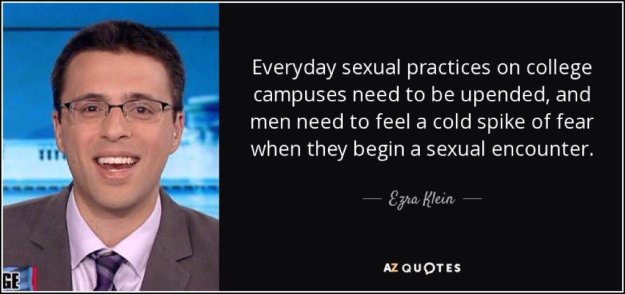
Ezra Klein asked for it and the market delivers: tools to make fears of sexual assault — and false reporting of sexual assault — normal aspects of life in America, starting with our campuses.
“We Consent” – An app suite for the modern college woman
“…We-Consent records students agreeing to sexual activity. A breathy female voice with a British accent asks the user to ‘say the name of the person with whom you would like to have sexual relations.’ Then the app announces to the other person, that so-and-so ‘would like to have sexual relations with you’ and asks for…
View original post 1,689 more words
Graduates grumble about paying 25% of the price of the keys to heaven
01 May 2017 Leave a comment
in economics of education, politics - New Zealand Tags: College premium, crybaby left, graduate premium
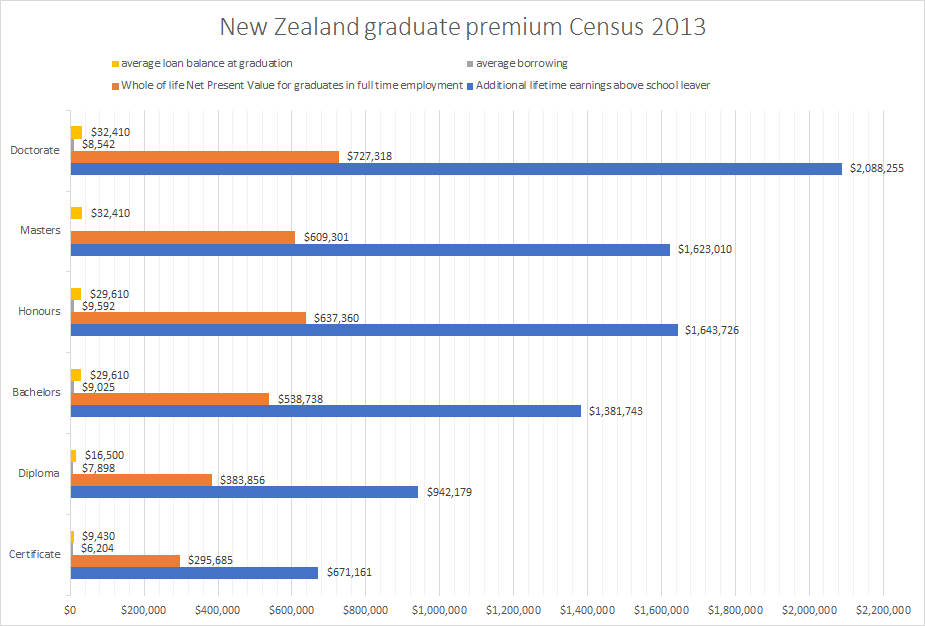
Source: A Degree is a smart investment | Universities New Zealand – Te Pōkai Tara and Student Loan Scheme Annual Report 2016 | Education Counts
.
In Search Of The Coming Ice Age (1978); I wrote high school science essay on this
01 May 2017 Leave a comment
in environmental economics, global warming Tags: climate alarmism, global cooling
Her PM needs confidence of national assembly; president can’t fire current socialist PM
01 May 2017 Leave a comment
in constitutional political economy Tags: 2017 French elections

Stirring the possum again
01 May 2017 Leave a comment
in defence economics, laws of war, politics - New Zealand, war and peace Tags: Anzac Day, World War I

From a Life of Crime to One of the Most Prolific Actors of All Time Danny Trejo’s Prison Break
01 May 2017 Leave a comment
Lachmann Symposium on Ludwig Lachmann -Deirdre McCloskey
01 May 2017 Leave a comment
in history of economic thought
HT Cafe Hayek
The rapid adaptation of women to changing prospects
01 May 2017 1 Comment
in discrimination, economics of education, gender, human capital, labour economics, labour supply, occupational choice Tags: College premium, gender way, reversing gender gap
On the upside, Goldin (2006) showed that women adapted rapidly over the 20th century to changing returns to working and education as compared to options outside the market. Their labour force participation and occupational choices changed rapidly into long duration professional educations and more specialised training in the 1960s and 1970s as many more women worked and pursued careers. The large increase in tertiary education by New Zealand after 1990 and their move into many traditionally male occupations is another example.
The key is what drives the rapid changes in the labour force participation and occupational choices of women. Some of the factors are global technology trends such rising wages and the emergence of household technologies and safe contraception and antidiscrimination laws. All of these increased the returns to working and investing in specialised education and training.
Up until the mid-20th century, women invested in becoming a teacher, nurse, librarian or secretary because these skills were general and did not deprecate as much during breaks. When expectations among women of still working at the age of 35 doubled, there were massive increases in female labour force participation and female investments in higher education and specialised skills (Goldin and Katz 2006). These trends continue to today.
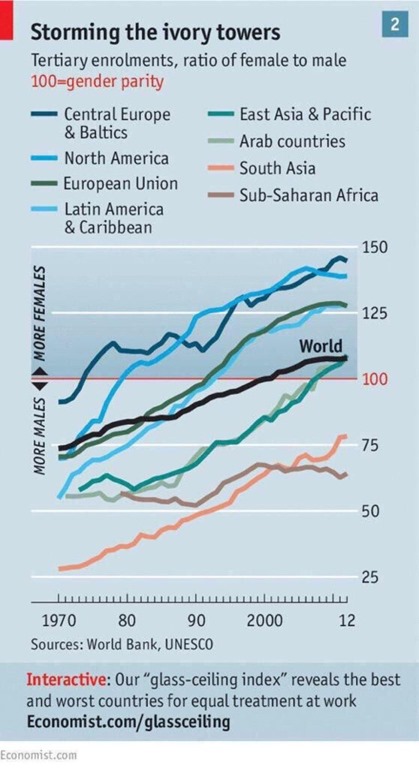 Women and in particular those women making education choices need good information on their prospects in different occupations. The evidence is they adapt rapidly to changing prospects (Goldin 2004, 2006). Goldin (2004, 2006) referred to a quiet revolution in women’s employment, earnings and education because the changes in female labour supply and occupational choices were abrupt and large.
Women adapted rapidly to changes in their expectations about their future working life, graduation rates, attainment of professional degrees, age of first marriage, and the timing and number of children. These expectations of women about their futures turned out the surprisingly accurate (Katz 2004, 2006). Young women are surprisingly good forecasters of their labour market involvement. Any gender policy options must be sensitive to the high level of responsiveness of women to changing educational opportunities and prospects and their precision to date as forecasters.
The complex decisions youth make about education and occupational choices is driven by many sources. Women are interested in issues that are of less importance to men such as work-life balance and the costs of career breaks to their earning power and human capital. Goldin (2004, 2006) argued that women who have a more accurate assessment of their future labour market involvement will invest more wisely in education and occupational choice.
The market process rewards the skills and commitment the men and women bring to the labour market. The differences in skills and commitment the men and women bring arise from a gendered division of labour and effort in the household and in raising families that appears to be open to only minor changes that are expensive in terms of growth and prosperity. This is because most gains in the status of women were the result of economic growth rather than legal interventions. Child care subsidies and parental leave arose after rising income made them and the modern welfare state fiscally affordable rather than the other way around.

 Utopia, you are standing in it!
Recent Comments