When Milton Friedman pondered what would happen if a helicopter dropped $1,000 from the sky, he likely never imagined that one day a military cargo plane would scatter millions of dollars into one of Bolivia’s largest cities. But while the Nobel Prize-winning economist worried about the inflation that an influx of cash could generate, the impact in…
The actual helicopter drop?
The actual helicopter drop?
07 Mar 2026 Leave a comment
in applied price theory, development economics, financial economics, growth disasters, history of economic thought, macroeconomics, Milton Friedman, monetarism, monetary economics, property rights
The Nightmare Scenario Leading to a Wealth Tax
07 Mar 2026 Leave a comment
in applied price theory, economic growth, economic history, entrepreneurship, fiscal policy, income redistribution, liberalism, macroeconomics, Marxist economics, politics - USA, Public Choice, public economics Tags: taxation and labour supply, taxation and entrepreneurship, taxation and investment

Is it time to pack our belongings and head to Argentina, where Javier Milei is dramatically improving economic policy and cultural attitudes? I’m joking, but also not joking. The reason I’m not joking is that there’s a very depressing scenario for America’s near-term economic outlook. It involves these six potential developments. Thanks in part to […]
The Nightmare Scenario Leading to a Wealth Tax
Population changes helping Republicans
07 Mar 2026 Leave a comment
The latest US population estimates will help the Republicans in the 2032 presidential election, according to this analysis. It suggests blue states will lose 10 electoral votes, swing states gain one and red states gain nine. This will only matter in a very close election such as 2000, but it is interesting that so many…
Population changes helping Republicans
What if Hitler had been killed?
06 Mar 2026 Leave a comment
in defence economics, war and peace Tags: Nazi Germany, The Holocaust, World War II

On July 20, 1944, a group of German officers planned a daring assassination attempt on Adolf Hitler. This attack was part of a broader conspiracy within the German army and administrative elite, known as the July 20 plot or Operation Valkyrie. In the early afternoon, Colonel Claus von Stauffenberg placed a bomb in a briefcase […]
What if Hitler had been killed?
Dismantling the competition myth
06 Mar 2026 Leave a comment
in Austrian economics, comparative institutional analysis, economic history, economics of regulation, entrepreneurship, history of economic thought, industrial organisation, law and economics, organisational economics, politics - Australia, technological progress, theory of the firm Tags: competition law, creative destruction
Ask anyone in Australia’s competition law community what transformed the economy, and you will hear a familiar story. Australia was once a cartelised, complacent place where businesses divided up markets and consumers paid the price. Then came the Trade Practices Act in 1974, and competition law forced firms to compete. This is not a fringe […]
Dismantling the competition myth
The youth gender gap is because young women have moved left
06 Mar 2026 Leave a comment
in politics - New Zealand, politics - USA, Public Choice Tags: regressive left, voter demographics
The tweet above includes this graph: The original tweet has lots of reasoning as to why this is. TLDR is social media. The post The youth gender gap is because young women have moved left first appeared on Kiwiblog.
The youth gender gap is because young women have moved left
Germany’s “Energy Transition” Hits the Ice: LNG Crisis Exposes the Costs of Shunning Nuclear and Baseload Power
05 Mar 2026 Leave a comment
in economics of climate change, economics of regulation, energy economics, environmental economics, environmentalism, global warming Tags: celebrity technologies, Germany, solar power, wind power
Baseload power sources — whether nuclear or coal — were dismissed prematurely with pie-in-the-sky magical-thinking that a renewables-centric system could replace them quickly. But the reality of an industrialized society is that demand does not pause when the wind stops blowing or when Baltic ice slows a tanker. In that context, abandoning dispatchable power before…
Germany’s “Energy Transition” Hits the Ice: LNG Crisis Exposes the Costs of Shunning Nuclear and Baseload Power
Why Most Australian Writers’ Festivals Are Pro-Palestinian
05 Mar 2026 Leave a comment
in economics of education, economics of media and culture, liberalism, Marxist economics, politics - Australia
Australian writers’ festivals are frequently accused of being “pro-Palestinian” or anti-Israeli. The charge is usually made in frustration: panels on Gaza and Palestinian literature are common; strongly pro-Israel voices are rare; and anyone who questions the imbalance is quickly told they are confusing “balance” with “morality”. Yet the more interesting question is not whether a […]
Why Most Australian Writers’ Festivals Are Pro-Palestinian
When Rubber Was the Critical Imported Good
05 Mar 2026 Leave a comment
in defence economics, economic history, transport economics, war and peace Tags: World War II
At the start of World War II, the US economy relied almost exclusively on imported rubber as the key material for making, among other things, tires for cars and airplanes. The dependency was well-known, but in April 1942, when Japan cut off the foreign supply, the US was unprepared. Synthetic rubber ended up being part…
When Rubber Was the Critical Imported Good
The Evaluative Emptiness of the Economic Approach to Law
04 Mar 2026 Leave a comment
in applied price theory, applied welfare economics, comparative institutional analysis, history of economic thought, law and economics, Public Choice

Law & economics traces its intellectual roots to the University of Chicago. That lineage still shapes how the field is understood. Chicago price theory—especially Gary Becker’s (1976) systematic application of maximization, equilibrium, and stable preferences across social life, and George Stigler’s (1992, p. 459) suggestion that “every durable social institution or practice is efficient, or…
The Evaluative Emptiness of the Economic Approach to Law
Jack Smith’s Secret Orders Targeting Patel and Wiles Should Alarm Us All
04 Mar 2026 Leave a comment
in economics of crime, law and economics, politics - USA Tags: 2020 presidential election, 2024 presidential election

Below is my column on Fox.com on the new disclosures of secret orders targeting now FBI Director Kash Patel and…
Jack Smith’s Secret Orders Targeting Patel and Wiles Should Alarm Us All
More Bark Than Bite: Kaine’s War Powers Resolution is an “Imminent” Failure
04 Mar 2026 Leave a comment
in defence economics, International law, laws of war, politics - USA, war and peace Tags: regressive left

We now have a glimpse of the War Powers Resolution promised by Sen. Tim Kaine (D., Va.), which is reportedly…
More Bark Than Bite: Kaine’s War Powers Resolution is an “Imminent” Failure
The Clintons and the Politics of Scandal
03 Mar 2026 Leave a comment
in economics of crime, law and economics, politics - USA

Below is my column in the Hill on the deposition of former President Bill Clinton and former Secretary of State…
The Clintons and the Politics of Scandal
Iranian women: 1970 vs. 2020
03 Mar 2026 Leave a comment
in defence economics, discrimination, economic history, gender, labour economics, liberalism, Marxist economics Tags: Age of Enlightenment, Iran, sex discrimination

I put something like this up years ago, but it’s a good way to see, with just a few clicks, what happened to Iran after the “Revolution”. Let’s taken women’s dress, a touchstone of misogyny and theocratic oppression. Before the Islamic Revolution of 1979, it was a pretty free country in that respect, and everyone…
Iranian women: 1970 vs. 2020
Sports and Supply-Side Economics
03 Mar 2026 Leave a comment
in labour economics, labour supply, sports economics Tags: taxation and labour supply
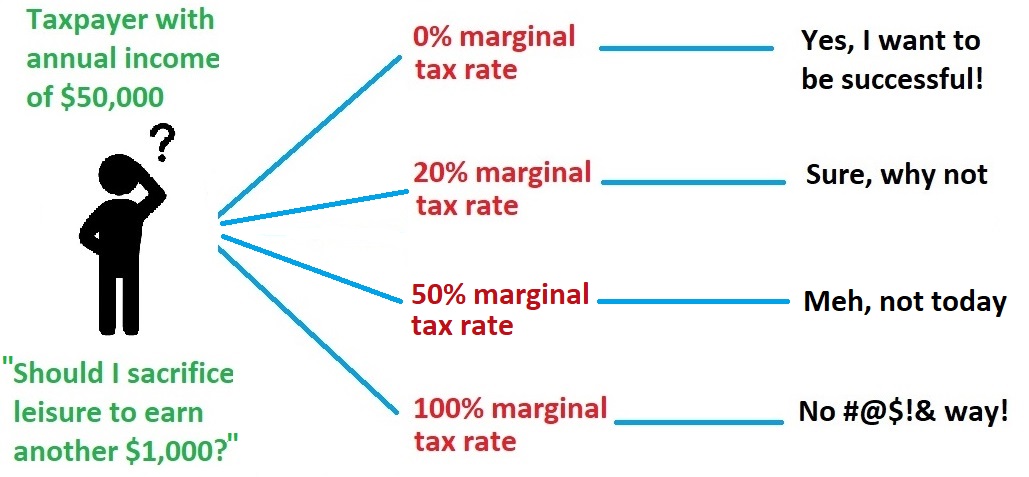
One of the key insights of good tax policy is that people respond to incentives. If tax rates are punitive, people will do what they can to protect themselves from predatory government. Especially if they have any ability to control the timing, level, and composition of their income. Star athletes are definitely in this group. They avoid […]
Sports and Supply-Side Economics
 Utopia, you are standing in it!
Recent Comments