
How Often People in Various Countries Shower – Atlantic Mobile
18 Feb 2015 Leave a comment
in cricket, health economics Tags: The Great Escape
The great 12 man video with Richie Benaud
15 Jan 2015 Leave a comment
in cricket, economics of media and culture Tags: Richie Benaud
The game is not the same
29 Jun 2014 Leave a comment
in cricket Tags: betting, cheating

Australian cricketers toured England in 1972 for the princely fee of £1200 each.
In 2011, an English 40-over match attracted bets through the regulated gambling websites totalling more than $24 million. Global betting giant Betfair had $573 million in bets on 22 Big Bash games in Australia in 2012. The amount of betting with the illegal betting syndicates in South Asia is only a matter of speculation. There was a narrow upset loss after batting collapse
Spot betting with the illegal betting syndicates in South Asia has extended to suburban soccer in Australia. The facilities at these suburban soccer pitches were inferior to those that I played on as a high school kid: primitive changing sheds and to soccer goals in a suburban park.
The seeds of corruption in cricket were sown in the 1970s when county and tournament games in England and other countries were allegedly fixed by teams to secure points and league positions.
The economics of Dennis Lillee and Steve Jobs
15 Mar 2014 1 Comment
in cricket, entrepreneurship, human capital, labour economics Tags: Apple, Bill Gates, CEO pay, cricket, Dennis Lillee, Kerry Packer, regulatory capture, Steve Jobs, superstars, top 1%
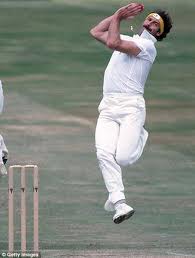
Dennis Lillee was paid £1,200 to tour England in 1972 for five months. He was paid the same to tour for three months in 1975. Now a world-class fast bowling coach, he would probably not get out for bed for £1,200
When Kerry Packer bid for the Australian cricket rights in the 1970s, he offered $500,000 per year. That was about ten times what the ABC was paying at the time
The Australian cricket TV rights sold for over $500 million in 2013 for a 5-year deal.
Today’s international cricketers are millionaires – widely respected and beloved members of the top 1% of income earners. Most think it is great that top sports people make millions over their career. No plans for the Occupy Wall Street crowd to occupy the MCG, Wimbledon or the Olympics to complain about superstar sports salaries and prizes.
Lillee and other top athletes, celebrities, actors, musicians and entertainers are all paid much more for much the same reason that CEOs, money market managers, top lawyers and tech entrepreneurs are paid much more than in the past.
They are superstars who are able to leverage their talent through communications technology advances on a national and global level. They can apply ‘their talent to greater pools of resources and reach[ing] larger numbers of people thus becoming more productive and higher paid’.
- Why is there envy over the pay of businessmen but not for superstar entertainers and athletes?
- Did people boo World Series Cricket in 1977 because those cricketers could now make a decent living?
- Do people complain when musicians and actors make it big?
Why is Steve Jobs strangely immune from top 1% envy despite his cheapness and meanness to others while Bill Gates is reviled as some sort of monopolist despite his giving most of his wealth away?
Was Jobs worth his pay? Apple shares went up and down in billions on news of Steve Jobs’s health.
When Hewlett Packard’s CEO Mark Hurd resigned unexpectedly, the value of HP shares dropped by about $10 billion! This makes his $30 million in annual compensation a bargain for his shareholders. Oracle’s shares rose 6% on word of Mr. Hurd’s hiring as co-president on an annual base salary of $950,000 and being eligible for up to a $10 million annual bonus. Perhaps he is under-paid?
See Kaplan, Steven N., and Joshua Rauh. 2013. It’s the Market: The Broad-Based Rise in the Return to Top Talent, Journal of Economic Perspectives 2013 for more.
 Utopia, you are standing in it!
Recent Comments