A tidal wave of cash?

Michael Reddell's avatarcroaking cassandra

One thing in the National Party’s call for a public inquiry into monetary policy that I didn’t comment on yesterday was the framing. The press release is headed “Inquiry needed into impact of tidal wave of cash”. It is a framing I have never liked, whether coming from critics on the left or the right.

My point here isn’t to bag National. They ran with a catchy headline, but the body of their release talks more generally about the overall conduct of monetary policy. But it is a framing that isn’t uncommon (loose talk of “money printing”) so it is an opportunity to restate my view – probably a minority view, but I stand by it – of the macroeconomic irrelevance (to a first approximation) of the Reserve Bank’s LSAP programme.

Rather than write something fresh, here I’ve reproduced the relevant sections of a lecture I gave to some Victoria…

View original post 634 more words

Milton Friedman commented on Powell’s Fed in 1978

Lars Christensen's avatarThe Market Monetarist

Watching today’s press conference with Fed chief Jerome Powell reminded me of something Milton Friedman said in 1978:

“Nearly a dozen years ago, I warned of an inflationary recession (Newsweek, Oct. 17, 1966). We have since then had three inflationary recessions and a fourth is almost surely on the way. During the first, the brief mini-recession of 1967, consumer prices rose 2.4 per cent per year; during the longer and more severe recession from December 1969 to November 1970, prices rose 5.3 per cent per year; during the still longer and even more severe recession from November 1973 to March 1975, prices rose 10.8 per cent per year; during the coming recession, prices are likely to rise at least 7 per cent per year.

Each scenario has been the same: rapid growth in the quantity of money followed by economic expansion and then, much later, by rising inflation; a…

View original post 247 more words

Driest Start Since 1976? No, 2010 Was Drier

Hayek and the Lucas Critique

David Glasner's avatarUneasy Money

In March I wrote a blog post, “Robert Lucas and the Pretense of Science,” which was a draft proposal for a paper for a conference on Coordination Issues in Historical Perspectives to be held in September. My proposal having been accepted I’m going to post sections of the paper on the blog in hopes of getting some feedback as a write the paper. What follows is the first of several anticipated draft sections.

Just 31 years old, F. A. Hayek rose rapidly to stardom after giving four lectures at the London School of Economics at the invitation of his almost exact contemporary, and soon to be best friend, Lionel Robbins. Hayek had already published several important works, of which Hayek ([1928], 1984) laying out basic conceptualization of an intertemporal equilibrium almost simultaneously with the similar conceptualizations of two young Swedish economists, Gunnar Myrdal (1927) and Erik Lindahl [1929]…

View original post 2,033 more words

Axel Leijonhufvud and Modern Macroeconomics

David Glasner's avatarUneasy Money

For many baby boomers like me growing up in Los Angeles, UCLA was an almost inevitable choice for college. As an incoming freshman, I was undecided whether to major in political science or economics. PoliSci 1 didn’t impress me, but Econ 1 did. More than my Econ 1 professor, it was the assigned textbook, University Economics, 1st edition, by Alchian and Allen that impressed me. That’s how my career in economics started.

After taking introductory micro and macro as a freshman, I started the intermediate theory sequence of micro (utility and cost theory, econ 101a), (general equilibrium theory, 101b), and (macro theory, 102) as a sophomore. It was in the winter 1968 quarter that I encountered Axel Leijonhufvud. This was about a year before his famous book – his doctoral dissertation – Keynesian Economics and the Economics of Keyneswas published in the fall of 1968 to instant acclaim…

View original post 3,345 more words

Renewables Road to Nowhere: Subsidised Wind & Solar Just Don’t Work & Never Will

stopthesethings's avatarSTOP THESE THINGS

In the absence of mandates directing grid managers to take chaotic wind or solar power ahead of conventional power and/or massive subsidies directed to retailers encouraging them to take it and/or heavy fines imposed on them if they refuse to, there is simply no commercial market for power which can only be generated occasionally, in ideal wind conditions and/or when the sun is shining, on cloudless days.

Back in 1983 the American Wind Industry Association claimed that wind power would be “competitive and self-supporting on a national level by the end of the decade if assisted by tax credits and augmented by federally sponsored R&D”. That was 36 years ago. And there was no lack of assistance in the form of tax credits and federally sponsored R&D, along with a whole bunch of other punitive mandates and targets designed to cripple conventional generators and favour chaotically intermittent wind power.

Now…

View original post 587 more words

The ruble has appreciated exactly BECAUSE the sanctions are working

Lars Christensen's avatarThe Market Monetarist

The question I have been asked most over the last week is why the Russian ruble is been appreciating despite the fact Russia has been hit by extensive economic sanctions.

I must honestly admit that since the sanctions were introduced I have not spent much time following the development of the ruble – or rather the ruble exchange rate on our screens does not really tell us much as the ruble today cannot really be said to be a convertible currency in the traditional sense.

If, for example. showed up at an European bank with rubles and wanted to exchange them for euros then in practice you would hardly be able to do so.

This is because the Russian central bank (CBR) has been sanctioned and what happens in practice is that if you have to exchange rubles for euros the money is basically deposited in the Russian central bank…

View original post 1,281 more words

Hetzel on “Learning from the Pandemic Monetary Policy Experiment”

Lars Christensen's avatarThe Market Monetarist

Robert Hetzel undoubtebly is one of the most important monetary thinkers of our time and for more than five decades he has been involved in US monetary policy making and has furthermore greatly contributed to monetary theory and monetary history.

And he is one of my absolut biggest idols in the world of monetary thinking and I am proud to call Bob my friend.

Luckily Bob and I rarely disagree, but I continue to learn from Bob and anybody interested in monetary matters should read Bob’s papers.

Bob now has a new paper out – published by the Mercatus Center where he now is Senior Affiliated Scholar.

Abstract:

In response to the COVID-19 pandemic, which unfurled starting in March 2020 and raised unemployment dramatically, the Federal Open Market Committee (FOMC) adopted a highly expansionary monetary policy. The policy restored the activist policy of aggregate demand management that had characterized the…

View original post 149 more words

Image

Star Trek: Season 2, Episode Six “The Doomsday Machine”

Great Books Guy's avatarGreat Books Guy

Stardate: 4202.1 (2267)
Original Air Date: October 20, 1967
Writer: Norman Spinrad
Director: Marc Daniels

“Gentlemen, I suggest you beam me aboard.”

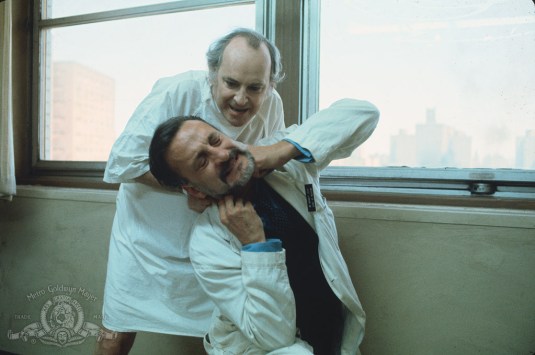
The Enterprise receives an automated distress call from the partially destroyed ship, the USS Constellation. Something has destroyed system L-370 (seven planets) and system L-374, where only two planets remain. Spock notes that the U.S.S. Constellation is suspended in space with limited power but it is capable of sustaining life. In order to investigate this derelict ship, Kirk, Bones, Scotty, join a damage control team abeam aboard the Constellation.

Lying alone near the ship’s controls, they find a badly shaken Commodore Matt Decker (William Windom). Commodore Decker details a harrowing situation: the Constellation had attempted to contact Starfleet when it arrived in L-374 but the fourth planet seemed to be breaking apart and the interference prevented any communication to Starfleet. Most of his…

View original post 591 more words

A public inquiry isn’t necessary

Michael Reddell's avatarcroaking cassandra

A few weeks ago in a post about what a new government might do about the Reserve Bank, I noted with some concern that the National Party had been very quiet on the issue.

I noted then that the process for reappointing (or not) Orr was likely to be getting underway very soon, and that if the Opposition thought it was inappropriate for him to be reappointed they needed to be raising concerns now (helping create a climate in which it would be more difficult for the government to push ahead) and not wait until (as required by law) the Minister has to consult other parties on the person he proposes to appoint as Governor (by when there would be considerable momentum behind any particular name).

So it was interesting and encouraging to see a press release yesterday from Luxon which appeared to raise serious concerns about Orr’s stewardship of…

View original post 2,475 more words

Doubt, Decency, and the History of English Witchcraft

Krista Kesselring's avatarLegal History Miscellany

Posted by Krista J. Kesselring, 26 July 2022.

Some myths about the past float entirely free of the evidence, but some have just enough grounding in the documentary record to be particularly persistent. Witchcraft is mired with myths of both sorts. Historians repeatedly and seemingly in vain point out that the phenomenon of ‘witch hunting’ was not so much medieval as early modern – it corresponded with the age of Shakespeare and early science more so than the supposedly superstitious or saintly Middle Ages. They note that much of the energy behind the fears and trials came from educated, elite commentators not some uneducated, illiterate rabble, and from secular authorities, physicians, and lawyers at least as often as from churchmen. (King James VI/I’s witch-treatise Daemonologie, first published in 1597, is a prime example.) While patriarchy pervaded the proceedings – the majority of the condemned in England as in many…

View original post 2,235 more words

Evidence for Lower Corporate Tax Rates, Part III

Dan Mitchell's avatarInternational Liberty

To begin Part III of this series (here’s Part I and Part II), let’s dig into the archives for this video I narrated back in 2007.

At the risk of patting myself on the back, all of the points hold up very well. Indeed, the past 15 years have produced more evidence that my main arguments were correct.

The good news is that all these arguments helped produce a tax bill that dropped America’s federal corporate tax rate by 14 percentage points, from 35 percent to 21 percent.

The bad news is that Biden and most Democrats in Congress want to raise the corporate rate.

In a column for CapX, Professor Tyler Goodspeed explains why higher corporate tax…

View original post 496 more words

Star Trek: Season 2, Episode Four “Mirror, Mirror”

Great Books Guy's avatarGreat Books Guy

Stardate: 2267, along with an unknown date in a parallel universe date
Original Air Date: October 6, 1967
Writer: Jerome Bixby
Director: Marc Daniels

“What will it be: past or future? Tyranny or freedom?”

Kirk and crew fail to persuade a Council on the planet Halkan to mine dilithium crystals on their planet while an ion storm gathers overhead. Kirk pledges not to use overwhelming force to destroy the Halkans in exchange for the dilithium crystals. However, when Kirk, Bones, Scotty, and Uhura beam back aboard the Enterprise, the ion storm causes a strange transporter malfunction. Much to his horror, Kirk notes that the general appearance of the ship has been altered, the behavior of the likes of Spock (now brandishing a goatee) has become “brutal, savage.” The crewmen are fierce and violent, easily instigating mutiny, and readily willing to now destroy the Halkans on…

View original post 735 more words

Image

PBS – American Experience: Eyes On The Prize – #14/14 – Back to the Movement 1979–1983

adamsmith1922's avatarThe Inquiring Mind

About this episode from IMDb

Episode explores new and old challenges that black communities faced 25 years after civil rights struggle began. It follows black communities in Miami and Chicago and chronicles their dramatically different responses to these challenges.

About this series

Wikipedia

Eyes on the Prize is an American television series and 14-part documentary about the Civil Rights Movement in the United States. The documentary originally aired on the PBS network and also aired in the United Kingdom on BBC2. Created and executive produced by Henry Hampton at the film production company Blackside and narrated by Julian Bond, the series uses archival footage, stills and interviews of participants and opponents of the movement. The title of the series is derived from the folk songKeep Your Eyes on the Prize,” which is used in each episode as the opening theme music.

A total…

View original post 151 more words

Power Shock: Renewables Meltdown Leaves Australians With Power Shortages & Crippling Power Bills

stopthesethings's avatarSTOP THESE THINGS

The erratic and occasional delivery of wind and solar has sent wholesale power prices into orbit and major energy users are simply being chopped from the grid when wind and/or solar output hits the floor. Consumers have just been hit with retail power bills which are between 20 and 30% higher than the same time last year. And this is just the beginning.

Australia’s power pricing and supply calamity is the product of policies deliberately designed to wreck reliable and affordable power supplies. Massive and seemingly endless subsidies to chaotically intermittent wind and solar have done what they were designed to do: drive the owners of reliable coal-fired power generators to the wall, by allowing wind and solar generators to occasionally deliver power to the market ahead of the cheap and reliable stuff.

It’s a calamity to be sure, but you wouldn’t know it if you believed…

View original post 1,224 more words

Previous Older Entries Next Newer Entries

Bassett, Brash & Hide

Celebrating humanity's flourishing through the spread of capitalism and the rule of law

Truth on the Market

Scholarly commentary on law, economics, and more

The Undercover Historian

Beatrice Cherrier's blog

Matua Kahurangi

Celebrating humanity's flourishing through the spread of capitalism and the rule of law

Temple of Sociology

Celebrating humanity's flourishing through the spread of capitalism and the rule of law

Velvet Glove, Iron Fist

Celebrating humanity's flourishing through the spread of capitalism and the rule of law

Why Evolution Is True

Why Evolution is True is a blog written by Jerry Coyne, centered on evolution and biology but also dealing with diverse topics like politics, culture, and cats.

Down to Earth Kiwi

Celebrating humanity's flourishing through the spread of capitalism and the rule of law

NoTricksZone

Celebrating humanity's flourishing through the spread of capitalism and the rule of law

Homepaddock

A rural perspective with a blue tint by Ele Ludemann

Kiwiblog

DPF's Kiwiblog - Fomenting Happy Mischief since 2003

The Dangerous Economist

Celebrating humanity's flourishing through the spread of capitalism and the rule of law

Watts Up With That?

The world's most viewed site on global warming and climate change

The Logical Place

Tim Harding's writings on rationality, informal logic and skepticism

Doc's Books

A window into Doc Freiberger's library

The Risk-Monger

Let's examine hard decisions!

Uneasy Money

Commentary on monetary policy in the spirit of R. G. Hawtrey

Barrie Saunders

Thoughts on public policy and the media

Liberty Scott

Celebrating humanity's flourishing through the spread of capitalism and the rule of law

Point of Order

Politics and the economy

James Bowden's Blog

A blog (primarily) on Canadian and Commonwealth political history and institutions

Science Matters

Reading between the lines, and underneath the hype.

Peter Winsley

Economics, and such stuff as dreams are made on

A Venerable Puzzle

"The British constitution has always been puzzling, and always will be." --Queen Elizabeth II

The Antiplanner

Celebrating humanity's flourishing through the spread of capitalism and the rule of law

Bet On It

Celebrating humanity's flourishing through the spread of capitalism and the rule of law

History of Sorts

WORLD WAR II, MUSIC, HISTORY, HOLOCAUST

Roger Pielke Jr.

Undisciplined scholar, recovering academic

Offsetting Behaviour

Celebrating humanity's flourishing through the spread of capitalism and the rule of law

JONATHAN TURLEY

Res ipsa loquitur - The thing itself speaks

Conversable Economist

In Hume’s spirit, I will attempt to serve as an ambassador from my world of economics, and help in “finding topics of conversation fit for the entertainment of rational creatures.”

The Victorian Commons

Researching the House of Commons, 1832-1868

The History of Parliament

Articles and research from the History of Parliament Trust

Books & Boots

Reflections on books and art

Legal History Miscellany

Posts on the History of Law, Crime, and Justice

Sex, Drugs and Economics

Celebrating humanity's flourishing through the spread of capitalism and the rule of law

European Royal History

Exploring the Monarchs of Europe

Tallbloke's Talkshop

Cutting edge science you can dice with

Marginal REVOLUTION

Small Steps Toward A Much Better World

NOT A LOT OF PEOPLE KNOW THAT

“We do not believe any group of men adequate enough or wise enough to operate without scrutiny or without criticism. We know that the only way to avoid error is to detect it, that the only way to detect it is to be free to inquire. We know that in secrecy error undetected will flourish and subvert”. - J Robert Oppenheimer.

STOP THESE THINGS

The truth about the great wind power fraud - we're not here to debate the wind industry, we're here to destroy it.

Lindsay Mitchell

Celebrating humanity's flourishing through the spread of capitalism and the rule of law

Alt-M

Celebrating humanity's flourishing through the spread of capitalism and the rule of law

croaking cassandra

Economics, public policy, monetary policy, financial regulation, with a New Zealand perspective

The Grumpy Economist

Celebrating humanity's flourishing through the spread of capitalism and the rule of law

International Liberty

Restraining Government in America and Around the World