Reviewing Covid monetary policy – Part 1

Michael Reddell's avatarcroaking cassandra

After last week’s posts on the Reserve Bank’s handling of monetary policy, I thought it might be worthwhile to stand back and attempt a series of posts this week on how the Reserve Bank has handled things (mainly monetary policy) over the two and half years since, in late January 2020, Covid became an economic issue for New Zealand. In today’s post, I will look at the Bank’s preparedness and their responses over the first three months or so. In a second post, probably tomorrow, I will look at their handling of policy over the following year or so, and a third post will look at the more recent period. If it seems worthwhile, I might attempt a final post bringing it all together.

It is hardly a secret that I do not have a high regard for the Governor, but in this series I will be seeking to offer…

View original post 3,468 more words

Utterly Pointless: Why Intermittent Wind & Solar Can’t Cut Carbon Dioxide Gas Emissions

stopthesethings's avatarSTOP THESE THINGS

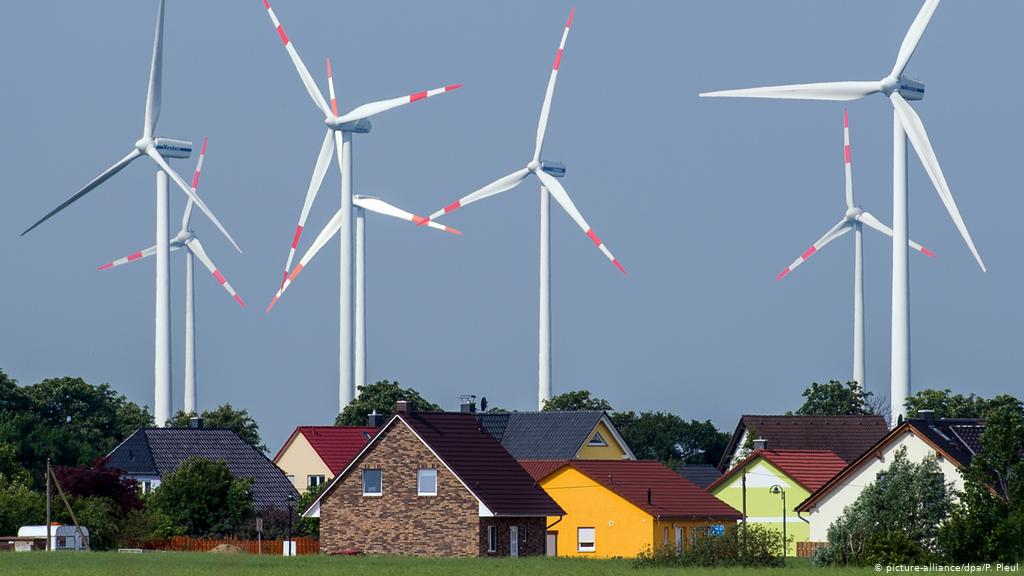
For renewable energy rent-seekers, the claim that wind and solar reduce carbon oxide gas emissions is a necessary and endlessly repeated lie. The necessity comes from the fact that without that (utterly false) premise the wind and solar industries would have been dead and buried, years ago. Incapable of ever supplying power as and when power consumers need it, wind and solar generators are responsible for a product with absolutely no commercial demand. Hence the massive subsidies.

For the record, STT is not overly concerned about human-generated carbon oxide gas and doesn’t accept the notion that it is ‘carbon pollution’. Plants crave the stuff and couldn’t care less whether comes from a volcano, peat bog or coal-fired power plant.

But, for those who worry about human-generated CO2, back in August 2014, STT posed the following question: How Much CO2 Gets Emitted to Build a Wind Turbine? Since then, that post has…

View original post 772 more words

Star Trek: Season 2, Episode Eight “I, Mudd”

Great Books Guy's avatarGreat Books Guy

Stardate: 4513.3 (2268)
Original Air Date: November 3, 1967
Writer: Stephen Kandel, David Gerrold (uncredited)
Director: Marc Daniels

“What is a man but that lofty spirit, that sense of enterprise, that devotion to something that cannot be sensed, cannot be realized but only dreamed! The highest reality.”

In this goofy Harry Mudd sequel episode, a crewman named Norman (Richard Tatro) begins acting strangely and he rather quickly locks the ship’s controls and hijacks the entire vessel. He stiffly addresses the bridge (referring to himself as “we”) by stating that the Enterprise will arrive at a new intended destination in four solar days. Norman then reveals himself to be an android and then promptly shuts himself down while the ship speeds toward its unknown destination.

Several days later, the Enterprise arrives at an uncharted planet, classified a “Class-K” planet (meaning a planet which can be adapted for life…

View original post 876 more words

Who gains from pay transparency?

Dead Calm Weather Exposes The Great ‘Green’ Energy Lie Almost Every Single Day

stopthesethings's avatarSTOP THESE THINGS

If you believe that the ‘cheque’s in the mail’, ‘the wind is always blowing somewhere’ and ‘the sun never sets’, you’ll believe anything. STT is dedicated to exposing the lie that we are well on our way to an inevitable transition to an all-wind and sun-powered future.

What’s depicted above – courtesy of Aneroid Energy – is the output delivered by Australian wind power outfits to the Eastern Grid last month from every wind turbine connected to the Eastern Grid (with a combined notional capacity of 9,854 MW). Wind power acolytes never confront the chaos caused by sudden 5,000 to 6,000 MW collapses in wind power output that occur every few days or so. Rarely is their total output more than about 60% of nominal capacity; often it’s less than 6%. But troublesome facts like that, never serve the narrative. Not that you’d know it if your only source of…

View original post 1,242 more words

Back to black: coal demand to return to its peak this year 

oldbrew's avatarTallbloke's Talkshop

Ferrybridge ‘C’ Power Station (1966–2016)
[image credit: Lynne Kirton / Wikipedia]
The estimated global figure is 8 billion tonnes. Under UK ‘net zero’ climate policy, the coal option will soon disappear completely. Then what, when the electricity supply going gets tough? Electricity demand is rising, not falling, and global coal use is expected to do the same.
– – –
As countries are juggling between skyrocketing energy prices and reduced gas flows, it seems that many of them could turn to coal to secure power to keep the lights on in winter, says Energy Live News.

The latest report by the International Energy Agency (IEA) paints a grim picture of the current situation the international energy systems find themselves in.

The IEA’s Coal Market Update report forecasts that global coal demand will return to its record highs this year.

The agency estimates that global coal consumption will rise by…

View original post 60 more words

July 29, 1565: Mary I, Queen of Scots marries Henry Stuart, Lord Darnley, Duke of Albany

liamfoley63's avatarEuropean Royal History

Queen Mary I of Scotland was born on December 8, 1542 at Linlithgow Palace, Scotland, to King James V and his French second wife, Marie of Guise. She was said to have been born prematurely and was the only legitimate child of James to survive him.

She was the great-niece of King Henry VIII of England, as her paternal grandmother, Margaret Tudor, was Henry VIII’s older sister. On December 14, six days after her birth, she became Queen of Scotland when her father died, following the Battle of Solway Moss from drinking contaminated water while on campaign.

In 1548, she was betrothed to François, the Dauphin of France, and was sent to be brought up in France, where she would be safe from invading English forces during the Rough Wooing.

Mary married François in 1558, becoming queen consort of France from his accession in 1559 until his death in December…

View original post 981 more words

July 29, 1567: The infant James VI is crowned King of Scotland at Stirling

liamfoley63's avatarEuropean Royal History

The future James VI of Scotland was the only son of Mary I, Queen of Scots, and her second husband, Henry Stuart, Lord Darnley. Mary’s rule over Scotland was insecure, and she and her husband, being Roman Catholics, faced a rebellion by Protestant noblemen. During Mary’s and Darnley’s difficult marriage, Darnley secretly allied himself with the rebels and conspired in the murder of the Queen’s private secretary, David Rizzio, just three months before James’s birth.

James’s father, Darnley, was murdered on February 10, 1567 at Kirk o’ Field, Edinburgh, perhaps in revenge for the killing of Rizzio.

James inherited his father’s titles of Duke of Albany and Earl of Ross. Mary was already unpopular, and her marriage on May 15, 1567 to James Hepburn, 4th Earl of Bothwell, who was widely suspected of murdering Darnley, heightened widespread bad feeling towards her.

In June 1567, Protestant rebels arrested Mary and imprisoned…

View original post 110 more words

The Correct Fiscal Goal Is Smaller Government, not Budget Neutrality or Deficit Neutrality

Dan Mitchell's avatarInternational Liberty

About 10 years ago, the Center for Freedom and Prosperity released this video to explain that America’s real fiscal problem is too much spending and that red ink is best viewed as a symptom of that problem.

I wrote a primer on this issue two years ago, but I want to revisit the topic because I’m increasingly irked when I see people – over and over again – mistakenly assume that “deficit neutrality” or “budget neutrality” is the same thing as good fiscal policy.

  • For instance, advocates of a carbon tax want to use the new revenues to finance bigger government. Their approach (at least in theory) would not increase the deficit. Regardless, that’s a plan to increase to overall burden of government, which is not sound fiscal policy.
  • Just two days ago, I noted that Mayor Buttigieg wants the federal government to spend more money on health programs and…

View original post 227 more words

America’s Horrific Long-Run Fiscal Forecast

Dan Mitchell's avatarInternational Liberty

The Congressional Budget Office has released its new long-run fiscal forecast. Like I did last year (and the year before, and the year before, etc), let’s look at some very worrisome data.

We’ll start with projections over the next three decades for taxes and spending, measured as a share of economic output (gross domestic product). As you can see, the tax burden is increasing, but the spending burden is increasing even faster.

By the way, some people think America’s main fiscal problem is the gap between the two lines. In other words, they worry about deficits and debt.

But the real problem is government spending. And that’s true whether the spending burden is financed by taxes, borrowing, or printing money.

So why is the burden of government spending projected to get larger?

As you can see from Figure 2-2, entitlement programs deserve the lion’s share of the…

View original post 168 more words

UK Sea Level Rise Speeding Up–Claim Met Office: Data Proves Otherwise

July 28, 1540: King Henry VIII of England, Lord of Ireland marries his fifth wife, Catherine Howard

liamfoley63's avatarEuropean Royal History

King Henry VIII considered the matter of the need for a politically aligned marriage. As a new Protestant nation England needed Protestant allies. Chancellor, Thomas Cromwell suggested Anne, the 25-year-old sister of the Duke Wilhelm I-V of Jülich-Cleves-Berg who was seen as an important ally in case of a Roman Catholic attack on England, for the duke fell between Lutheranism and Catholicism.

Hans Holbein the Younger was dispatched to Cleves to paint a portrait of Anne for the king. Despite speculation that Holbein painted her in an overly flattering light, it is more likely that the portrait was accurate; Holbein remained in favour at court.

Henry VIII, King of England and Lord of Ireland

After seeing Holbein’s portrait, and urged on by the complimentary description of Anne given by his courtiers, the 49-year-old king agreed to wed Anne. However, it was not long before Henry wished to annul the marriage…

View original post 428 more words

Did it make a difference?

Michael Reddell's avatarcroaking cassandra

I’ll get back to some extensive original material next week, but I have been reflecting a bit on the attack on the Reserve Bank by Arthur Grimes, former chief economist of the Bank (and later chair of the Bank’s monitoring board). The most recent version ran on Radio New Zealand yesterday morning. As I noted on Twitter, there was a fair amount there I agreed with (notably the observations on the poor quality make-up of the MPC) and a fair amount I disagreed with.

Grimes has been critical of the Bank (and the government) for some considerable time, going back to the amendment to the statutory objective (adding a secondary element of “supporting maximum sustainable employment). Since the pandemic descended on us, his criticism has centred not on CPI inflation (actual or prospective) but on house prices.

Almost a year ago, he had an impassioned piece on these themes published…

View original post 1,518 more words

Three Propagation Mechanisms in Lucas and Sargent with a Response from Brad DeLong

David Glasner's avatarUneasy Money

UPDATE (4/3/2022): Reupping this post with the response to my query sent by Brad DeLong.

I’m writing this post in hopes of eliciting some guidance from readers about the three propagation mechanisms to which Robert Lucas and Thomas Sargent refer in their famous 1978 article, “After Keynesian Macroeconomics.” The three propagation mechanisms were mentioned to parry criticisms of the rational-expectations principle underlying the New Classical macroeconomics that Lucas and Sargent were then developing as an alternative to Keynesian macroeconomics. I am wondering how subsequent research has dealt with these propagation mechanisms and how they are now treated in current macro-theory. Here is the relevant passage from Lucas and Sargent:

A second line of criticism stems from the correct observation that if agents’ expectations are rational and if their information sets include lagged values of the variable being forecast, then agents’ forecast errors must be a serially uncorrelated random…

View original post 1,827 more words

Penn Station Expansion is Based on Fraud

Alon Levy's avatarPedestrian Observations

New York is asking for $20 billion for reconstruction ($7 billion) and physical expansion ($13 billion) of Penn Station. The state is treating it as a foregone conclusion that it will happen and it will get other people’s money for it; the state oversight board just voted for it despite the uncertain funding. Facing criticism from technical advocates who have proposed alternatives that can use Penn Station’s existing infrastructure, lead agency Empire State Development (ESD) has pushed back. The document I’ve been looking at lately is not new – it’s a presentation from May 2021 – but the discussion I’ve seen of it is. The bad news is that the presentation makes fraudulent claims about the capabilities of railroads in defense of its intention to waste $20 billion, to the point that people should lose their jobs and until they do federal funding for New York projects…

View original post 2,940 more words

Previous Older Entries Next Newer Entries

Bassett, Brash & Hide

Celebrating humanity's flourishing through the spread of capitalism and the rule of law

Truth on the Market

Scholarly commentary on law, economics, and more

The Undercover Historian

Beatrice Cherrier's blog

Matua Kahurangi

Celebrating humanity's flourishing through the spread of capitalism and the rule of law

Temple of Sociology

Celebrating humanity's flourishing through the spread of capitalism and the rule of law

Velvet Glove, Iron Fist

Celebrating humanity's flourishing through the spread of capitalism and the rule of law

Why Evolution Is True

Why Evolution is True is a blog written by Jerry Coyne, centered on evolution and biology but also dealing with diverse topics like politics, culture, and cats.

Down to Earth Kiwi

Celebrating humanity's flourishing through the spread of capitalism and the rule of law

NoTricksZone

Celebrating humanity's flourishing through the spread of capitalism and the rule of law

Homepaddock

A rural perspective with a blue tint by Ele Ludemann

Kiwiblog

DPF's Kiwiblog - Fomenting Happy Mischief since 2003

The Dangerous Economist

Celebrating humanity's flourishing through the spread of capitalism and the rule of law

Watts Up With That?

The world's most viewed site on global warming and climate change

The Logical Place

Tim Harding's writings on rationality, informal logic and skepticism

Doc's Books

A window into Doc Freiberger's library

The Risk-Monger

Let's examine hard decisions!

Uneasy Money

Commentary on monetary policy in the spirit of R. G. Hawtrey

Barrie Saunders

Thoughts on public policy and the media

Liberty Scott

Celebrating humanity's flourishing through the spread of capitalism and the rule of law

Point of Order

Politics and the economy

James Bowden's Blog

A blog (primarily) on Canadian and Commonwealth political history and institutions

Science Matters

Reading between the lines, and underneath the hype.

Peter Winsley

Economics, and such stuff as dreams are made on

A Venerable Puzzle

"The British constitution has always been puzzling, and always will be." --Queen Elizabeth II

The Antiplanner

Celebrating humanity's flourishing through the spread of capitalism and the rule of law

Bet On It

Celebrating humanity's flourishing through the spread of capitalism and the rule of law

History of Sorts

WORLD WAR II, MUSIC, HISTORY, HOLOCAUST

Roger Pielke Jr.

Undisciplined scholar, recovering academic

Offsetting Behaviour

Celebrating humanity's flourishing through the spread of capitalism and the rule of law

JONATHAN TURLEY

Res ipsa loquitur - The thing itself speaks

Conversable Economist

In Hume’s spirit, I will attempt to serve as an ambassador from my world of economics, and help in “finding topics of conversation fit for the entertainment of rational creatures.”

The Victorian Commons

Researching the House of Commons, 1832-1868

The History of Parliament

Articles and research from the History of Parliament Trust

Books & Boots

Reflections on books and art

Legal History Miscellany

Posts on the History of Law, Crime, and Justice

Sex, Drugs and Economics

Celebrating humanity's flourishing through the spread of capitalism and the rule of law

European Royal History

Exploring the Monarchs of Europe

Tallbloke's Talkshop

Cutting edge science you can dice with

Marginal REVOLUTION

Small Steps Toward A Much Better World

NOT A LOT OF PEOPLE KNOW THAT

“We do not believe any group of men adequate enough or wise enough to operate without scrutiny or without criticism. We know that the only way to avoid error is to detect it, that the only way to detect it is to be free to inquire. We know that in secrecy error undetected will flourish and subvert”. - J Robert Oppenheimer.

STOP THESE THINGS

The truth about the great wind power fraud - we're not here to debate the wind industry, we're here to destroy it.

Lindsay Mitchell

Celebrating humanity's flourishing through the spread of capitalism and the rule of law

Alt-M

Celebrating humanity's flourishing through the spread of capitalism and the rule of law

croaking cassandra

Economics, public policy, monetary policy, financial regulation, with a New Zealand perspective

The Grumpy Economist

Celebrating humanity's flourishing through the spread of capitalism and the rule of law

International Liberty

Restraining Government in America and Around the World