Taxation 101

Dan Mitchell's avatarInternational Liberty

I’ve written a few columns that explain tax principles, but this video from the Tax Foundation may be the best place to start if you have friends or colleagues who need to learn the basics.

As part of the article that accompanies the video, the Tax Foundation explains that not all taxes are created equal. In other words, some taxes impose more damage than other taxes.

And this chart from the article is a nice summary of the three types of tax, along with the potential damage caused by varying ways of collecting tax.
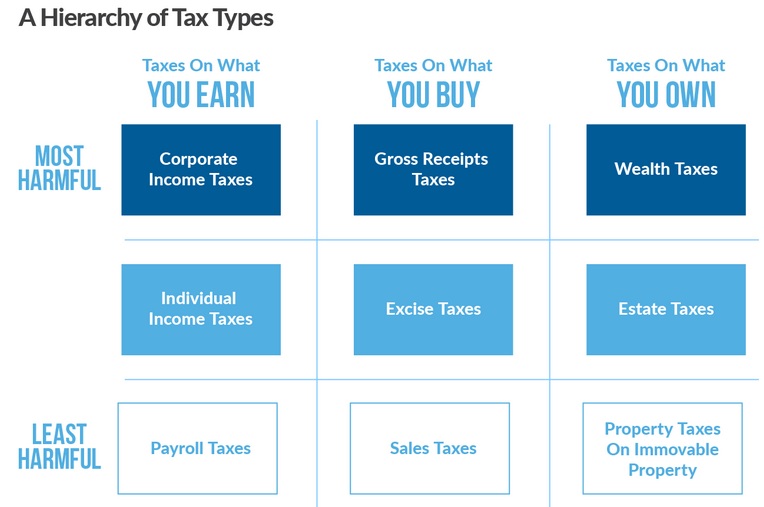
As a general rule, this chart is totally accurate.

Corporate income taxes, gross receipts taxes (mentioned here), and wealth taxes do a lot of economic damage on a per-dollar-collected basis.

But I want to add a caveat to the first column.

As currently designed, there’s no question that the personal income tax…

View original post 331 more words

Wind & Solar Transition Means Transition to Power Rationing & Rocketing Power Bills

stopthesethings's avatarSTOP THESE THINGS

When the sun sets and calm weather sets in, wind and solar power can’t be bought at any price. Increase the capacity of the unreliables connected to your grid and get ready for not only rocketing power bills, but routine power rationing.

Once upon a time, electricity was cheap and it flowed like running water. Civil and ordered society demanded it.

Now, a group of virtue signalling elites have upended that model, replacing it with something from the pages of George Orwell’s 1984.

In 2022, smart meters, rather than telescreens, keep an eye on what the proles and Party members are up to, allowing the Ministry of Plenty to slash their access to electricity, in a heartbeat and without warning.

The only reason that governments are interfering in consumers’ power usage to that degree is that they’ve become obsessed with subsidising intermittent wind and solar while simultaneously wrecking the profitability…

View original post 644 more words

Would more tax cuts be inflationary?

julianhjessop's avatarPlain-speaking Economics

One of the central arguments of Rishi Sunak’s campaign to become the next Prime Minister is that it would be irresponsible to cut taxes further until inflation is under control. Of course, there are risks here, but my view is that they are worth taking.

For a start, it is not clear that tax cuts have to be inflationary. Indeed, a recent paper from the Bank for International Settlements concluded that the inflationary effect of fiscal stimulus depends crucially on how central banks respond.

Basic economics tells you that inflation is caused by too much money chasing too few goods and services. But tax cuts in themselves do not increase the stock of money in the economy. This is largely determined by monetary policy, not fiscal policy.

Tax cuts might add to inflation by increasing the velocity of circulation of money. But it is more likely that they will simply…

View original post 429 more words

A Path to a 4-day week (with 8-hour days)

I was living in Japan as a student when that country was Transitioning from a six day working week to a five day working week. Everyone at my university came in on Saturday mornings to work 1/2 day. The result was the lost decade of growth as explained by Prescott.

I don’t know what was done at 24/7 businesses such as hospitals or how schools and universities will work on four-day weeks. Many parts of the services sectors are prone to Baumol’s disease so they don’t have an ability to increase productivity through higher morale.

Entities that compete with the international market including the tourism sector would find it tough going as well

John Quiggin's avatarJohn Quiggin

Suppose(!) an Oz government or IR tribunal, wanted to shift the standard working week to four eight-hour days.
Here’s one possible path:

Reduce standard working week from 38 hours to 35, a demand of the trade union movement that’s been on the books for the last 50 years. With four weeks annual leave and 10 public holidays per year, that implies just over 1600 hours per year (excluding sick leave etc) 1/..

Now move to the four-day, 32 hour week, with the proviso that the full four days are worked in weeks with public holidays. That gives 1536 hours worked in a standard year 2/..

Now shift from four weeks annual leave to two, with the proviso that workers can put in up to eight 5-day weeks during the year and take the time off in an additional two-week block. That brings annual hours back up to 1600 3/…

Thoughts?

View original post

Image

July 17, 1918: Assassination of Emperor Nicholas II of Russia and his Family.

liamfoley63's avatarEuropean Royal History

From the Emperor’s Desk: In the past on this blog I’ve written detailed accounts of the assassination of Emperor Nicholas II and his family. Today I will focus on genealogy, his marriage and briefly cover his reign.

Nicholas II (May 18, 1868 – July 17, 1918), known in the Russian Orthodox Church as Saint Nicholas the Passion-Bearer, was the last Emperor of Russia, King of Congress Poland and Grand Duke of Finland, ruling from 1 November 1894 until his abdication on 15 March 1917.

Grand Duke Nicholas Alexandrovich was born in the Alexander Palace in Tsarskoye Selo south of Saint Petersburg, during the reign of his grandfather Emperor Alexander II. He was the eldest child of then-Tsesarevich Alexander Alexandrovich and his wife, Tsesarevna Maria Feodorovna (née Princess Dagmar of Denmark).

Grand Duke Nicholas’ father was heir apparent to the Russian throne as the second but eldest surviving son of Emperor…

View original post 1,234 more words

Judge Hits Wind Farm & Big Tesla Battery Owners With $4m Fines For Delivery Failures

stopthesethings's avatarSTOP THESE THINGS

Now and again the law catches up with the shysters that run wind farms and so-called big batteries. Failing to deliver on a promise ordinarily results in an order for damages to be paid to the unwitting victim. In addition, in a regulated electricity market, the regulator will sometimes join in and seek its pound of flesh, as well.

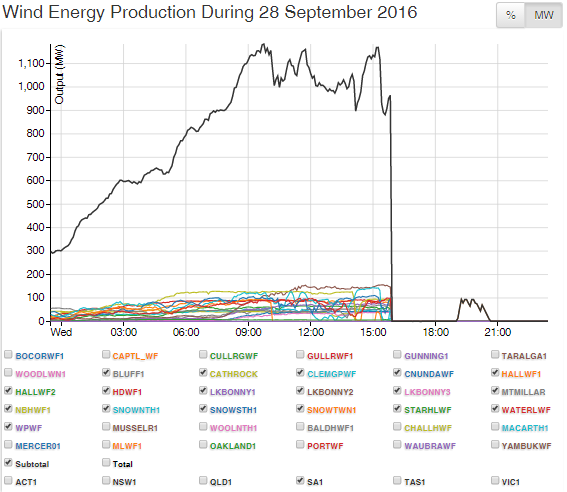
Back in September 2016, South Australia’s wind farms were the cause of utter chaos when the automatic and instant shutdown of their turbines during a spring gale (see above) resulted in Australia’s only ever statewide blackout.

Parts of the state were left without power for over a fortnight. The operators involved cost the State’s businesses and households close to $400 million, but, for their part, walked away with a paltry $3.5 million fine (see below).

In a separate incident in October 2019, SA’s big Tesla battery had been contracted to…

View original post 679 more words

Classic TV Drama: The Onedin Line – #01 – S01 E01 – The Wind Blows Free (15 Oct 1971)

adamsmith1922's avatarThe Inquiring Mind

A great Brit TV Classic

This Episode

James Onedin is an ambitious, headstrong sea captain working for the Callon Line. Upon returning to Liverpool in 1860, he is denied a bonus by his employer, Thomas Callon, because a portion of the cargo has been lost. Upon seeing a notice offering the old schooner Charlotte Rhodes for sale for £500, James decides to set up his own shipping company. Unfortunately, his cautious brother Robert, who has inherited their father’s chandler’s shop while he was away, refuses to put up any capital.[1]

James calls on Captain Webster to inquire about the Charlotte Rhodes. Webster rejects James’ low offer of £175 (his life savings), but his compelling spinster daughter, Anne, who deftly manages her cantankerous and drunken father, is concerned about her future. She makes James a counteroffer: the ship as dowry. Anne Webster, “on the wrong side of…

View original post 368 more words

The seven tactics that Remainers use to discredit Brexit – and why they’re wrong

julianhjessop's avatarPlain-speaking Economics

Brexit has hardly featured in the race to become the next Prime Minister, but the Conservative Party is still divided on the best way forward. The new leader will be under great pressure from many quarters to keep the UK economy as close to the EU as possible, rather than pursue the ambition of a truly ‘Global Britain’. This would be a historic mistake.

Unfortunately, ‘Continuity Remain’ is alive and well, and still pushing the line that Brexit has been an economic disaster. This can be refuted simply by comparing the UK’s growth since the 2016 referendum with the big four economies in the EU, namely Germany, France, Italy and Spain. ‘Brexit Britain’ is vying with France for top spot on total growth and is sitting comfortably in mid-table on per capita GDP.

Similarly, UK inflation is little different from the average in the euro area, or the latest rate…

View original post 855 more words

Star Trek: Season 2, Episode One “Amok Time”

Great Books Guy's avatarGreat Books Guy

Stardate: 3372.7 (2267)
Original Air Date: September 15, 1967
Writer: Theodore Sturgeon
Director: Joseph Pevney

“Live long and prosper.”

★★★★★

In this classic season two opener, Dr. McCoy kicks off the episode by expressing concerns about Mr. Spock. According to Bones, Spock has been acting strange: “restive,” “nervous,” even irritable, and he is avoiding eating food (not to mention the fact that he threatened to strangle Bones). Bones and Kirk catch Nurse Chapel attempting to bring a bowl of Vulcan plomeek soup to Spock in a show of affection, but when Spock erupts at her in a rage, he immediately requests shore leave on his home planet of Vulcan. However, the Enterprise is already en route to Altair VI for the presidential inauguration ceremony, however Spock apparently redirects the Enterprise’s course to Vulcan anyway. Nevertheless, Spock continually appears agitated and confused. Kirk orders Spock to sickbay…

View original post 935 more words

PBS – American Experience: Eyes On The Prize – #1/14 – Awakenings 1954-1956

adamsmith1922's avatarThe Inquiring Mind

About this episode from TV Guide

“Awakenings 1954-56” profiles Mose Wright, a black Mississippian who testified against two white men accused of murder; and Rosa Parks, who refused to give up her seat to a white person on Dec. 1, 1955 in Montgomery, Ala. The incident sparked a bus boycott that lasted for one year.

About this series

Wikipedia

Eyes on the Prize is an American television series and 14-part documentary about the Civil Rights Movement in the United States. The documentary originally aired on the PBS network and also aired in the United Kingdom on BBC2. Created and executive produced by Henry Hampton at the film production company Blackside and narrated by Julian Bond, the series uses archival footage, stills and interviews of participants and opponents of the movement. The title of the series is derived from the folk song “Keep Your Eyes on…

View original post 167 more words

PBS – American Experience: Eyes On The Prize – #5/14 – Mississippi Is This America 1962–1964

adamsmith1922's avatarThe Inquiring Mind

About this episode from TV Guide

The events of 1963 and ’64, when Mississippi became the battleground of the civil-rights movement. Relying on sit-ins, business boycotts and marches, blacks found their efforts thwarted by white supremacists. Included: the 1963 assassination of Medgar Evers; and the 1964 black voter-registration drive.

About this series

Wikipedia

Eyes on the Prize is an American television series and 14-part documentary about the Civil Rights Movement in the United States. The documentary originally aired on the PBS network and also aired in the United Kingdom on BBC2. Created and executive produced by Henry Hampton at the film production company Blackside and narrated by Julian Bond, the series uses archival footage, stills and interviews of participants and opponents of the movement. The title of the series is derived from the folk song “Keep Your Eyes on the Prize,” which is used…

View original post 161 more words

Think it’s hot now? How Britain roasted in TEN-WEEK heatwave during summer of ’76

Pro Archia by Cicero (62 BC)

Simon's avatarBooks & Boots

Pro Archia is the shortest of the five speeches contained in the excellent Oxford University Press edition of Defence Speeches of Cicero, edited and translated by D.H. Berry (2000). It’s barely 12 pages long and yet even this slip of a thing requires a detailed three-page introduction from Dr Berry. In it he explains that: Aulus Licinius Archias was born plain Archias in Antioch in Syria in the mid-120s. As a young man he established himself as a poet and travelled round the eastern Mediterranean writing poems to order. In 102 he arrived in Rome and was welcomed into the home of Lucius Licinius Lucullus where he tutored the two young sons. He was sought out by other noble Roman families.

During this period Cicero himself took instruction from Archias (among his other achievements, Cicero was no mean poet) and explains in the speech that gratitude for his old…

View original post 3,721 more words

Krugman on 2013 vs 1958 macro

But is there all that much evidence that modern macroeconomics has had any influence on central-bank policy-making.

Greg mankiw in 2006 in his engineers versus scientists essay in the Journal of economic perspectives did a wonderful take-out of a biography of a federal reserve board member saying that his insights were sophisticated and nuanced about the macroeconomy but didn’t show any knowledge of modern macroeconomics in coming to his conclusions.

My two brothers graduated in economics in the early 1970s. I think what they knew of economics is about as much central bankers do now; they would not have to update to have a conversation with a central banker.

John Quiggin's avatarJohn Quiggin

At the recent American Economic Association meeting in San Diego, Brad DeLong chaired a panel on ” Stimulus or Stymied?: The Macroeconomics of Recessions“, and has posted a transcript. Paul Krugman was there and picked up my claim that macroeconomics has, on balance, gone backwards since 1958. I’ve extracted his section here. Lots of useful stuff, but I’d stress this:

the whole basis on which we constructed monetary policy during the Great Moderation, which is that stabilizing inflation and stabilizing output are the same thing, is all wrong: you can have a sustained period of low but not negative inflation consistent with an economy operating far below its potential productive capacity. That is what I believe is happening now. If so, we are failing dismally in responding to this economic crisis. This is in contrast to what some central bankers are saying—that we have done well because inflation…

View original post 2,525 more words

Forget inflation — the problem is falling real wages

No one under the age of about 50 has an adult memory of high inflation and falling behind wages.

John Quiggin's avatarJohn Quiggin

That’s the title of my new column in Independent Australia. I plan to write fortnightly from now on.

Now that quantitative easing is no longer needed, the problem is how to manage the huge increase in money balances that is driving demand. This is not a new problem; it arises every time a lot of spending is needed to handle an emergency, and we know what works and what does not. In the aftermath of World War I, governments in the UK and Australia sought to unwind the inflation created by wartime spending and return to the gold standard. The result was a long period of economic weakness, culminating in the Great Depression. By contrast, after World War II, wages and prices were allowed to rise, as wartime rationing ended and reconstruction gradually removed constraints on production.

As long as the real value of wages is maintained, a once-off…

View original post 238 more words

Previous Older Entries Next Newer Entries

The War on Prices

Celebrating humanity's flourishing through the spread of capitalism and the rule of law

The Bleeding Heart Libertarian

Celebrating humanity's flourishing through the spread of capitalism and the rule of law

More Stories from the Stories I Publish!

Celebrating humanity's flourishing through the spread of capitalism and the rule of law

In My Tribe

Celebrating humanity's flourishing through the spread of capitalism and the rule of law

Coordination Problem

Celebrating humanity's flourishing through the spread of capitalism and the rule of law

Libertarian Land

Celebrating humanity's flourishing through the spread of capitalism and the rule of law

Arin’s Substack

Celebrating humanity's flourishing through the spread of capitalism and the rule of law

David Andolfatto

Celebrating humanity's flourishing through the spread of capitalism and the rule of law

Monetary Non-Neutrality

Celebrating humanity's flourishing through the spread of capitalism and the rule of law

Reason Magazine

Celebrating humanity's flourishing through the spread of capitalism and the rule of law

Coyote Blog

Celebrating humanity's flourishing through the spread of capitalism and the rule of law

Thoughts from the North

Celebrating humanity's flourishing through the spread of capitalism and the rule of law

Fardels Bear

A History of the Alt-Right

Vincent Geloso

Econ Prof at George Mason University, Economic Historian, Québécois

Bassett, Brash & Hide

Celebrating humanity's flourishing through the spread of capitalism and the rule of law

Truth on the Market

Scholarly commentary on law, economics, and more

The Undercover Historian

Beatrice Cherrier's blog

Matua Kahurangi

Celebrating humanity's flourishing through the spread of capitalism and the rule of law

Temple of Sociology

Celebrating humanity's flourishing through the spread of capitalism and the rule of law

Velvet Glove, Iron Fist

Celebrating humanity's flourishing through the spread of capitalism and the rule of law

Why Evolution Is True

Why Evolution is True is a blog written by Jerry Coyne, centered on evolution and biology but also dealing with diverse topics like politics, culture, and cats.

NoTricksZone

Celebrating humanity's flourishing through the spread of capitalism and the rule of law

Homepaddock

A rural perspective with a blue tint by Ele Ludemann

Kiwiblog

DPF's Kiwiblog - Fomenting Happy Mischief since 2003

The Dangerous Economist

Celebrating humanity's flourishing through the spread of capitalism and the rule of law

Watts Up With That?

The world's most viewed site on global warming and climate change

The Logical Place

Tim Harding's writings on rationality, informal logic and skepticism

Doc's Books

A window into Doc Freiberger's library

The Risk-Monger

Let's examine hard decisions!

Uneasy Money

Commentary on monetary policy in the spirit of R. G. Hawtrey

Barrie Saunders

Thoughts on public policy and the media

Liberty Scott

Celebrating humanity's flourishing through the spread of capitalism and the rule of law

Point of Order

Politics and the economy

James Bowden's Blog

A blog (primarily) on Canadian and Commonwealth political history and institutions

Science Matters

Reading between the lines, and underneath the hype.

Peter Winsley

Economics, and such stuff as dreams are made on

A Venerable Puzzle

"The British constitution has always been puzzling, and always will be." --Queen Elizabeth II

The Antiplanner

Celebrating humanity's flourishing through the spread of capitalism and the rule of law

Bet On It

Celebrating humanity's flourishing through the spread of capitalism and the rule of law

History of Sorts

WORLD WAR II, MUSIC, HISTORY, HOLOCAUST

Roger Pielke Jr.

Undisciplined scholar, recovering academic

Offsetting Behaviour

Celebrating humanity's flourishing through the spread of capitalism and the rule of law

JONATHAN TURLEY

Res ipsa loquitur - The thing itself speaks

Conversable Economist

In Hume’s spirit, I will attempt to serve as an ambassador from my world of economics, and help in “finding topics of conversation fit for the entertainment of rational creatures.”

The Victorian Commons

Researching the House of Commons, 1832-1868

Books & Boots

Reflections on books and art