Deirdre McCloskey: How Liberty Made the Modern World
04 Jun 2022 Leave a comment
in applied price theory, comparative institutional analysis, development economics, economic history, growth disasters, growth miracles, history of economic thought, law and economics, liberalism, libertarianism, Marxist economics, property rights, Public Choice Tags: The Great Enrichment
‘Greens’ Destroying Germany’s Ancient Forests To Make Way For Industrial Wind Turbines
03 Jun 2022 Leave a comment

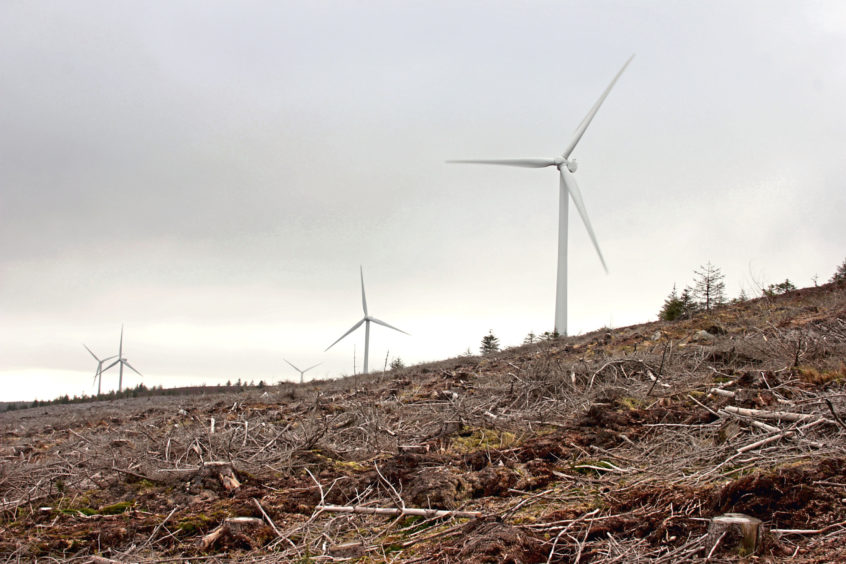
To make way for over 30,000 of these things, the German wind industry has ruthlessly clear-felled ancient forests, once considered out of bounds.
Provided the wilderness being turned into smouldering ash is used as a platform for hundreds of 260m high/300 tonne industrial juggernauts, it’s all for the greater good.
Trashing thousand-year-old oak trees and carving up pristine woodland is all in a day’s work for those promising to save the planet.
Germany’s Black Forest has already been overrun; chainsaws, bulldozers and blazing torches doing their worst to save us from the horrors of a change in the weather.
The Reinhardswald in the State of Hesse is their next target. A magical place where the Brothers Grimm brought Snow White and Sleeping Beauty to life, both literally and figuratively.
The Greens are determined to wreck even that remnant of German history and culture with a move to rip up…
View original post 545 more words
The Gallic War by Julius Caesar – 1
03 Jun 2022 Leave a comment

I’d just bought the Oxford University Press edition of Julius Caesar’s Gallic Wars off Amazon when I walked into my local charity shop and found the old Penguin edition going second-hand for £2. So I snapped it up and am now reading the two editions interchangeably.
The OUP edition (1996)
The OUP edition (1996) is translated and introduced by Carolyn Hammond. She began to put me off almost immediately when, in her preface, she writes:
The subject-matter of The Gallic War is potentially distasteful, even immoral, for the modern reader. The drive to increase territorial holdings, high civilian as well as military casualties, and the predominance of economic motives for organised aggression – all these belong to an accepted norm of international activity in the ancient world, and hence need careful introduction and explanation…
This begs all kinds of questions. For example: Why are you devoting so much time to…
View original post 4,392 more words
Lower Taxes on Capital = More Prosperity
03 Jun 2022 Leave a comment

Good tax policy should strive to solve the three major problems that plague today’s income tax.
- Punitive tax rates on productive behavior.
- Double taxation of saving and investment
- Corrupt, complex, and inefficient loopholes.
Today, let’s focus on the second item. If the goal is to minimize the economic damage of taxation, both labor and capital should be taxed at the lowest-possible rate.
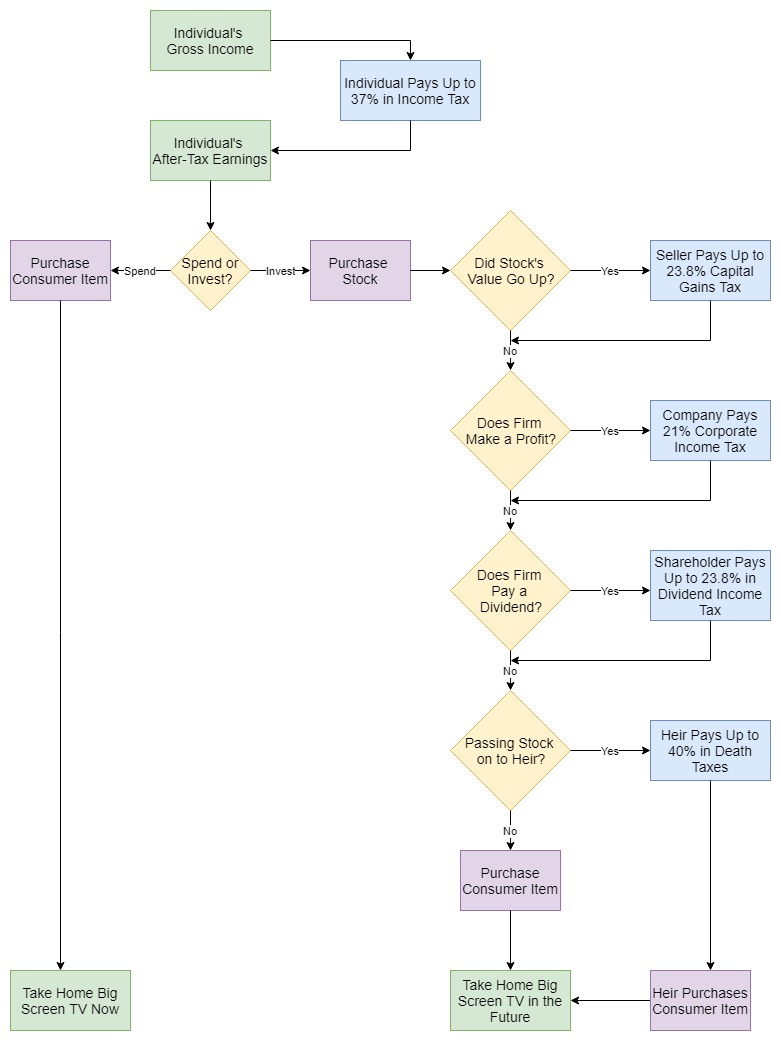 But, as illustrated by the chart, the internal revenue code imposes widespread “double taxation” on income that is saved and invested.
Actually, it’s more than double taxation. Between the capital gains tax, corporate income tax, double tax on dividends, and death tax, there are multiple layers of tax on income from saving and investment.
So even if statutory tax rates are low, effective tax rates can be very high when you consider how the IRS gets several bites at the…
View original post 471 more words
Wind & Solar Subsidies Destroying Reliable & Affordable Power Supplies
02 Jun 2022 Leave a comment

Wind and solar subsidies were designed to undermine the owners of reliable power generation plants, making them uncompetitive in the first instance and ultimately putting them out of business.
The problem with that model, though, is that once-reliable generators are knocked off the grid, power consumers are then forced to pay the full price of the market chaos caused by weather-dependent wind and sunshine-dependent solar.
Well, as they say, you reap what you sow. And, so it is in the USA.
Robert Bradley takes a look at the cancerous destruction being wreaked by subsidised wind and solar in Texas.
“Negative Electricity Prices and the Production Tax Credit” (2012 warning for Texas went unheeded)
Master Resource
Robert Bradley
17 May 2022
[Editor note: The current (May) problems of the Texas Grid reflect a socialized wholesale market (ERCOT) in light of the wind/solar cancer that has wounded the ‘reliables.’ Specifically, negative pricing of windpower, a…
View original post 1,070 more words
June 1, 1533: Anne Boleyn is Crowned Queen of England
02 Jun 2022 Leave a comment

Anne Boleyn (c. 1501 – May 19, 1536) was Queen of England from 1533 to 1536, as the second wife of King Henry VIII. The circumstances of her marriage and of her execution by beheading for treason and other charges made her a key figure in the political and religious upheaval that marked the start of the English Reformation.
 Anne was the daughter of Thomas Boleyn, 1st Earl of Wiltshire, and his wife, Lady Elizabeth Howard, and was educated in the Netherlands and France, largely as a maid of honour to Queen Claude of France. Anne returned to England in early 1522, to marry her Irish cousin James Butler, 9th Earl of Ormond; the marriage plans were broken off, and instead she secured a post at court as maid of honour to Henry VIII’s wife, Catherine of Aragon.
Early in 1523, Anne was secretly betrothed to Henry Percy, son of…
View original post 364 more words
Definitions matter
02 Jun 2022 Leave a comment

What follows is the raw script/notes from my presentation at the World Potato Congress in Dublin on 1 June 2022. As the presentation was given without supports, some of the text may differ from the actual delivered speech.
It was nice to be back on stage.
Reality is perceived by the definitions we give; the black and white lines we draw upon a grey canvas. So in communications, the message is controlled by the wordsmither – the one framing the language that guides our social discourse.
Who is controlling the definitions to the concepts we are using in agriculture and food research?
This might seem obvious but many food/agriculture issues in Brussels are problematic because of poor lexicons. Definitions matter in that they frame our policy discussions, regulations and emotional responses. Regulators start their work with definitions and tend to use this to limit problems or to reach solutions to…
View original post 1,396 more words
In Conversation with Deirdre McCloskey
02 Jun 2022 Leave a comment
in applied price theory, comparative institutional analysis, development economics, economic history, growth disasters, growth miracles, history of economic thought
Harold Demsetz Conference
02 Jun 2022 Leave a comment
in applied price theory, applied welfare economics, comparative institutional analysis, economic history, economics of information, economics of regulation, history of economic thought, industrial organisation, law and economics, property rights, theory of the firm
The life of Julius Caesar by Suetonius (120 AD)
01 Jun 2022 Leave a comment
Suetonius
Not much is known about Gaius Suetonius Tranquillus, generally referred to as Suetonius. He was born around 70 AD, probably in a town in modern-day Algeria. He may have taught literature for a while, he seems to have practiced the law. He is recorded as serving on the staff of Pliny the Younger when the latter was governor of Bithynia in north Turkey in 110 to 112 AD. Subsequently he served on the staff of emperors, being in charge of the emperor’s libraries under Trajan and then managing the emperor Hadrian’s correspondence. Pliny describes him as a quiet and studious man devoted to his writing. He wrote The Lives of Illustrious Men, 60 or so biographies of poets, grammarians, orators and historians, almost all of which has been lost (except for short lives of Terence, Virgil and Horace).
The Lives of the Caesars, by contrast, has survived…
View original post 8,827 more words
Subsidy Cuts Mean Wind Turbine Makers Face Miserable & Uncertain Future
01 Jun 2022 Leave a comment

The wind industry was built on lies and runs on subsidies; cut the subsidies and the whole thing collapses in a heartbeat.
Wind turbine makers like Germany’s Siemens are having a rather miserable time of it, of late. Subsidies were already being wound back across Europe (and with it demand for these whirling wonders) when an ambitious Russian decided to storm across Ukraine in an effort to expand Russia’s territorial control.
All of a sudden, focus was drawn on Europe’s critical dependence upon Russian gas; a critical component of their reliance upon intermittent wind and solar.
The Germans have now renounced their purported disdain for nuclear and coal-fired power, opting to have power as and when they need it. The French, among others, are determined to expand their nuclear power generation capacity, as if their lives and livelihoods depend upon it. Needless to say, the love affair with the unreliables…
View original post 942 more words
Blame the Federal Reserve
01 Jun 2022 Leave a comment
Back in 2015, I explained to Neil Cavuto that easy money creates the conditions for a boom-bust cycle.
It’s now 2022 and my argument is even more relevant.
That’s because the Federal Reserve panicked at the start of the pandemic and dumped a massive amount of money into the economy (technically, the Fed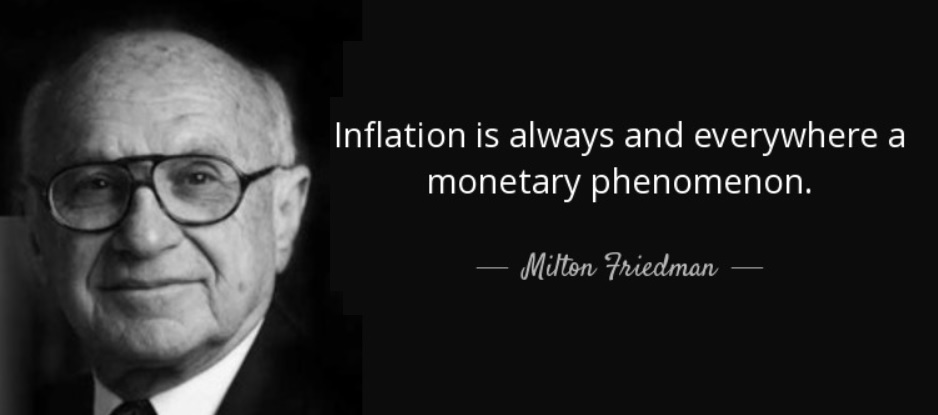 increased its balance sheet by purchasing trillions of dollars of government bonds).
As the late, great Milton Friedman taught us, this easy-money, low-interest-rate approach produced the rising prices that are now plaguing the nation.
But that’s only part of the bad news.
The other bad news is that easy-money policy sets the stage for future hard times. In other words, the Fed causes a boom-bust cycle.
Desmond Lachman of the American Enterprise Institute explains how and why the Federal Reserve has put the country in a bad situation.
Better late than never. Today, the…
View original post 418 more words
Depressing Polling Data
01 Jun 2022 Leave a comment
Here are some of America’s main economic problems.
- Painful inflation caused by bad monetary policy by the government.
- Excessive spending and debt caused by bad fiscal policy by the government.
- Rising prices and waste caused by bad health policy by the government.
- Inflexibility and inefficiency caused by bad regulatory policy by the government.
And that’s just a partial list. I’m not asserting that markets produce perfect results. Indeed, markets are a never-ending process of creative destruction.
But what I am stating is that intervention by politicians and bureaucrats almost always leads to bad outcomes.
So you can imagine my angst and disappointment at this recent polling data from Echelon Insights. A plurality thinks the government should “do more.”
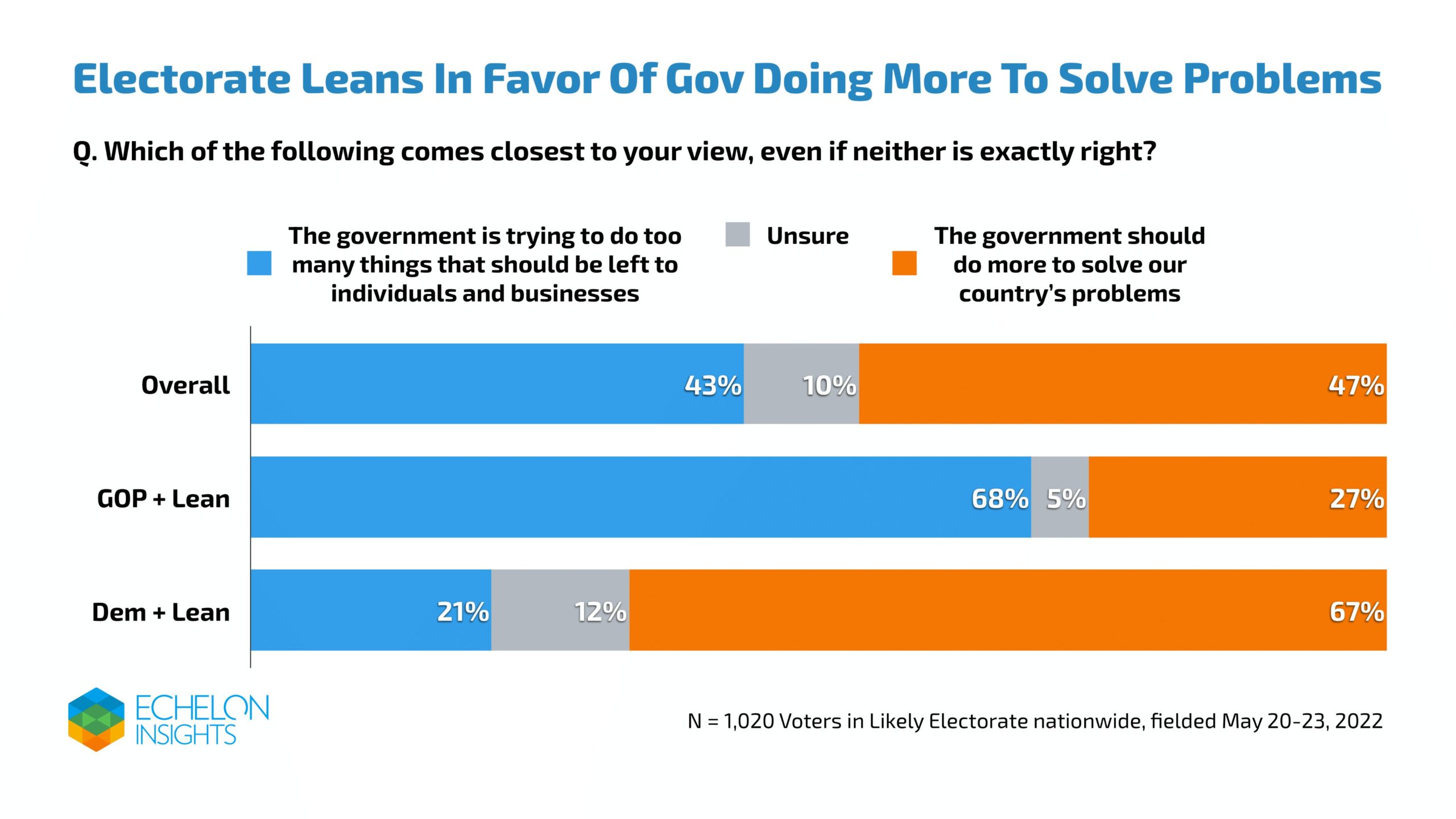
I’m tempted to speculate whether 47 percent of Americans are morons.
But let’s take the high road and simply dig into the numbers. Whenever I see polling data, I always check…
View original post 267 more words
Blackout Blame Shifting: Wind & Solar Collapses Responsible For Unplanned Power Outages
31 May 2022 Leave a comment
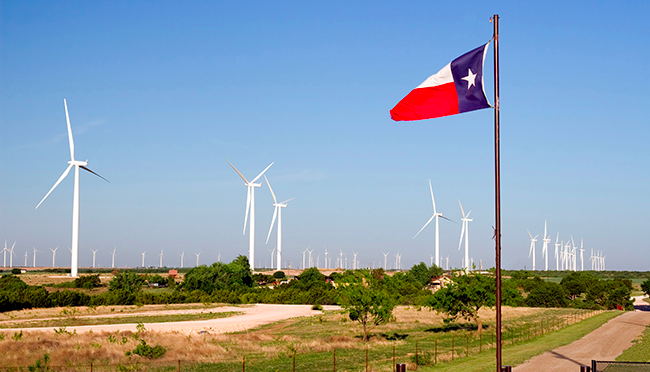
Wind and solar generators happily take credit when the sun’s up and the wind’s blowing, but dodge all criticism when blackouts follow sunset and/or calm weather. The standard trick is to point in every direction – except the obvious – when power rationing (euphemistically called “demand management”) or unplanned power rationing (aka widespread blackouts) follows routine and unpredictable collapses in wind and solar output.
All care and no responsibility, renewable energy rent seekers then point the finger at coal and gas generators – where a few of their units are often offline for routine maintenance, or, if they suffer a breakdown, are repaired and up and running in a jiffy – and assert that the chaos was all their fault.
The line goes that wholesale prices spiked and/or power supplies were cut because a coal-fired or gas-fired generator failed to deliver X hundred MWs of power, cleverly ignoring the fact…
View original post 1,255 more words


Recent Comments