Royal Society’s handling of complaints against two fellows could shape the future of NZ science – and of Kiwi reality
23 Dec 2021 Leave a comment
All indigenous cultures had practical knowledge of their environment. That’s what keeps anthropologists in business.
But all useful parts of Maori knowledge is already part of modern science, already invented by modern science as part of the Industrial Revolution.
Is there anything that is unique in Maori knowledge that was not sooner or later discovered by other cultures?

The politicians seem to have steered clear of the controversy over matauranga Maori and science in which the Royal Society of New Zealand has become embroiled.
This is perturbing. The meaning of “science” in this country – and how it is taught – will be influenced by the way the controversy is resolved. So, too, will the difference between truth and belief.
Soon the government will be evaluating feedback after launching the Te Ara Paerangi – Future Pathways Green Paper to prompt a consultation on the future of the country’s research, science and innovation science system.
Associate science minister Ayesha Verrall ominously said at the launch:
“Te Tiriti needs to be embedded right across the design and delivery of the system, and more opportunities need to exist for mātauranga Māori.”
Does she mean opportunities for a belief system? An alternative view of the world? Or what?
View original post 1,254 more words
Winning and Losing WWII
23 Dec 2021 Leave a comment

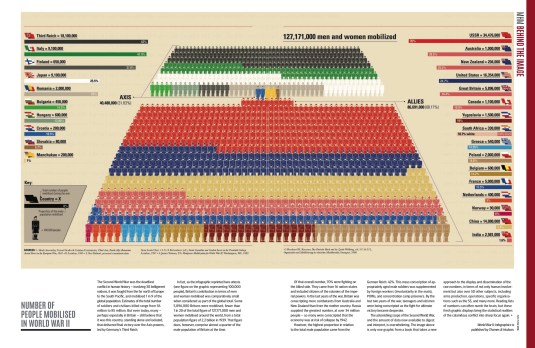
The years from 1939 to 1945 may well have seen the most profound and concentrated upheaval of humanity since the Black Death. Not since the fourteenth century had so many people been killed or displaced, disturbed, uprooted, or had their lives completely transformed in such a short space of time. The years at the very end of the war, and immediately following it, once more illustrated the old adage that it is quite possible to win the war and lose the peace.
The areas where the war was actually fought lay in ruins. Northern France, the Low Countries, the great sweep of the North German Plain, and a wide swath running all the way to Moscow and Stalingrad lay devastated. In the countryside it was not so bad; targets had been fewer, and there were substantial areas that had been bypassed by the fighting. The farther back in the country…
View original post 5,195 more words
Ronan Cormacain: Blue-eyed Babies, Amnesties, Sovereignty of Parliament and the Rule of Law: The Northern Ireland Legacy Proposals
23 Dec 2021 Leave a comment


Could Parliament pass a law that all blue-eyed babies be murdered? This was the hypothetical question posed by Stephen in the Science of Ethics, quoted by AV Dicey in the Introduction to the Study of The Constitution. Dicey agreed with the answer that “legislators must go mad before they could pass such a law, and subjects be idiotic before they could submit to it”.
But what if Parliament passed a law that if a blue-eyed baby was murdered, there could be: no civil case against the murderer; no inquest into the circumstances of the death; no prosecution of the murderer; and there could not even be a police investigation? What if Parliament went even further and passed a law that: all current civil cases on this point must cease instantly; all current inquests be stopped; existing prosecutions must be discontinued; and existing investigations must end? Would we likewise agree…
View original post 1,577 more words
Ronan Cormacain: What should courts do when ministers flout the law?
23 Dec 2021 Leave a comment
 No, this is not a paper on covid rule-breaking by UK ministers. Instead it analyses the judgment of 20th December 2021 in Re Napier, on what happens when Northern Ireland ministers refuse to comply with their legal duties. The particular duty was the duty to participate in meetings of the North-South Ministerial Council (the NSMC). Given that the Democratic Unionist Party ministers had already been found to be acting unlawfully by failing to participate, what would happen when the case came back before the court, and the court was asked to order them to stop acting unlawfully?
Facts
Part V of the Northern Ireland Act 1998 sets out various duties of the First Minister and deputy First Minister (of Northern Ireland) in relation to meetings of the NSMC. The NSMC essentially provides a venue for discussion of matters where the government of Northern Ireland and the government of…
View original post 1,437 more words
Brideshead Revisited: The Sacred and Profane Memories of Captain Charles Ryder by Evelyn Waugh (1945)
23 Dec 2021 Leave a comment

“Ought we to be drunk every night?” Sebastian asked one morning.
“Yes, I think so.”
“I think so too.”
(Charles and Sebastian as students discuss their drinking habits in Brideshead Revisited)
Brideshead Revisited is probably Evelyn Waugh’s most famous novel, simply because of the huge success of the 1981 ITV dramatisation. Which is ironic, because there’s a strong case for arguing that Brideshead is the least representative of Waugh’s works.
It’s also odd that it’s so popular, considering it amounts to a prolonged description of the destructive effects of alcoholism, the bitterness of adultery and infidelity, and a sustained account of one of the most dysfunctional families in literature.
Brideshead Revisited is divided into five sections: a short prologue (13 pages) and even shorter epilogue (6 pages) and 3 long central parts which each cover a distinct period in the characters’ lives. At 331 pages in the Penguin paperback…
View original post 9,423 more words
Dirty Rotten Scoundrels: Double Dealing Wind Developer’s Dodgy Contracts Exposed
22 Dec 2021 Leave a comment

How do you know when a wind developer’s goon is lying to you? His lips are moving.
Riding roughshod over rural communities is just another day at the office for wind power outfits; lies, bullying and deceit are their tools of trade.
When these characters turn up and start spruiking tall tales about wonderful wind and the thousands of jobs that will soon emerge like mushrooms in a forest, it’s not long before community members wake up and move to a war footing.
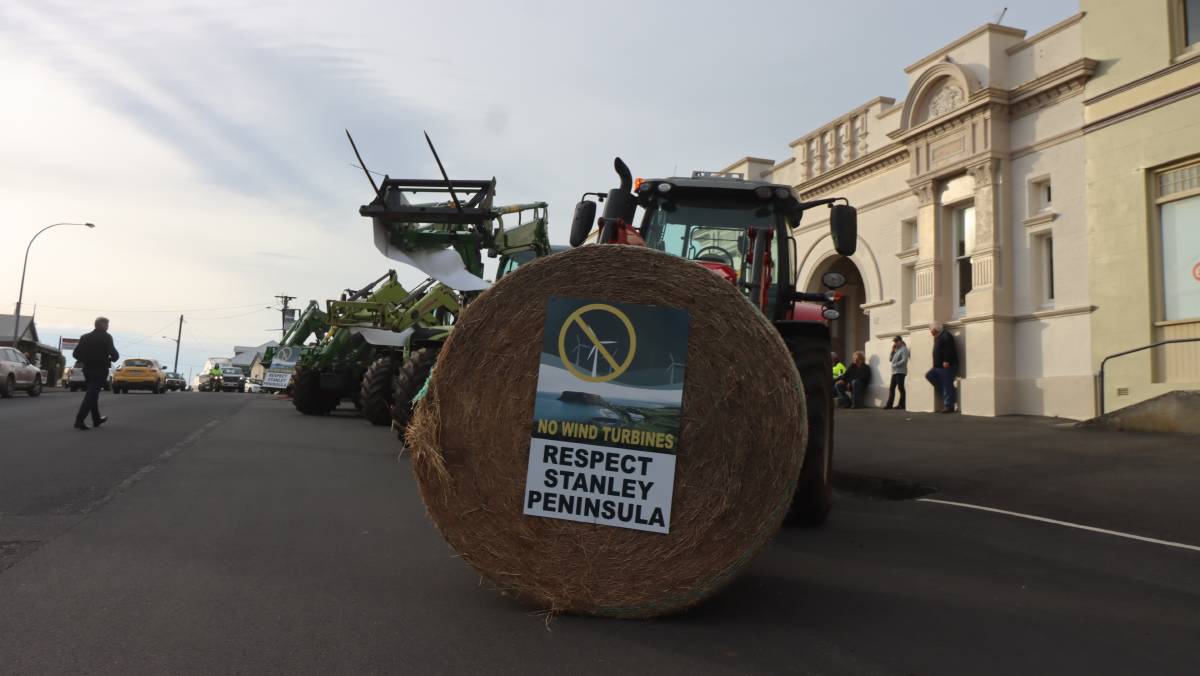
Peaceful and prosperous rural communities, like Stanley on Tasmania’s north coast, are not prepared to become the wind industry’s next victims.
Adding to their long list of well justified grievances, is the fact that Epuron – the foreign owned outfit with plans to carpet their countryside with Chinese-made wind turbines – has been telling lies about the basis for land use option agreements being dangled in front…
View original post 714 more words
A “skewed” distribution: interconnecting intermittency
22 Dec 2021 Leave a comment

While creating the graph that I used in previous post, I noticed something that I expected for a long time. Remember, my graph was a recreation of this graph showing the sorted daily contribution of solar and wind in the Netherlands:
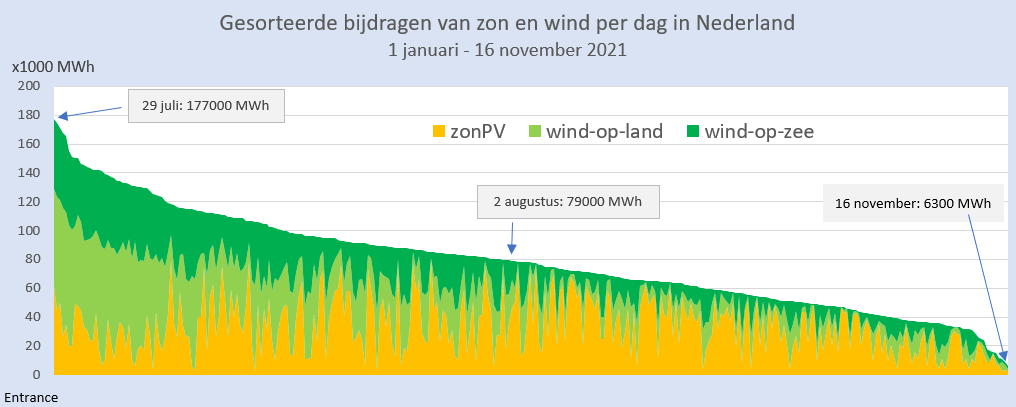
It shows that the lowest daily production of solar and wind between January 1 and November 16 was measured on November 16. When I was creating my graph depicting the Belgian sorted daily contribution, I found that the lowest production of solar and wind in Belgium over the same period was also November 16. That should not have come as a surprise, Belgium and the Netherlands are neighboring countries.
That November 16 date was not the only date that appeared in that original graph. Besides November 16 (lowest production) there are also July 29 (highest production) and August 2 (in between). That made me wonder whether those two other…
View original post 566 more words
Rapid RE Retreat: Looming Winter Blackouts Force Greeks to Reignite Coal-Fired Plants
21 Dec 2021 Leave a comment
In the abstract, the ‘inevitable transition’ to an all wind and sun-powered future is easy, the kicker comes when reality bites; the sun sets and calm weather sets in.
The Greeks, like the Germans, have been talking long and loud about killing off every last one of their coal-fired power plants, denigrating them as “dirty”, evil polluting monsters. All the while promising that sunshine and breezes will readily fill the void.
Like the Germans, Greeks have found that all the cheap talk about wind and solar replacing coal, is just that.
In the first part of 2021, German wind power output plummeted by more than 20%, while at the same time Germany’s coal-fired power generators increased output by a whopping 38%. This is in a country where coal-fired power is meant to be as dead as the dodo.
The writing was on the wall when Germany mandated the shutdown of…
View original post 533 more words
December 20, 1192: Richard I of England is Captured by the Duke of Austria
21 Dec 2021 Leave a comment

Returning from the Third Crusade, bad weather forced King Richard I of England’s ship to put in at Corfu, in the lands of Byzantine Emperor Isaac II Angelos, who objected to Richard’s annexation of Cyprus, formerly Byzantine territory. Disguised as a Knight Templar, Richard sailed from Corfu with four attendants, but his ship was wrecked near Aquileia, forcing Richard and his party into a dangerous land route through central Europe.
On his way to the territory of his brother-in-law Heinrich XII the Lion, Duke of Bavaria and Saxony, Richard was captured December 20, 1192 near Vienna by Leopold V, Duke of Austria, (member of the House of Babenberg) who accused Richard of arranging the murder of his cousin Conrad of Montferrat. Moreover, Richard had personally offended Leopold by casting down his standard from the walls of Acre.
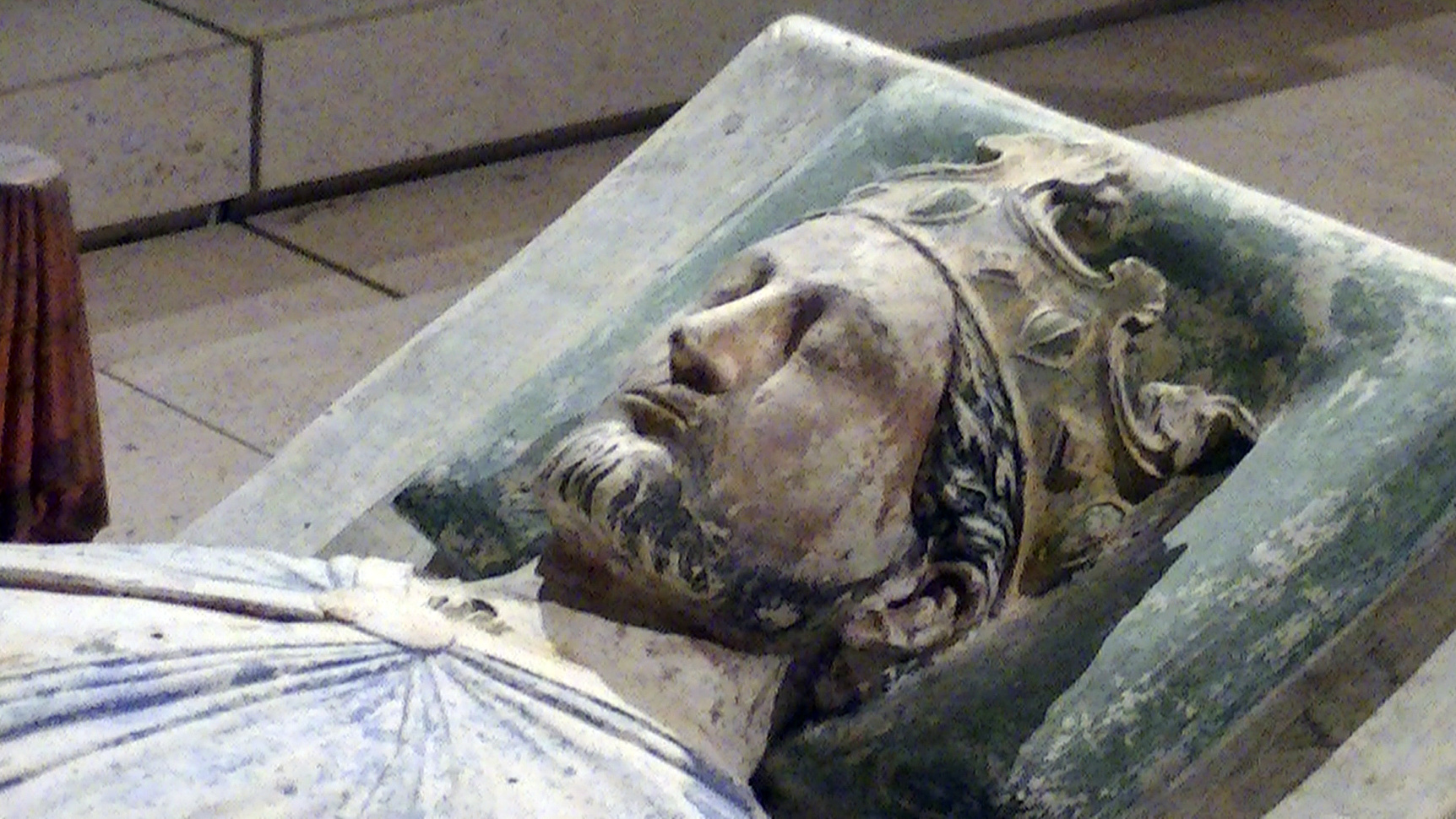 Tomb of Richard I the Lion Heart, King of England
Leopold kept Richard…
View original post 464 more words


Recent Comments