Related Reading: “The Hopkins Touch: Harry Hopkins and the Forging of the Alliance to Defeat Hitler” by David Roll
01 Jan 2022 Leave a comment
Book Review: “Princes of the Renaissance: The Hidden Power Behind an Artistic Revolution” by Mary Hollingsworth
01 Jan 2022 Leave a comment

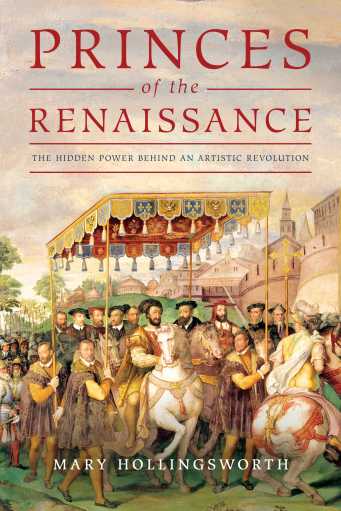 The 15th and 16th centuries were full of dynamic political and religious reforms, but they were also known for cultural changes throughout Europe. The medieval foundations started to crumble, and the early modern age emerged. One of the centers of change was Italy, a series of states with their rulers vying for power and prestige. These rulers would help finance masterpieces in art, literature, and architecture, but it was their rivals that threatened to tear the Renaissance society apart. In “Princes of the Renaissance: The Hidden Power Behind an Artistic Revolution,” Mary Hollingsworth explores the lives of the men and women who helped shape the Renaissance.
I want to thank Pegasus Books for sending me a copy of this book. This title was intriguing to me, and I wanted to learn more about Italian history. The Italian Renaissance has been an area in history that I have been interested in…
View original post 318 more words
Why economists are unpopular
01 Jan 2022 Leave a comment
in applied price theory, applied welfare economics, comparative institutional analysis, economics of bureaucracy, economics of crime, entrepreneurship, environmental economics, history of economic thought, income redistribution, industrial organisation, international economics, labour economics, labour supply, law and economics, liberalism, macroeconomics, managerial economics, minimum wage, organisational economics, personnel economics, poverty and inequality, property rights, Public Choice, public economics, rentseeking, survivor principle, theory of the firm, unemployment, unions, welfare reform Tags: offsetting behaviour, The fatal conceit, unintended consequences
World In Action – The Great Train Robbery – 1964
01 Jan 2022 Leave a comment

I remember this robbery taking place and the aftermath. Wish we had decent TV like this today, but in NZ our media is in thrall to the Ardern Regime
Oct 11, 2021
The multi-award winning series ‘World In Action’ aired a special programme looking back at The Great Train Robbery which had taken place just 7 months previously.
Vicarious Liability of Bishop for abuse committed by clergy
31 Dec 2021 Leave a comment

In a decision handed down just prior to Christmas, DP (a pseudonym) v Bird [2021] VSC 850 (22 December 2021), a judge of the Victorian Supreme Court ruled that the Roman Catholic Bishop of the Diocese of Ballarat could be sued as vicariously liable for child sexual abuse committed by an assistant parish priest against the plaintiff DP when he was 5 years old (in 1971). The decision (as noted in a recent online press report) seems to be the first time a diocese has been found vicariously liable under common law principles for the actions of a priest, in Australia. In this note I will suggest that the reason for this is that the decision is wrong, as inconsistent with clear High Court of Australia authority. This does not mean that I think that the organised church ought to be allowed to escape liability for harm committed…
View original post 2,730 more words
Why economists should sit on SAGE
30 Dec 2021 Leave a comment

Throughout the pandemic, our politicians have been urged to “follow the science” or, more accurately, the advice provided by medical scientists. Other disciplines play only a bit part. There are Scientific Advisory Group for Emergencies (Sage) sub-groups assessing the impacts of Covid on the provision of social care, or minority ethnic groups, but what about the economy?
Indeed, it appears that economists are only asked to put a cost on policy decisions that have already been made, or come up with schemes to mitigate the impacts, rather than influence decisions in the first place. In my admittedly biased view, this is a mistake.
Any decent economist has a toolbox of concepts and skills that can be applied to the policy responses to a pandemic. This begins with communicating the case for state intervention.
For example, protection from a deadly virus is a classic example of what economists call a “public…
View original post 920 more words
In the Debate over Capitalism and Morality, the Score Is: Walter Williams 1 – Pope Francis 0
25 Dec 2021 Leave a comment

The biggest mistake of well-meaning leftists is that they place too much value on good intentions and don’t seem to care nearly as much about good results.
Pope Francis is an example of this unfortunate tendency. His concern for the poor presumably is genuine, but he puts ideology above evidence when he argues against capitalism and in favor of coercive government.
Here are some passages from a CNNreport on the Pope’s bias.
Pope Francis makes his first official visit to the United States this week. There’s a lot of angst about what he might say, especially when he addresses Congress Thursday morning. …He’ll probably discuss American capitalism’s flaws, a theme he has hit on since the 1990s. Pope Francis wrote a book in 1998 with an entire chapter focused on “the limits of capitalism.” …Francis argued that…capitalism lacks morals and promotes selfish behavior. …He has been especially critical…
View original post 739 more words
The Factual Basis of Political Opinions
24 Dec 2021 Leave a comment

“Ideology is a menace” Paul Collier says in his forthcoming book The Future of Capitalism and I couldn’t agree more: ideology (and by extension morality) “binds and blinds”, as psychology professor Jonathan Haidt describes i. And ideology, especially utopian dreams by dedicated rulers, is what allows – indeed accounts for – the darkest episodes of humanity. There is a strange dissonance among people for whom political positions, ideology and politics are supremely important:
- They portray their position as if supported by facts and empirical claims about the world (or at least spit out such claims as if they did believe that)
- At the same time, believing that their “core values” and “ideological convictions” are immune to factual objections (“these are my values; this is my opinion”)
My purpose here is to illustrate that all political positions, at least in part, have their basis in empirically verifiable claims about the…
View original post 1,082 more words
The Misdiagnosis That Continues To Save Lives: Origin Story Of The War On Cancer
24 Dec 2021 Leave a comment

In 1969, Colonel Luke Quinn, a U.S. Army Air Force officer in World War II, was diagnosed with inoperable gallbladder cancer. Surprisingly, he was referred to Dr. DeVita, the lymphoma specialist at National Cancer Institute, by the great Harvard pathologist Sidney Farber — famous for developing one of the most successful chemotherapies ever discovered. Nobody imagined back then that Colonel Luke Quinn, a wiry man with grey hair and a fierce frown with his unusual and likely incurable cancer, would significantly impact how we look at cancer as a disease.
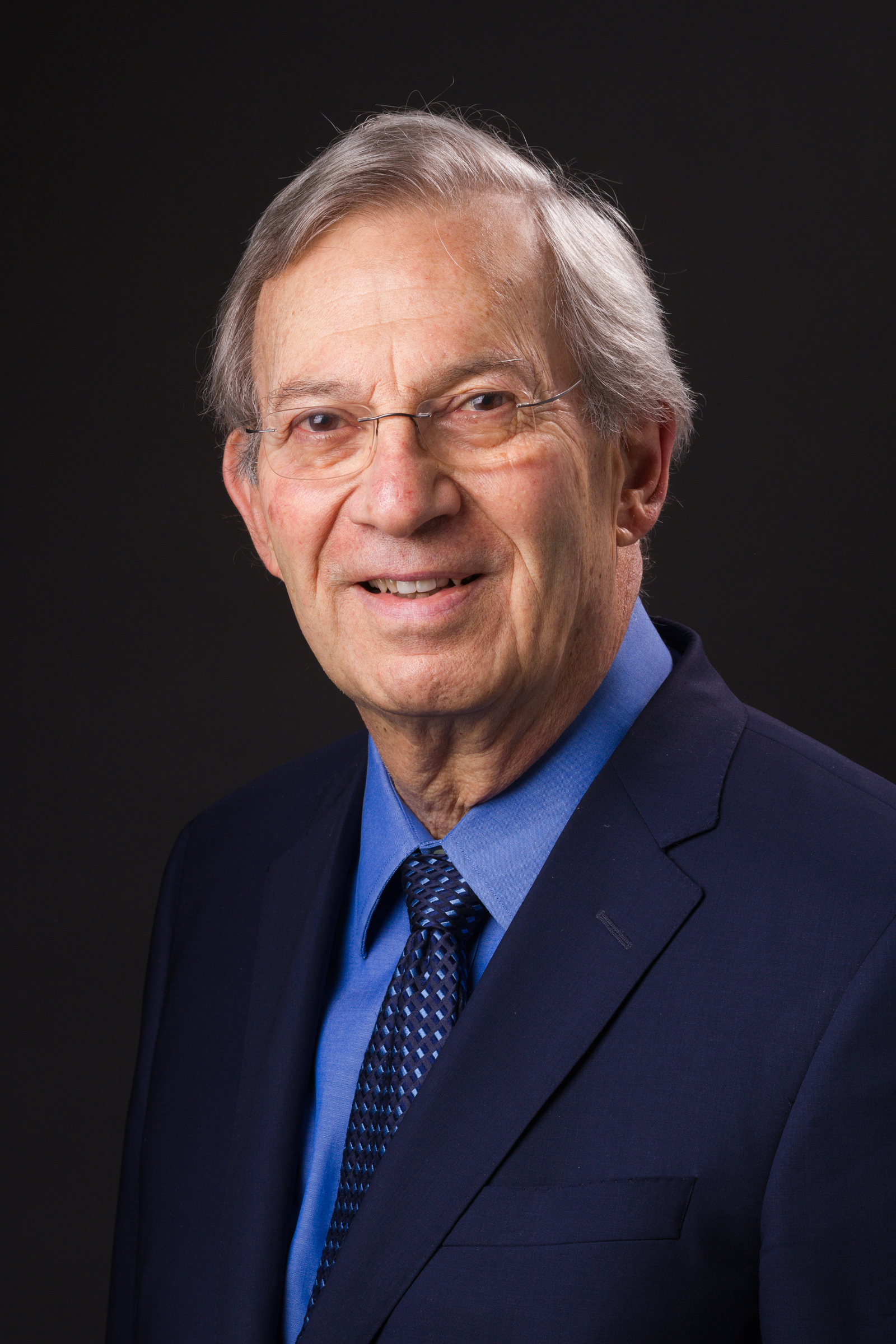
Having been coerced to take up the case of Colonel Luke Quinn, despite gallbladder cancers not being his specialty, Dr.DeVita began to take a routine history, much to the annoyance of Luke Quinn who was used to being in command. Though Quinn glared at Dr.DeVita for reinitiating another agonizing round of…
View original post 1,545 more words
Who Is Jonathan Swift?
24 Dec 2021 Leave a comment

Jonathan Swift was born in Dublin on November 30, 1667 –only a handful of years after the end of Puritanical rule in England– to an English mother and an English father, who died of syphilis just before Jonathan was born, supposedly the disease was contracted while he was away from home sleeping in a pair of “dirty sheets.” Jonathan was an only child, raised by various friends and family members. His English lineage as well as Irish ethnicity together affected his sense of civic duty as he maintained a lifelong sympathy for the Irish struggle. His upbringing was of an upper-crust variety among Anglo-Irish ruling class. He attended Kilkenny School from 1674-1682 and then Trinity College in Dublin from 1682-1686.
In 1689, Swift moved to England to reside at Moor Park in Surrey where he served as secretary to its owner, Sir William Temple, a retired diplomat who had pretensions…
View original post 761 more words


Recent Comments