Twitter an Unreliable Means of Discourse
14 Sep 2021 Leave a comment


Jack Butler writes an article The Myth of the Red Pill in the National Review. I won’t go into all the nuances and various meanings attached to being redpilled, blue- or blackpilled, but want to reblog his discussion about how cyberspace is now awash with tweets from people, left and right, who believe they and they alone are “woke” in either the progressive, post-modern sense, or the opposite. Excerpts in italics with my bolds.
Adherents believe that their apparent online numbers, purportedly sophisticated ideas, and supposed influence in real-world politics point both to their being correct and the emerging conservative paradigm. All of these things are hard to measure, not just because of the amorphous quality of online interaction, but also because of the many layers of irony and memery in which believers conceal themselves. Still, it is undoubtedly true that none of this would have happened
View original post 1,072 more words
300 Years of Leadership and Innovation: Sir Robert Walpole, Britain’s first ‘Prime Minister’ and the History of Parliament Online
14 Sep 2021 Leave a comment


On 3 April 1721 Robert Walpole was appointed First Lord of the Treasury and Chancellor of the Exchequer. This was not the first time that he had occupied these roles, however it was from this point that he is generally regarded as becoming the first ever ‘Prime Minister’. The title was initially bestowed upon Walpole as an insult, used to criticise Walpole’s improper rise to a position higher than some members of the royal family.A similar charge had been levelled against Robert Harley during his impeachment trial in 1715, something in which Walpole himself had been closely involved. In fact, in 1741 Walpole told the Commons “I unequivocally deny that I am sole and prime minister” [W. Coxe, Memoirs of the Life and Administration of Sir Robert Walpole]. However, the title gradually…
View original post 510 more words
Protests Break Out in Europe As Electricity Prices Soar
14 Sep 2021 Leave a comment

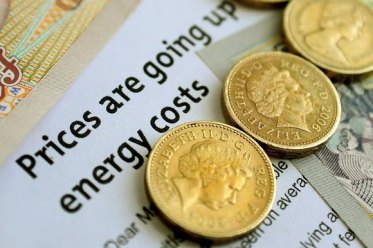 Energy costs on the rise
Refusal to exploit their own reserves of coal and gas, strong reluctance to import any more than the bare minimum because of a professed fear of trace gases in the atmosphere, and over-reliance on costly renewables is making the countries in question look more and more foolish. No end in sight to this kind of economic pain.
– – –
Depleted natural gas inventories and low wind speeds have led to a surge in electricity prices across Europe, putting pressure on governments as consumers protest against surging power bills ahead of the winter heating season, says OilPrice.com.
Electricity prices from the UK to Spain have jumped to all-time highs, people in Spain have taken to the streets, while prices across Europe so high could become a drag on the economic recovery from the pandemic.
In Spain, day-ahead electricity prices surged to a fresh record…
View original post 165 more words
From Modeling Monetary Economies – Champ, Freeman & Haslag
13 Sep 2021 Leave a comment
in applied price theory, applied welfare economics, budget deficits, macroeconomics, monetary economics Tags: fixed exchange rates
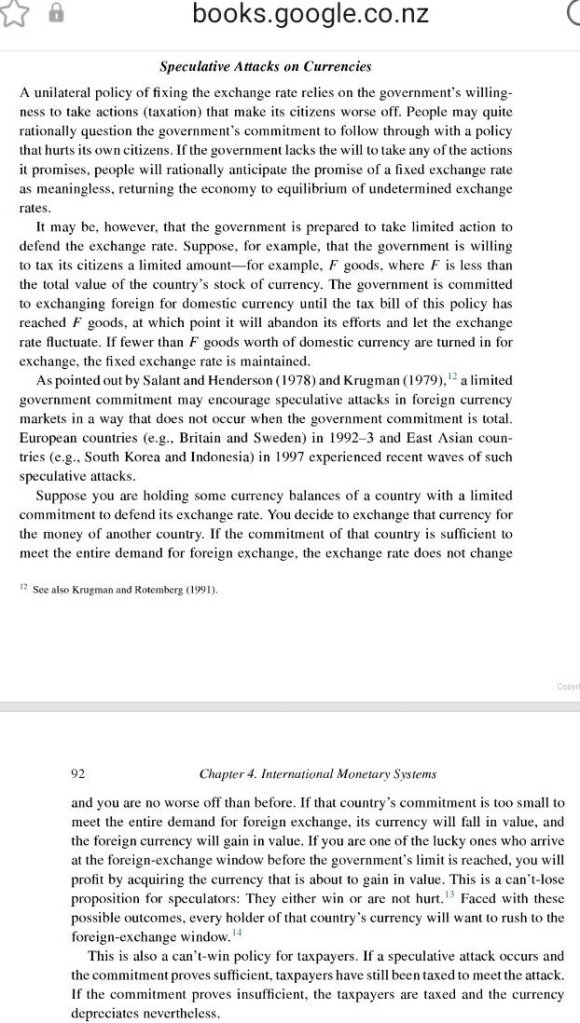
From https://books.google.co.nz/books?id=TLq8z0oQg2sC&pg=PA47&source=gbs_toc_r&cad=3#v=onepage&q&f=false
Are soft NDP voters switching to save Liberals?
13 Sep 2021 Leave a comment

In my earlier preview of September elections, I noted that the surge in polls for the Conservatives in the Canadian election might lead to the NDP losing votes. It is possible this is happening now.
In recent days, the Liberals have returned to a narrow lead in votes and strengthened their existing seat lead, according to the CBC poll tracker. At the same time, there is a notable dip in NDP votes and seats.
We need to be careful about inferring individual change from aggregate trends. But the most likely cause of what the poll tracker and its seat estimator are picking up is softer NDP voters worried about a Conservative plurality.
Note that this would be strategic voting, but not based on district-level expected outcomes (“coordination”), rather on national-level expectations. “All politics is national”, as Taagepera and I put it in the title of our chapter (10)…
View original post 215 more words
Business Cycles – Edward C. Prescott 2/15
11 Sep 2021 Leave a comment
in applied price theory, budget deficits, business cycles, development economics, economic growth, economic history, Edward Prescott, Euro crisis, fiscal policy, global financial crisis (GFC), great depression, great recession, growth disasters, growth miracles, history of economic thought, income redistribution, labour economics, labour supply, macroeconomics, monetary economics Tags: real business cycles
COP26: Climate minister criticised for international – and quarantine free – travel
11 Sep 2021 Leave a comment
 Airport scene [image credit: Wikipedia] Here, there and everywhere by jet in pursuit of ‘net zero’ = not zero. What happened to the alleged climate emergency they claim we’re in? Farcical, and his US counterpart does the same.
– – –
The president of the UK’s upcoming climate change conference is under fire for reportedly travelling to more than 30 countries in seven months, says BBC News.
The Daily Mail said seven of the places visited by Alok Sharma were also on the Covid red list – but he used an exemption available to ministers to not have to quarantine on his return.
The government said face-to-face meetings were “crucial” ahead of COP26.
But Wales’ First Minister Mark Drakeford called it “inexplicable”.
View original post 227 more words
COP26: Poorest countries fear not reaching UK for climate summit due to Covid rules
11 Sep 2021 Leave a comment
 If the Queen, the Pope, or the US President – all classed as vulnerable due to their age – get Covid in Glasgow, climate won’t get a look-in.
– – –
The world’s poorest countries say they are worried about getting to the COP26 climate summit in Glasgow in November, reports BBC News.
Twenty are on the UK’s Covid red list – meaning hotel quarantine for arrivals.
They say the fortnight-long talks may involve being away for seven weeks as they will also have to isolate on return.
View original post 272 more words
THE AFGHANISTAN PAPERS: A SECRET HISTORY OF THE WAR by Craig Whitlock
11 Sep 2021 Leave a comment

/cloudfront-us-east-1.images.arcpublishing.com/tgam/7FMIBPGJGZHELODTJZZ67EIR4U)
(Former President Bush flashes a thumbs-up after declaring the end of major combat in Iraq aboard a U.S. aircraft carrier in 2003. He now says declaring mission accomplished was a mistake.)
In 1971 the Supreme Court ruled in a 6-3 decision, that the U.S. government had not met “the heavy burden of showing justification for the enforcement” of prior restraint. The Court ordered the immediate end of the injunctions against publication which led to the dissemination of the Pentagon Papers by the New York Times. ThePentagon Papers, officially titledReport of the Office of the Secretary of Defense Vietnam Task Force is a Defense Department history of the United States’ political and military involvement in Vietnamfrom 1945 to 1967. Though Washington Post national security reporter Craig Whitlock’s new book, THE AFGHANISTAN PAPERS: A SECRET HISTORY OF THE WAR does not rise to the level of the Pentagon Papers
View original post 1,761 more words
High Implicit Tax Rates Trap Poor People in the Quicksand of Government Dependency
11 Sep 2021 Leave a comment

The welfare state and the so-called war on poverty has been very bad news for taxpayers.
But it’s also very bad news for poor people, in part because various redistribution programs can lure them out of the productive economy and into total dependency on government (and this will become an even bigger problem if Biden’s per-child handouts are approved).
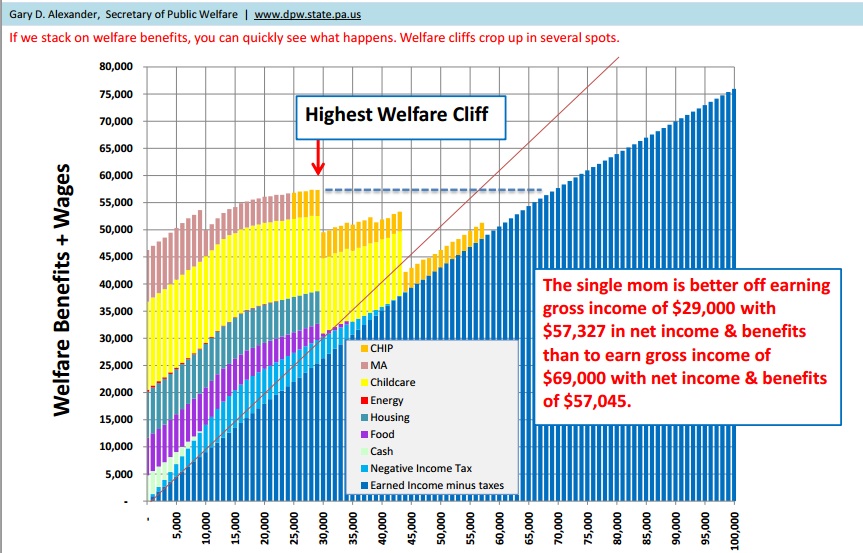 But it’s also bad news because redistribution programs can result in very high implicit tax rates for low-income people who try to improve their lives by climbing the economic ladder.
I shared an example back in 2012, which showed how a single mother in Pennsylvania would be worse off with $57,000 of income instead of $29,000.
In other words, she would be dealing with a de facto marginal tax rate of more than 100 percent.
If you want to understand how this happens, Professors Craig Richardson and Richard…
View original post 574 more words
When Cassius Clay became Muhammad Ali
11 Sep 2021 Leave a comment


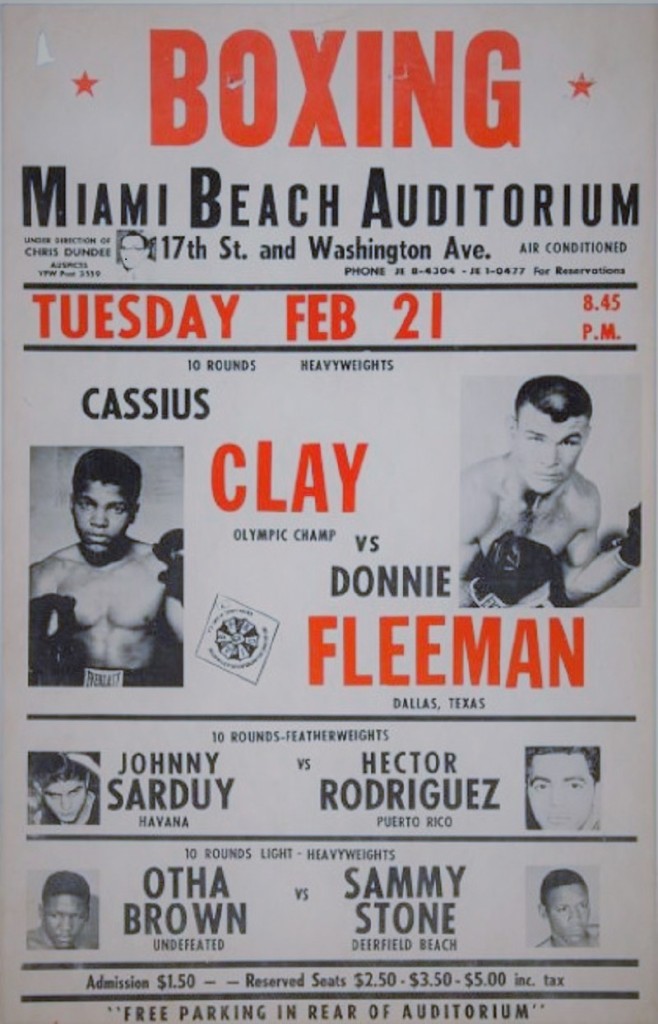
On March 6,1964 Cassius Clay announced that he no longer would be known as Cassius Clay but as Muhammad Ali.
Clay had been linked to the Nation of Islam, although they initially had refused him entry as a member due to his boxing career. However when Clay beat Joe Liston in 1964, the Nation of Islam did accept him , I can only speculate that this was a good Public Relations move for them.
Shortly afterwards on March 6, Elijah Muhammad gave a radio address that Clay would be renamed Muhammad (one who is worthy of praise) Ali (most high).
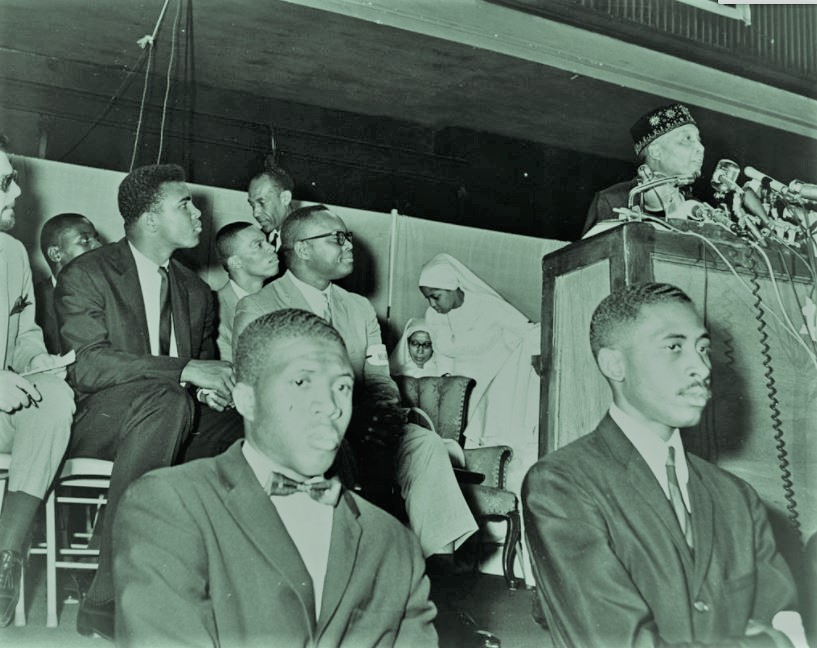
Muhammad Ali had claimed that his old name Cassius Clay was a “slave name and a white man’s name”
Unfortunately this is what happens so often when athletes, musicians, actors or other celebrities get involved in a political movement(although the nation of Islam had religious elements, it was really a…
View original post 338 more words


Recent Comments