Essential UCLA School of Economics: How Property Rights & Profits Reduce Discrimination
18 Sep 2021 Leave a comment
in applied price theory, Armen Alchian, comparative institutional analysis, discrimination, economic history, economics of education, Gary Becker, gender, human capital, industrial organisation, labour economics, labour supply, law and economics, property rights, Public Choice, survivor principle, theory of the firm Tags: racial discrimination, sex discrimination
The Godfather
18 Sep 2021 Leave a comment

The Godfather (1972) Director: Francis Ford Coppola
“I’m gonna make him an offer he can’t refuse.”

★★★★★
The Godfather is simply a perfect movie -beautifully shot, an impeccable script devised by Director Francis Ford Coppola and original novelist Mario Puzo, a transcendent score by Nino Rota, excellent acting from an all-star cast (even the actors considered but ultimately denied roles in the film included an extraordinary line-up, Laurence Olivier, George C. Scott, Orson Welles, Ernest Borgnine, Robert Redford, Robert De Niro, Martin Sheen, Dustin Hoffman, Jack Nicholson and so on). The Godfather is about a Sicilian family now living in America and running a criminal enterprise. The year is 1945 in New York City. We are dropped into the wedding celebration of Vito Corleone’s daughter, Connie (played by Coppola’s sister Talia Shire). Per Sicilian tradition, Don Vito Corleone (played by a cotton-mouthed Marlon Brando and based on real mobster Frank…
View original post 1,587 more words
Daily Disaster: Blackouts Only Reward For California’s Wind & Solar Nightmare
17 Sep 2021 Leave a comment


If insanity is doing the same thing repeatedly and expecting different results, then California’s a clear candidate for the asylum.
Over the last 20 years, its maniacal wind and solar obsession has cost Californians dearly: they suffer America’s highest power prices and, when the mercury soars, are lucky to get any power, at all. Energy poverty is an entrenched part of daily life now for millions of its poor and underprivileged.
But, that’s the price to be paid for the unsubstantiated belief that all your power needs can be delivered exclusively by sunshine and breezes.
California’s wind and sun cult reckon that the solution to its power pricing and supply calamity is simple: endless banks of giant batteries – which will store wind and solar power on those occasions when it’s purportedly being produced in excess, to account for sunset and/or calm weather.
It’s never worked anywhere on Earth, but…
View original post 564 more words
September 16, 1701: Death of King James II-VII of England, Scotland and Ireland.
17 Sep 2021 Leave a comment

James II-VII (October 14, 1633 – September 16, 1701) was King of England and Ireland as James II, and King of Scotland as James VII, from February 6, 1685 until he was deposed in the Glorious Revolution of 1688. He was the last Catholic monarch of England, Scotland, and Ireland; his reign is now remembered primarily for struggles over religious tolerance. However, it also involved the principles of absolutism and divine right of kings, and his deposition ended a century of political and civil strife by confirming the primacy of Parliament over the Crown.
James, the second surviving son of King Charles I and his wife, Henrietta Maria de Bourbon of France, the youngest daughter of Henri IV of France (Henri III of Navarre) and his second wife, Marie de’ Medici, and named after her parents was born at St James’s Palace in London on October 14, 1633. Later that…
View original post 1,660 more words
The Supply Chain Management Principles during Market Garden
16 Sep 2021 Leave a comment

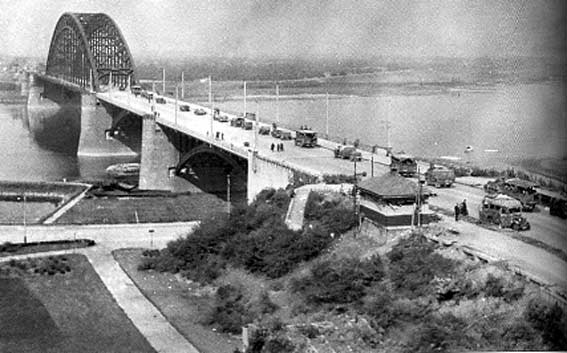
This may seem a strange title for a WWII related subject but in fact it is probably more appropriate then you’d expect.
One of the definitions of Supply Chain Management is “the management of the flow of goods and services,involves the movement and storage of raw materials, of work-in-process inventory, and of finished goods from point of origin to point of consumption”
Replace the word “consumption” with “action” or “combat” and you can apply the principle of Supply Chain management to Operation Market Garden or a great number of other operations during WWII.

The reason why I chose Market Garden is twofold. Firstly because it had a great effect on the country I was born in.Secondly It was the largest airborne operation up to that point and is one of the best recorded mistakes by the allied forces.
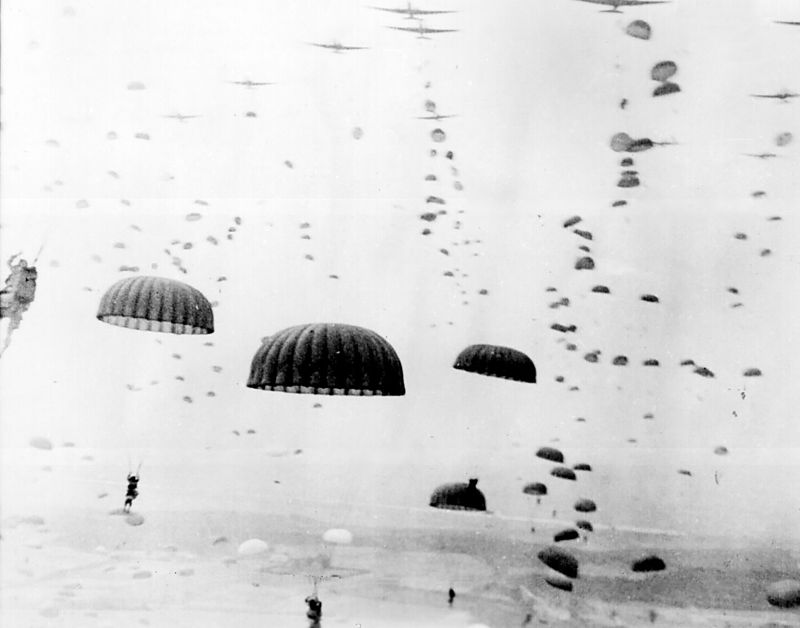
Planning is key to successful supply chain demand and the forecast…
View original post 561 more words
Operation Market Garden
16 Sep 2021 Leave a comment
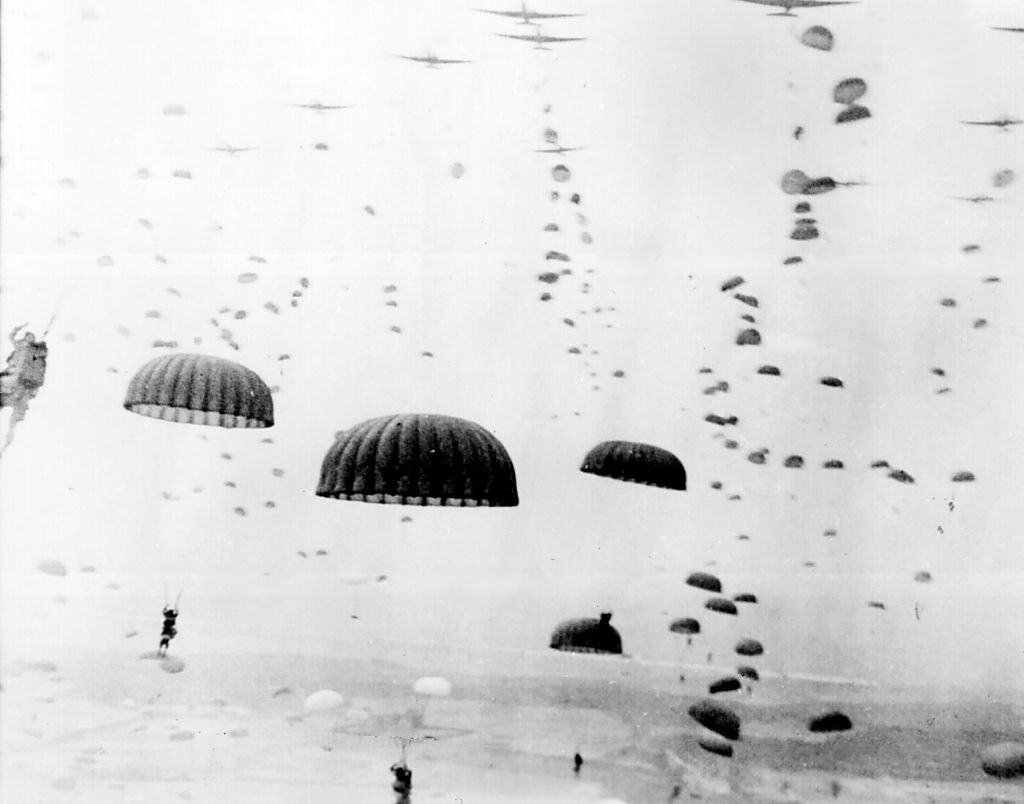
Today marks the 74th Anniversary of Operation Market Garden,mostly associated with the book of Cornelius Ryan’A Bridge too Far’ which was made into a star studded block buster movie in 1977 with the same title.It is a lengthy blog but it is an important story to be re-told because the effects of this operation were felt long after the war.
Operation Market Garden was in fact two combined operations.
- Market – the airborne forces, the First Allied Airborne Army, who would seize bridges
- Garden – the ground forces, consisting of the British XXX Corps.
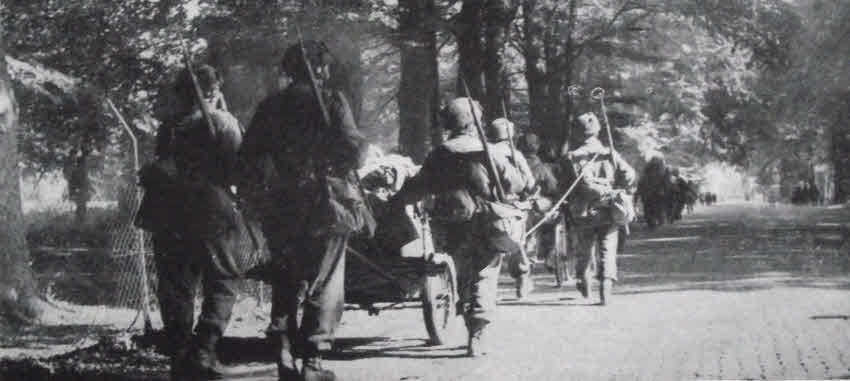
On 17 September 1944 thousands of paratroopers descended from the sky by parachute or glider up to 150 km behind enemy lines. Their goal: to secure the bridges across the rivers in Holland so that the Allied army could advance rapidly northwards and turn right into the lowlands of Germany, hereby skirting around the Siegfried line…
View original post 4,042 more words
Ardern govt surprised by news of Aussie decision to buy nuclear subs and form new security partnership
16 Sep 2021 Leave a comment

What do you do when your neighbour goes nuclear?
The Ardern government will be tackling that question after being taken aback by news the Australians are to buy US nuclear attack submarines and will form a new trilateral security partnership to be called AUKUS.
Our Beehive connections tell us PM Jacinda Ardern was briefed by Australian PM Scott Morrison last night.
We are tempted to say these developments confirm how far NZ has slipped off the map in terms of a regional defence power. Our contacts say the Beehive is still grappling with how come NZ wasn’t consulted about the new security partnership – or even invited.
Canberra will acquire several Virginia Class nuclear attack submarines. A $A90 billion plan to buy French nuclear submarines and convert them to diesel-electric power will be abandoned.
View original post 379 more words
The Real Motive for Class-Warfare Taxation
16 Sep 2021 Leave a comment

In addition to being a contest over expanding the burden of government spending, the Democratic primary also is a contest  to see who wants the biggest tax increases.
Bernie Sanders and Elizabeth Warren have made class-warfare taxation an integral part of their campaigns, but even some of the supposedly reasonable Democrats are pushing big increases in tax rates.
James Pethokoukis of the American Enterprise Institute opines about the anti-growth effect of these proposed tax hikes, particularly with regard to entrepreneurship and successful new firms.
The Democratic presidential candidates have plenty of ideas about taxes. Wealth taxes. Wall Street taxes. Inequality taxes. And probably more to come. So lots of creative thinking about wealth redistribution. Wealth creation? Not so much. …one way to look at boosting GDP growth
is thinking about specific policies to boost labor force and productivity growth. But there’s another way of approaching the issue: How many fast-growing growing new…
View original post 1,157 more words
Israel Kirzner’s Keynote Address on F. A. Hayek and the Nobel Prize
16 Sep 2021 Leave a comment
in applied price theory, applied welfare economics, Austrian economics, comparative institutional analysis, economics of information, entrepreneurship, F.A. Hayek, history of economic thought, industrial organisation, Israel Kirzner, survivor principle
Margaret Thatcher Debunks the Leftist Agenda on Income Equality
16 Sep 2021 Leave a comment
The statists are making a big issue out of income inequality, hoping to convince ordinary Americans that redistribution is their only hope for a better life.
I’ve explained with a pizza analogy that this is horribly misguided because it falsely assumes the economy is a fixed pie.
Simply stated, it doesn’t make sense – or help anybody – if inequality is reduced by policies that hurt everyone, but happen to hurt upper-income people more than lower-income people.
Moreover, redistribution tends to create a “poverty trap” as people get seduced by dependency.
That’s why I’ve argued that economic growth is the best way of helping the less fortunate.
But I have to admit that Margaret Thatcher does a much better job of eviscerating the left’s agenda on this issue.
While it’s inspiring to watch Thatcher in action, it’s also painful to realize that the current crop of GOP presidential candidates…
View original post 104 more words
Scotland’s place in the Union will not be decided in the courts: only politicians can enable or prevent independence
16 Sep 2021 Leave a comment


Whether or not Scotland can legally hold a referendum without the consent of Westminster is a question that has provoked much debate. Ciaran Martin argues that the answer to this question does not really matter: regardless of the legality of any referendum, it is unrealistic to think that Scotland will leave the Union without the consent of Westminster. This makes the key question a political one, which the courts cannot resolve.
In mid-August I spoke at the Edinburgh International Book Festival about Scotland and the future of the United Kingdom. My theme was that when the constitutional debate resumes (which it will) after the post-Holyrood election lull, there could, and in my view should, be a debate not just on what independence means, but on what remaining in the Union means. This is a fundamentally different proposition than it was in 2014, and not just because of Brexit.
In 2014…
View original post 1,321 more words
How the German overhang and compensation system works
15 Sep 2021 Leave a comment

Heinz Brandenburg on Twitter walks readers through a very useful explainer on how the current Germany version of MMP deals with overhangs through a multi-layered compensation mechanism, and why it could mean the new Bundestag will top out at more than 800 seats!
It is best to read it in its native Twitter, but following is the text of most of it (courtesy of the ThreadReader app) . The starting point, not quoted here, is a poll of current party standing in the state of Bavaria.
[the remainder of this text is not mine, but Brandenburg’s; numbers correspond to tweets in the thread]
____________________________________________________________________________
Last time around, the CSU won 38.8% of the vote but all of the constituencies in Bavaria (they even swept all of Munich). That results in so-called overhang and compensatory seats.
How are these calculated?
1/Well, there are 93 regular seats allocated to Bavaria, 46…
View original post 664 more words
Pumped hydro more expensive than batteries: the intro
15 Sep 2021 Leave a comment

At the end of last week, I came across a SolarQuotes article about Snowy Hydro 2.0 being more expensive than batteries. Snowy Hydro 2.0 is a pumped hydro project in Australia (New South Wales and Victoria) and is currently under construction. The brunt of the article is that pumped hydro is too expensive compared to (grid sized) batteries and makes the plea to halt the project in favor of batteries.
That was new to me. As far as I know, pumped hydro is the cheapest way of dispatchable backup in order to counter intermittency and definitely cheaper than batteries. Yet, the author of this article argues that it is the exact opposite.
The name of the author of the article, Ronald Brakels, rings a bell. Not even a year ago, I wrote a post on his claim that South Australia has the second cheapest electricity in Australia, despite…
View original post 1,198 more words


Recent Comments