‘CO2 levels’ and your ‘carbon footprint’ — NOT the problem you’ve been told
15 Sep 2021 Leave a comment

 CO2 is not pollution
Irrational fears about essential carbon dioxide in relation to the Earth’s climate have long since degenerated into superstition or old wives’ tales, for which we’re all paying the price, as discussed here.
– – –
Last year a student at a nearby university complained she couldn’t focus in class; she was convinced high levels of carbon dioxide (CO2) were the cause, says Dan Nevert @ CFACT.
The entire building was immediately evacuated and tested for “toxic levels of this dangerous gas.” After determining the CO2 levels were less than 500 parts-per-million (ppm), the classroom air was considered “safe” and classes again resumed.
Recently, this same school advertised that you can now “offset carbon emissions from previously completed university-funded ground-transportation and air travel trips” — by filling out a “travel carbon offsets” form, available in their “Sustainability Office.” Plus, this school is offering a course on…
View original post 383 more words
Aileen McHarg and Alison L. Young: The Resilience of the (Old) British Constitution
14 Sep 2021 Leave a comment


 In 2009, Vernon Bogdanor wrote about The New British Constitution. His thesis was that a decade of New Labour reforms had produced a shift in the nature of the constitution, from one based on parliamentary sovereignty, to one based on the ‘sovereignty of the constitution’. Since 2009, further constitutional reforms have been implemented by governments of various political stripes, apparently consolidating the legalisation of the constitution, and the dispersal of power from the institutions of central government to Parliament, the devolved institutions, and the courts. The New British Constitution appeared to be firmly established. Recent events, however, demonstrate the shaky foundations of this new constitutionalism, with a growing trend towards a weakening of both legal and political checks on Governmental power. This blog post draws attention to this worrying trend, focusing on three key examples. It is based on the findings of the first report of the Constitutional Monitoring Group…
View original post 1,631 more words
Vernon Bogdanor: Reply to McHarg and Young
14 Sep 2021 Leave a comment
 Aileen McHarg and Alison Young believe that the new British constitution, which I wrote about in my book of that name published in 2009 is less securely based than I suggested.
The pillars of that new constitution were, I argued, the Human Rights Act, the devolution settlement, the referendum, and the new arrangements for the government of London which provided for Britain’s first directly elected mayor.
All of these pillars remain in place. Indeed, as McHarg and Young acknowledge, two of them have been strengthened. The devolved bodies in Scotland and Wales have gained new powers since 2009, most notably the power in effect to determine income tax rates in the Scotland Act of 2016 and the Wales Act of 2017. Devolution and directly elected mayors have been extended to England by means of the Cities and Local Government Devolution Act of 2016. Around one-third of the people of England…
View original post 727 more words
Wind & Solar Cult Bans Nuclear Power Promoters from Climate Change Conference
14 Sep 2021 Leave a comment

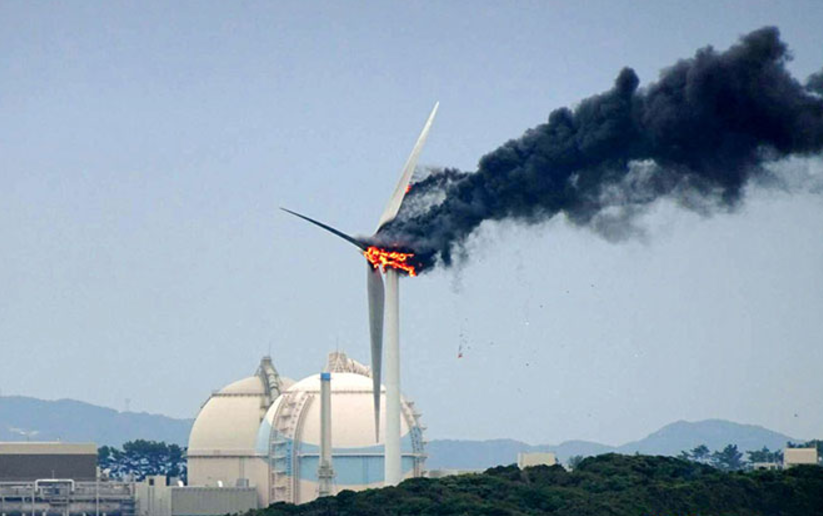
The climate cult’s true colours are revealed when it actively agitates against nuclear power; bad enough that they won’t promote it, worse still when they seek to sabotage nuclear power’s prospects, altogether.
This is the crowd out to convince us that man-made carbon dioxide gas is “pollution” which, unless you stop generating it, will result in an inevitable Armageddon, where all life on earth perishes. The naturally occurring kind doesn’t trouble them, apparently.
If, however, these characters were in earnest, they would be berating governments to start building nuclear power plants as fast as humanly possible. Nuclear power is the only stand-alone power source that does not generate carbon dioxide emissions during that process and that’s also available on demand, whatever the weather or time-of-day.
Just why those who jump up and down about human-generated carbon dioxide gas refuse to promote ever-reliable, safe and affordable nuclear power is hard to…
View original post 529 more words
Entrepreneurship and the Market Process | Israel Kirzner
14 Sep 2021 Leave a comment
in applied price theory, Austrian economics, economics of information, entrepreneurship, history of economic thought, Israel Kirzner
The Tyranny of Experts | William Easterly
14 Sep 2021 Leave a comment
in applied price theory, comparative institutional analysis, development economics, economics of bureaucracy, economics of information, Public Choice
Twitter an Unreliable Means of Discourse
14 Sep 2021 Leave a comment


Jack Butler writes an article The Myth of the Red Pill in the National Review. I won’t go into all the nuances and various meanings attached to being redpilled, blue- or blackpilled, but want to reblog his discussion about how cyberspace is now awash with tweets from people, left and right, who believe they and they alone are “woke” in either the progressive, post-modern sense, or the opposite. Excerpts in italics with my bolds.
Adherents believe that their apparent online numbers, purportedly sophisticated ideas, and supposed influence in real-world politics point both to their being correct and the emerging conservative paradigm. All of these things are hard to measure, not just because of the amorphous quality of online interaction, but also because of the many layers of irony and memery in which believers conceal themselves. Still, it is undoubtedly true that none of this would have happened
View original post 1,072 more words
300 Years of Leadership and Innovation: Sir Robert Walpole, Britain’s first ‘Prime Minister’ and the History of Parliament Online
14 Sep 2021 Leave a comment


On 3 April 1721 Robert Walpole was appointed First Lord of the Treasury and Chancellor of the Exchequer. This was not the first time that he had occupied these roles, however it was from this point that he is generally regarded as becoming the first ever ‘Prime Minister’. The title was initially bestowed upon Walpole as an insult, used to criticise Walpole’s improper rise to a position higher than some members of the royal family.A similar charge had been levelled against Robert Harley during his impeachment trial in 1715, something in which Walpole himself had been closely involved. In fact, in 1741 Walpole told the Commons “I unequivocally deny that I am sole and prime minister” [W. Coxe, Memoirs of the Life and Administration of Sir Robert Walpole]. However, the title gradually…
View original post 510 more words
Protests Break Out in Europe As Electricity Prices Soar
14 Sep 2021 Leave a comment
 Energy costs on the rise
Refusal to exploit their own reserves of coal and gas, strong reluctance to import any more than the bare minimum because of a professed fear of trace gases in the atmosphere, and over-reliance on costly renewables is making the countries in question look more and more foolish. No end in sight to this kind of economic pain.
– – –
Depleted natural gas inventories and low wind speeds have led to a surge in electricity prices across Europe, putting pressure on governments as consumers protest against surging power bills ahead of the winter heating season, says OilPrice.com.
Electricity prices from the UK to Spain have jumped to all-time highs, people in Spain have taken to the streets, while prices across Europe so high could become a drag on the economic recovery from the pandemic.
In Spain, day-ahead electricity prices surged to a fresh record…
View original post 165 more words
From Modeling Monetary Economies – Champ, Freeman & Haslag
13 Sep 2021 Leave a comment
in applied price theory, applied welfare economics, budget deficits, macroeconomics, monetary economics Tags: fixed exchange rates
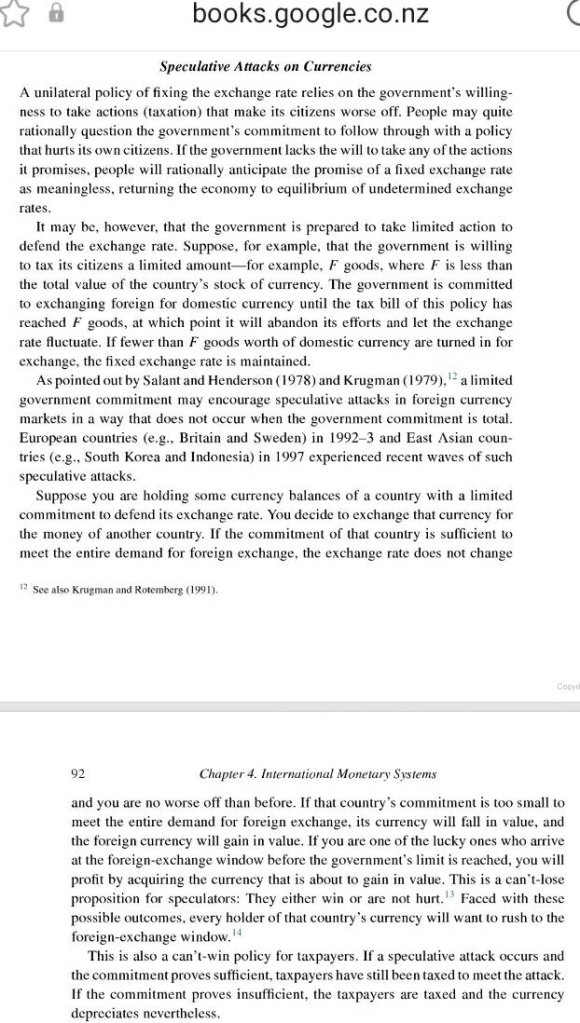
From https://books.google.co.nz/books?id=TLq8z0oQg2sC&pg=PA47&source=gbs_toc_r&cad=3#v=onepage&q&f=false
Are soft NDP voters switching to save Liberals?
13 Sep 2021 Leave a comment

In my earlier preview of September elections, I noted that the surge in polls for the Conservatives in the Canadian election might lead to the NDP losing votes. It is possible this is happening now.
In recent days, the Liberals have returned to a narrow lead in votes and strengthened their existing seat lead, according to the CBC poll tracker. At the same time, there is a notable dip in NDP votes and seats.
We need to be careful about inferring individual change from aggregate trends. But the most likely cause of what the poll tracker and its seat estimator are picking up is softer NDP voters worried about a Conservative plurality.
Note that this would be strategic voting, but not based on district-level expected outcomes (“coordination”), rather on national-level expectations. “All politics is national”, as Taagepera and I put it in the title of our chapter (10)…
View original post 215 more words


Recent Comments