Business Cycles – Edward C. Prescott 2/15
11 Sep 2021 Leave a comment
in applied price theory, budget deficits, business cycles, development economics, economic growth, economic history, Edward Prescott, Euro crisis, fiscal policy, global financial crisis (GFC), great depression, great recession, growth disasters, growth miracles, history of economic thought, income redistribution, labour economics, labour supply, macroeconomics, monetary economics Tags: real business cycles
COP26: Climate minister criticised for international – and quarantine free – travel
11 Sep 2021 Leave a comment

 Airport scene [image credit: Wikipedia] Here, there and everywhere by jet in pursuit of ‘net zero’ = not zero. What happened to the alleged climate emergency they claim we’re in? Farcical, and his US counterpart does the same.
– – –
The president of the UK’s upcoming climate change conference is under fire for reportedly travelling to more than 30 countries in seven months, says BBC News.
The Daily Mail said seven of the places visited by Alok Sharma were also on the Covid red list – but he used an exemption available to ministers to not have to quarantine on his return.
The government said face-to-face meetings were “crucial” ahead of COP26.
But Wales’ First Minister Mark Drakeford called it “inexplicable”.
View original post 227 more words
COP26: Poorest countries fear not reaching UK for climate summit due to Covid rules
11 Sep 2021 Leave a comment
 If the Queen, the Pope, or the US President – all classed as vulnerable due to their age – get Covid in Glasgow, climate won’t get a look-in.
– – –
The world’s poorest countries say they are worried about getting to the COP26 climate summit in Glasgow in November, reports BBC News.
Twenty are on the UK’s Covid red list – meaning hotel quarantine for arrivals.
They say the fortnight-long talks may involve being away for seven weeks as they will also have to isolate on return.
View original post 272 more words
THE AFGHANISTAN PAPERS: A SECRET HISTORY OF THE WAR by Craig Whitlock
11 Sep 2021 Leave a comment


(Former President Bush flashes a thumbs-up after declaring the end of major combat in Iraq aboard a U.S. aircraft carrier in 2003. He now says declaring mission accomplished was a mistake.)
In 1971 the Supreme Court ruled in a 6-3 decision, that the U.S. government had not met “the heavy burden of showing justification for the enforcement” of prior restraint. The Court ordered the immediate end of the injunctions against publication which led to the dissemination of the Pentagon Papers by the New York Times. ThePentagon Papers, officially titledReport of the Office of the Secretary of Defense Vietnam Task Force is a Defense Department history of the United States’ political and military involvement in Vietnamfrom 1945 to 1967. Though Washington Post national security reporter Craig Whitlock’s new book, THE AFGHANISTAN PAPERS: A SECRET HISTORY OF THE WAR does not rise to the level of the Pentagon Papers
View original post 1,761 more words
High Implicit Tax Rates Trap Poor People in the Quicksand of Government Dependency
11 Sep 2021 Leave a comment

The welfare state and the so-called war on poverty has been very bad news for taxpayers.
But it’s also very bad news for poor people, in part because various redistribution programs can lure them out of the productive economy and into total dependency on government (and this will become an even bigger problem if Biden’s per-child handouts are approved).
 But it’s also bad news because redistribution programs can result in very high implicit tax rates for low-income people who try to improve their lives by climbing the economic ladder.
I shared an example back in 2012, which showed how a single mother in Pennsylvania would be worse off with $57,000 of income instead of $29,000.
In other words, she would be dealing with a de facto marginal tax rate of more than 100 percent.
If you want to understand how this happens, Professors Craig Richardson and Richard…
View original post 574 more words
When Cassius Clay became Muhammad Ali
11 Sep 2021 Leave a comment


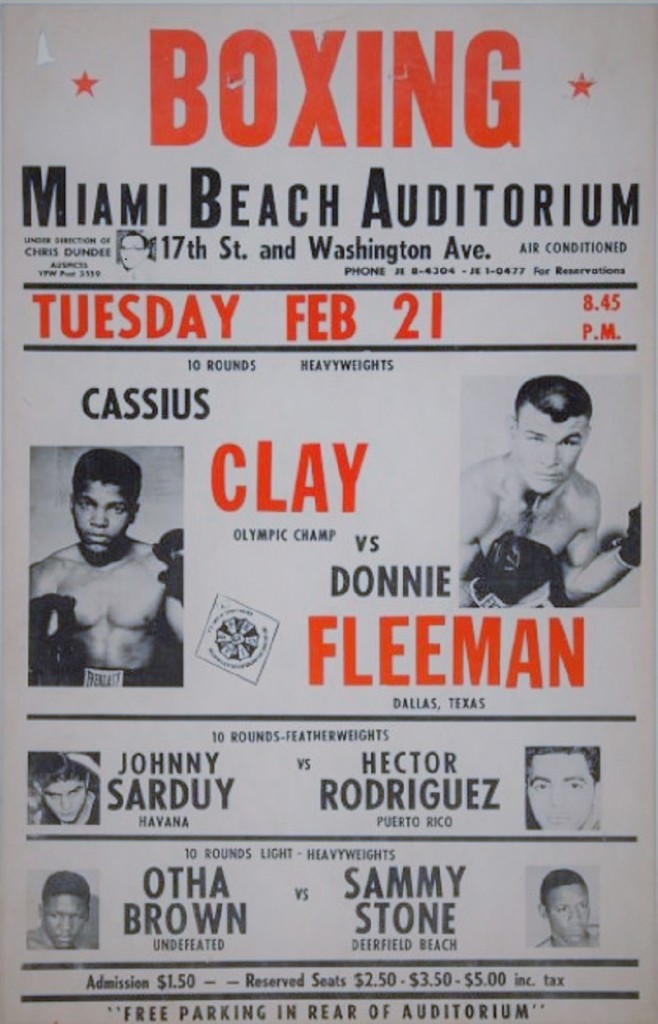
On March 6,1964 Cassius Clay announced that he no longer would be known as Cassius Clay but as Muhammad Ali.
Clay had been linked to the Nation of Islam, although they initially had refused him entry as a member due to his boxing career. However when Clay beat Joe Liston in 1964, the Nation of Islam did accept him , I can only speculate that this was a good Public Relations move for them.
Shortly afterwards on March 6, Elijah Muhammad gave a radio address that Clay would be renamed Muhammad (one who is worthy of praise) Ali (most high).
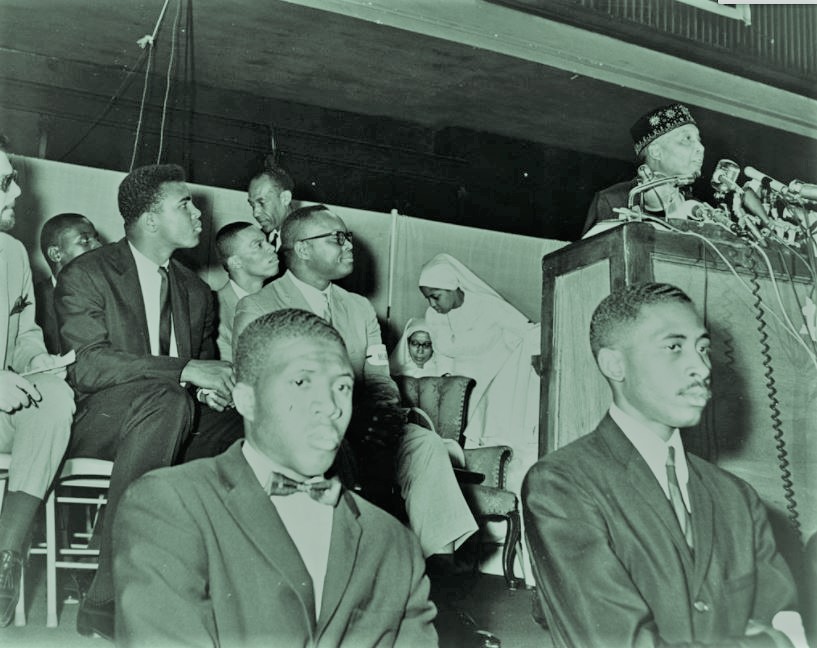
Muhammad Ali had claimed that his old name Cassius Clay was a “slave name and a white man’s name”
Unfortunately this is what happens so often when athletes, musicians, actors or other celebrities get involved in a political movement(although the nation of Islam had religious elements, it was really a…
View original post 338 more words
Nazi War criminals in Ireland
10 Sep 2021 Leave a comment

Before I start I have to say I love Ireland and I love living here, but like most nations in the world Ireland too has some black pages in its history.
Although Ireland was supposed to be neutral, at times it took that neutrality too far, Sending condolences to Germany after Hitler died was a good example. What is even more disturbing is that it did harbour Nazi war criminals and helped some evade justice. Often these evil men did lead a very comfortable life in Ireland.
A small number of Germans, Croatians,Belgians and Dutch who arrived in the Irish Republic after 1945. Although some were suspected of having worked for Hitler, there was no determined official effort to weed them out. It is estimated that between 100 and 200 Nazi criminals found refuge in Ireland.
I will be looking at just a few of them, starting off with a…
View original post 644 more words
Unnecessary Night-time Nuisance: Why Wind Turbine Noise Is So Much More Annoying After Dark
10 Sep 2021 Leave a comment


Delivering a thumping, grinding, mechanical cacophony, industrial wind turbines drive neighbours nuts. But, as a recent study from Flinders University in South Australia has found, there’s a reason why wind turbine noise is so much worse after dark.
The pulsing, thumping nature of wind turbine noise – which relates to blades passing the tower – is referred to as ‘amplitude modulation’ (AM). And it’s the peaks and troughs in sound pressure levels that makes living with wind turbine noise a daily misery for thousands around the world.
But changes in humidity, temperature, atmospheric pressure, wind speed and direction all have a part to play in how the wind industry’s victims get to experience AM in the range of other unnatural noises generated by these things.
Over the last four years, Dr Kristy Hansen and her PhD candidate Duc Phuc Nguyen have been researching the complex nature of the noise from…
View original post 461 more words
Judith Butler & The Guardian
10 Sep 2021 Leave a comment

This week (7th September 2021) an interview with Judith Butler was published in The Guardian. It created a bit of a furore on Terf Island twitter, for comparing Gender Critical feminists to fascists. In the midst of the backlash the article was significantly amended. For the record, I do not think her words should have been censored. As it happens many people had taken copes of the article and, as the interviewer (Jules Gleeson) boasted on twitter, it has been drawn to the attention of far more people. (Search ”Streisand effect” if you need context for this tweet).
About Jules Gleeson

The interviewer is a self proclaimed intersex activist, with an interesting body of work.

It is perfectly possible the above 👆is a factual statement and they do indeed have a difference in sexual development (DSD). There are a number of variations of sexual characteristics which fall under the term…
View original post 2,127 more words
Israel M. Kirzner’s Contributions to Market Process Theory and Entrepreneurship Studies
10 Sep 2021 Leave a comment
in applied price theory, applied welfare economics, Austrian economics, comparative institutional analysis, economic history, economics of education, entrepreneurship, F.A. Hayek, industrial organisation, Israel Kirzner
Politics vs. Prosperity and Freedom with Yale Brozen
09 Sep 2021 Leave a comment
in applied price theory, applied welfare economics, comparative institutional analysis, economic history, economics of regulation
Thomas Sowell, Cost-Benefit Analysis, and the Limits of Regulation
09 Sep 2021 Leave a comment
Thomas Sowell is a great economist, but his expertise extends to other fields of study. Everything from history to education.
But he’s also famous for being a great communicator, with dozens of well-known quotes.
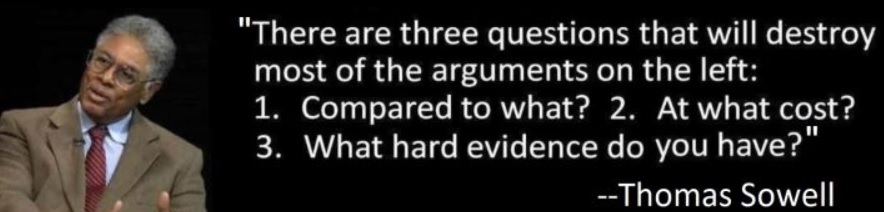 I use one of them on my rotating banner because it succinctly summarizes why the left has to rely on emotional appeals rather than rigorous evidence.
For purposes of today’s column, I want to cite one of his other quotes, this one dealing with the fact that tradeoffs are an inevitable reality.
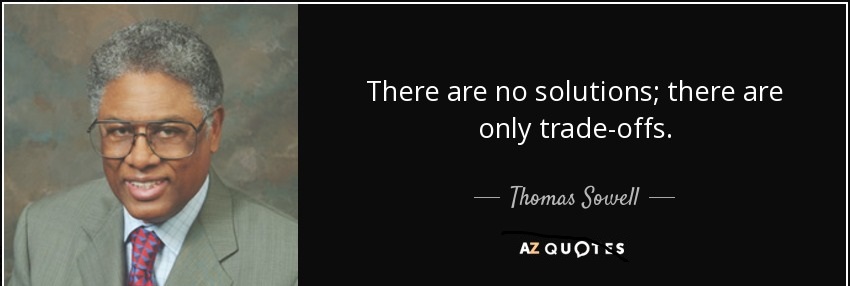 Simply stated, if you want more of one thing, you have to accept less of another thing.
And this has important implications for regulatory policy – especially about the value of cost-benefit analysis.
Let’s look at two examples.
First, here’s the abstract from a study by Jordan Nickerson from MIT and David Solomon from Boston College.
Since 1977, U.S. states have…
View original post 654 more words
William I the Conqueror as King of the English and his death on September 8, 1087.
09 Sep 2021 Leave a comment

At Christmas 1085, William ordered the compilation of a survey of the landholdings held by himself and by his vassals throughout his kingdom, organised by counties. It resulted in a work now known as the Domesday Book. The listing for each county gives the holdings of each landholder, grouped by owners. The listings describe the holding, who owned the land before the Conquest, its value, what the tax assessment was, and usually the number of peasants, ploughs, and any other resources the holding had. Towns were listed separately.
All the English counties south of the River Tees and River Ribble are included, and the whole work seems to have been mostly completed by August 1, 1086, when the Anglo-Saxon Chronicle records that William received the results and that all the chief magnates swore the Salisbury Oath, a renewal of their oaths of allegiance. William’s exact motivation in ordering the survey…
View original post 576 more words


Recent Comments