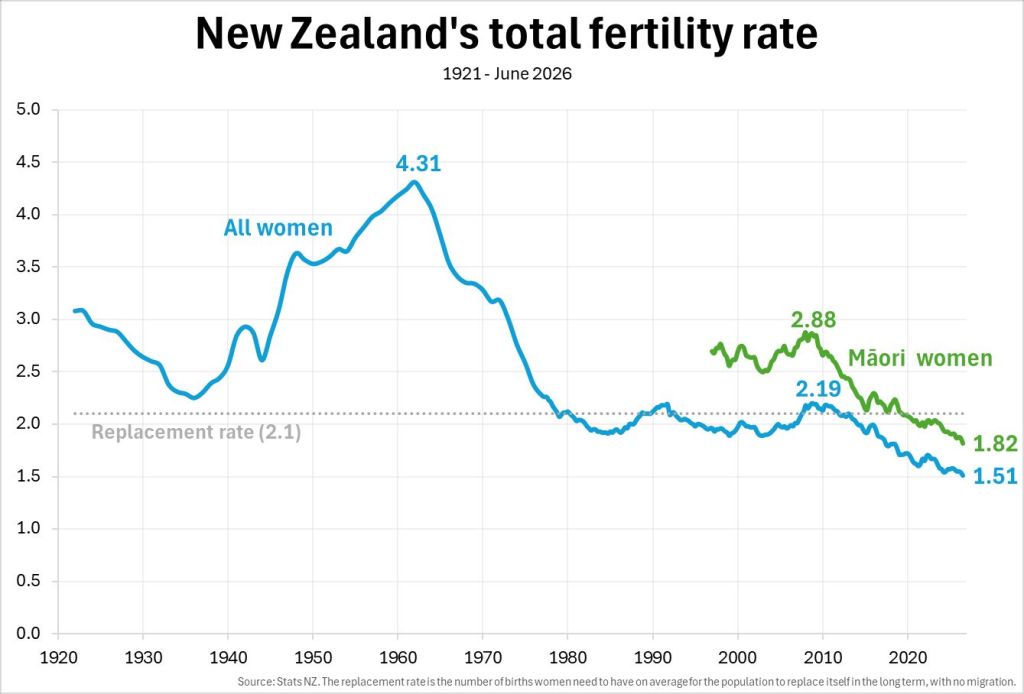
The baby bust
30 Sep 2026 Leave a comment
in economics of love and marriage, labour economics, labour supply, politics - New Zealand, population economics Tags: baby bust, economics of fertility
Pronatal policies
21 Jul 2026 Leave a comment
in applied price theory, labour economics, labour supply, population economics Tags: economics of fertility
The Institute for Family Studies puts up a pro-natal proposal that I’d not seen before.Most of the literature I’ve seen on baby bonuses suggests that the amount on offer would have to be hefty to have substantive effects. This version could harness a bit of loss aversion:President Trump launched a small savings account seeded with…
Pronatal policies
Broadband coverage and rural fertility
18 Jul 2026 Leave a comment
in econometerics, labour economics, population economics Tags: economics of fertility
I recently expressed some scepticism at a paper showing that the release of the iPhone explained a third or more of the decline in US fertility. So, I was interested to read this new working paper by Gokhan Kumpas (California State University, Los Angeles), which looks at the effect of broadband coverage on fertility. Specifically, Kumpas…
Broadband coverage and rural fertility
Do falling birth rates boost per capita income?
06 Jul 2026 Leave a comment
in applied price theory, econometerics, economic growth, human capital, labour economics, labour supply, macroeconomics Tags: economics of fertility
The secular decline in birth rates across the globe over the past seven decades has slowed population growth, raised average ages, and reshaped labor markets and the macroeconomy. Contrary to the widespread expectation that these trends hamper economic growth, we find lower birth rates are associated with higher growth in GDP per working-age adult across…
Do falling birth rates boost per capita income?
Typewriters and fertility
01 Jul 2026 1 Comment
in discrimination, economic history, gender, human capital, labour economics, labour supply, occupational choice Tags: economics of fertility
Workplace technological changes were instrumental in creating new tasks for women over the last century. This paper studies the adoption of the typewriter into US workplaces. Exploiting exogenous variation in typist demand across sectors, I document that the typewriter increased women’s labor force participation, leading to lower rates of marriage and fertility. These developments stemmed…
Typewriters and fertility
Does working from home raise lifetime fertility?
06 Apr 2026 Leave a comment
in applied price theory, economics of love and marriage, labour economics, labour supply, population economics Tags: economics of fertility, economics of pandemics
See Work from Home and Fertility by Steven J. Davis, Cevat Giray Aksoy, Jose Maria Barrero, Nicholas Bloom, Katelyn Cranney, Mathias Dolls & Pablo Zarate. Abstract”We investigate how fertility relates to work from home (WFH) in the post-pandemic era, drawing on original data from our Global Survey of Working Arrangements and U.S. Survey of Working Arrangements…
Does working from home raise lifetime fertility?
These are large differences
03 Nov 2025 Leave a comment
in economics of love and marriage Tags: dating markets, economics of fertility, marriage and divorce
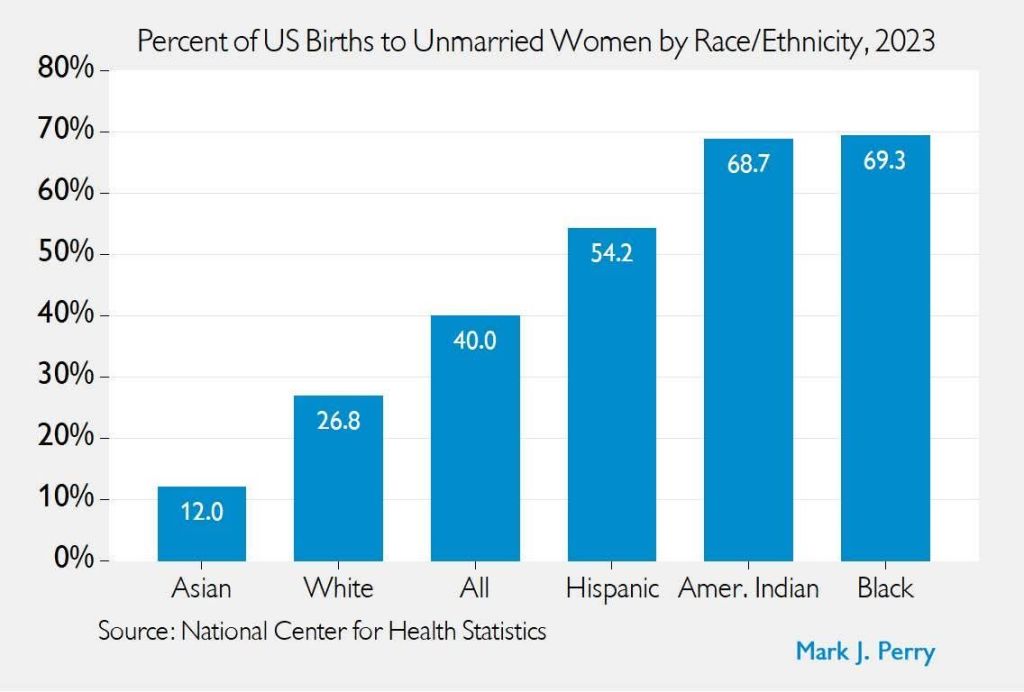
Population bust
09 Sep 2025 Leave a comment
in labour economics, labour supply, population economics Tags: ageing society, economics of fertility, population bust
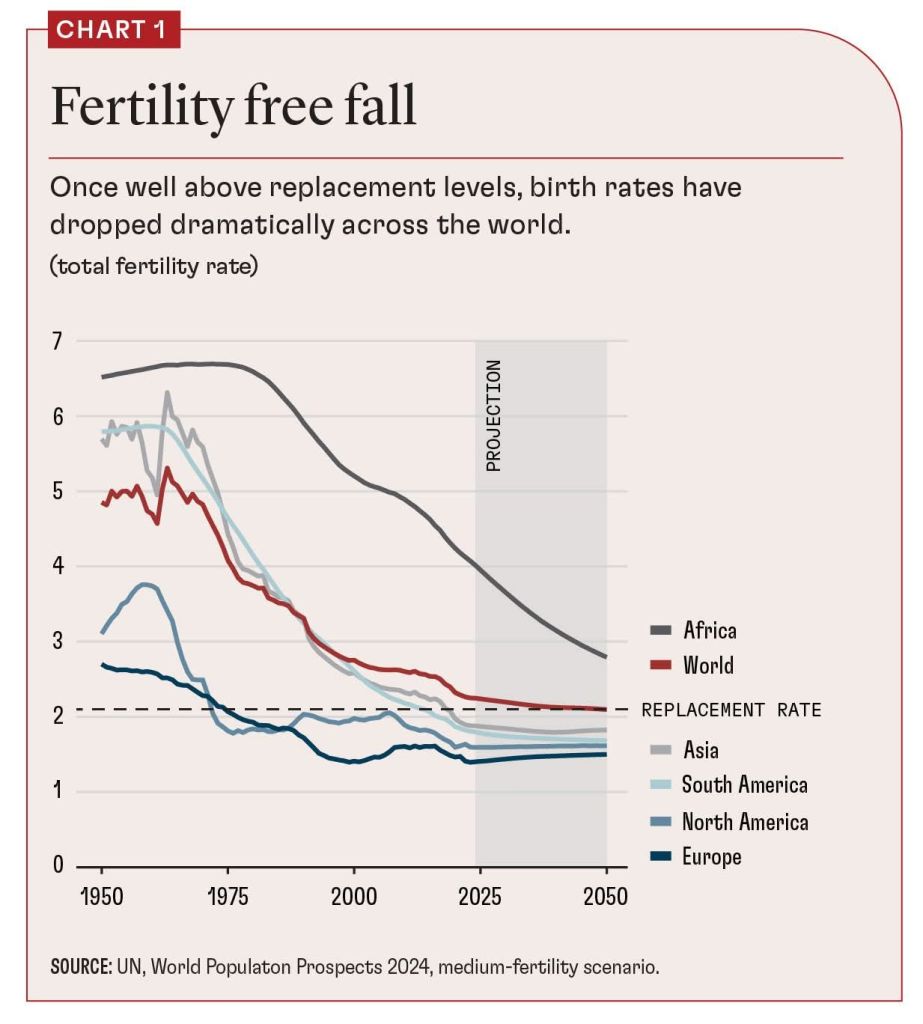
Fertility
29 Aug 2025 Leave a comment
in population economics Tags: baby bust, economics of fertility
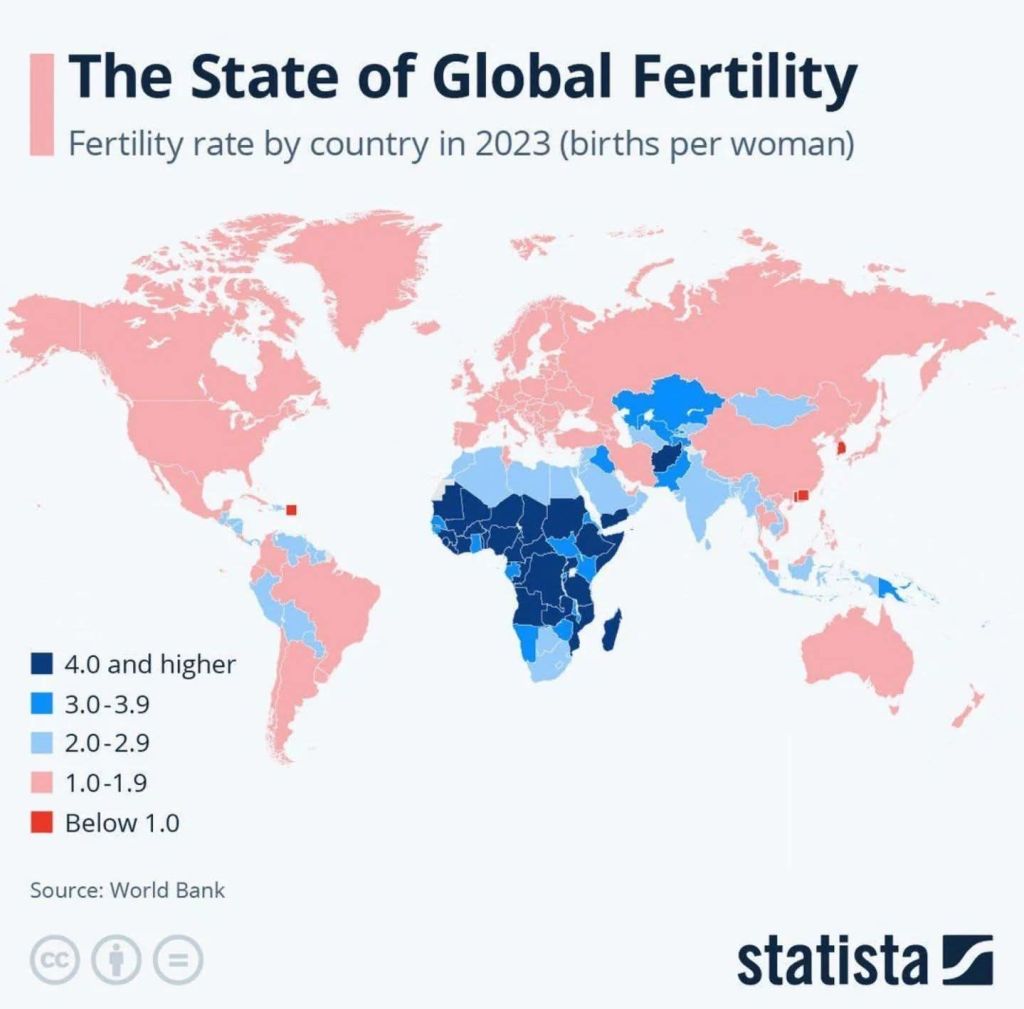
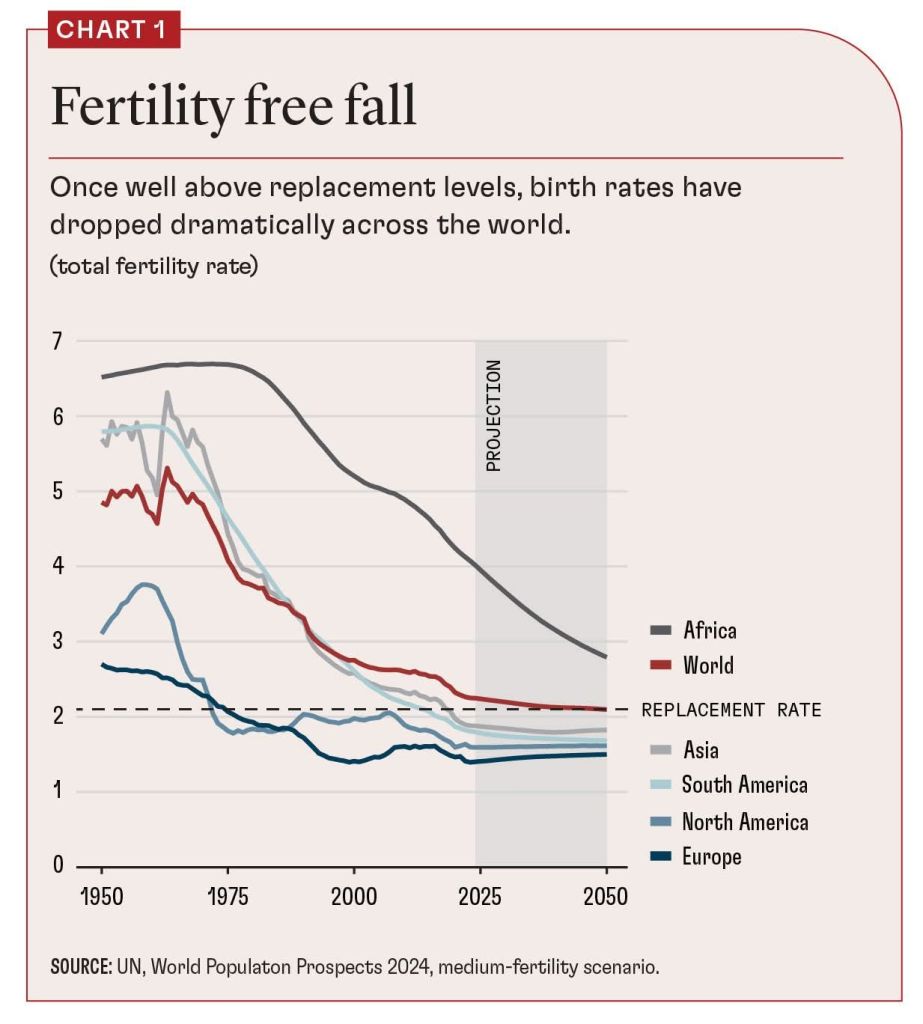
The population bust
15 Jul 2025 Leave a comment
in development economics, economic history, labour economics, labour supply, population economics Tags: ageing society, economics of fertility, population bust
There’s little evidence that subsidies and protections have substantially raised the number of children women have over their lifetime
13 Apr 2025 Leave a comment
in economics of love and marriage, labour economics, labour supply, law and economics, population economics Tags: economics of fertility
See They Want More Babies: Now They Have Friends in the White House by Lydia DePillis of The NY Times. Excerpts: “In designing policy requests for federal legislators, however, pronatalists run into a problem: There’s little evidence that subsidies and protections have substantially raised the number of children women have over their lifetime. It’s not for…
There’s little evidence that subsidies and protections have substantially raised the number of children women have over their lifetime
The Anatomy of Marital Happiness
22 Mar 2025 Leave a comment
in applied price theory, econometerics, economic history, economics of love and marriage, industrial organisation, labour economics, population economics Tags: dating markets, economics of fertility, marriage and divorce, marriage premium
How can I not link to a new Sam Peltzman piece on such a topic? Here goes: Since 1972, the General Social Survey has periodically asked whether people are happy with Yes, Maybe or No type answers. Here I use a net “happiness” measure, which is percentage Yes less percentage No with Maybe treated as […]
The Anatomy of Marital Happiness
Gender gaps in education and declining marriage rates
06 Feb 2025 Leave a comment
in applied price theory, econometerics, economics of love and marriage, economics of marriage, human capital, labour economics, law and economics, poverty and inequality Tags: assortative mating, economics of fertility
Over the past half-century, the share of men enrolled in college has steadily declined relative to women. Today, 1.6 million more women than men attend four-year colleges in the U.S. This trend has not lowered marriage rates for college women, a substantial share of whom have historically married economically stable men without college degrees. Both […]
Gender gaps in education and declining marriage rates
The Child Penalty: An International View
03 Feb 2025 Leave a comment
in applied price theory, discrimination, econometerics, economics of education, gender, human capital, labour economics, labour supply, occupational choice Tags: economics of fertility, gender wage gap, marriage and divorce

It’s well-known that when a couple has a child, the average woman experiences a “child penalty” in labor market outcomes, while outcomes for the man are largely unchanged. For a discussion of this pattern using US data, here’s an article by Jane Waldfogel from back in 1998 in the Journal of Economic Perspectives. As that…
The Child Penalty: An International View
Babies and the Macroeconomy
02 Feb 2025 Leave a comment
in applied price theory, development economics, economic history, economics of love and marriage, economics of marriage, human capital, labour economics, labour supply Tags: ageing society, economics of fertility, marriage and divorce
By Claudia Goldin. From NPR’s Planet Money.”Countries around the world have seen a jaw-dropping decline in fertility rates. In this paper, Claudia Goldin, the 2023 winner of the Nobel Prize in economic sciences, offers a new theory to help explain why (listen to The Indicator’s conversation with her back in 2021). Goldin starts by providing…
Babies and the Macroeconomy


Recent Comments