The gender pay gap: An interview with with Daniel S. Hamermesh
04 Aug 2021 Leave a comment
in applied price theory, applied welfare economics, gender, health and safety, human capital, labour economics, labour supply, occupational choice, poverty and inequality Tags: gender wage gap
Atlantic Meeting, by H.V. Morton
04 Aug 2021 Leave a comment

80 years ago on this day, August 4th 1941, Britain’s Prime Minister Winston Churchill set sail across the Atlantic to make history.
Upon Sunday, August 3rd, 1941, Mr Winston Churchill and the Chiefs of Staff travelled by train to the North, where on the following day, and in conditions of the greatest secrecy, they embarked in a battleship. Five days later, upon Saturday, August 9th, the battleship dropped anchor in a lonely bay off the shores of Newfoundland. American warships were waiting there with President Roosevelt, who had come so secretly to the rendezvous that the entire Press of America was speculating on his disappearance. In that desolate bay, which reminded everyone of the Hebrides, with low hills rising mistily in the air, the warships lay at anchor while the two statesmen conducted their conference, the published outcome of which was the Atlantic Charter. (p.9)
So begins H V Morton’s…
View original post 1,371 more words
August 1, 1714: The Elector of Hanover becomes King George I of Great Britain and Ireland. Conclusion.
04 Aug 2021 Leave a comment

Elector Ernst-August died on January 23, 1698, leaving all of his territories to George with the exception of the Prince-Bishopric of Osnabrück, an office he had held since 1661. George thus became Duke of Brunswick-Lüneburg as well as Archbannerbearer and a Prince-Elector of Hanover within the Holy Roman Empire. His court in Hanover was graced by many cultural icons such as the mathematician and philosopher Gottfried Leibniz and the composers George Frideric Händel and Agostino Steffani.
Shortly after George’s accession to his paternal duchy, Prince William, Duke of Gloucester, son of Queen Anne, who was second-in-line to the English and Scottish thrones, died. By the terms of the English Act of Settlement 1701, George’s mother, Sophia, was designated as the heir to the English throne if the then reigning monarch, William III, and his sister-in-law, Anne, died without surviving issue.
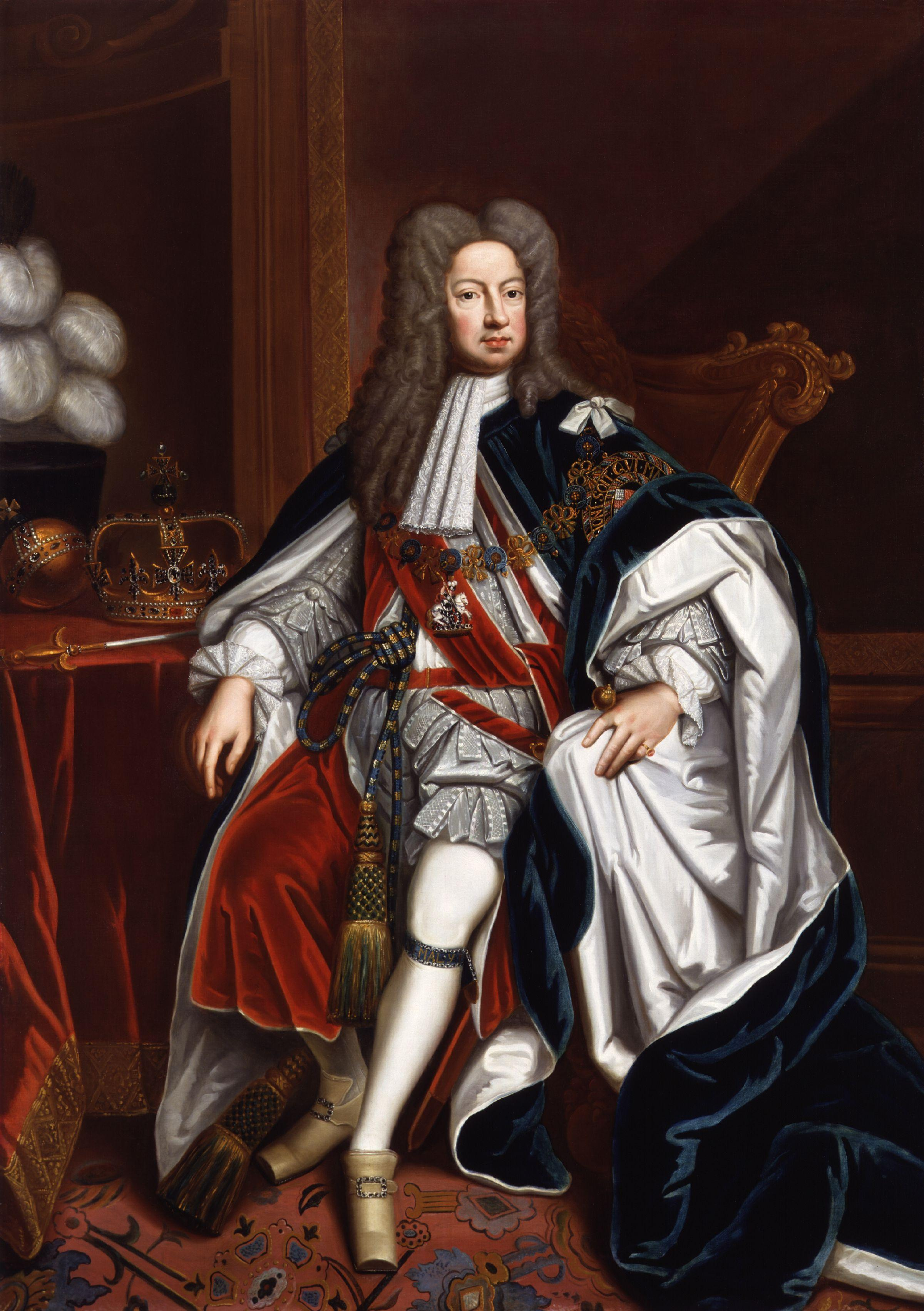 The succession was so designed because Sophia was the closest…
View original post 650 more words
George Stigler 50 Years Later: Part 1 – George Stigler’s Contribution and Lasting Impact
04 Aug 2021 Leave a comment
in applied price theory, applied welfare economics, comparative institutional analysis, constitutional political economy, economics of bureaucracy, economics of information, economics of regulation, George Stigler, income redistribution, Public Choice, rentseeking, Sam Peltzman
William I, The Conqueror, as King of the English. Part II.
04 Aug 2021 Leave a comment
Administration
After 1066, William did not attempt to integrate his separate domains into one unified realm or Kingdom with one set of laws. His seal from after 1066, of which six impressions still survive, was made for him after he conquered England and stressed his role as king, while separately mentioning his role as Duke. When in Normandy, William acknowledged that he owed fealty to the King of the Franks, but in England no such acknowledgment was made – further evidence that the various parts of William’s lands were considered separate.
The administrative machinery of Normandy, England, and Maine continued to exist separate from the other lands, with each one retaining its own forms. For example, England continued the use of writs, which were not known on the continent. Also, the charters and documents produced for the government in Normandy differed in formulas from those produced in England.
 In common…
View original post 668 more words
So, does France still need a new electoral system?
03 Aug 2021 Leave a comment

At the conclusion of the first round of voting for the French National Assembly, with projections showing a majority for newly elected President Nicolas Sarkozy’s UMP ranging from nearly two thirds to more than three fourth of the seats, I posed the question of whether France needed a new electoral system. With the party system fragmented, yet now dominated by two large and relatively moderate parties, the old majority-plurality two-round system no longer seemed to be serving the country well. When the electoral system was adopted in 1958 (and used for every election since then, except for 1986), there were no real “giants” in the fragmented party system and not even two clear blocs. One of the largest parties was a doctrinaire Communist party. In that context, a system that very quickly realigned the parties into two major blocs and led to the under-representation of the Communists was a…
View original post 1,218 more words
The attacks on seven eminent professors over a Listener letter in which they championed science have missed their target
03 Aug 2021 Leave a comment
Pre-modern cultures were knowledgeable of plants and animals; those that were not did not survive. The closest their cultures came to being scientific was tasting and cooking plants and animals to see if they were not poisonous.

********
A letter in defence of science, published in The Listener last month, was signed by seven professors from the University of Auckland – Kendall Clements, Garth Cooper, Emeritus Professor Michael Corballis, Douglas Elliffe, Elizabeth Rata, Emeritus Professor Robert Nola, and Emeritus Professor John Werry.
Prominent scientists were among the critics of the letter-writers. But despite their disquiet, dismay or outrage, the critics have avoided stating that mātauranga Māori is scientific.
GRAHAM ADAMS asks why they are skirting the main issue.
********
A distinctly curious feature of the backlash against the seven professors’ letter published in The Listener titled “In Defence of Science” is that none of its most prominent critics have actually defended mātauranga Māori (traditional Māori knowledge) as being scientific.
Yet the main point of the letter by the seven Auckland University professors — and the main point of contention for its critics — was summed up in…
View original post 1,367 more words
Can an individual large firm impact the U.S. business cycle?
03 Aug 2021 Leave a comment
15% is still large

Chen Yeh in this Richmond Fed economic brief:
Recent research has emphasized the importance of a few large firms in driving overall economic fluctuations, a view known as the “granular hypothesis.” I find that the granular hypothesis can explain about 15 percent of aggregate U.S. fluctuations, a smaller share than found in other research. Thus, the granular hypothesis plays a meaningful role for the U.S. economy, but there is still plenty of room for aggregate factors to be relevant.
15% is quite large.
California Could Lose Pork Products Due to New Pig Rules
03 Aug 2021 Leave a comment

Starting next year, Golden State residents are going to have a lot less pork options to eat resulting from a ballot initiative passed in 2018. According to the Associated Press, 2022 is when rules for a ballot proposition requiring more space for pigs, chickens who lay eggs, and veal calves.
While nationally-based pork food producers can meet the new requirements,the AP states only a fraction of hog operators are in compliance. Consequently, California not only stands to lose almost its entire pork supply most of which is shipped in from Iowa in which pork meat production costs stand to go very high. One farmer interviewed by the AP stated he would have to raise his pig selling prices an additional $20 in order to cover the costs.
With pork no longer available in California, it not only will hurt local restaurants and state supermarkets very hard, but porn prices…
View original post 180 more words
The elusiveness of divorce in medieval England: the marital troubles of the last Warenne earl of Surrey (d.1347)
03 Aug 2021 Leave a comment

In today’s blog Dr Simon Payling from our Commons 1461-1504 project continues our ongoing look into the marriages of Parliamentarians, both happy and unhappy. Divorce in medieval England was infrequent and difficult to secure, but this did not stop individuals from making an attempt…
Medieval England knew two forms of divorce. The first, and overwhelmingly the most important, was divorce a vinculo matrimonii (from the bond of marriage), a ruling by the Church that a marriage had never been valid. This turned on some default in the couple’s consent to it, either that consent had been coerced or they themselves were canonically incapable of giving it (because, for example, they were underage or too closely related to make a valid marriage). The second, what might be termed a separation, was divorce a mensa et thoro (from bed and board), a ruling that the couple need no longer live together on…
View original post 1,108 more words
Crossroads of Freedom: Antietam, the battle the changed the course of the American Civil War by James M. McPherson (2002)
02 Aug 2021 Leave a comment

The 160 pages or so of this tidy little book are like a pendant to ‘Battle Cry of Freedom’, McPherson’s vast 860-page history of the Civil War Era, which I have reviewed at length.
Crossroads of Freedom is part of a series called Pivotal Moments in American History. In his introduction McPherson says that, as you might expect, there were numerous important moments in the American Civil War, before going on to explain why he thinks the Battle of Antietam on September 17, 1862 justifies his focus.
Why Antietam?
Closest the South ever came to victory In a nutshell it’s because Antietam was the closest the South came to taking Washington DC, an event which would have not just demoralised the North and possibly fatally weakened its army. Far more importantly, it would have a decisive step toward achieving the South’s primary war aim which was Recognition by the International…
View original post 4,544 more words
Some ‘Transition’: German Wind Power Output Plummets 20%: Coal-Fired Power Generation Jumps 38%
02 Aug 2021 Leave a comment

 What’s really powering Germany …
Germany’s 30,000 wind turbines continue to disappoint those who reckon ‘coal is dead’. In the first half of 2021, wind power output plummeted by more than 20%, whereas Germany’s coal-fired power generators increased output by a whopping 38% over the same period.
So much for Germany’s ‘inevitable transition’ to an all wind and sun powered future – aka the ‘Energiewende’.
It’s almost like there’s some kind of conspiracy at work, with an outbreak of dead calm and cloudy weather all across Germany.
Pierre Gosselin reports on the latest lament from Germany’s wind and solar worshippers.
German Wind Power Production Plummets 20% In First Half 2021… Coal Power Consumption Jumps 38%!
No Tricks Zone
Pierre Gosselin
27 July 2021
What would we do without coal?
The first half of 2021 saw a massive 20% drop in wind power production in Germany … while “coal power saw…
View original post 245 more words
Polls results won’t deter Labour from its reform programme – but they shouldn’t unnerve the Nats, either
02 Aug 2021 Leave a comment

Latest opinion polling has created a stir among the political cognoscenti. On one side, ACT’s rise is being seen as a big problem for National. From another, Labour’s fall by 9.7 points from the previous poll points to sharp disillusion with the Ardern government.
TV3’s AM Show told viewers ACT’s four-point rise to 11 % constitutes “soaring popularity”. Well, not quite.
Then there seemed to be a general judgement that Judith Collins’ fall below ACT leader David Seymour’s rating signalled her imminent demise as National leader.
In reality, the Newshub Reid Research poll’s findings, while recording sharp shifts from its previous sampling, weren’t much different from the Colmar Brunton post-Budget poll which recorded Labour down to 46% from its previous highs in the fifties.
View original post 636 more words


Recent Comments