David Friedman talks about possible futures on The Marketplace of Ideas (10/21/2008)
09 Aug 2021 Leave a comment
in applied price theory, applied welfare economics, comparative institutional analysis, David Friedman, economics of crime, economics of information, economics of regulation, financial economics, industrial organisation, law and economics, property rights
The EU’s vaccine failures will leave a toxic legacy
08 Aug 2021 Leave a comment

This week it has been reported that the pharmaceutical giant AstraZeneca is ‘exploring options’ for its COVID-19 vaccine business, including a sale. This is not entirely surprising. The company has not traditionally focused on vaccines and its vital contribution to the fight against the coronavirus may never make a profit.
However, AstraZeneca’s experience still reflects badly on many politicians and policy-makers, especially in Europe. At every stage, certain national governments, and the European Commission itself, appear to have done their best to make life as difficult as possible for those trying to help.
Some mistakes were probably inevitable during the fog of the pandemic, and hindsight is a wonderful thing. The EU was not alone in messing things up either. The Australian government has also been widely criticised for ‘anti-AstraZenecism’ and for mixed messages about the safety of the company’s jab. The US authorities have been…
View original post 493 more words
Bryan Caplan – Poverty: Who Is To Blame
08 Aug 2021 Leave a comment
in applied price theory, applied welfare economics, comparative institutional analysis, David Friedman, development economics, econometerics, economic growth, economics of bureaucracy, economics of education, economics of regulation, entrepreneurship, growth disasters, growth miracles, health economics, human capital, income redistribution, industrial organisation, labour economics, labour supply, liberalism, libertarianism, Marxist economics, occupational choice, occupational regulation, P.T. Bauer, poverty and inequality, property rights, Public Choice, survivor principle, urban economics, welfare reform Tags: economics of fertility, economics of immigration, The Great Enrichment
Daron Acemoglu: Optimal Targeted Lockdowns for COVID-19 in a Multi-Group SIR Model
08 Aug 2021 Leave a comment
in applied price theory, applied welfare economics, comparative institutional analysis, economics of regulation, health economics, labour economics, labour supply, poverty and inequality, unemployment Tags: economics of pandemics
Information Tribunal orders Committee on Climate Change to reveal Net Zero calculations
07 Aug 2021 Leave a comment
Permanent No-Hopers: Never-Reliable Wind & Solar No Match For On-Tap Coal-Fired Power
07 Aug 2021 Leave a comment

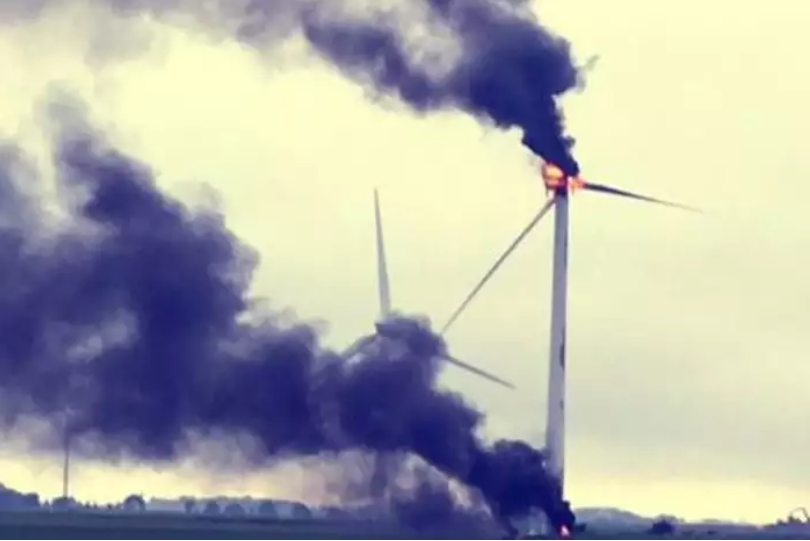
Virtue signalling anti-coal/pro-wind and solar groups are picking a fight they can only lose. NWO/NGOs have launched rabid attacks on any company with the temerity to back coalmining and/or coal-fired power.
The activists’ line goes that any company that isn’t telling its shareholders that coal and coal-fired power plants are already dead, is lying to them (and the market) and must be brought to book by the corporate regulator, ASIC.
In one targeted attack, a crowd using the entirely misleading moniker, ‘Market Forces’ -their methods and mantra are anything but – went after Australian coal miner, New Hope in an effort to spook its management, scare off shareholders and wreck its market value. Doesn’t sound much like Adam Smith’s “invisible hand”, to STT.
Unlike plenty of other timid corporates, New Hope wasn’t going to be rattled by a bit of undergraduate ranting from wind and solar cultists. Instead, New Hope…
View original post 1,186 more words
Why Is Growth in Developing Countries So Hard to Measure?
06 Aug 2021 Leave a comment

Noam Angrist, Pinelopi Koujianou Goldberg and Dean Jolliffe in the recent Journal of Eco Perspectives:
View original post 64 more words
One Hundred Years of Climate Change
06 Aug 2021 1 Comment

Government temperature graphs have been altered and are not consistent with historical records. As Tony Heller explains, they are propaganda, not science.
Starting Small: Nuclear Power’s Renaissance Begins with Small Modular Reactors
06 Aug 2021 Leave a comment
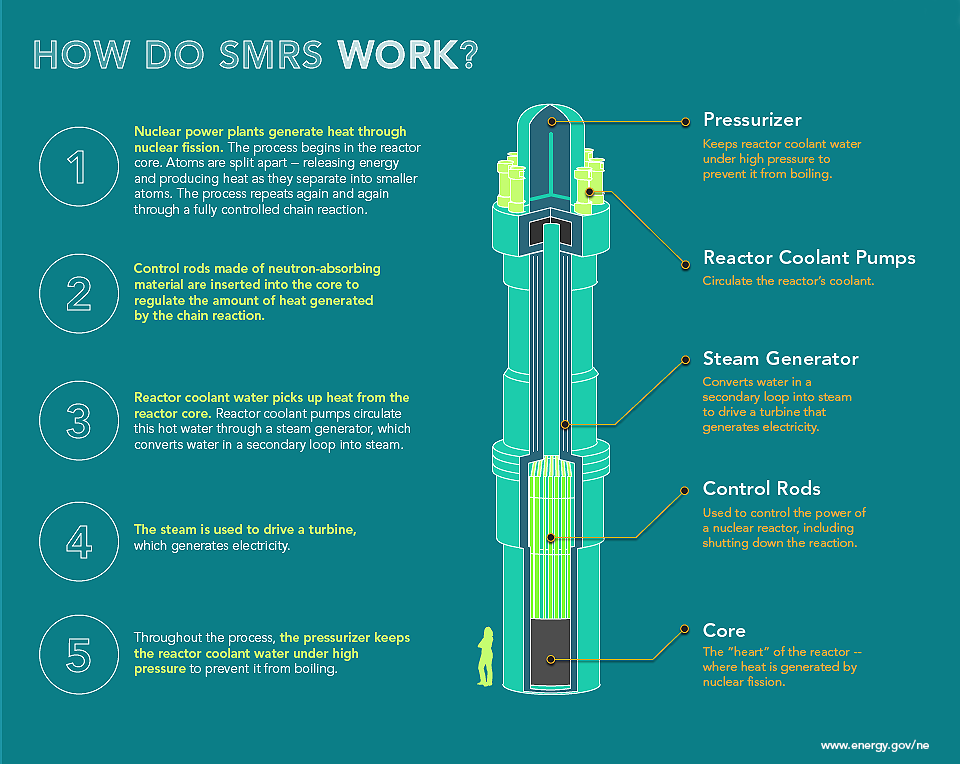
The world’s first small modular reactor (SMR) is under construction and, surprise, surprise, it’s energy-hungry China that leads the way.
While China’s love affair with coal-fired power looks like a marriage that will last a lifetime, the CCP is also building nuclear plants, hand over first. And not just the 1,000MW plus industrial-scale reactors it needs to drive its economic miracle.
China looks set to develop the technology to build SMRs at a scale that promises to shake up power generation and delivery, for generations to come.
The World’s First Small Nuclear Reactor Is Now Under Construction
Oil Price
Charles
Kennedy
13 July 2021
China National Nuclear Corporation (CNNC) launched on Tuesday the construction of the first onshore small nuclear reactor in the world, in its efforts to gain a leading position in the modular reactors market.
Construction began on the demonstration project at the Changjiang Nuclear Power Plant in…
View original post 274 more words
Should have done better
06 Aug 2021 Leave a comment

A couple of months ago the Institute of Directors approached me about doing a talk to their members in Wellington on monetary policy as it had been conducted by the Reserve Bank over recent times. Somewhat to my surprise, my name had apparently been suggested to them by Alan Bollard.
I gave the talk this morning, and although the date was set ages ago it could hardly have been more timely given the labour market data yesterday, which in a way finally marks the completion of not just the last 18 months’ of monetary policy, but in some ways the last 14 years (for the first time since the 2008/09 recession we have core inflation a little above the Bank’s target midpoint and the unemployment rate back to something that must be close to the NAIRU.
The full text of my remarks, and a few more points I didn’t have…
View original post 1,758 more words
My Hate Speech Submission
06 Aug 2021 Leave a comment

`I am pleased to submit my opposition to this unnecessary and insidious legistlaltion as follows.
- This is nothing more than an effort by various groups and the New Zealand Government to suppress speech they do not like or agree with. Free speech is a key cornerstone of Western Society and nowhere should that be more vigorously defended than in New Zealand. It is an indictment on Labour and its Ministers that it appears to be promoting and driving this legislation.
- Freedom of speech and expression is already severely impinged and restricted in New Zealand by virtue of the fact that the two major newspaper companies(Stuff and NZ Herald) will not countenance or publish views that are contrary to the views of the editors, opinion writers and staff. This is further exacerbated by the fact that the current government has paid them taxpayers money to keep solventand their…
View original post 328 more words
Net zero targets ‘unrealistic’ says Oxfam report
06 Aug 2021 Leave a comment

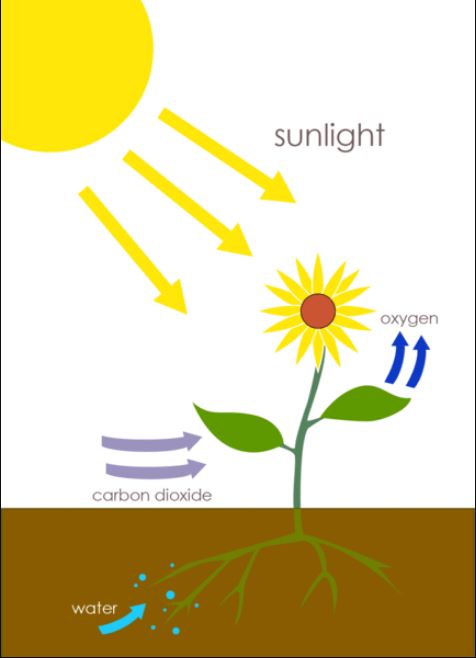 Photosynthesis: nature requires carbon dioxide
It’s pie in the sky time again as charity Oxfam trashes various so-called climate pledges, calling them greenwashing. For starters they reckon the amount of land required to fulfil them would far exceed anything likely to be available worldwide.
– – –
Oxfam says governments and companies are “hiding behind unreliable, unproven and unrealistic carbon removal schemes” in order to hit targets, reports BBC News.
Global attempts are being made to reach net zero carbon emissions by 2050.
But the charity claims net zero targets are often a “greenwashing exercise”.
Net zero means any emissions that can’t be stemmed by clean technology in 2050 will either be buried using carbon capture and storage, or soaked up by plants and soils.
View original post 165 more words
Tory rebels vow to fight 2030 ban on new petrol and diesel cars
05 Aug 2021 Leave a comment
 The GWPF has produced a 64-page Fair Fuel document. See the Chairman’s Summary on pages 56-58 for a flavour of the many present and future problems with the unplanned rush to EVs, which the ‘rebels’ fear is likely to be a disaster both for themselves and the motoring public. But they’re mixing up carbon dioxide emissions cuts with pollution, which is an entirely separate issue. Such confusion plays into the hands of the so-called ‘green’ activists.
– – –
Tory rebels have vowed to fight the 2030 ban on new petrol and diesel cars, reports The Sun (via The GWPF).
Thirteen MPs urged the Government to think again or face public fury.
The Fair Fuel all-party parliamentary group today calls on ministers to publish a full-cost analysis of what it will mean for the economy to go electric, and how they will slash emissions.
View original post 103 more words


Recent Comments