The End of Economic Growth? Unintended Consequences of a Declining Population
05 Jul 2021 Leave a comment
in applied price theory, applied welfare economics, economic growth, economic history, entrepreneurship, human capital, labour economics, labour supply, macroeconomics, population economics Tags: endogenous growth theory
A review on ‘The Friedman-Lucas transition in macroeconomics’
05 Jul 2021 Leave a comment

‘The book aims to develop what the author labels a “structuralist” approach to bring
into light the specificities of Robert Lucas’s methodology, especially in comparison to
the one argued and also applied by his predecessor, Milton Friedman. Accordingly, the book belongs to the field of methodology as well as to the history of economic analysis.’
The full text of the review is available here, on the page of The European Journal of the History of Economic Thought.

Tirole on applying lessons from modern economics to global health procurement.
04 Jul 2021 Leave a comment
in applied price theory, health economics, industrial organisation
Government Intervention and Unintended Consequences
04 Jul 2021 Leave a comment

Most people say the key feature of capitalism is competition. Hard to argue with that characterization, but I would go one step further and say that it is one of the consequences of competition – “creative destruction” – that best captures why free markets make it possible for entrepreneurs to deliver mass prosperity.
But what’s the key feature of government? Is it waste? Dependency? Corruption?
Those are all good answers, but perhaps “unintended consequences” should be first on the list. Courtesy of Reason, here are three examples.
I’ve previously written about both ethanol subsidies and so-called employment protection legislation, two of the three examples were already familiar to me.
I wasn’t aware, however, that businesses resorted to big concrete edifices to get around Vermont’s billboard ban (though I have read, in a classic case of baptists and bootleggers, that big…
View original post 108 more words
Alchian and Demsetz. Theory of the firm. Production, Information Costs, and Economic Organization
03 Jul 2021 Leave a comment

Sometimes the moment a renowned economist passes away is the day when somebody brings your attention to a particular aspect of his writings, and this happened to me about Prof. Demsetz and his paper (1) “Production, information costs and economic organization”, (written with Alchian in 1973).
They pose two questions:
- What drives nongovernmental organizations to do their specialized activities within the firm or across markets, and
- How do they structure their internal gears.
Thinking of fiat, authority or disciplinary action as a mechanism is a delusion for them. Firms don`t have these assets more than people may have in a contract relationship. Internally and externally they can punish others withholding additional business or seeking compensation in courts; long-term relationships don´t make firms either, as they exist between different players.
Let`s follow their proposals step by step.
1.- Why does the firm exist.
View original post 1,603 more words
12 Angry Men
03 Jul 2021 Leave a comment

12 Angry Men (1957) Director: Sydney Lumet
“It’s very hard to keep personal prejudice out of a thing like this. And no matter where you run into it, prejudice obscures the truth.”

★★★★★
12 Angry Men is a wonderful and compelling courtroom drama -almost the entirety of the film was shot inside a courtroom while a jury deliberates. The film was based on the earlier teleplay by Reginald Rose for the drama television program Studio One (it won him an Emmy). The film features an all-star cast of some of the greatest actors of the 1950s and 1960s. While it was hailed as a critical masterpiece of Hollywood courtroom drama, 12 Angry Men was a box office flop.
12 Angry Men uniquely explores notions of groupthink and consensus-building as well as the nature of reasonable doubt in our justice system. Throughout the film keen students of cinematography will notice as…
View original post 753 more words
Northeast Corridor High Speed Rail (American vs. Swedish)
03 Jul 2021 Leave a comment

If there is one railway in the United States of America that currently qualifies as a high speed rail line, then that would be the Northeast Corridor (abbreviated NEC) that connects Boston – New York City – Philadelphia – Baltimore – Washington D.C.. These cities alone have a population of 12 million people, but if you look a the Bos-Wash Megalopolis which stretches from Boston to Washington D.C., the railway has potential for 52 million people living in the northeast of the USA. Since the foundation of the federal railway operator Amtrak, this route received various upgrades in the 70s, 90s and 2000s, getting rid of grade crossing, electrification and realignments to enable faster speeds. On large sections of the corridor speeds of 201kmh (125mph) and 217kmh (135mph) can be reached and on several sections north and south of Providence (Rhode Island) even speeds of up to 241kmh (150mph)…
View original post 800 more words
The Witch of Buchenwald
02 Jul 2021 Leave a comment


On this day in 1951, Ilse Koch, wife of the commandant of the Buchenwald concentration camp, was sentenced to life imprisonment in a court in West Germany. Ilse Koch was nicknamed the “Witch of Buchenwald” for her extraordinary sadism.
Koch was born in Dresden, Germany, the daughter of a factory foreman. She was known as a polite and happy child in her elementary school. At the age of 15, she entered an accountancy school. Later, she went to work as a bookkeeping clerk. At the time the economy of Germany had not yet recovered from Germany’s defeat in World War I. In 1932, she became a member of the rising Nazi Party.
On May 29, 1937, she married Karl Otto Koch, a colonel in the SS who was commander of the Sachsenhausen camp.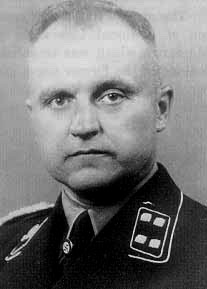 In the summer of 1937 he was transferred to Buchenwald, then a new concentration camp near Weimar. There Koch acquired her reputation as a sadist and nymphomaniac…
View original post 1,288 more words
Ronald Coase on JS Mill’s false doctrine of “natural monopoly”
02 Jul 2021 Leave a comment
in applied price theory, comparative institutional analysis, economic history, economics of bureaucracy, economics of regulation, history of economic thought, industrial organisation, law and economics, Public Choice, Richard Epstein, Ronald Coase, survivor principle
Cities and Economic Growth with Edward Glaeser — UC San Diego Economics Roundtable
02 Jul 2021 Leave a comment
in Alfred Marshall, applied price theory, applied welfare economics, economic growth, economic history, economics of bureaucracy, environmental economics, history of economic thought, industrial organisation, labour economics, labour supply, macroeconomics, property rights, Public Choice, public economics, transport economics, urban economics
David Card on immigration
01 Jul 2021 Leave a comment
in applied price theory, applied welfare economics, econometerics, economic history, human capital, labour economics, labour supply, unemployment Tags: economics of immigration
“Immigration Policy: Economics and Evidence”
01 Jul 2021 Leave a comment

That was the title of the presentation at yesterday’s lunchtime seminar hosted by Motu, the economics consultancy/research group. Motu has started up this series of public policy seminars – a laudable initiative, even if the costs mostly seem to be being met a group of sponsoring government agencies. The first such session was a month ago on minimum wages – I never got round to writing about it, but the summary is probably “not as useful or as damaging as is often claimed”. Perhaps it is going to be a theme, since a one line summary of yesterday’s immigration session could be quite similar.
A session on immigration policy is obviously timely, given that the government says it is cooking up changes to various aspects of policy (for which, despite a speech from the minister, there is still no supporting analysis or any details), and in view of the inquiry…
View original post 2,563 more words
Why it’s right to wind down furlough
01 Jul 2021 Leave a comment

The Treasury will start to wind down the furlough scheme this week – and not a moment too soon.
To begin with, the support is relatively generous – and costly – and still due to last another three months. Under the Coronavirus Job Retention Scheme (CJRS), employees on furlough receive 80% of their normal wages for any hours not worked, capped at £2,500 a month.
Currently, the Government pays the entire 80%. The taxpayer’s contribution will be scaled back to 70% from July 1, and cut further to 60% from the beginning of August, but the scheme is not due to close completely until the end of September.
In the meantime, the number of people on furlough has already fallen sharply. The latest harddata from HMRCreported that about 3.4 million jobs were still furloughed as of April 30. But more timely surveyestimates from the ONS
View original post 768 more words
Green Germany risks running out of power
30 Jun 2021 Leave a comment

 Residential solar panels in Germany.
Credit: Wikimedia Commons/ Sideka Solartechnik
The German energy crunch looms in the next few years, not unlike some other over-committed renewables enthusiasts, for example Britain. European countries don’t seem to see or admit the potential problem of relying on each other for imports. Somebody has to have an excess of power for that to work, but as more countries favour renewables over power stations the availability of on-demand electricity must inevitably decline.
H/T The Global Warming Policy Forum (GWPF)
FRANKFURT (Reuters) – Germany, a poster child for renewable energy, is renouncing nuclear and coal.
The problem is, say many power producers and grid operators, it may struggle to keep the lights on.
The country, the biggest electricity market in the European Union, is abandoning nuclear power by 2022 due to safety concerns compounded by the Fukushima disaster and phasing out coal plants over the next…
View original post 180 more words


Recent Comments