Disagreeing with Liberal Socialism, Despising Marxist Socialism
24 Jun 2021 Leave a comment

I wrote last week about evil of totalitarian ideologies such as communism and fascism and pointed out that both antifa and Nazis should be treated with complete disdain and ostracism.
And that led me to find common ground with my left-of-center friends, even though I don’t like many of their policies.
I don’t like redistribution…programs are financed with taxes and that the internal revenue code is enforced by coercion…if you catch me in a cranky mood, I’ll be like the stereotypical libertarian at Thanksgiving dinner and wax poetic about what’s wrong with the system.
That being said, I much prefer the coercion found in western democracies compared to the totalitarian versions of coercion found in many other parts of the world. At least we have the rule of law, which limits (however imperfectly) capricious abuse by government officials. …our Constitution still protects many personal liberties, things…
View original post 1,042 more words
Hobo’s Funnies II
24 Jun 2021 Leave a comment

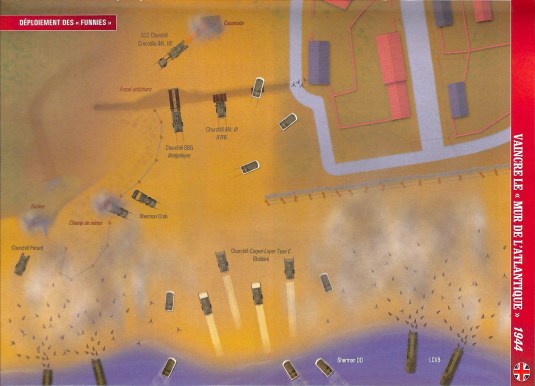

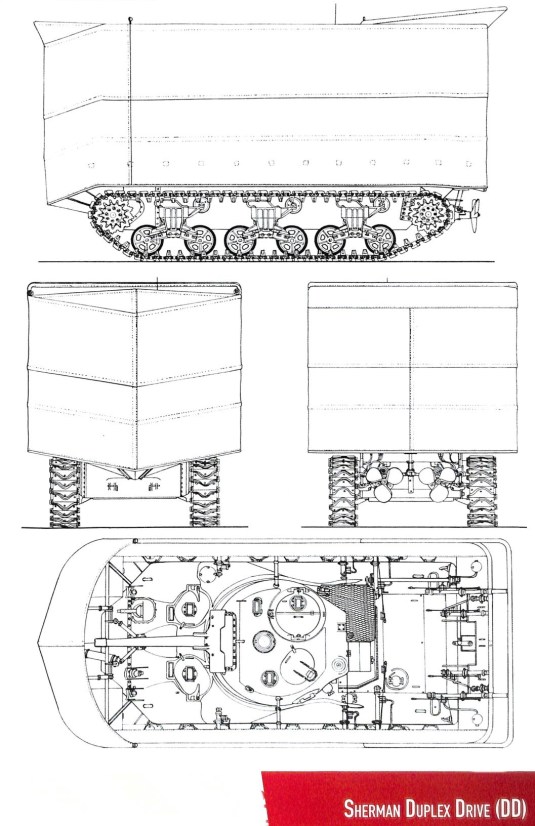
If, superficially, this suggests an absurdly cheap victory, it must be compared with what happened on the American sectors where, it will be recalled, the troops did not have the benefit of armoured breaching teams. On Utah Beach their task had been eased somewhat by the dropping of the US 82nd and 101st Airborne Divisions some miles inland during the previous night; but on Omaha Beach the US 1st and 29th Infantry Divisions were pinned down on the shore by defences that were no more formidable than those on the British sector. Not until an hour after the initial landings did the situation begin to improve slowly when eight American and three British destroyers, observing the carnage amid the shattered LCIs at the water’s edge, closed in to batter the defences at point blank range. Even then, it was only by the inspired leadership, heroism and self-sacrifice of individuals and…
View original post 3,097 more words
Seymour nettles the PM with questions about EVs, “feebate”, the Auckland cycle bridge and the disposal of batteries
23 Jun 2021 Leave a comment

Parliament, mostly a humdrum affair these days, nevertheless has moments which fascinate long-time aficinados. One such moment came at Question Time yesterday when ACT’s David Seymour was probing Prime Minister Jacinda Ardern over the “feebate” scheme which the government is introducing to accelerate the introduction of EVs.
The Prime Minister carries such an aura these days that it is not easy to penetrate the wall of omniscience which protects her from criticism.
But as Seymour pursued his line of questioning, she showed a hint of fallibility.
Seymour, with a smile, teased her:
“Is my line of questioning getting under the Prime Minister’s skin?”
Of course he had only to look at Ardern’s face to know that he had.
So Point of Order decided to reproduce from Hansard the exchanges of this unusual event.
It began when Seymour asked whether Ardern stood by her statement that “a large number of…
View original post 1,432 more words
Hobo’s Funnies I
23 Jun 2021 Leave a comment

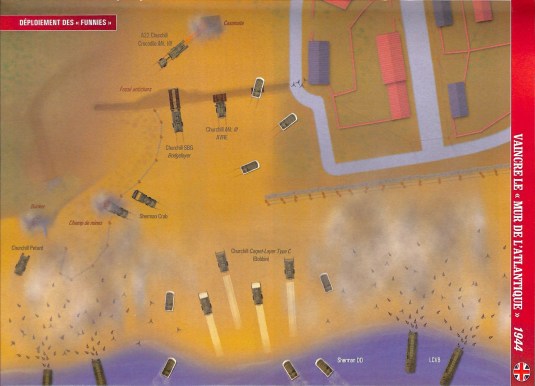
When, on 19 August 1942, the Allies mounted a major raid on Dieppe, they did so with the political object of demonstrating to Stalin that the opening of a ‘Second Front’ in the West was, for the moment, not a practical proposition. However, while the operation was ostensibly a failure, many valuable lessons were learned and put to good use in the planning of the invasion of Western Europe almost two years later.
After Dieppe the Allies recognised the impossibility of securing a heavily defended French port, deciding instead to invade over the open beaches of Normandy and bring their own prefabricated harbour with them. These beaches, while not as heavily fortified as the more important ports, nonetheless possessed formidable defences which were capable of inflicting terrible losses on a conventional landing force. The German belief was that the Allies would time their invasion to coincide with high tide, so…
View original post 3,258 more words
A pensions tax raid isn’t just bad politics, it’s awful economics
23 Jun 2021 Leave a comment

Here we go again.The Daily Telegraphis reporting that Treasury officials are “drawing up plans” for a pensions tax raid in the autumn to help pay for Covid. It might be more accurate to say that old plans are now being ‘dusted off’, but the quality of debate does not seem to have improved.
For a start, it is wrong to assume that taxes have to rise at all. We could, and probably should, regard the increase in government spending and borrowing during the pandemic as a one-off, and accept that the level of debt will be permanently higher as a result. A strong economic recovery and a bit of inflation will still reduce the burden of that debt (as a share of nominal GDP).
Indeed, thelatest monthly figureson the public finances show that borrowing is continuing to undershoot the OBR’s gloomy forecasts, as it…
View original post 746 more words
Exposing Net-Zero Doublethink
23 Jun 2021 Leave a comment

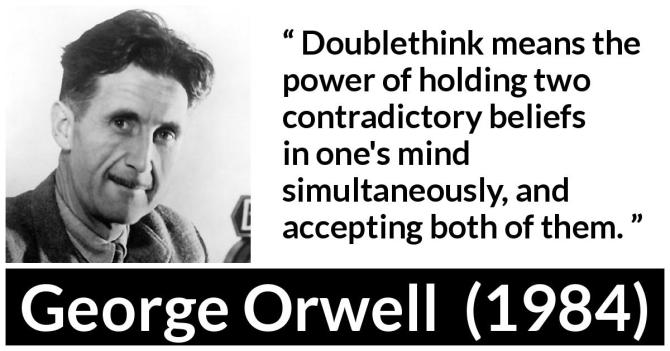
Bjorn Lomberg exposes the doublethink rhetoric around the “Net-Zero” carbon emissions notion in his Financial Post article Enough with the net-zero doublethink Excerpts in italics with my bolds and images.
When John Kerry and many other politicians insist that climate policies mean no sacrifice, they are clearly dissembling.
Our current climate conversation embodies two blatantly contradictory claims. On one side, experts warn that promised climate policies will be economically crippling. In a new report, the International Energy Agency (IEA) states that achieving net-zero in 2050 will likely be “the greatest challenge humankind has ever faced.” That is a high bar, surpassing the Second World War, the black plague and COVID.

On the other side, hand-waving politicians sell net-zero climate schemes as a near-utopia that every nation will rush to embrace. As U.S. climate envoy John Kerry told world leaders gathered at President Biden’s climate summit in April: “No…
View original post 820 more words
Defending Capitalism, Part I
23 Jun 2021 Leave a comment
I was a big fan of (and occasionalguest on) John Stossel’s TV show, and I’m now a big fan of his videos (see here, here, here, here, here, here, and here).
So it was an honor to appear in his latest video about “Capitalism Myths.”
It’s a two-part series. In this first video, we discussed three myths about free enterprise.
Myth #1 – Capitalists get rich by ‘taking’ money from others.
Since voluntary exchange, by definition, is mutually beneficial, this is a truly absurd argument. Indeed, only the most vapid politicians and pundits suggest otherwise.
The most definitive research in this area came from Professor William Nordhaus of Yale, who estimated that, “innovators are able to capture about 2.2 percent of the total social surplus from innovation.”
Translated from economic jargon, that means the rest of society gets nearly 98 percent…
View original post 234 more words
The gender pay gap: Solomon W. Polachek in conversation with Daniel S Hamermesh
23 Jun 2021 Leave a comment
in applied price theory, discrimination, econometerics, economic history, gender, health and safety, human capital, labour economics, labour supply, occupational choice, poverty and inequality Tags: gender wage gap
Four prorogations and a conflagration: Parliament and its buildings in 1834
22 Jun 2021 Leave a comment

Continuing our series on the different buildings occupied by the House of Commons between 1832 and 1868, this blog looks at the makeshift arrangements made for the prorogation in the aftermath of the devastating Westminster fire of October 1834. The first blog, on the pre-1834 Commons chamber, can be found here.
On 15 August 1834 the House of Commons assembled for the last day of the 1834 parliamentary session. Around seventy members were present in the chamber – the former St. Stephen’s Chapel – when the Speaker, Sir Charles Manners Sutton, took the chair that afternoon.
A limited amount of business took place, including the presentation of petitions, questions to ministers and notices of future motions. In a reminder of how long Parliament has been subject to restoration and renewal, Sir Samuel Whalley asked when ongoing repairs to Westminster Hall would be completed and suggested that ‘the painting…
View original post 1,260 more words
No confidence vote succeeds against Swedish government
22 Jun 2021 Leave a comment

The government of Prime Minister Stefan Lofven was ousted in a no confidence vote with 181 votes against it in the 349-seat Swedish parliament, the Riksdag, on 21 June. The prime minister has a week to decide whether to go to a snap election or resign to allow the speaker of parliament to facilitate the negotiation of a new government. According to Reuters, this make Lofven “the first Swedish prime minister to be ousted by a no-confidence motion put forward by the opposition.” If there is a snap election, it would be the first since 1958.
The government is a minority government of the Social Democrats and Greens, with a policy-based agreement to allow it to govern signed with the Centre and Liberal parties. It also has had tacit support from the Left Party, but the agreement with the two center-right parties calls for the Left to have no policy…
View original post 211 more words
George Stigler 50 Years Later: Part 2 – Advancing The Theory of Economic Regulation
22 Jun 2021 Leave a comment
in applied price theory, economic history, George Stigler, history of economic thought, industrial organisation, Public Choice
The Importance of Low Marginal Tax Rates
21 Jun 2021 Leave a comment
When studying the economic of taxation, one of the most important lessons is that there should be low marginal tax rates on work, saving, investment, and entrepreneurship.
That’s also the core message of this video from Prof. John Cochrane.
I wrote a primer on marginal tax rates back in 2018. I wanted to help people understand that the incentive to engage in additional productive behavior is impacted by how much people get to keep if they earn additional income.
So what matters isn’t the tax on income that’s already been generated.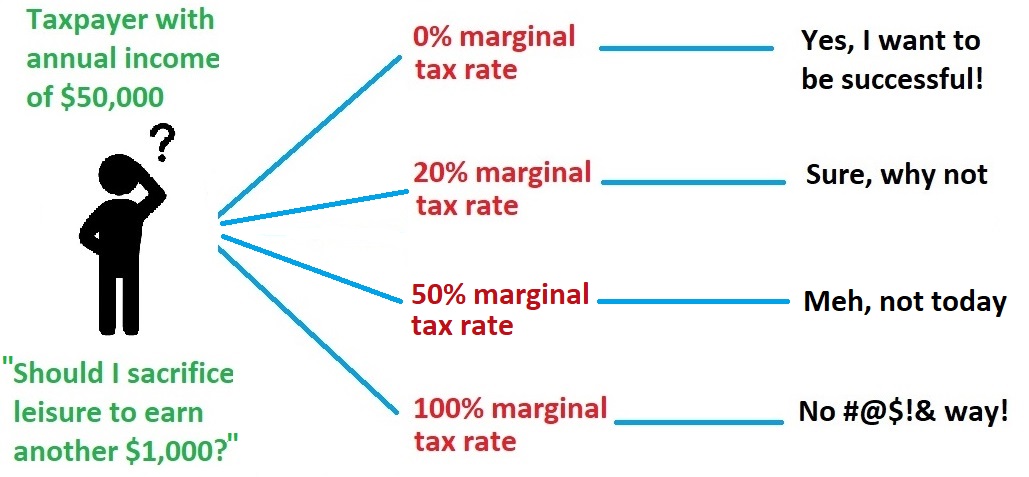 The key variable is the marginal tax on the additional increment of income. As illustrated by the accompanying visual.
I’ve shared real-life examples of how the American tax system can result in very high marginal tax rates, especially when you include the extra layers of tax on income that is saved and invested (producing extremely high effective marginal…
View original post 531 more words
It’s just an academic theory
21 Jun 2021 Leave a comment

I see there has been some ruction here in New Zealand about a high school activist group (School Strike For Climate Auckland or SSFCA) breaking itself up because of its inherent White Supremacy.
Apparently the group was “advised” about this problem by Maori and Pasifika groups also engaged in “fighting Climate Change”. I was amused that Chris Trotter covered this story with the title, Losing The “Struggle-Session” Over Climate Change:
The statement released by SSFCA was heart-breaking. To find an historical precedent for the document’s abject self-negation and unqualified acknowledgement of guilt it is necessary to go back to the “struggle sessions” of Mao Zedong’s Cultural Revolution of the late-1960s. Or, even further back, to the “confessions” tremulously delivered by the broken victims of Joseph Stalin’s show trials in the 1930s. The shaming and vilification required to reduce these idealistic young people to a state of such utter…
View original post 740 more words


Recent Comments