The FDA’s Oversight of Drug and Vaccine Development: A Conversation with Richard Epstein
26 May 2021 Leave a comment
in applied price theory, applied welfare economics, economics of information, economics of regulation, health economics, law and economics, property rights, Richard Epstein Tags: drug lags, economics of pandemics
EU leaders brace for clash over astronomical cost of Net Zero plans
25 May 2021 Leave a comment

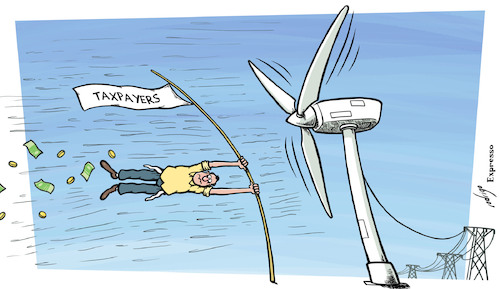 ‘All pain for no gain’ springs to mind. Will voters accept this pointless self-harm to their economic welfare indefinitely, or turn against it?
– – –
As the astronomical cost of Net Zero plans are becoming more evident by the day, EU leaders face the prospect of growing discontent and revolt over the relentless rise in energy prices and consumer pain, say The GWPF & FT.
After years of assuring voters that renewable energy will make energy cheaper and Europeans better off, EU leaders are now forced to concede that these plans will actually hurt consumers very badly.
The EU Commission is proposing a series of far-reaching measures that will drive up the cost of running a car and heating homes.
If it goes ahead, households will have to shoulder not only rising energy costs, but also the rising cost of Europe’s record carbon price in their heating bills…
View original post 201 more words
Parliamentary Elections in the reign of Henry VI
25 May 2021 Leave a comment

Ahead of next Tuesday’s VirtualIHR Parliaments, Politics and People seminar, we hear from Dr Hannes Kleineke, of the History of Parliament. On 1 June 2021, between 5.15 p.m. and 6.30 p.m., Hannes will be responding to your questions about hispre-circulated paper on parliamentary elections in the reign of Henry VI. Details of how to join the discussion are available here, or by contactingseminar@histparl.ac.uk.

The importance of the reigns of the Lancastrian Kings, and above all that of Henry VI, for the codification of the rules governing parliamentary elections is well known.
It was in 1406 that a statute was passed which required the sheriffs of the English counties to make their returns in the form of indentures counter-sealed by the electors who had in each instance participated in the choice of the knights of the shire, and thereby laid the…
View original post 1,056 more words
Aliens
23 May 2021 Leave a comment

Aliens (1986) Director: James Cameron
“You’re going out there to destroy them, right? Not to study. Not to bring back, but to wipe them out?“

★★★★☆
Aliens is a remarkable action film. In some ways it is James Cameron’s radical departure from the classic original Alien (1979) which was directed by Ridley Scott. By all accounts it should have been a cheap, sophomoric effort but Aliens is a surprisingly powerful roller-coaster of a sequel. Beset by roadblocks and lawsuits, a sequel to Alien was delayed for some seven years.
Aliens picks up 57 years after the original. Ripley (Sigourney Weaver) has been floating through space while in stasis and she happens to be picked up and returned to members of her company at the “Weyland-Yutani Corporation.” She explains to them what happened to the Nostromo, but the leadership do not believe her story about an alien race on…
View original post 551 more words
The fatal conceit
22 May 2021 Leave a comment
in applied price theory, Austrian economics, development economics, economic history, F.A. Hayek, growth disasters, history of economic thought, Marxist economics, Public Choice Tags: China, The fatal conceit, unintended consequences

David D. Friedman on his new book
20 May 2021 Leave a comment
in applied price theory, comparative institutional analysis, constitutional political economy, David Friedman, economics of crime, law and economics, property rights
Freedom comes at a Price: The Medieval History of Bail
20 May 2021 Leave a comment

Posted by Sara M. Butler, 19 May 2021.
On July 1, 2021, Ohio courts are entering into a new age of bail reform. Ohio’s Supreme Court ruled recently that not only must all Ohio counties adopt a uniform monetary bail schedule, but before resorting to cash bail, the courts must explore the option of release on non-monetary personal recognizance.[1] The motivation behind this extraordinary change is socioeconomic: it has long been recognized that the bail system privileges the rich. Those who cannot afford to cough up the cash for bail (or, at least the 10% required by a bail bondsman) are left to languish in prison until trial. This is true even of those accused of minor crimes, in which, if convicted, the maximum prison sentence would be less than the time it takes for the case to work its way through the judicial system to trial. Despite the…
View original post 2,382 more words
Why Marxism Always Fails
19 May 2021 Leave a comment

Jordan Peterson delves into the reasons why Marxist ideology fails both in theory and in practice. For those like me who prefer to read a text, I have made a transcript of Peterson’s talk, with some light editing to transpose a verbal presentation into a written one. My bolds are added. H/T Chiefio.
Jordan Peterson’s critique of the Communist Manifesto
Since we are talking about Marxism, I tried to reread the Communist Manifesto. The first time I read it I was 18 years old, more than 40 years ago. When you read something, you you don’t just follow the words and follow the meaning, but you take apart the sentences. And you ask yourself:
At this level of phrase and at the level of sentence and at the level of paragraph, is this true?
Are there counter arguments that can be put forward that are credible?
Is this solid thinking?
View original post 4,520 more words
Scientists try to explain why climate models can’t reproduce the early-2000s global warming slowdown
19 May 2021 Leave a comment
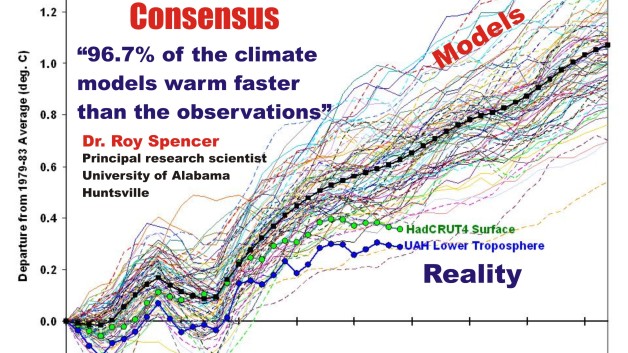 Climate models overheating
Explanation, or vague excuses? They seem to be saying the models are a wonder, just a shame they don’t reflect reality – mainly due to pesky natural variation.
– – –
A new study led by Dr. Wei and Dr. Qiao from the First Institute of Oceanography, Ministry of Natural Resources provides an evaluation of the performance of the newly released CMIP6 models in simulating the global warming slowdown observed in the early 2000s, says Phys.org.
This study reveals that the key in simulating and predicting near-term temperate change is to correctly separate and simulate the two distinct signals, i.e., the human-induced long-term warming trend and natural variabilities, especially those at interannual, interdecadal and multidecadal scales.
View original post 310 more words
The Stuarts: Anne & The United Kingdom of Great Britain (1702-1707)
19 May 2021 Leave a comment
“The Age of Anne is rightly regarded as the greatest manifestation of the power of England which had till then been known,” says Winston Churchill in his History of English Speaking Peoples (396). Despite her plain and sickly disposition, Queen Anne was one of the more consequential reigning English monarchs. Her queenship saw the establishment of a united kingdom of Scotland and England as “Great Britain.” It was a neo-Augustan age of letters from the likes of Addison, Pope, Defoe, Steele, Swift, and others. It was also the era of the Royal Society, which was originally chartered under Charles II, and the work of Sir Isaac Newton proliferated. However, despite numerous efforts Anne remained childless and in order to protect the Protestant character of the kingdom, after her death the crown would pass to a distant family from the Continent: the Hanovers.

“I know…
View original post 1,340 more words
Max Taylor: The Dissolution and Calling of Parliament Bill: Missed Opportunities
18 May 2021 Leave a comment

 The newly introducedDissolution and Calling of Parliament Bill(“the Bill”) – like theDraft Fixed-term Parliaments Act (Repeal) Billwhich preceded it – is a missed opportunity.It has failed to unify and define the scope and exercise of the powers of proroguing and dissolving Parliament, in one statute, which were in need of clarification post-Miller II. Now that the Government has decided on the form which it would like the Bill repealing the Fixed-term Parliaments Act to take, the moment has gone and, as a niche of constitutional law, it is unlikely to garner enough political capital for these issues to be deemed worth addressing for the meantime.
Ironically, by foregoing the opportunity to require the consent of a simple majority of MPs for a premature dissolution and/orprorogation,the Government has missed out on the simplest method for it to achieve either or both of these goals…
View original post 2,349 more words
Stagflation and pretty graphs?
17 May 2021 Leave a comment

For two decades after the end of WWII, economists, bureaucrats and politicians were pretty sure that they’d nailed the problems of controlling a capitalist economy.
The ruling theory was Keynesianism, named after the famous economist John Maynard Keynes, whose key insight in the 1930’s was that in times of economic recession, and especially depression such as The Slump of the 1930’s, governments should not cut back on their spending but increase it.
Prior to that governments had always taken the same attitude towards a shrinking economy that households and businesses did: you cut spending in line with your falling revenues, tax in the case of government. Keynes argued that this was the wrong thing for governments to do; they were different because they controlled the creation of credit so debt was not the same threat to them. They could go into debt, perhaps quite a lot of debt, and…
View original post 1,297 more words
John Kerry: US climate envoy criticised for optimism on clean tech
17 May 2021 Leave a comment
 [image credit: latinoamericarenovable.com] Wishful thinking is the new climate policy for fantasy planet savers. John Kerry told the BBC technologies that don’t yet exist will play a huge role in stabilising the climate. But ‘Craig Bennett from the UK Wildlife Trusts told BBC News Mr Kerry’s remarks were “frankly ridiculous”.’ How much more worthless baloney do we have to endure from hypocritical globe-trotting alarmists?
– – –
America’s climate envoy John Kerry has been ridiculed for saying technologies that don’t yet exist will play a huge role in stabilising the climate.
Speaking on the BBC’s Andrew Marr show, he said the US was leading the world on climate change – and rapidly phasing out coal-fired power stations.
But he rejected a suggestion that Americans need to change their consumption patterns by, say, eating less meat.
View original post 175 more words
University of Essex 2021 Annual Regius Lecture: “Following the Science? The Use of Science Advice in Policy”
16 May 2021 Leave a comment

Deposition in Mann vs. CEI/National Review
16 May 2021 Leave a comment

In the interests of transparency, and to provide a window to some of the ugliness found in climate science, here in PDF is a copy of my deposition in the case of Mann vs. CEI/National Review, which is into its 8th year.
You can find some various documents related to the case here and here. Here is an update on the most recent actions in the case.


Recent Comments