No free riders
17 Apr 2021 Leave a comment
in applied price theory, applied welfare economics, health economics Tags: free-riders
In another blow for the union wage premium
16 Apr 2021 Leave a comment
in applied price theory, labour economics, labour supply, unions Tags: union wage premium
FTPA Joint Committee lays down marker for the future
12 Apr 2021 Leave a comment



The Fixed-term Parliaments Act 2011placed a legal obligation on the Prime Minister to make arrangements for a committee to review the legislation before the end of 2020. That committee was duly created, and published its reportlast month.Robert Hazell and Meg Russell offer a summary of the committee’s work and argue thatthe committee ‘ignored’ the weight of the evidence on several key areas.
On 24 March the parliamentary Joint Committee to review the Fixed-term Parliaments Act 2011 (FTPA) published its report. The committee was established last November under section 7 of the FTPA, which required the Prime Minister in 2020 to make arrangements for a committee to review the operation of the Act, and if appropriate to make recommendations for its amendment or repeal. The review was carried out by a Joint Committee composed of 14 MPs and six members of the House of Lords, and…
View original post 1,852 more words
The Syrian Civil War – Evolution of the Syrian Army’s Way of War
10 Apr 2021 Leave a comment

By Eyal Berelovich
militarystrategymagazine.com
The views expressed above are those of the author and do not represent those of the Israel Defense Force Ground Forces, the R.D.C Department, or the Israel Defense Force.
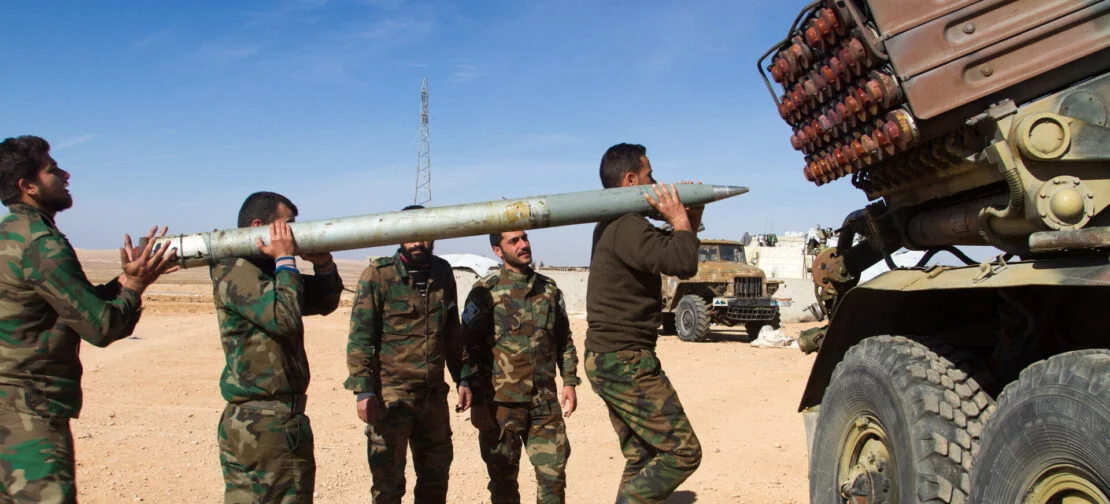
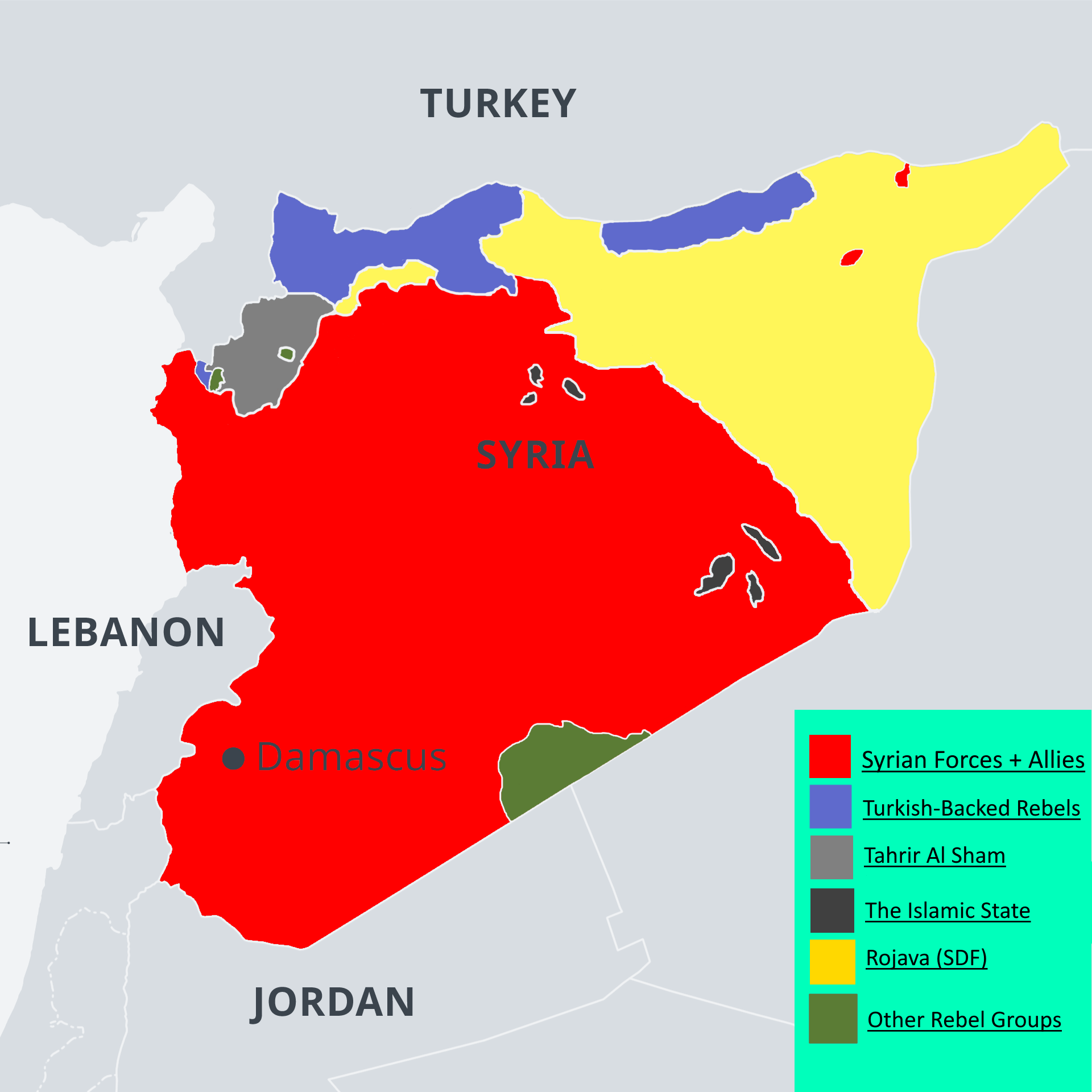
Professor Eyal Zisser’s 2018 article on the Syrian Civil War begins with the following words: “In March 2011 a revolution erupted in Syria. It began as a limited local non-violent protest in the rural and peripheral areas of the country, and within a few months escalated into a bloody civil war that quickly became sectarian, and worse yet – religious, a holy war (Jihad). The civil war attracted foreign intervention that transformed Syria into a regional and international arena of conflict, with the rival sides being used by the global and regional powers as pieces on the chess-board of their conflicts.” [i]
Most descriptions and analyses of the war divide it chronologically into several main phases. Some…
View original post 4,750 more words
THE YORKIST TRIUMPH, 1460–1461 Part I
09 Apr 2021 Leave a comment
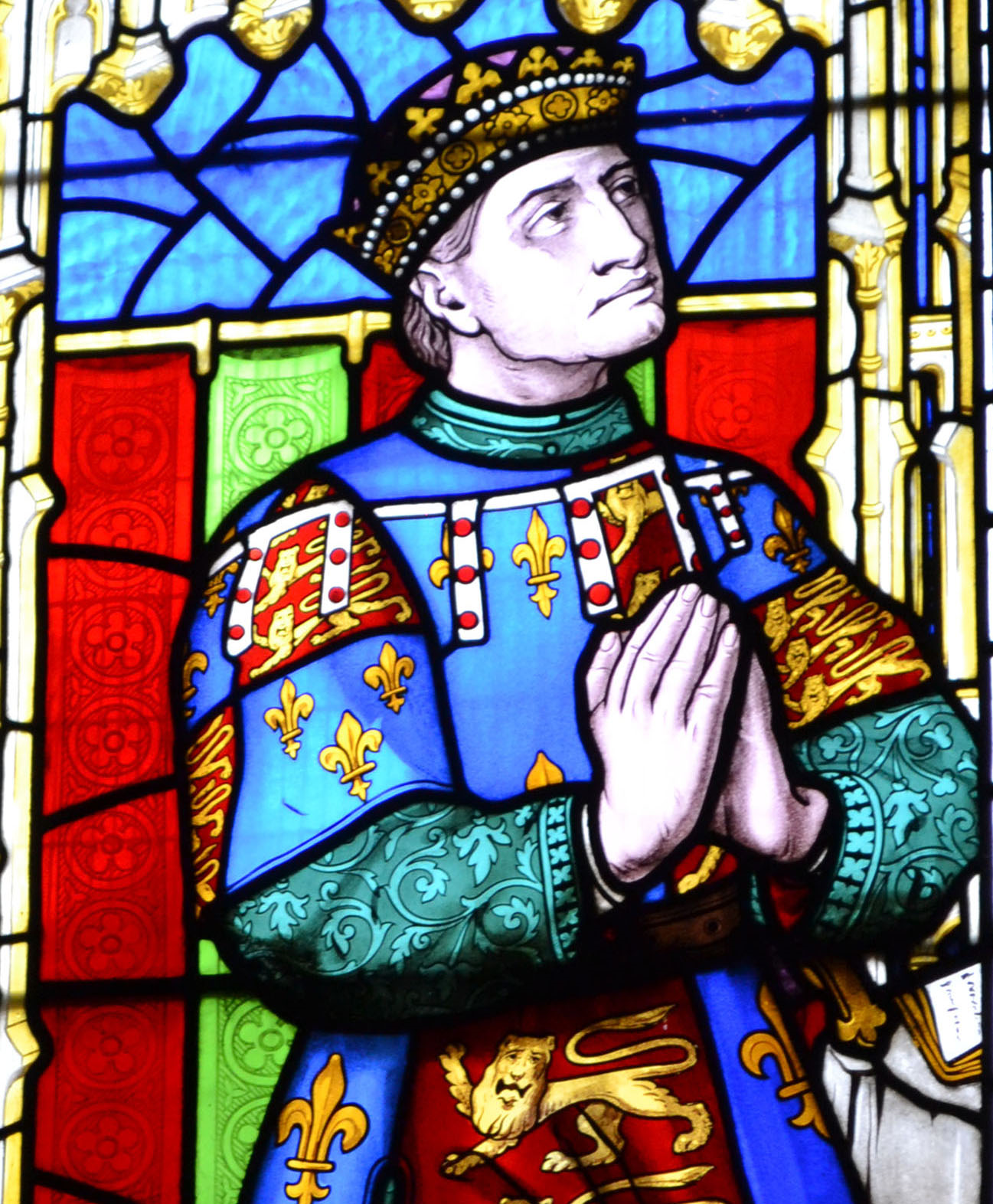
Richard Plantagenet, Duke of York
Of the many sudden changes of political fortune which mark English history in the fifteenth century, none is more remarkable than the recovery of the Yorkist cause following the débâcle of October 1459. Within a month of Ludford its leaders were proscribed and attainted exiles. Yet by June 1460 they were able to mount a successful invasion of England and take control of London. Shortly after, they defeated the king’s forces at Northampton and Henry VI became a prisoner in their hands. This made possible a period of Yorkist-controlled government lasting to the end of the year, when the disasters at Wakefield (30 December 1460) and St Albans (17 February 1461) again put all in suspense, and thrust Edward of March onto the English throne.
Why this Yorkist revival was so successful has never been properly explained. Certainly, the rebels’ control of bases outside England…
View original post 2,838 more words
Holding senior officials to high standards
09 Apr 2021 Leave a comment

I’ve been bothered for some time by how lightly the Director-General of Health, Ashley Bloomfield, was excused over his lapse of judgement in accepting hospitality from New Zealand Cricket at a time when preferential access to the Covid vaccine for the New Zealand cricket team was a matter of some concern to New Zealand Cricket, and when Bloomfield himself exercises considerable clout in such matters (having both formal statutory powers assigned to him ex officio, but also being (one of) the Covid minister’s chief advisers). It wasn’t even as if this was a single lapse, since Bloomfield acknowledged that he had last year several times accepted tickets to rugby games, and yet the Rugby Union had been negotiating with the government re the ability to host foreign teams in New Zealand.
New Zealand has tended to pride itself over many years about the incorruptibility of public life. Unfortunately, we…
View original post 1,382 more words
April 6, 1199: Death of King Richard I of England
08 Apr 2021 Leave a comment

Richard I (September 8, 1157 – April 6, 1199) was King of England from 1189 until his death. He was the second king of the House of Plantagenet. He also ruled as Duke of Normandy, Aquitaine and Gascony, Lord of Cyprus, Count of Poitiers, Anjou, Maine, and Nantes, and was overlord of Brittany at various times during the same period. He was the third of five sons of King Henry II of England and Duchess Eleanor of Aquitaine and seemed unlikely to become king, but all of his brothers except the youngest, John, predeceased their father. Richard is known as Richard Cœur de Lion or Richard the Lionheart because of his reputation as a great military leader and warrior.
Richard was born on September 8, 1157, probably at Beaumont Palace, in Oxford, England, son of King Henry II of England and Eleanor of Aquitaine. He was a younger brother of…
View original post 755 more words
April 7, 1141: Empress Matilda claims the English Throne
08 Apr 2021 Leave a comment
Empress Matilda (c. February 7, 1102 – September 10, 1167), also known as the Empress Maude, was one of the claimants to the English throne during the civil war known as the Anarchy. Empress Matilda was the daughter of King Henry I of England by first wife Matilda of Scotland, daughter of Malcolm III, King of Scots.
Henry I’s two eldest surviving children were William Ætheling and Matilda. William Ætheling (1103 – 1120), commonly called Adelin, sometimes Adelinus, or Adelingus or other Latinised Norman-French variants of Ætheling. William was married to Matilda of Anjou the eldest daughter of Count Fulk V of Anjou. The couple were married when William Ætheling was 16 and Matilda of Anjou was only 8. Needless to say, that when William drowned in the English channel in 1120, a year after their marriage, when his ship, The White Ship, sank, there were no children from the…
View original post 587 more words
Chris McCorkindale and Aileen McHarg: Constitutional Pathways to a Second Scottish Independence Referendum
07 Apr 2021 Leave a comment


The Scottish Government’s Case for a Second Independence Referendum
On 19 December 2019 – a week after the Westminster General Election at which the SNP, again, won an overwhelming majority of Scottish seats – the Scottish Government published its long-awaited case for a second independence referendum: Scotland’s Right to Choose: Putting Scotland’s Future in Scotland’s Hands.
The document does three main things, aimed at four distinct audiences. First, the bulk of the discussion is devoted to setting out the democratic case for holding a second referendum by the end of 2020. This is based on three claims: that the people of Scotland, as members of a multi-national Union based on consent, have the sovereign right to determine their own constitutional future; that there has been a material change in circumstances since the 2014 referendum; and that the Scottish Government has a mandate to hold a referendum. The material change…
View original post 2,827 more words
Kathrin Strauss: Ausgleichsmandate for the Scottish Parliament? – Scotland’s mixed electoral system and the Alba Party
07 Apr 2021 Leave a comment

 Alex Salmond has been a controversial figure (to say the least) in Scottish politics for quite some time. Recently, he sparked further controversy when he introduced his newly founded Alba Party alongside a strategy to secure a supermajority for Scottish independence in the upcoming 2021 Scottish Parliament election. While it is not clear what exactly makes a supermajority in Salmond’s understanding, how he aims to achieve it is.
The Scottish election system is different from that of Westminster. Instead of a pure first past the post system(FPTP) Scotland uses the Additional Member System(AMS). Scots elect a Member of the Scottish Parliament(MSP) in their constituency just as they do for Westminster elections, but additionally they vote within their electoral region to send seven further MSPs to Holyrood. While the MSPs in constituencies are chosen according to FPTP, MSPs within the region are not. This is what Alex Salmond and his AlbaParty…
View original post 1,377 more words
Biography: Sir Francis Walsingham
06 Apr 2021 Leave a comment

 (Born around 1532- Died April 6, 1590)
Son of William Walsingham and Joyce Denny.
Married to Anne Barne and Ursula St. Barbe.
Father of Frances Devereux, Countess of Essex and Mary Walsingham.
Sir Francis Walsingham was Elizabeth I’s “Spy Master” and was one of her primary secretaries. It was Walsingham and his men who discovered the Babington Plot and were able to stop it and protect Elizabeth.
Sir Francis Walsingham was born around 1532 to William Walsingham and his wife Joyce, probably at Foots Cray, near Chislehurst, Kent. His father was a very wealthy lawyer who died in 1534 when Francis was around two years old. After William’s death, Joyce married the courtier Sir John Carey in 1538; Carey’s brother William was the husband of Mary Boleyn, Anne Boleyn’s elder sister. In 1548 Walsingham enrolled at King’s College, the most Protestant and reformist college of the University of Cambridge, and…
View original post 1,202 more words
Book Review; “The Queen’s Agent: Sir Francis Walsingham and the Rise of Espionage in Elizabethan England” by John Cooper
06 Apr 2021 Leave a comment
 When we think about spies, we often think of modern examples like the ones we see in movies. However, spies and their spymasters have been working hard to protect their countries and their rulers for centuries. For Queen Elizabeth I, the only man she could trust to be her spymaster was Sir Francis Walsingham. But is it fair to call Walsingham as only Elizabeth’s “spymaster”? That is the question that John Cooper tries to answer in his book “The Queen’s Agent: Sir Francis Walsingham and the Rise of Espionage in Elizabethan England”. Who was Sir Francis Walsingham and what did he do to help his queen and his country?
First and foremost, Walsingham was a Protestant. This is very important to understand because, in this time, your religion determined where you stood on certain political and international issues. Walsingham would flee to universities in other countries while Mary I was…
View original post 345 more words
Book Review: “The Time Traveler’s Guide to Elizabethan England” by Ian Mortimer
06 Apr 2021 Leave a comment
 Have you ever read a history book and wondered what life was really like for those who lived in the past? To understand a time period and the motives of the people of the past, we have to understand the structure of their society. How they understood things like class, sex, violence, government, and religion is essential for us to understand what separates us from our ancestors. What they ate, what they wore, and where they slept also give a unique insight into the time period. It can be a difficult undertaking to figure out all of the different aspects of the past connect and to present it cohesively, yet acclaimed historian Ian Mortimer has embraced this challenge head-on to tackle one of the most complex periods of the past; the Elizabethan era. His love letter to the Elizabethan age entitled, “The Time Traveler’s Guide to Elizabethan England” is a…
View original post 490 more words
NO GLOBAL WARMING : Global Temperature Now 0.01 Degrees Below Average
05 Apr 2021 Leave a comment


SOME might argue that the latest global temperature, as measured by x15 NASA/NOAA AMSU (advanced microwave sounding unit) satellites, measuring literally every square inch of the lower troposphere (the exact place where ‘man-made global warming’ is supposed to occur) might be an anomaly caused by the de-industrialisation experiment carried out during draconian COVID-19 lockdowns.
Not so, according to the UN’s own meteorological agency, the WMO.
They concluded that despite the draconian COVID-19 lockdowns that initiated the greatest de-industrialisation science experiment ever carried out in human history, CO₂ levels failed to drop…
Ergo, if CO₂ concentrations didn’t budge, at all, during the most comprehensive global science…
View original post 455 more words


Recent Comments